
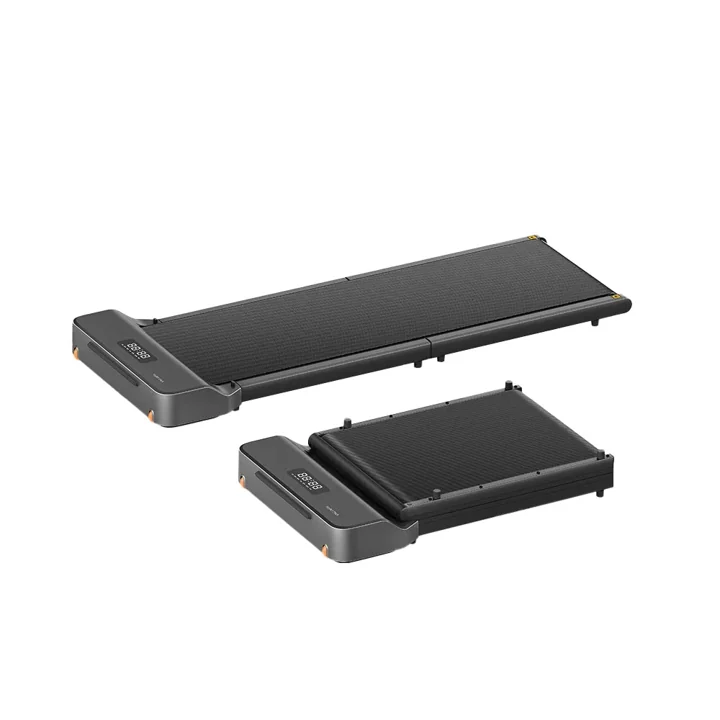
For folding office walking
WalkingPad Z1
Our priority: a long walking surface and a deck that folds away after work. [1]
Check on Amazon*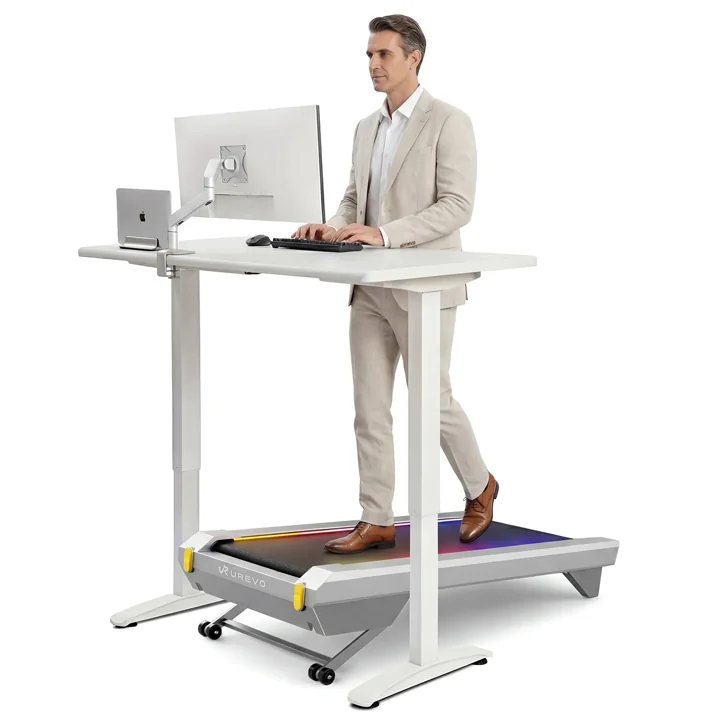
FitRecover Buying Guide · 2026 Edition
More everyday steps – without buying the wrong device. We compare folding desk pads, incline models and 2-in-1 treadmills. The walking surface, handling and space you actually have are decisive.
For a folding desk device, we place particular weight on the combination of a long belt and practical storage. That is why we start with the Z1. It does not include a handrail or incline. [1]
Our priority: a long walking surface and a deck that folds away after work. [1]
Check on Amazon*For dedicated walking sessions with motorised incline. This means the Office version, not the Home model. [2]
Check on Amazon*The lowest stated product weight in this selection. In return, you have to accept a short walking surface. [7]
Check on Amazon*Figures come from manufacturer specifications. Belt dimensions describe the usable walking surface, not the housing. On small screens, you can scroll the table sideways.
| Rank | Model | Speed / belt | Incline | User weight / product weight | Folding | Offers |
|---|---|---|---|---|---|---|
| 01 | 1–6 km/h 121 × 40 cm | None | 110 kg Device: 23 kg | Deck folds in the middle | Check on Amazon* | |
| 02 | 1–6.4 km/h 100 × 42 cm | Automatic, up to 14% | 181 kg¹ Device: 28.6 kg | Does not fold in the middle | Check on Amazon* | |
| 03 | Up to 6 km/h 120 × 41.5 cm | None | 136 kg¹ Device: 27 kg | Deck folds in the middle | Check on Amazon* | |
| 04 | 1–8 km/h 100 × 40 cm | None | 150 kg¹ Device: 25.5 kg | Deck folds in the middle | Check on Amazon* | |
| 05 | Up to 6 km/h in walking mode; up to 10 km/h with rail raised Approx. 102 × 38 cm | None | 120 kg Device: 21.4 kg | Rail folds; deck stays long | Check on Amazon* | |
| 06 | 1–12 km/h, depending on mode 120 × 44 cm | None | 110 kg Device: 36 kg | Rail and deck fold | Check on Amazon* | |
| 07 | 1–6 km/h 90 × 40 cm | Manual, up to 5% | 150 kg¹ Device: 15.8 kg | Does not fold in the middle | Check on Amazon* | |
| 08 | 0.5–6 km/h 120 × 40 cm | None | 100 kg Device: 25 kg | Deck folds in the middle | Check on Amazon* | |
| 09 | 1–6 km/h 100 × 38.5 cm | None | Conflicting 120/150 kg figures² Device: 23.8 kg | Deck folds in the middle | Check on Amazon* | |
| 10 | 1–10 km/h according to the manufacturer 102 × 41 cm | Manual, up to 9%³ | 300 lb ≈ 136 kg¹ Device: 19 kg | Central deck folding not verified | Check on Amazon* |
¹ Manufacturer limit, not load-tested by us. TP3 data refers to the international product page; the German version must be checked against it. ² sWalk Fold: 120 kg in one description, 150 kg in the specification table. ³ TP3: table says 0–9%, FAQ says 2–9%. We do not guarantee a flat starting position. Sources: manufacturer links in the individual product sections.
For office walking, we value a suitable deck, simple controls and an easy switch back to sitting more highly than running speed. A raisable rail matters, however, when you specifically want a hybrid.
We consider in-use dimensions, folding type and product weight together. A short box, a low folding rail and a centrally folding deck are three different things. The best storage arrangement depends on your home.
We favour specific model names and traceable specifications. Unclear versions, conflicting load ratings or unverified folding promises lead to caveats – not invented scores.
What this comparison does not establish: We have not carried out standardised measurements of noise under load, belt tracking, long-term durability or service quality. We therefore award neither noise winners nor test grades. Here, “best” means our reasoned selection for the stated use profiles.
Our choice for a folding home-office setup
We place the Z1 first because, for a desk device, we value a long walking surface and genuine folding more than high maximum speed. Its design suits people who want to alternate between sitting and walking, then put the device away.
Its limitations matter just as much: there is neither incline nor a raisable handrail. Anyone who needs that support or wants to run regularly should choose a different type of device. And 23 kilograms is not lightweight luggage; the route to its storage space therefore belongs in your buying decision. Manufacturer specifications [1]
FitRecover verdict: Our first choice for controlled walking at a suitable standing desk – not for jogging or people who need a handrail.
Premium choice with automatic incline
The CyberPad for Office is our specialist recommendation for people who want more than flat walking. Motorised incline adjustment makes it interesting for dedicated walking sessions alongside the working day. For precise typing, however, we would prefer a calm, flat setting.
Do not let its compact frame obscure the shorter walking surface. It also lacks central folding. Important when ordering: “for Office” and “for Home” are different versions; this comparison explicitly refers to the Office version. The high load limit is a manufacturer claim, not a load test we performed. Manufacturer specifications [2]
FitRecover verdict: For users who deliberately want automatic incline – not automatically the best choice for a tight storage space.
Folding with a higher stated load capacity
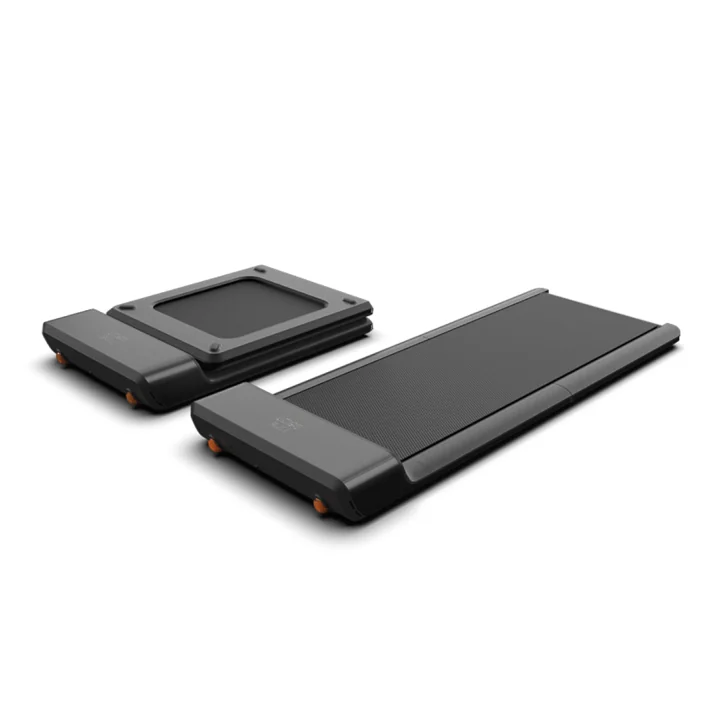
The A1 Pro is an alternative to the Z1 for people seeking a folding walking belt with a higher documented load limit. We refer to the current German manufacturer page. Older retailer offers therefore warrant a close look at the exact version.
The combination of walking surface and low folded profile makes sense. However, the higher product weight argues against buying it if you must lift it over a threshold every day. Automatic foot control is an option; while getting used to it, we would initially choose a fixed speed using the remote. Manufacturer specifications [3]
FitRecover verdict: Interesting when stated capacity and folded dimensions matter more than minimising product weight.
Design choice with genuine deck folding
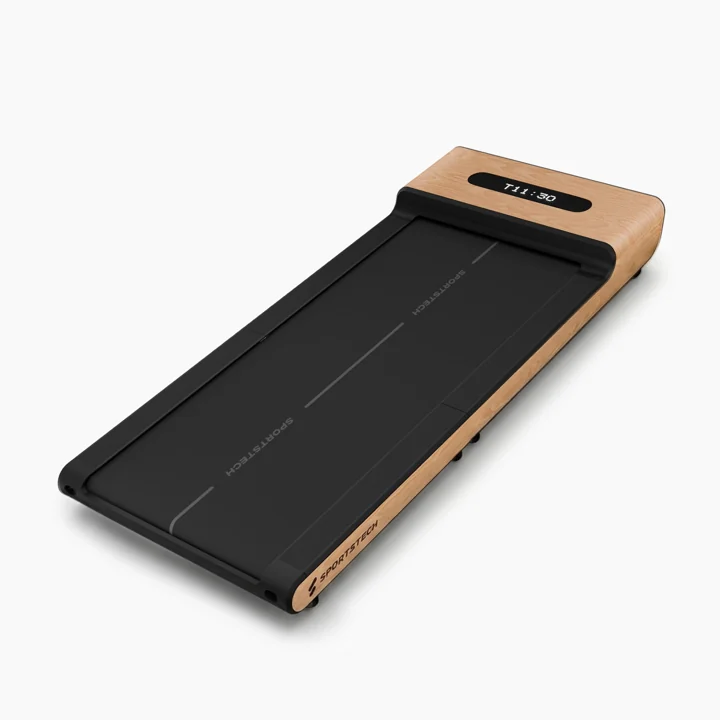
The WoodPad Pro is our choice for people whose device will remain visible in their living space. Its wood-effect design is an aesthetic argument, not evidence of a better training effect. We consider central folding and documented storage dimensions more important.
Its higher maximum speed is not an additional reason to buy it for office work. We would still choose this model as a walking device and adapt the speed to safe movement. The relatively short walking surface and product weight remain its main compromises. Manufacturer specifications [4]
FitRecover verdict: A convincing design alternative for a visible location – provided its walking surface suits your stride length.
2-in-1 alternative with a folding rail
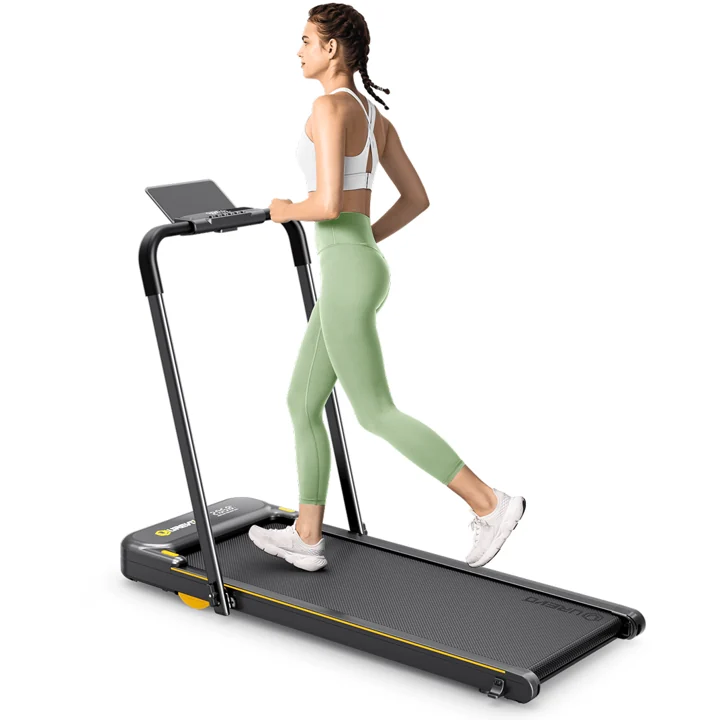
The Strol 2E belongs on your shortlist if you want to switch between a low-profile office device and a model with a raised rail. The manufacturer distinguishes walking and running modes. This distinction matters more than the large speed figure in a sales listing.
Here, “folding” refers to the rail: the device becomes lower, but the deck does not fold in the middle like the Z1. Its narrow walking surface is another reason to assess your space needs realistically before buying. For ambitious running training, we would prefer a more generously sized treadmill. Manufacturer specifications [5]
FitRecover verdict: A compromise for walking and occasional running – not a replacement for a large training treadmill.
Folding hybrid with a wider belt
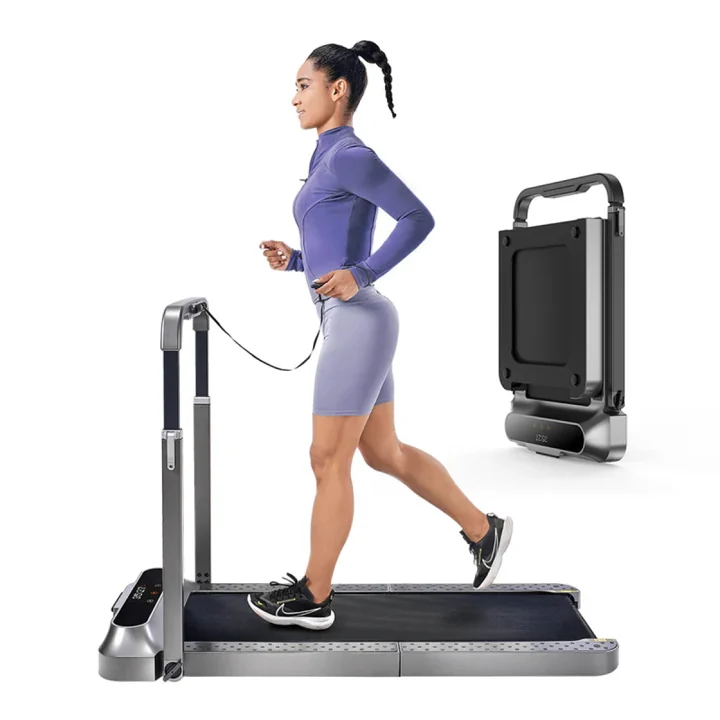
The R2 has a different focus from a lightweight office pad: it combines a relatively generous walking surface with a raisable rail and a folding deck. For people who genuinely need both uses, this offers a more coherent solution than a walking-only flat belt.
At 36 kilograms, however, it is the least manageable option here for daily movement between rooms. Even folded, the package stays relatively wide. Do not buy it solely for maximum speed, but only when its rail, additional belt width and running mode have a specific benefit for you. Manufacturer specifications [6]
FitRecover verdict: Our hybrid option for a largely permanent location. For office walking alone, its weight and bulk would usually be too much for us.
Lightest selection for short walking sessions
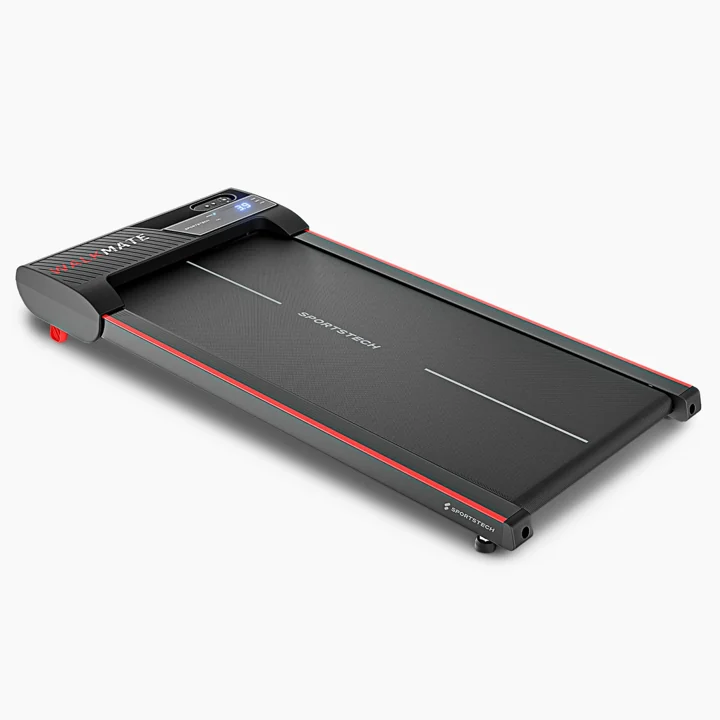
With the lowest stated product weight in this selection, the Walkmate is interesting if you want to move your pad more often. It relies on a short housing rather than a centrally folding deck. That may be enough for a suitable space under furniture.
The trade-off is the shortest walking surface in our list. A high stated load capacity therefore does not automatically make it suitable for tall people with long strides. Incline is also adjusted manually, not changed by a motor while walking. Manufacturer specifications [7]
FitRecover verdict: A compact alternative for people who prefer short steps. For long strides, we would look at a longer deck first.
Folding alternative with a low starting speed
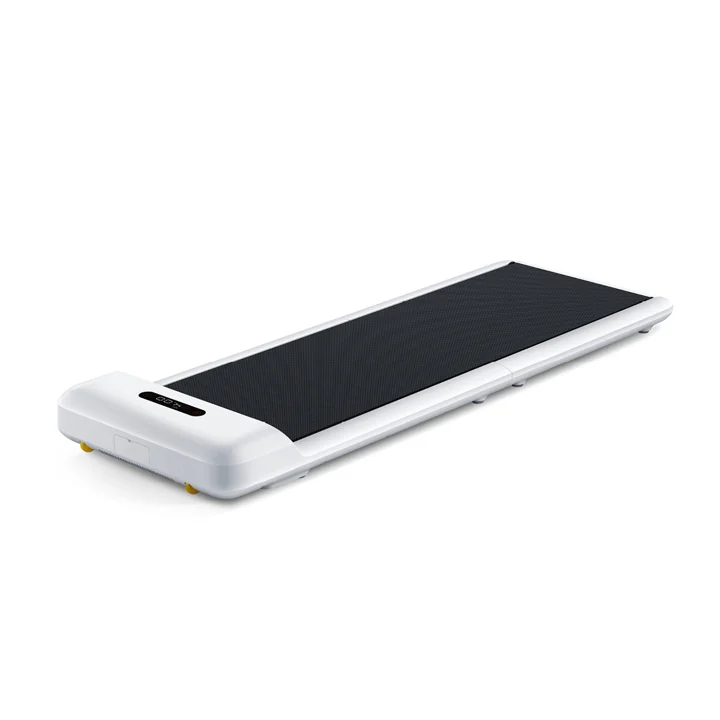
The C2 remains a useful comparison option for a folding device with a long belt and particularly low starting speed. Its load limit is more restrictive than the Z1 or A1 Pro, however. “Mini” should also not be confused with easy to carry.
At the time of research, the German manufacturer shop marked the model as sold out. Retailer offers therefore need separate checking. Without a convincing final price and clear delivery commitment, we would not favour it over the Z1. The manufacturer image shows the white version. Manufacturer specifications [8]
FitRecover verdict: An alternative when a suitable retailer offer exists, not a recommendation to buy any remaining stock uncritically.
Short folded length – clarify capacity before buying
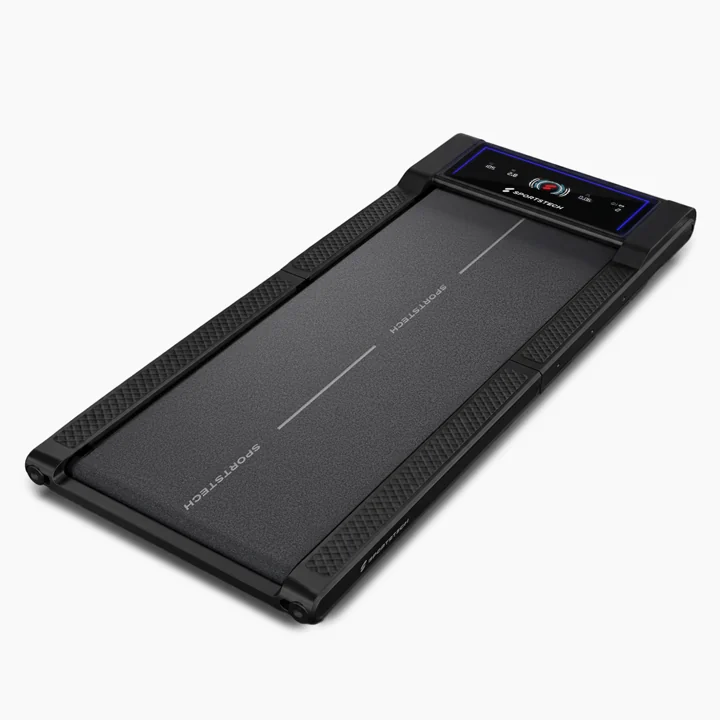
The sWalk Fold is interesting when folded length is the main constraint. It therefore belongs on a small-home shortlist. Its rather narrow, short walking surface limits that advantage, however.
There is a specific reason for our caution: one image description on the manufacturer page states a 120-kilogram user limit, while the specification table and safety instructions state 150 kilograms. We do not resolve this contradiction in favour of the higher figure. Get written confirmation of the limit for the version actually supplied; until then, we show both figures clearly. Manufacturer specifications [9]
FitRecover verdict: Designed to save space, but a dependable buying recommendation only after the exact version has been clarified.
Manual incline – check the exact version
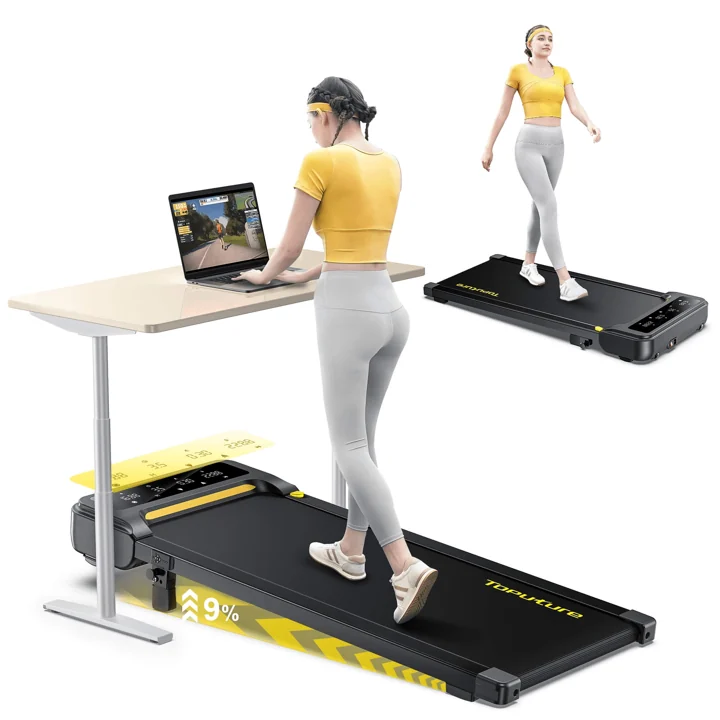
We include the TP3 as another manual-incline option. However, we deliberately assess it more cautiously: the international product page does not establish that every German retailer offer contains exactly the same version.
There is also inconsistent information. The table states 0–9% incline, while the FAQ gives a 2% base incline. Central deck folding is not clearly documented either, despite “folding” advertising. Check these points, the German version and the rating plate before buying. High maximum speed alone does not make this design without a substantial rail our preferred running device. Manufacturer specifications [10]
FitRecover verdict: Interesting only with a clear version match. Better-documented alternatives rank higher for a straightforward buying decision.
Mark the planned belt dimensions on the floor with tape. Stand inside and take a few controlled steps: if it already feels cramped without a moving belt, we would not count on comfortable use. This preliminary check does not replace a device trial, but can prevent an obviously unsuitable purchase.
A high load limit is not a substitute for enough room. Body weight, height and stride length are different selection criteria. For long strides, we would favour extra belt length over additional app features when in doubt.
The Z1 folds the deck itself. The Strol 2E primarily lowers its rail. Both may be advertised as folding, but solve different storage problems. Compare the final storage dimensions, not just the word in the headline. [1] [5]
Also check whether the folded device fits through the opening under your sofa. A low unfolded frame does not guarantee a low folded height. Store it upright only if the manual explicitly allows that position.
Noise does not come only from the motor. We would also consider footsteps, belt movement and the location. An advertising figure from a different test setup does not tell you what reaches the room below or your microphone.
Plan a real check in the intended location: with your shoes, usual speed and a short test call. A suitable mat is not a promise of silence. Also make sure it complies with the manufacturer's installation requirements.
The CyberPad for Office offers motorised adjustment; the Walkmate is adjusted manually. These are different convenience approaches. Adjust manual incline only when the device is stopped and according to its instructions. [2] [7]
Our buying rule: pay for incline only when you have a specific plan to use it. For simultaneous work, we would initially favour a calm, controllable speed on a flat setting. Do not confuse percentages with degrees.
Write down three questions before buying: how do I start and stop without a smartphone? Is an app needed for initial setup? What remains usable without paid content? A device display, remote control and training subscription serve different purposes.
For office walking, we would value an easily reached stop control and simple speed selection more than a large video library. Also check whether replacement remotes are available. Losing a small accessory should not unnecessarily block your entire routine.
Set an overall budget before clicking. Where needed, include a suitable mat, appropriate desk and useful maintenance accessories. A high crossed-out starting price says little about whether the specific offer suits you.
Our buttons deliberately open a model search. Check the exact version, a clearly identifiable seller and delivery commitment there. For a large, heavy device, we would also clarify how any return would work before ordering.
A walking pad must solve a real everyday problem. If there is no suitable space, it must be carried up stairs after every session or an appropriate desk is missing, we would resolve those conditions first. A device does not become practical just because a retailer calls it compact.
For regular, demanding running training, we would not restrict the search to flat office pads either. And if you need support to walk safely, we would not choose a desk setup without a proper rail as an improvised solution. A desk is not automatically a suitable substitute for a purpose-built handrail.
Above all, you do not need a device to start moving more. The WHO explicitly counts activity during leisure, work and everyday life. Our view: buy a pad when it creates an additional, realistic opportunity – not because you think you cannot do anything for yourself without a purchase. [11]
Read the safety, installation and maintenance instructions before the first start. Begin only with an undamaged, stably positioned device. Keep children and pets away, wear suitable non-slip sports shoes and step on or off only when the belt is stopped. Start at the lowest speed. These basic rules also appear in manufacturer instructions. [9]
Our suggestion for familiarisation: initially focus only on walking. Once you are confident with the movement and stop function, try a simple secondary task. We would not introduce precise typing, a steep incline and higher speed simultaneously.
Stop use if you experience dizziness, pain or other symptoms. Seek professional advice first if you have existing limitations or are uncertain about personal suitability. A walking pad is not a blanket rehabilitation recommendation and does not replace individually appropriate treatment. [9]
Follow the relevant manual for maintenance too: one lubrication interval for all ten devices would not be appropriate.
In our editorial selection, the WalkingPad Z1 is the first candidate for folding office walking. That reflects our priorities, not a measured test victory. If you need motorised incline, a handrail or another load capacity, the suitable models change. Start with the intended use, not first place.
Here, “walking pad” means a low-profile device for walking. Some models combine this with a raisable rail and a separate running mode. The Strol 2E and R2 belong to this second group. What matters is the operating mode permitted for the specific configuration – not just the maximum advertised speed.
Only measuring can answer that. Compare clearance height and width at the narrowest point with the storage dimensions. Also check crossbars, feet, cables, skirting boards and the route to storage. A folded device may be shorter but taller. Use only storage positions allowed by the manufacturer.
The available manufacturer information does not let us name a fairly measured noise winner. A motor running without a person is not the same as walking under load. For your home, overall noise in the intended location matters. Avoid buying solely on a single dB figure or the phrase “whisper quiet”.
Not necessarily. For working, this comparison prioritises controllable movement and a suitable deck. An incline option mainly adds value if you want to use it for separate walking sessions. Check whether adjustment is manual or motorised and whether a genuinely flat starting position is documented.
We do not recommend spending the entire working day on the pad. Start with short, manageable periods and change position. Also follow the permitted operating duration and breaks in the manual. A desk device is not an invitation to continuous operation. Stop using it if symptoms occur.
Walking is physical activity; the WHO emphasises that movement counts and prolonged sitting should be limited. This does not guarantee weight loss from a particular device. We promise neither a fixed calorie burn nor a specific result. Choose a pad for a realistic movement routine, not a spectacular advertising calculation. [11]
The compared models are documented as having remote controls; app features are separate. Still check before buying whether setup requires an account and which functions remain without the app. Sportstech offers additional Live memberships. Our hardware recommendation does not require such a membership. [9]
The sWalk Fold has conflicting load ratings on the manufacturer page. The TP3's base incline and folding promise are not clearly documented. We list these open points rather than presenting a favourable assumption as a verified fact. Written confirmation for the exact item number is the more useful basis here. [9] [10]
No. They open a model-specific search on Amazon.de. This avoids presenting an unverified item number as an exact offer. Compare the model name, version, seller, package contents, delivery date and final price. Search results can include similar devices. Starred links are affiliate links.
For folding office walking, we start with the WalkingPad Z1. For deliberately chosen motorised incline, we favour the UREVO CyberPad for Office . Anyone seeking a hybrid should particularly weigh the differences between the Strol 2E and R2 . These recommendations are based on documented designs, not a claimed hands-on test. [1] [2] [5] [6]
The decisive question is not which pad has the most features, but which one you can use safely, comfortably and regularly in your location. A suitable deck, accessible stop control and realistic storage space are a better foundation than an eye-catching discount.
Check on Amazon*Manufacturer information accessed on 18 September 2026. Images come from the linked official product pages. Linking to a source does not mean we adopt its advertising promises or customer reviews.
No fixed Amazon prices, star ratings or availability promises: these were not reliably confirmed at individual-offer level for this comparison. Manufacturer limits are not performance data independently measured by FitRecover.
Back to top ↑
9:43 · Open the video library, then choose Watch video to load YouTube. Select an available audio language in the player.
Open video →