
Recovery After Exercise: 7 Things That Really Help
Getting back to full performance sooner sounds like a job for ice baths, special drinks and expensive recovery devices. In practice, less spectacular basics usually make the difference: appropriate training loads, sleep, enough energy, fluids and — if it feels good — very gentle movement.
The key takeaway
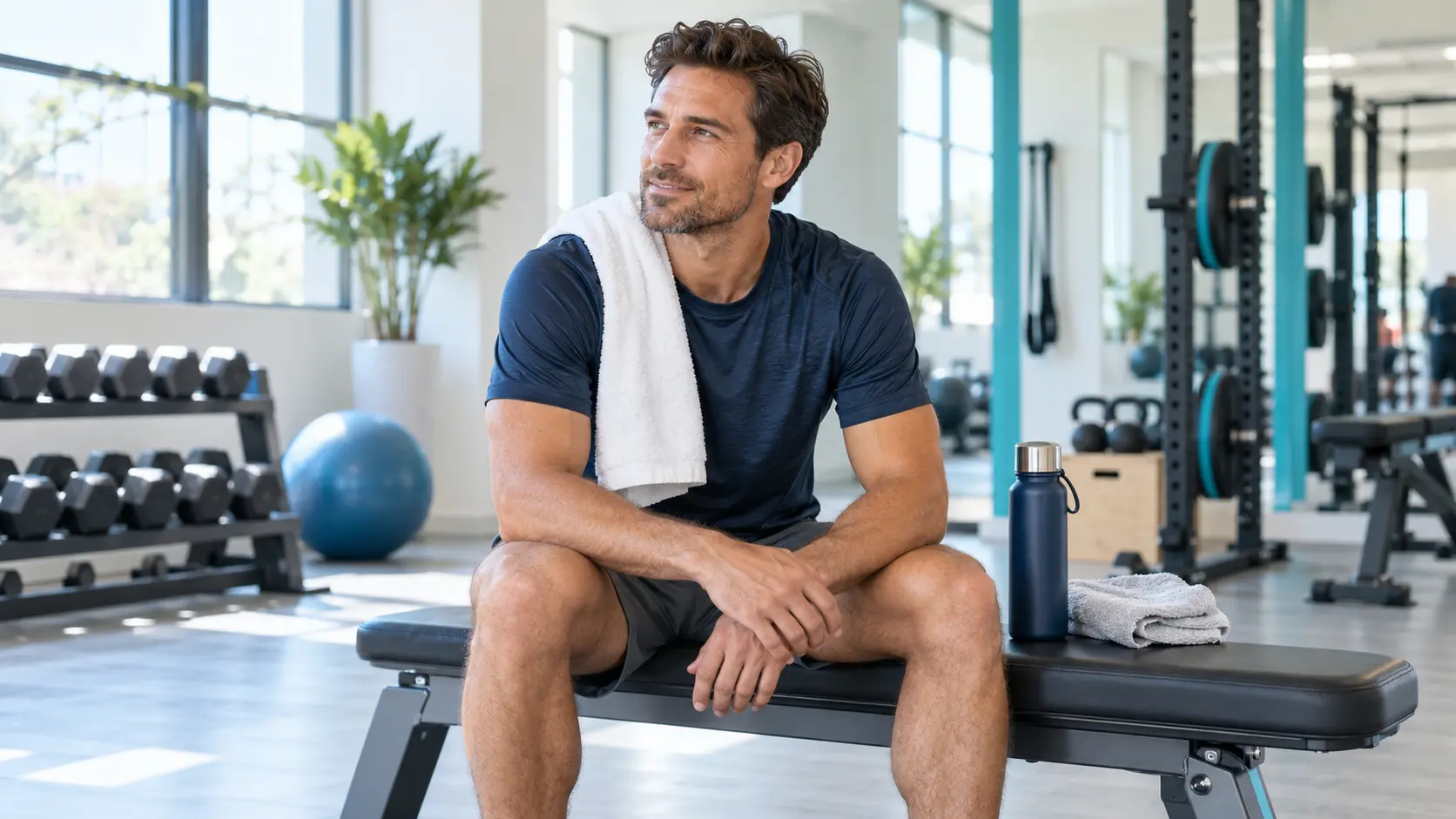
Active recovery can feel good, but it is not compulsory. Five to twelve minutes of very easy walking, cycling or gentle mobility work are plenty. Over the following hours and days, sleep, food, fluids and training management matter more than any single method.
Advertising / affiliate links: This article contains Amazon links. As an Amazon Associate, FitRecover earns from qualifying purchases, at no extra cost to you. We deliberately do not list prices because they can change at short notice.
What really helps after training?
Recovery is not a single process. Energy stores are replenished, loaded tissues adapt, the nervous system processes the exercise and perceived fatigue changes too. A method can therefore feel pleasant without automatically improving performance the following day.
| Method | Realistic benefit | Important limitation | Assessment |
|---|---|---|---|
| Sleep | A foundation for physical and mental recovery | No single number of hours suits everyone | Priority 1 |
| Energy, protein & carbohydrates | Support replenishment and adaptation | Needs depend on training load and daily life | Very important |
| Fluids | Replace actual sweat losses | More is not automatically better | Very important |
| Gentle movement | Can feel good and ease the transition after exercise | Not reliably better than rest | Optional |
| Stretching | Can feel pleasant and influence flexibility | Does not reliably prevent soreness | Optional |
| Foam roller / massage ball | Brief self-massage; small short-term effects are possible | Not a repair tool or a necessity | Optional |
Active recovery: useful, but not compulsory
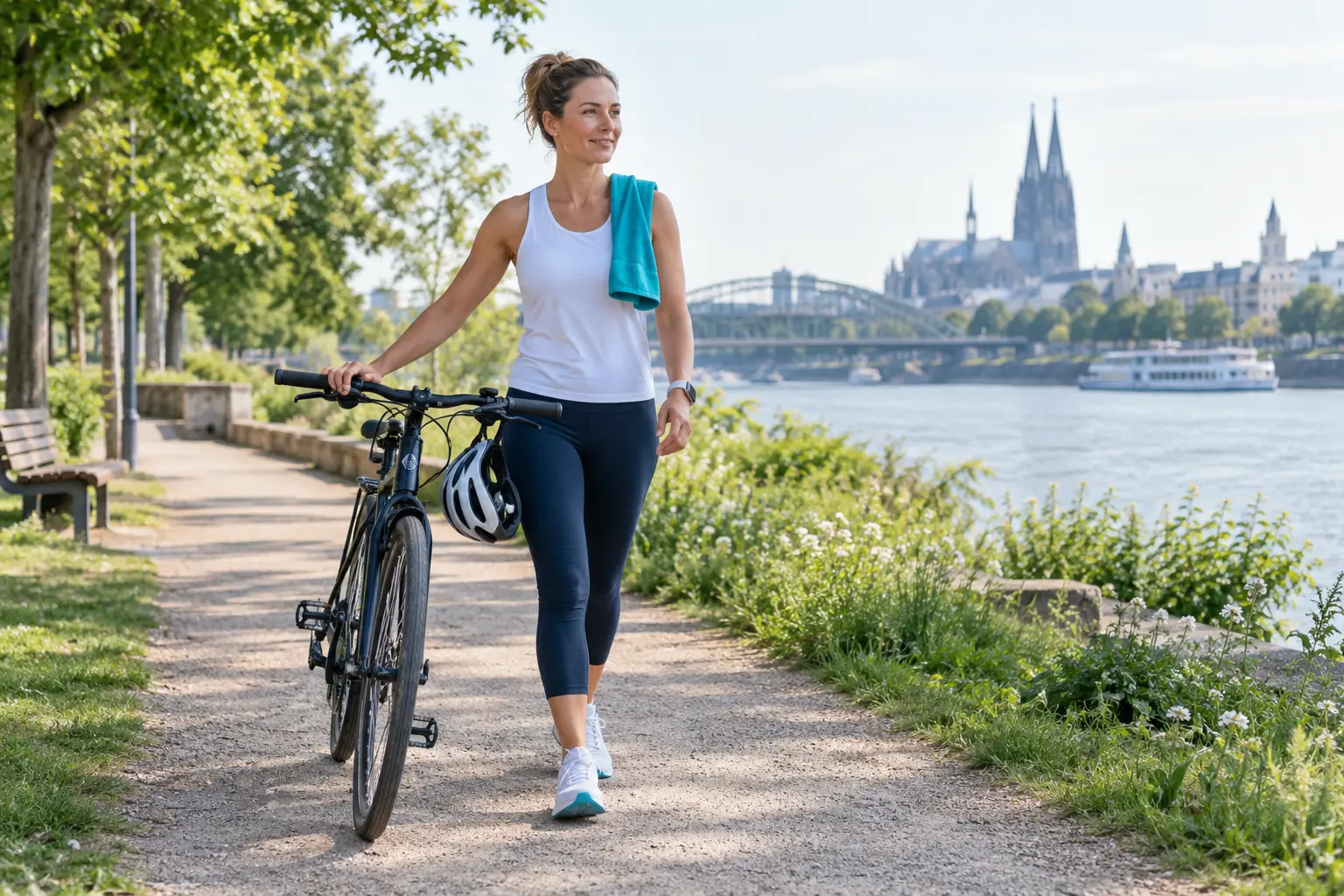
Active recovery means very light movement after exercise or on a rest day: relaxed walking, easy cycling, gentle swimming or mild mobility work. The key is not the activity itself, but its low intensity.
Aim for a perceived effort of around 2–3 on a scale from 0 to 10. You should be able to speak comfortably in full sentences. If your legs feel heavier, your breathing rises noticeably or you start pursuing performance targets, recovery has become another workout.
The 7 key fundamentals of better recovery
Adjust your training load appropriately
No measure can permanently compensate for too much volume, overly rapid progression or missing rest days. Recovery starts with training planning. Do not increase weight, sets, frequency and exercise difficulty all at once.
Allow enough sleep
Sleep needs are individual. What matters is enough opportunity to sleep, consistency, and whether you feel alert and capable during the day. Rollers, baths and supplements cannot compensate for chronic sleep shortage.
Eat enough energy
After long or intense sessions, a normal meal containing carbohydrate and protein sources helps. Recreational athletes do not need a narrow “anabolic window” or a special recovery drink. Timing becomes more important when training several times a day.
Replace fluids as needed
Drink according to thirst, heat, exercise duration and sweat loss. Electrolytes may matter after very long, hot or sweaty sessions. Drinking large amounts of water just in case does not accelerate recovery.
Keep gentle movement genuinely gentle
Five to twelve minutes of walking or very easy cycling is enough. On a recovery day, a short walk may be more useful than a structured “recovery session” that brings renewed performance pressure.
Use mobility work without forcing it
Gentle mobilisation can help stiff movements feel familiar again. However, static stretching is not a reliable remedy for muscle soreness. Move with control, without aggressive bouncing or painful pulling. Find guided practice in our 5 Mobility Exercises.
Use tools deliberately, not automatically
A foam roller or massage ball can make brief self-massage easier. Use only enough pressure to keep breathing calmly and relax. Do not roll directly over joints, the spine, open injuries or irritated nerve structures. For help choosing, see our foam-roller comparison for beginners.
Four common recovery myths
1. “Muscle soreness comes from lactic acid”
Lactate is processed relatively quickly, while delayed-onset muscle soreness typically becomes noticeable many hours later. A cool-down can accelerate blood-lactate clearance, but this does not prove better recovery the next day.
2. “Without stretching, your muscles shorten”
Stretching can improve range of motion, but the idea of immediate structural “shortening” after every workout is too simplistic. Stretch when it fits your mobility goals, not out of fear of soreness.
3. “The more painful the roller, the better”
Strong pressure is not a mark of quality. If you hold your breath, tense up or move away, the load is too high. Start against a wall if necessary and adjust the pressure through your body position.
4. “A supplement replaces a meal”
A supplement can have a clearly defined function, but it replaces neither energy nor a varied diet. Creatine, for example, is a well-studied performance supplement, not an immediate remedy for muscle soreness.
The simple 12-minute recovery routine
- Minutes 0–5: Walk calmly or cycle with very light resistance. Effort: around 2–3 out of 10.
- Minutes 5–7: Slowly circle your shoulders and raise and return your arms with control. Perform five to eight repetitions.
- Minutes 7–9: Rotate your upper back four to six times per side while sitting or standing upright, without using momentum.
- Minutes 9–11: Make small hip circles or alternately raise each knee slightly. Hold on if needed.
- Minutes 11–12: Continue walking slowly, breathe calmly and check: do you feel at least as fresh as before the routine?
A practical plan for the first 24 hours
Immediately afterwards
Slow the pace, drink as needed and change out of wet clothing. A short cool-down is optional, not compulsory.
Over the next few hours
Eat a normal meal containing protein, carbohydrates and vegetables or fruit. Avoid an unplanned second hard workout.
The following day
Assess movement, fatigue and performance together. Mild stiffness often allows gentle activity; increasing pain is not a signal to “push through”.
Which recovery products are useful?
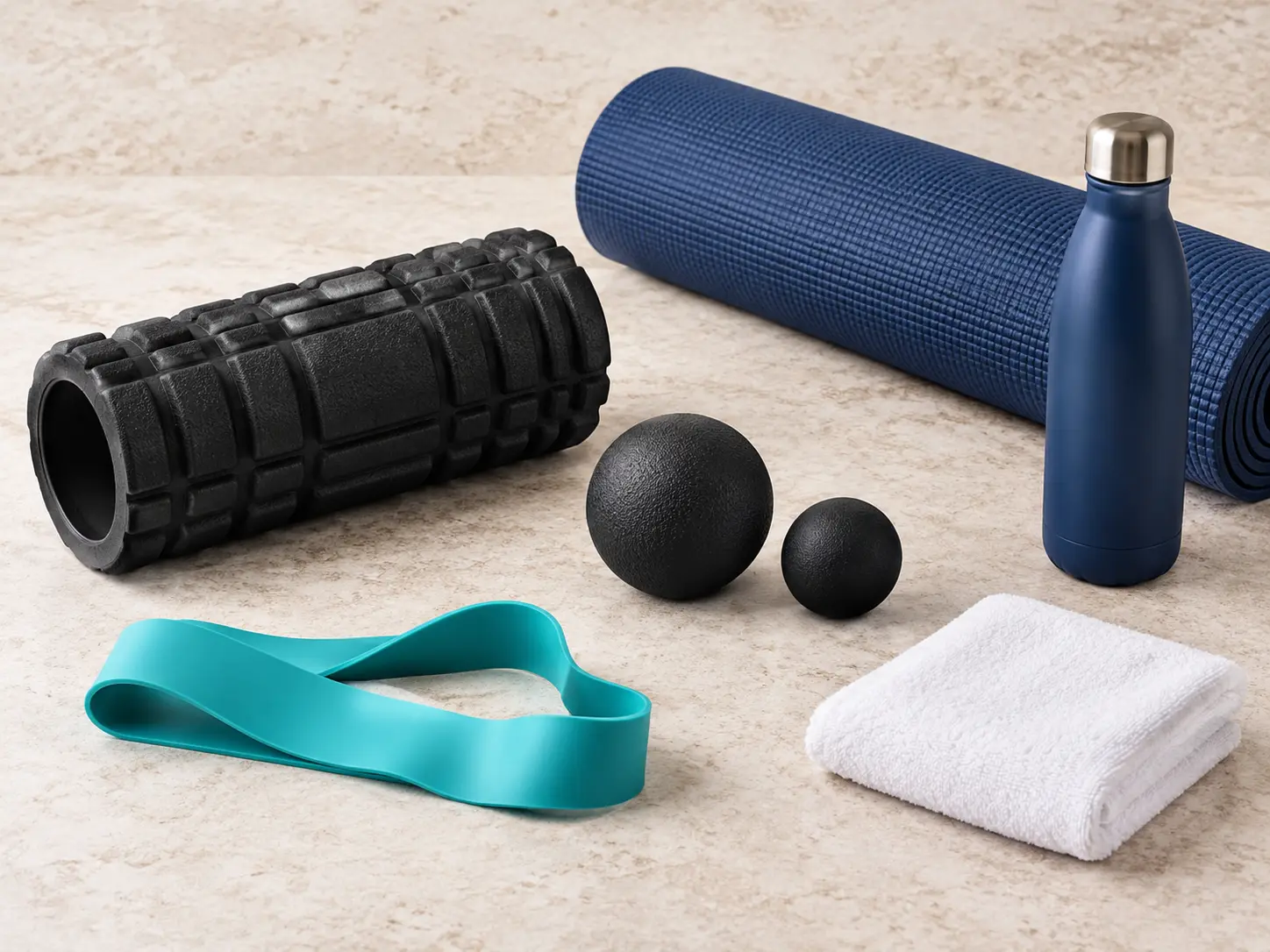
None of the following products is essential. We deliberately show different functions rather than a long gadget list: broad-area self-massage, even pressure, localised application and a performance supplement placed in its proper context. This selection is editorial guidance, not our own laboratory testing.
TriggerPoint GRID 1.0
This approximately 33 cm roller combines a sturdy hollow core with a wipe-clean EVA surface and differently textured zones. It suits users who prefer a versatile roller with a noticeable texture.
Limitation: The texture may be too intense if you are very pressure-sensitive. Test it against a wall first or choose a softer roller.
Check the current offer on AmazonBLACKROLL STANDARD
According to the manufacturer, this smooth, medium-firm roller measures 30 × 15 cm. Its even contact is predictable and suits broad-area work on the legs, glutes and upper back.
Limitation: Very pressure-sensitive beginners may initially find it too firm. Harder is not automatically more effective.
Check the current offer on AmazonBLACKROLL BALL 08 & 12 Set
Two ball sizes allow different degrees of concentrated pressure. Loading is easier to control against a wall than on the floor — useful around the glutes, shoulders or sole of the foot.
Limitation: Do not roll over joints, the spine or acutely irritated areas. Focused pressure is not suitable for every symptom.
Check the current offer on AmazonBioTechUSA 100% Creatine Monohydrate
According to the manufacturer, the unflavoured version consists of micronised creatine monohydrate. The authorised EU health claim concerns performance in successive bursts of short-term, high-intensity exercise with a daily intake of 3 g of creatine.
Limitation: Creatine does not immediately prevent muscle soreness and replaces neither sleep nor a balanced diet. Follow the manufacturer's instructions and consider personal medical factors.
Check the current offer on AmazonAdvertising / affiliate links: As an Amazon Associate, FitRecover earns from qualifying purchases, at no extra cost to you. Product details were checked against manufacturer information on 6 September 2026. Versions, dimensions, ingredients, sellers and availability can change — check the product page before buying.
Conclusion: fundamentals before gadgets
Good recovery is rarely spectacular. Plan training loads and rest days sensibly, prioritise sleep and normal meals, and replace fluids as needed. Gentle movement, mobility work, a foam roller or massage ball can complement these basics when they feel pleasant — but they are neither compulsory nor a repair button.
The best recovery routine is one that fits your everyday life and does not leave you more exhausted. Start with twelve calm minutes and then assess not only soreness, but also movement, energy and performance.
Frequently asked questions about recovery after exercise
How long does recovery after exercise take?
That depends on the type, volume and intensity of training, your fitness, sleep and nutrition. Soreness alone is not a reliable readiness test. Increase your next training load only when movement, performance and well-being have largely returned to normal.
Does active recovery really help?
Very gentle movement can feel pleasant and improve certain short-term recovery markers. However, it is not reliably better than rest for next-day performance. It should remain easy and not create new fatigue.
Does stretching after training prevent muscle soreness?
No convincing evidence supports that. Gentle stretching can feel pleasant and affect range of motion, but it should not be viewed as a guarantee against soreness.
Do I need a foam roller for recovery?
No. A foam roller is an optional tool for brief self-massage. Sleep, sufficient energy intake, fluids as needed and an appropriate training load are more important.
Is creatine a remedy for muscle soreness?
Creatine is not an immediate remedy for muscle soreness. The authorised EU health claim concerns physical performance in successive bursts of short-term, high-intensity exercise with a daily intake of 3 g of creatine, not immediate recovery.
Sources and further reading
- Van Hooren & Peake: Do We Need a Cool-Down After Exercise? (Sports Medicine, 2018)
- Dupuy et al.: An Evidence-Based Approach for Choosing Post-exercise Recovery Techniques (Frontiers in Physiology, 2018)
- Afonso et al.: The Effectiveness of Post-exercise Stretching in Short-Term and Delayed Recovery (Frontiers in Physiology, 2021)
- Walsh et al.: Sleep and the Athlete – Expert Consensus Recommendations (British Journal of Sports Medicine, 2021)
- Thomas et al.: Nutrition and Athletic Performance (Medicine & Science in Sports & Exercise, 2016)
- Wiewelhove et al.: Effects of Foam Rolling on Performance and Recovery – Meta-Analysis (Frontiers in Physiology, 2019)
- Hou, Yin & Qiao: Acute and Delayed Effects of Post-Exercise Recovery Strategies – Network Meta-Analysis (Healthcare, 2026)
- EU Regulation No 432/2012: authorised health claim for creatine
- TriggerPoint: GRID 1.0 — manufacturer specifications
- BLACKROLL: STANDARD — manufacturer specifications
- BLACKROLL: BALL 08 — manufacturer specifications
- BioTechUSA: 100% Creatine Monohydrate — manufacturer specifications
Sources and product details checked: 6 September 2026. This article provides general information and does not replace individual medical or clinical nutrition advice.