
5 Mobility Exercises for Better Flexibility
This short routine combines hip-flexor mobilisation, shoulder movement, a gentle sciatic nerve slider, the deep squat and the Cossack squat. You do not need extreme positions or a long workout — calm repetitions, good control and a range of motion that suits you matter more.
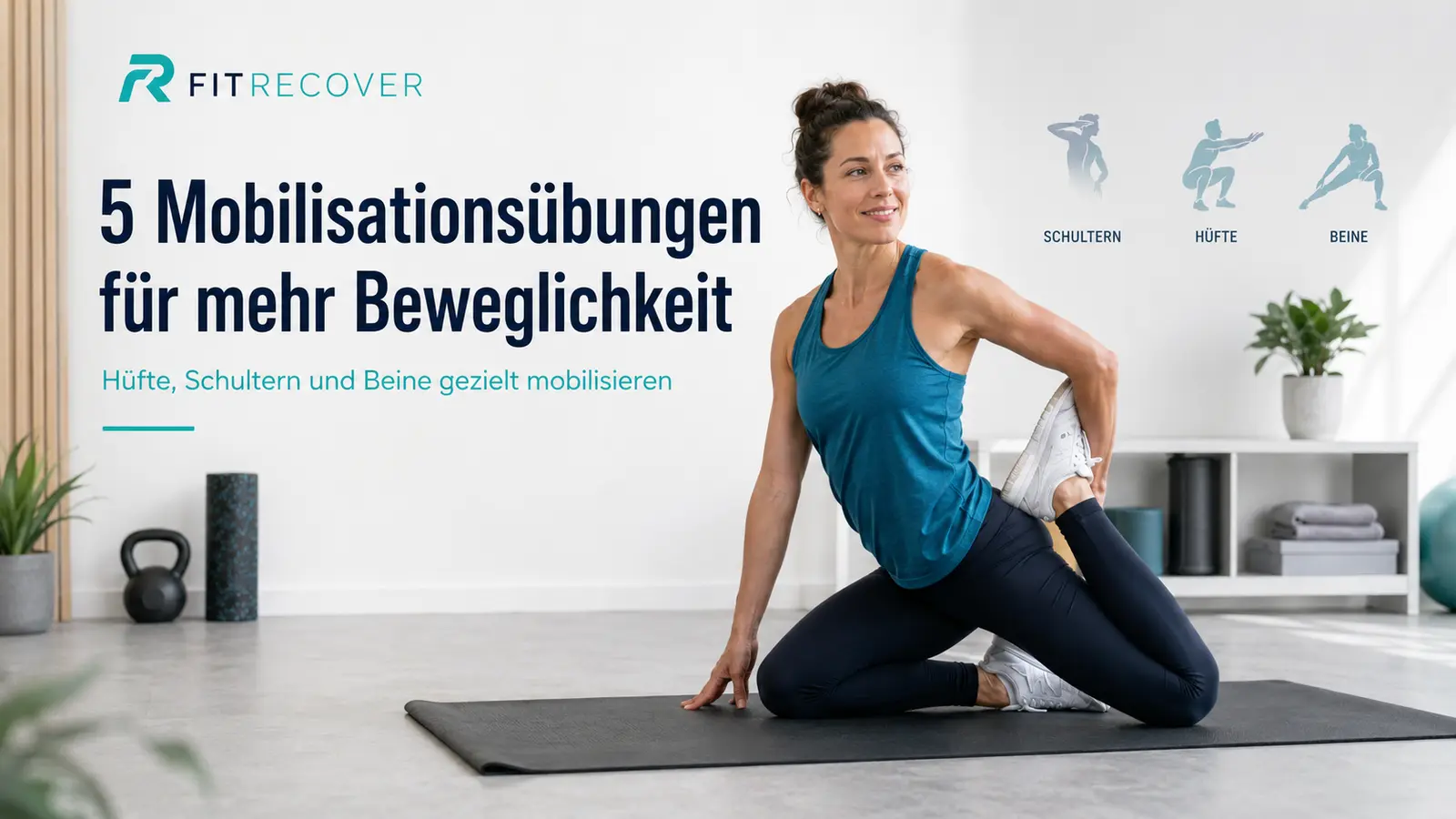
The routine at a glance
Begin with two or three minutes of easy walking or marching on the spot. Then work through the exercises in the order shown. One round is enough to start; if you still feel fresh and in control afterwards, you can add a second round.
| Exercise | Main focus | Dosage | Level |
|---|---|---|---|
| Couch Stretch | Hip flexors, front of thighs | 20–30 sec per side | Easy–moderate |
| Shoulder Pass-Through | Shoulders, ribcage | 6–10 repetitions | Easy |
| Sciatic nerve slider | Gliding movement along the back of the leg | 6–10 per side, without holding | Easy; dose carefully |
| Deep squat | Hips, ankles, back | 20–30 sec or 5 transitions | Easy–moderate |
| Cossack Squat | Lateral hip, adductors | 5–8 per side | Moderate–advanced |
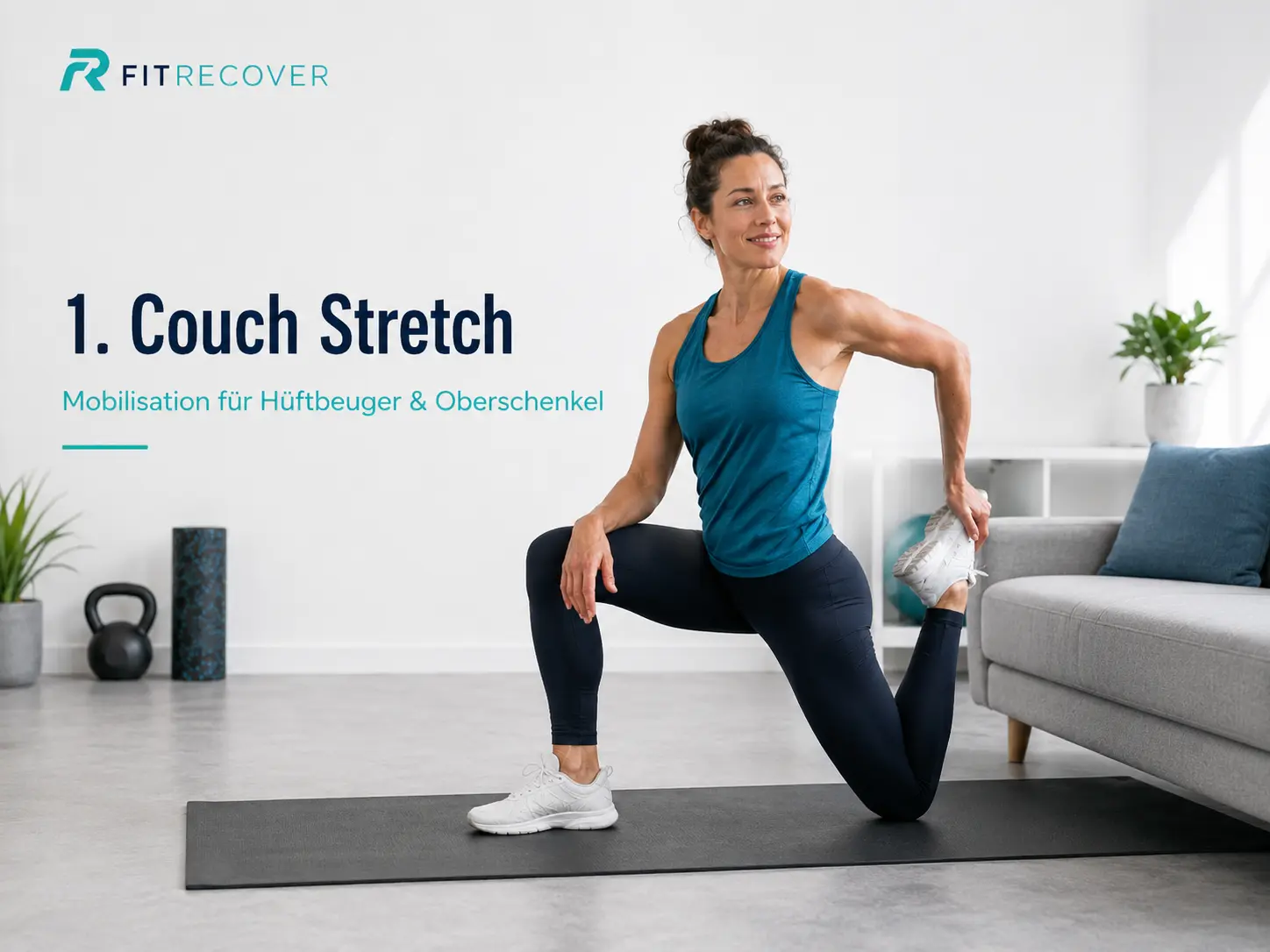
1. Couch stretch: mobilise your hip flexors with control
The couch stretch combines hip extension with a bent back knee. This creates tension at the front of the hip and thigh. However, the intense wall-supported position is not essential: start in a half-kneeling position and increase the challenge only if you can keep your pelvis and trunk steady.
How to perform it
- Kneel on a mat. Place your front foot far enough forwards to give you a stable stance.
- For the classic variation, position your back knee a short distance in front of a wall or sofa and rest your shin or the top of your foot against it. A greater distance makes the position easier.
- Gently engage the glute on the back-leg side and tilt your pelvis slightly backwards. Keep your torso long and avoid a pronounced lower-back arch.
- Move your pelvis forwards only until you feel a clear but comfortably tolerable stretch.
- Place a cushion or folded towel under your knee.
- Do not pull on your foot if this hurts your knee.
- Keep your hips facing forwards as evenly as possible.
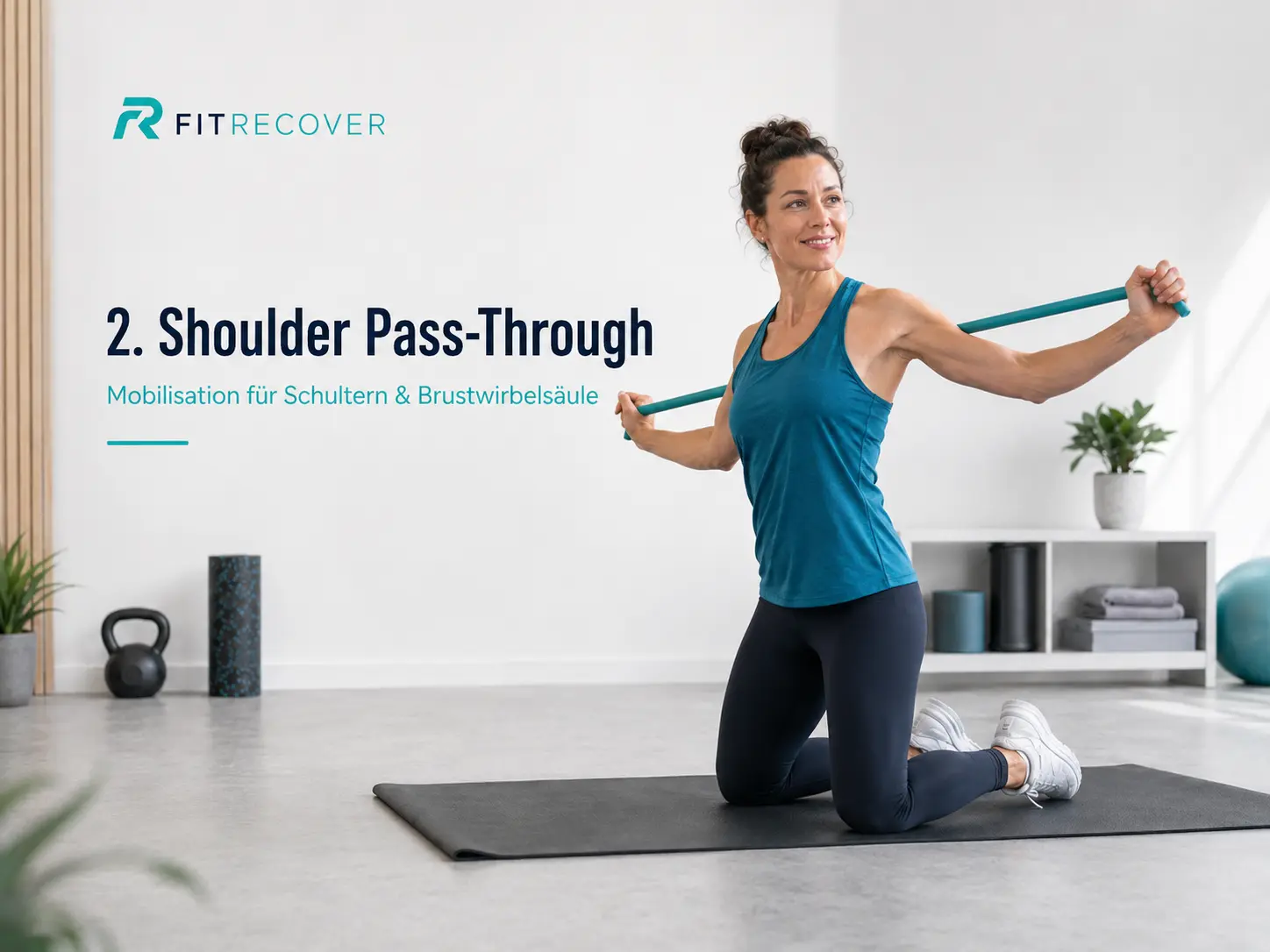
2. Shoulder pass-through: move your shoulders and ribcage
In a shoulder pass-through, you move a band or light stick over your head with straight arms. This is not a test of how narrow a grip you can use. What matters is that both shoulders move evenly and your ribs and lower back do not compensate.
How to perform it
- Grip the band considerably wider than shoulder width and keep your arms long but not rigid.
- Gently engage your abdomen and glutes. Slowly raise your hands and — only if there is no pinching — move them behind your body.
- Return along the same path. Keep the movement calm and symmetrical.
- If the movement becomes uneven, widen your grip or stop a little sooner.
- Do not use momentum or jerk your arms through the movement.
- Do not push your ribs forwards to compensate for limited shoulder movement.
- Stop if you feel sharp pain or instability.
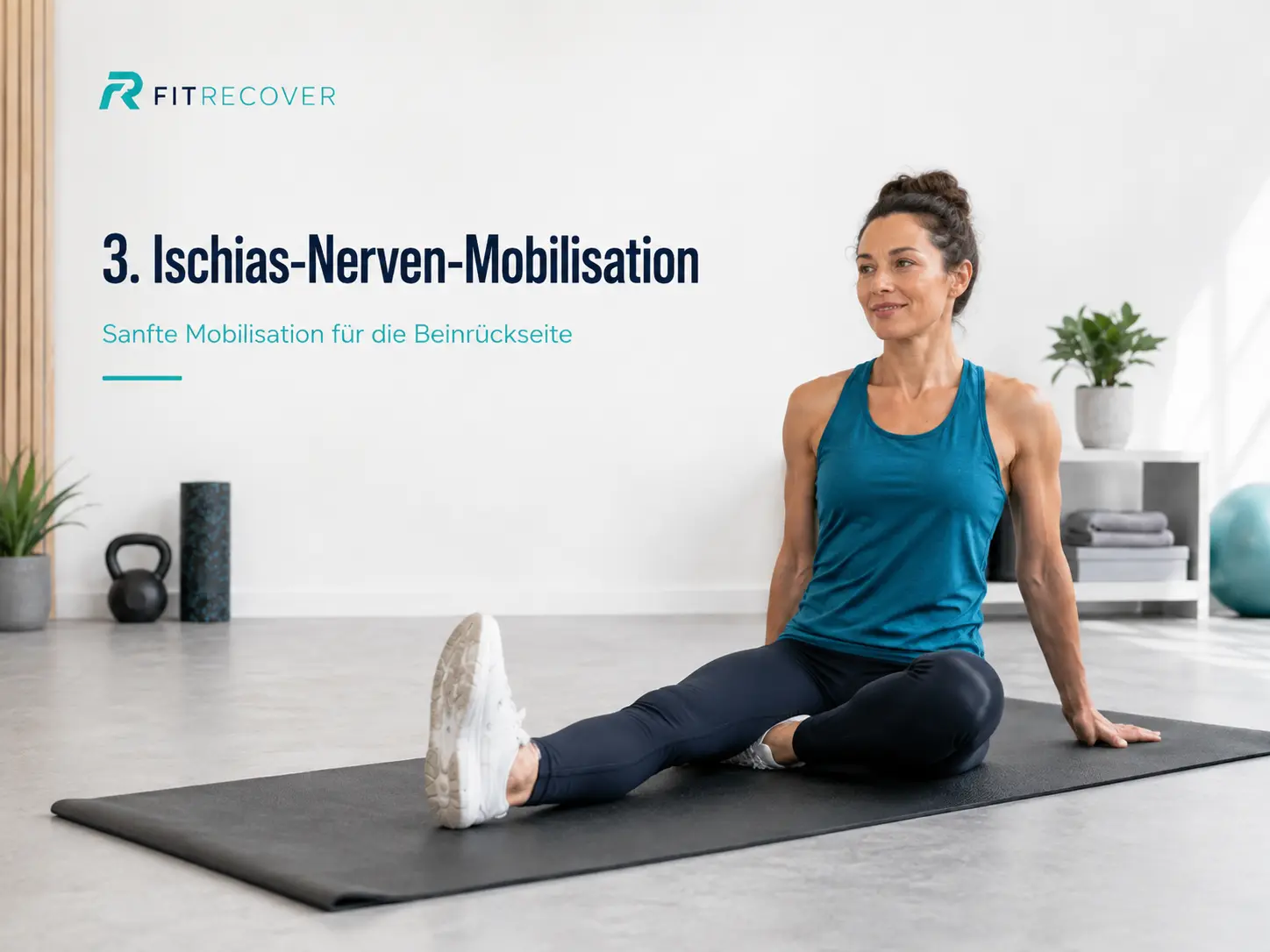
3. Sciatic nerve slider: glide rather than pull
A nerve slider combines knee, foot and head movements so that loading along the nervous system alternately increases and decreases. It is therefore clearly different from a static hamstring stretch. With acute radiating symptoms, a physiotherapist should select the exercise.
Gentle seated variation
- Sit upright on the front half of a stable chair or — as illustrated — well supported on a mat. Begin with your knee bent.
- Slowly straighten your knee, look slightly upwards and keep your foot relaxed or your toes pointing slightly forwards.
- Bend the knee again, bring your foot back and simultaneously lower your chin slightly towards your chest.
- Move continuously between the two positions. Do not hold or push further at the end point.
- Keep the movement small if you feel a strong pulling sensation.
- Do not additionally lean your torso forwards.
- Stop immediately if tingling, numbness or radiating pain increases.
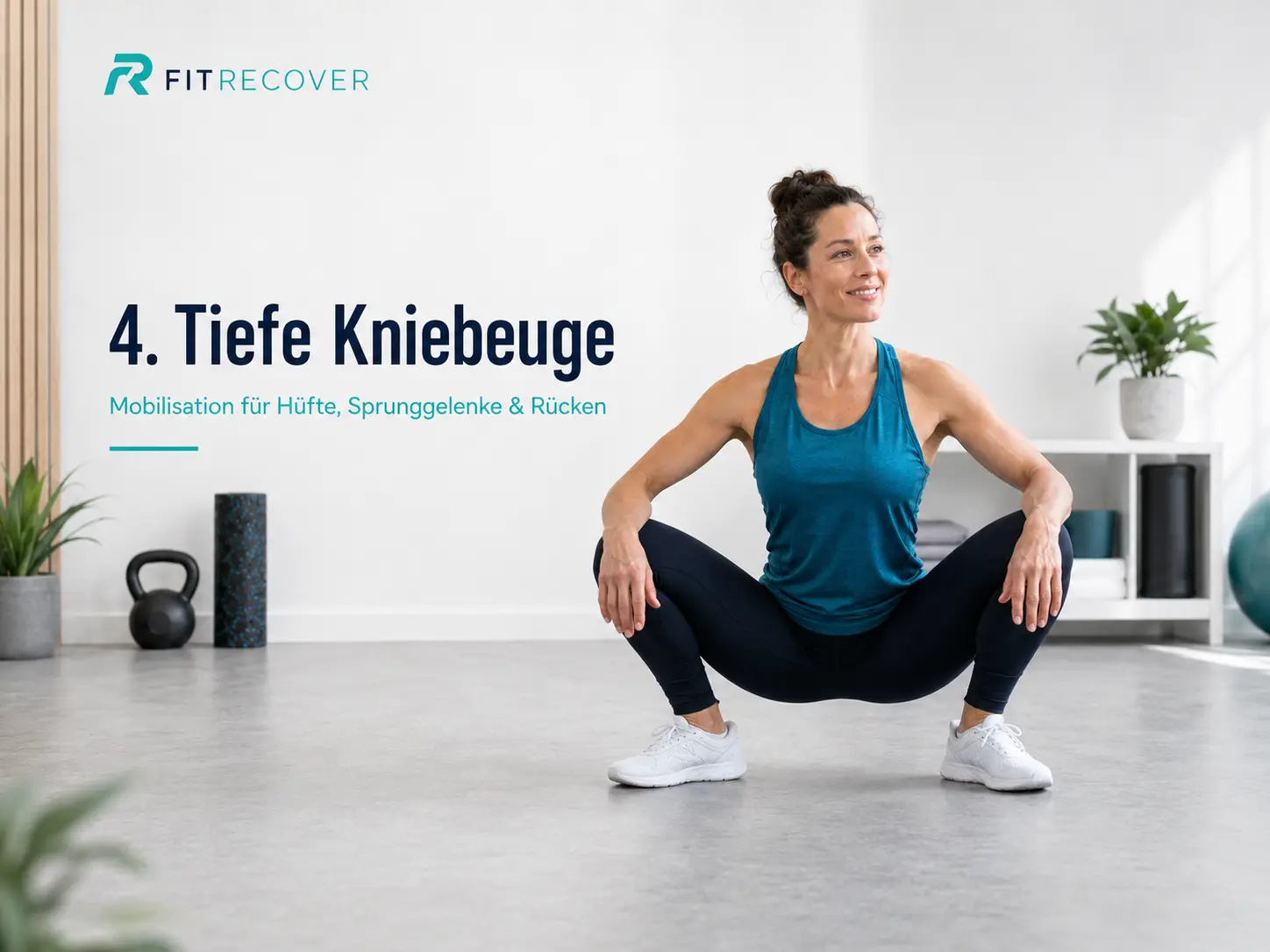
4. Deep squat: use your hips and ankles together
The deep squat combines mobility at the ankles, knees and hips with active trunk control. Not everyone reaches the same depth — anatomy, exercise experience and how you feel that day all matter. Hold a doorframe or stable support if you would otherwise tip backwards.
How to perform it
- Place your feet around shoulder-width apart or slightly wider. Your toes may point slightly outwards.
- Bend your knees and hips together. Your knees follow roughly the same direction as your toes.
- Lower yourself only as far as you can control your heels, knees and trunk. Hold on if needed.
- Gently shift your weight left and right two or three times, or stand up again with control.
- If your heels lift, initially squat less deeply or raise your heels slightly.
- Do not force your knees outwards with your elbows.
- Breathe calmly; do not “sit through” a painful position.
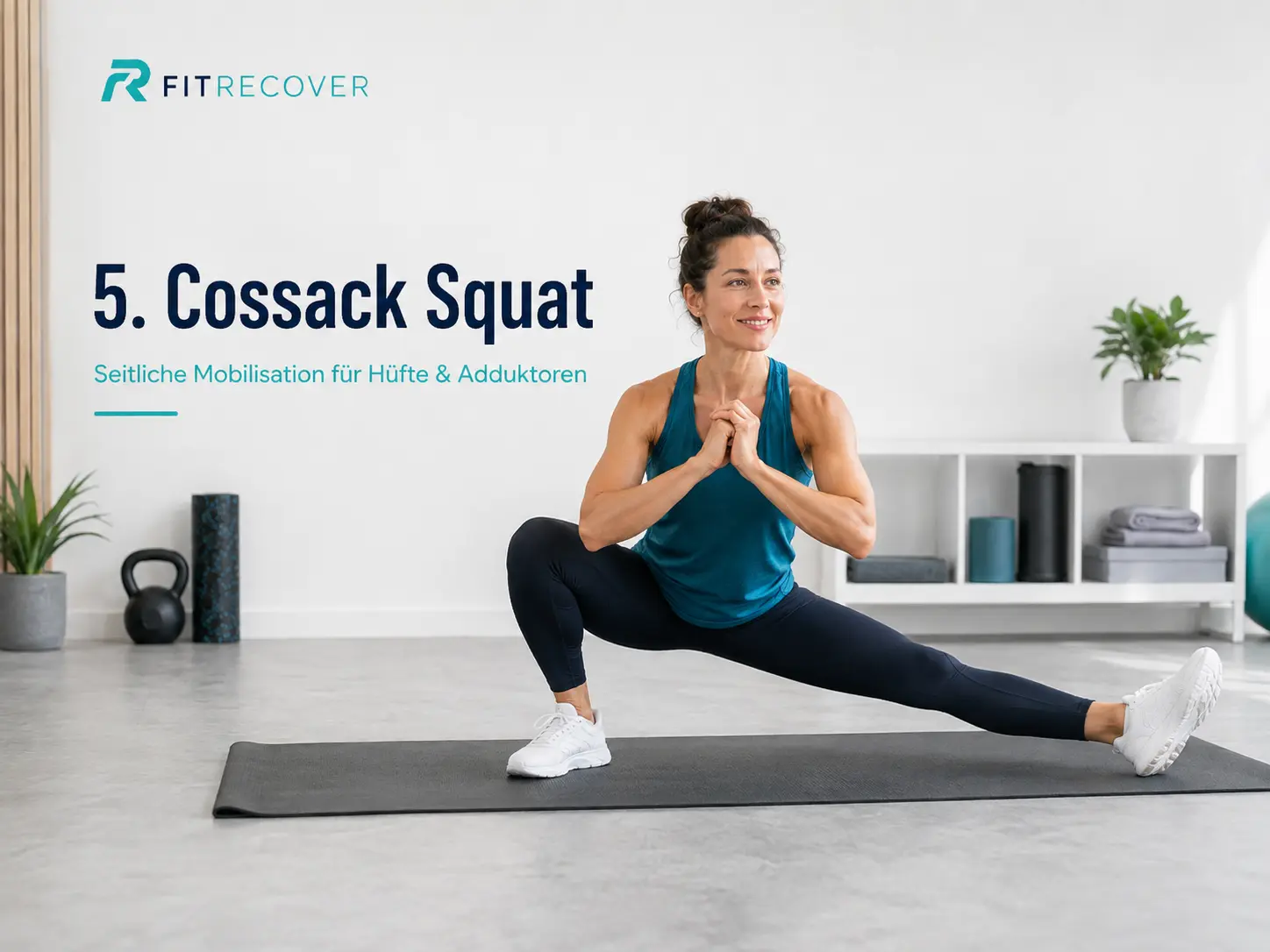
5. Cossack squat: controlled lateral hip mobility
The Cossack squat shifts your body weight from a wide stance onto one leg while the other stays straighter. This actively combines a squat, hip movement and adductor tension. Depth comes second: progress lower only when you can guide the bent knee steadily over the foot.
How to perform it
- Stand considerably wider than shoulder width. Hold your hands in front of your chest or grip a stable support.
- Push your hips backwards and shift your weight to one side. Bend the knee and hip on that side.
- Keep the other leg long. Depending on your mobility, its foot may remain flat or the toes may turn upwards while the heel stays on the floor.
- Push back to the centre with control and switch sides.
- Begin with a small weight shift — full depth is not compulsory.
- Guide the bent knee and toes in a similar direction.
- Do not bounce into the end range or “fall” sideways.
Your 8-minute routine
- 1:00 minute: walk gently or march on the spot.
- 1:00 minute: Couch stretch, about 25 seconds per side.
- 1:00 minute: 6–10 shoulder pass-throughs.
- 1:30 minutes: 6–10 nerve sliders per side, slowly and without holding.
- 1:00 minute: deep squat with gentle weight shifts.
- 2:00 minutes: 5–8 Cossack squats per side.
- 0:30 minutes: shake out, breathe calmly and check how you feel.
What can this kind of routine realistically achieve?
Regular flexibility training can improve your available range of motion. A large meta-analysis of static stretching found measurable flexibility gains both immediately and after longer-term training. However, this does not mean every exercise suits everyone equally well or that a short routine can “mobilise pain away”.
A realistic everyday goal is useful: movements should become more familiar, more controlled and gradually easier. Combine mobility work with regular strength and endurance training, adequate recovery and varied daily positions. These exercises are one component, not a repair programme for joints or nerves.
Which tools are useful for this routine?
All five exercises can be scaled using body weight and household objects. However, a non-slip mat, long band or stretching strap often makes the positions more comfortable. Foam rollers and massage balls are optional additions, not prerequisites for mobility.
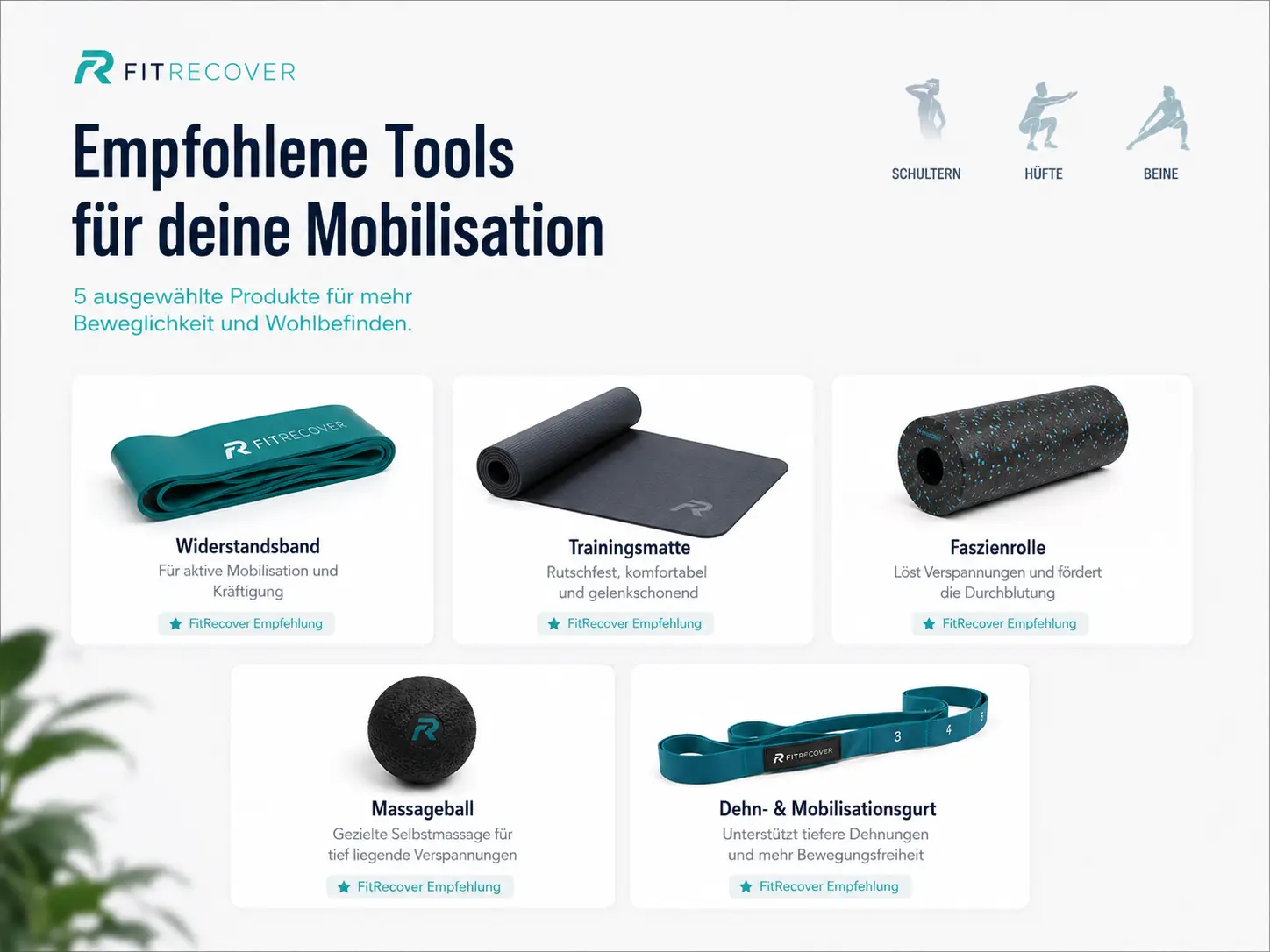
Long resistance band
Useful for shoulder pass-throughs. A light, long band allows a wide grip and provides some give when needed.
View resistance bands on AmazonAmazon Basics yoga mat, 10 mm
Cushioning for your knee during the couch stretch and for floor exercises. Before use, check that the mat sits securely on your floor.
View the yoga mat on AmazonBLACKROLL® STANDARD foam roller
Optional before or after the routine. Studies in healthy adults show possible improvements in range of motion, but a roller is not inherently more effective than stretching.
View BLACKROLL on AmazonCork massage set with massage ball
Roller and ball for a short muscle massage with pressure you control yourself. Do not apply directly to joints, the spine or irritated nerve structures.
View the cork massage set on AmazonStretching and mobility strap
Can help you reach your foot during the unsupported hip-flexor stretch without twisting your torso. The strap provides support — it should not pull you into an end position.
View stretching straps on AmazonAdvertising / affiliate links: As an Amazon Associate, I earn from qualifying purchases, at no extra cost to you. Before buying, check the model, dimensions, material, contents, seller and current availability on Amazon.
Frequently asked questions
How often should I do the mobility routine?
For many adults without symptoms, three to five gentle sessions per week are a practical starting point. Daily practice is not automatically better: if an area remains irritated afterwards, reduce the depth, repetitions or frequency.
Can I do these exercises before training?
Dynamic shoulder pass-throughs, controlled squats and shallow Cossack squats work well before training after a general warm-up. Longer static couch-stretch holds are better placed afterwards or in a separate mobility session.
Should mobility work hurt?
No. A mild stretching or tension sensation can be normal. Sharp pain, increasing tingling, numbness, loss of strength or instability are stop signals, not something to “train away”.
Will this routine help with back pain or sciatica?
This is general movement training, not treatment. A nerve slider in particular should be selected individually when symptoms radiate. Severe, new or persistent symptoms require medical or physiotherapy assessment.
Do I need exercise equipment?
No. A mat and a long band or strap can improve comfort and control. A roller and massage ball are optional and replace neither movement nor professional assessment.
Sources and further reading
- American Heart Association: Flexibility Exercise (Stretching)
- South Tees Hospitals NHS Foundation Trust: Hip stretch in half kneeling
- South Tees Hospitals NHS Foundation Trust: Sciatic nerve slider
- Milanese et al.: Optimising the Dose of Static Stretching to Improve Flexibility (systematic review and meta-analysis)
- Konrad et al.: Foam Rolling Training Effects on Range of Motion (systematic review and meta-analysis)
Sources checked: 2 September 2026. This article provides general information and does not replace individual medical advice.