
Adequate intake matters. A particularly high dose is not automatically a better choice. This guide combines vitamin C research with an editorial comparison of ten specifically identified Amazon.de products. It examines food, absorption, cold studies and exercise adaptation, distinguishing actual vitamin C from extract or compound weights.
In this article
Three options for different needs
Moderate capsule serving
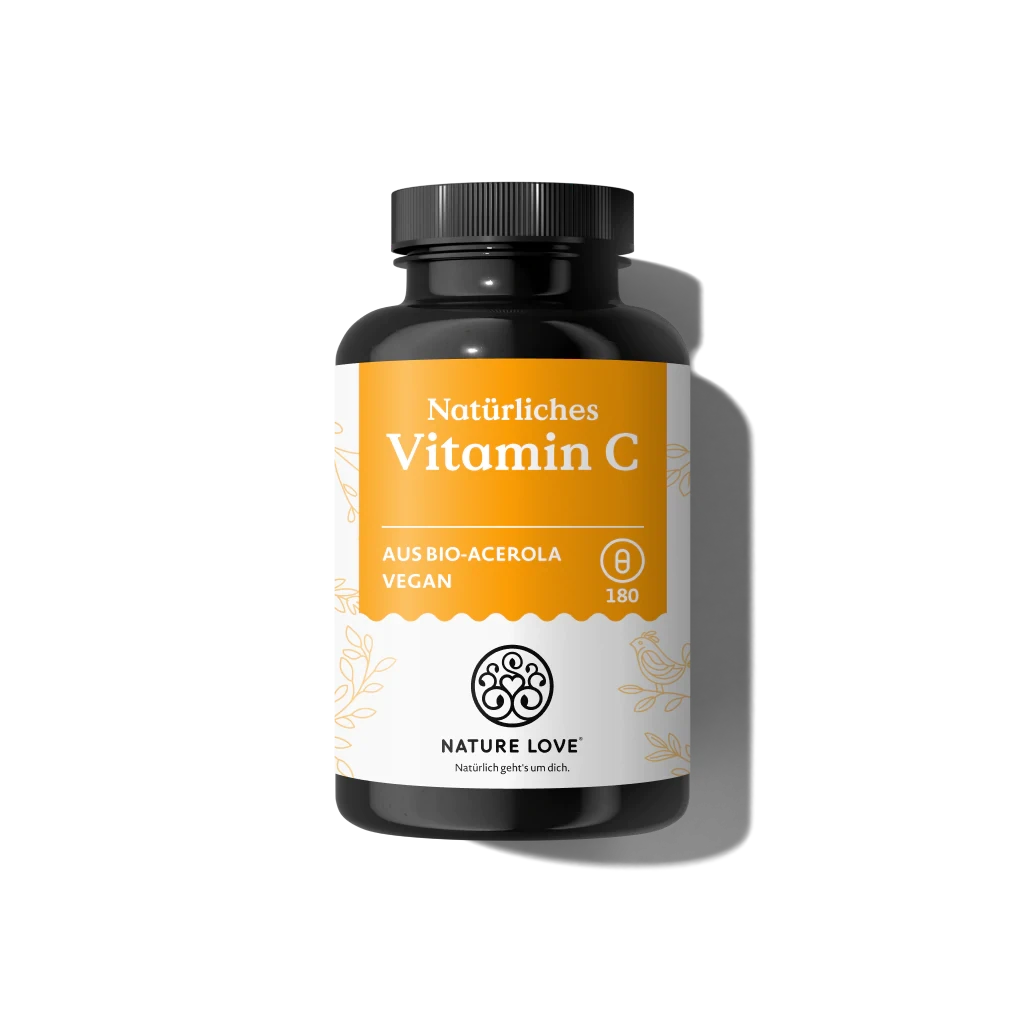
Rank 1
NATURE LOVE Bio Acerola
160 mg vitamin C from organic acerola per two capsules: our first capsule candidate when a supplement is actually needed.
Powder instead of capsules
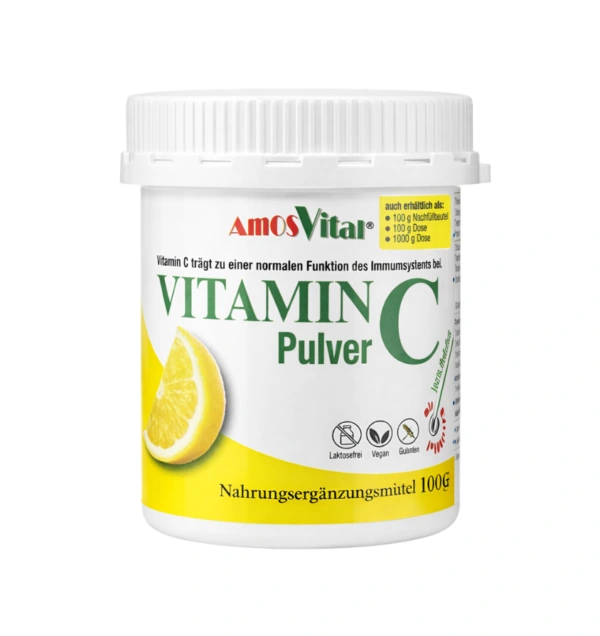
Rank 2
AMOSVITAL Vitamin C Pulver
Plain ascorbic acid: the directions specify one measuring spoon of approximately 120 mg daily; this comparison covers the 100 g tub.
Buffered alternative
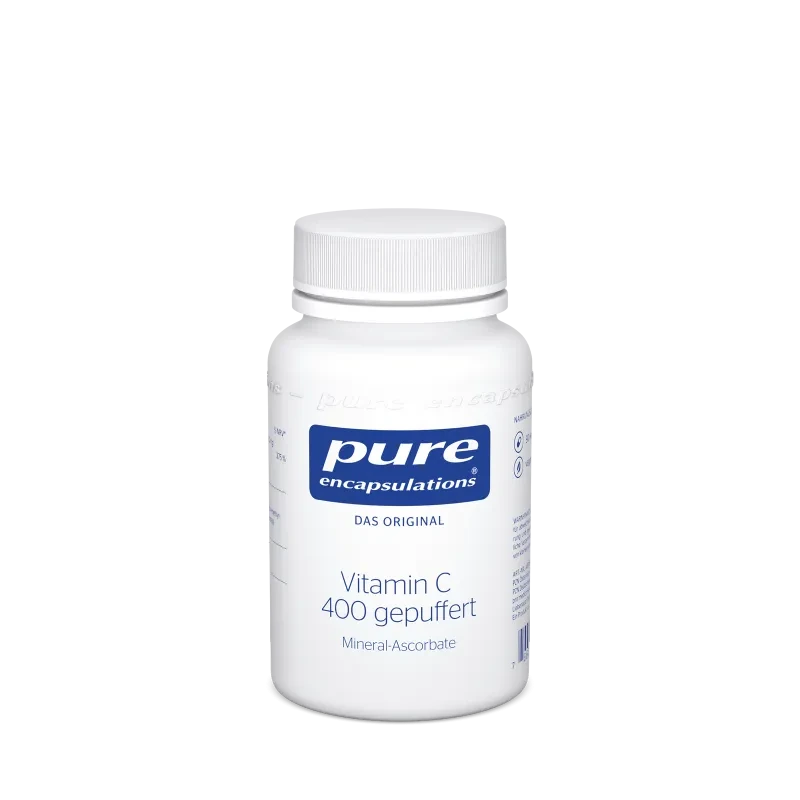
Rank 3
Pure Encapsulations Vitamin C 400 gepuffert
The name refers to 400 mg of buffered compound; the manufacturer declares 300 mg actual vitamin C per capsule.
Top 10 at a glance
Select a product name to jump directly to its detailed profile. The separate Amazon button opens the specific product. On a phone, scroll the table sideways.
How we built this ranking
This is an editorial source and label comparison, not our own laboratory, tolerance or efficacy test. The selection covers ten identified Amazon.de supplements, not the entire market. We prioritise a serving suited to small intake gaps, clear C declarations, a simple formula and practical use. Moderate forms therefore rank above gram doses and combinations. Positions 3–10 already exceed the BfR proposal of 250 mg per labelled daily serving and are not blanket everyday recommendations. The order does not rank measured healing effects; different needs can lead to a different choice.
Product pages and manufacturer information checked on 29 October 2026. Daily servings document the label and are not individual dosing advice. Prices and seller names are omitted; check the current offer, delivery and formulation before purchase.
1. What vitamin C does—and how much you need
Vitamin C is an essential, water-soluble vitamin. Its established roles include normal collagen formation, protection of cells from oxidative stress and normal immune function. These roles explain why adequate intake matters. They do not show that additional grams enhance immunity beyond normal function in people who already have enough. Feeling tired after a long working day is not proof of vitamin C deficiency. [10]
The values below refer to total daily intake from food and supplements. They are German DGE reference values for adults. We retain this reference in every language because the product comparison targets Amazon.de. Individual clinical circumstances may require a different assessment. [1]
| Group | Vitamin C per day |
|---|---|
| Adult women / men | 95 / 110 mg |
| Women / men who smoke | 135 / 155 mg |
| Pregnancy from the fourth month | 105 mg |
| Breastfeeding | 125 mg |
Three numbers with different meanings
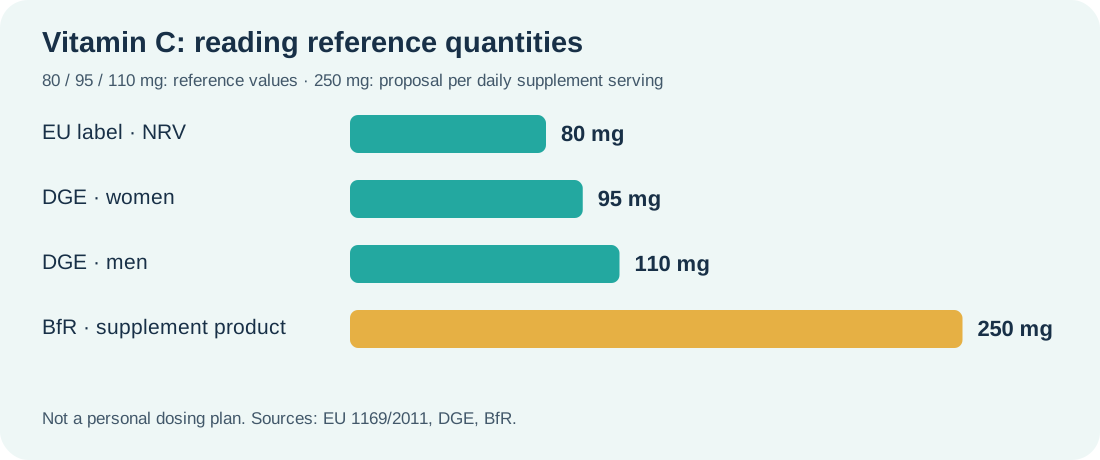
80 mg is the EU nutrient reference value used for label percentages. 95 or 110 mg is the DGE recommendation for total intake in healthy adult non-smokers. 250 mg is the BfR's proposed maximum per daily serving of one supplement. It is neither a legal ceiling nor an individual intake target. A label stating 1250% NRV for 1000 mg therefore does not mean 12.5 times the health benefit. [1][3][13]
High daily C-plus-zinc serving
natural elements Vitamin C + Zink
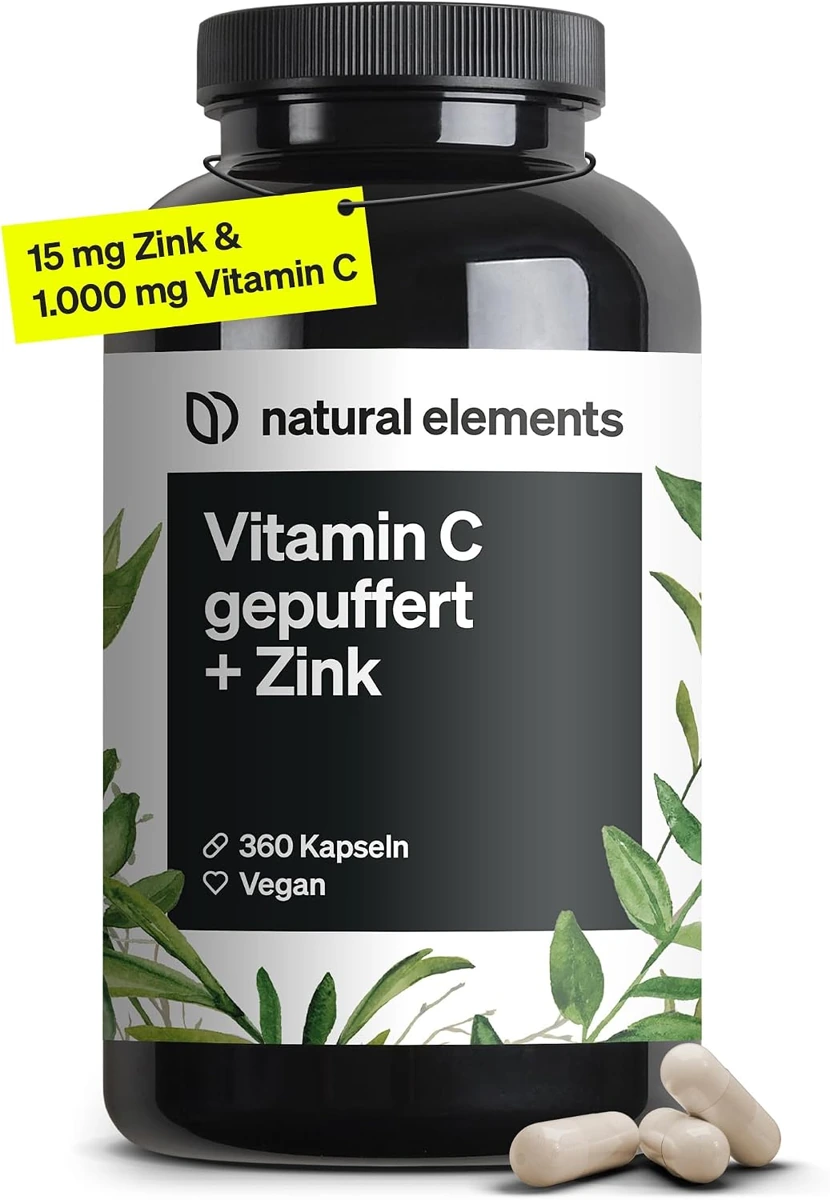
1000 mg vitamin C and 15 mg zinc per two capsules; 360 capsules equal 180 daily servings.
- Actual vitamin C per unit
- 500 mg
- Labelled daily serving
- 2 capsules · 1000 mg C
- Pack
- 360 capsules
- Form / other ingredients
- Buffered: adds 15 mg zinc per daily serving
Above the BfR proposal of 250 mg per daily serving
This is a different formula from the brand's plain 500 mg C capsule in fifth place. Together, the two daily capsules supply 15 mg zinc. Combining several such products can create unnecessarily high total intakes. Tenth place does not mean that poor quality was measured. It follows our priority for appropriate doses and simple supplementation: an isolated C gap does not automatically require 1000 mg C or additional zinc. A large bottle does not make the combination universally appropriate.
+ Pros
- Buffered C source and a clear two-capsule serving
- 360 capsules provide 180 labelled daily servings
− Cons & limitations
- 1000 mg C substantially exceeds the BfR proposal
- Manufacturer: do not take additional zinc-containing supplements
Best suited to
A specifically justified need for both nutrients in this exact combination.
Manufacturer / product sourceDepot combination with D3 and zinc
Doppelherz Vitamin C 1000 + D3 + Zink DEPOT
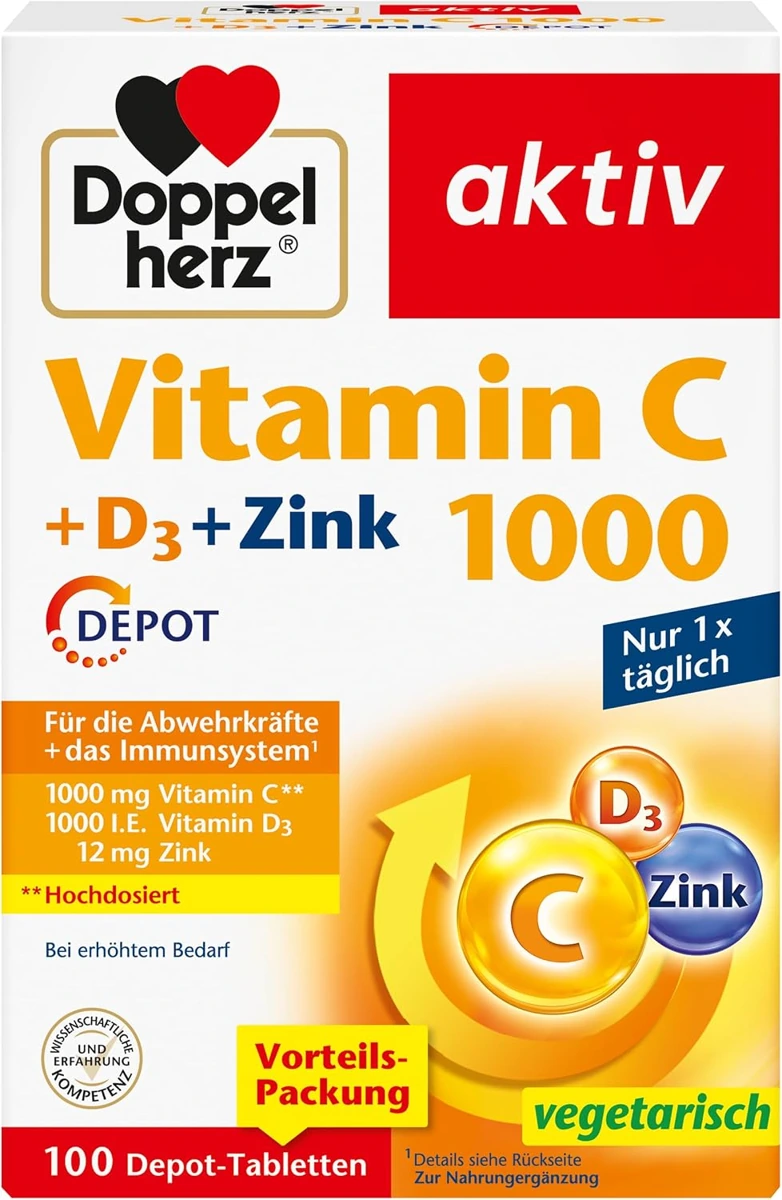
Each tablet provides 1000 mg C, 25 µg vitamin D3 and 12 mg zinc; this comparison covers the 100-tablet pack.
- Actual vitamin C per unit
- 1000 mg
- Labelled daily serving
- 1 tablet · 1000 mg C
- Pack
- 100 tablets
- Form / other ingredients
- Sustained release: adds 25 µg D3 + 12 mg zinc
Above the BfR proposal of 250 mg per daily serving
Doppelherz combines three nutrients in a sustained-release tablet. This is convenient only when all three are wanted in these amounts. People already taking vitamin D, zinc or a multivitamin need to add up the totals. Sustained release is a formulation feature, not proof of fewer colds. Ninth place reflects the high C amount and limited ability to adjust the three ingredients independently. The pack number 100 refers to tablets, not milligrams.
+ Pros
- C, D3 and zinc amounts clearly declared
- 100 tablets and a documented sustained-release form
− Cons & limitations
- 1000 mg C per tablet is well above the BfR proposal
- Adds 25 µg D3 and 12 mg zinc; easy to duplicate other supplements
Best suited to
Only a deliberately planned combination that takes other supplements into account.
Manufacturer / product source2. Absorption, saturation and the different forms
The body regulates vitamin C through absorption, tissue distribution and excretion. An early controlled dosing study in seven healthy men found a non-linear relationship between intake and blood concentration: multiplying the dose does not multiply blood levels by the same factor. This small physiological study supports the principle of diminishing additional returns; it is not a direct health-outcome trial of our ten products. [8]
The NIH overview reports approximately 70–90% absorption at moderate daily intakes of 30–180 mg; above 1 g daily, the absorbed proportion falls below 50%. These are estimates from particular investigations, not an exact calculation for every capsule. Some of a higher dose can still be absorbed. The relevant question is whether that produces an additional benefit for the person taking it. [4]
| Form | Practical difference | Limit of the claim |
|---|---|---|
| L-ascorbic acid | A simple acidic C source, often sold as powder | Acidity may be uncomfortable; it does not imply inferior efficacy |
| Mineral ascorbates | Buffered; may also contain calcium or sodium | Distinguish mineral amounts from actual vitamin C content |
| Acerola / fruit complex | Plant extracts with a declared amount of C | Extract weight is not C content; natural is not proof of superiority |
| Sustained release / Ester-C | A modified release pattern or specific formulation | No automatic advantage for infections or exercise |
| Liposomal | C combined with a lipid formulation | Results apply to the formulation studied, not every retail product |
What is plausible about liposomal C—and what remains open
A 2024 randomised crossover trial in 27 adults found approximately 21% higher total plasma exposure over 24 hours with one particular 500 mg liposomal formulation than with the comparison form. It measured absorption, not prevented colds. The formulation was LipoVantage, not the WeightWorld capsules listed here. Our editorial inference is that a measurable blood-level difference is interesting but cannot, by itself, establish a general health or purchasing advantage. [9]
Liposomal: assess the benefit
WeightWorld Liposomal Vitamin C
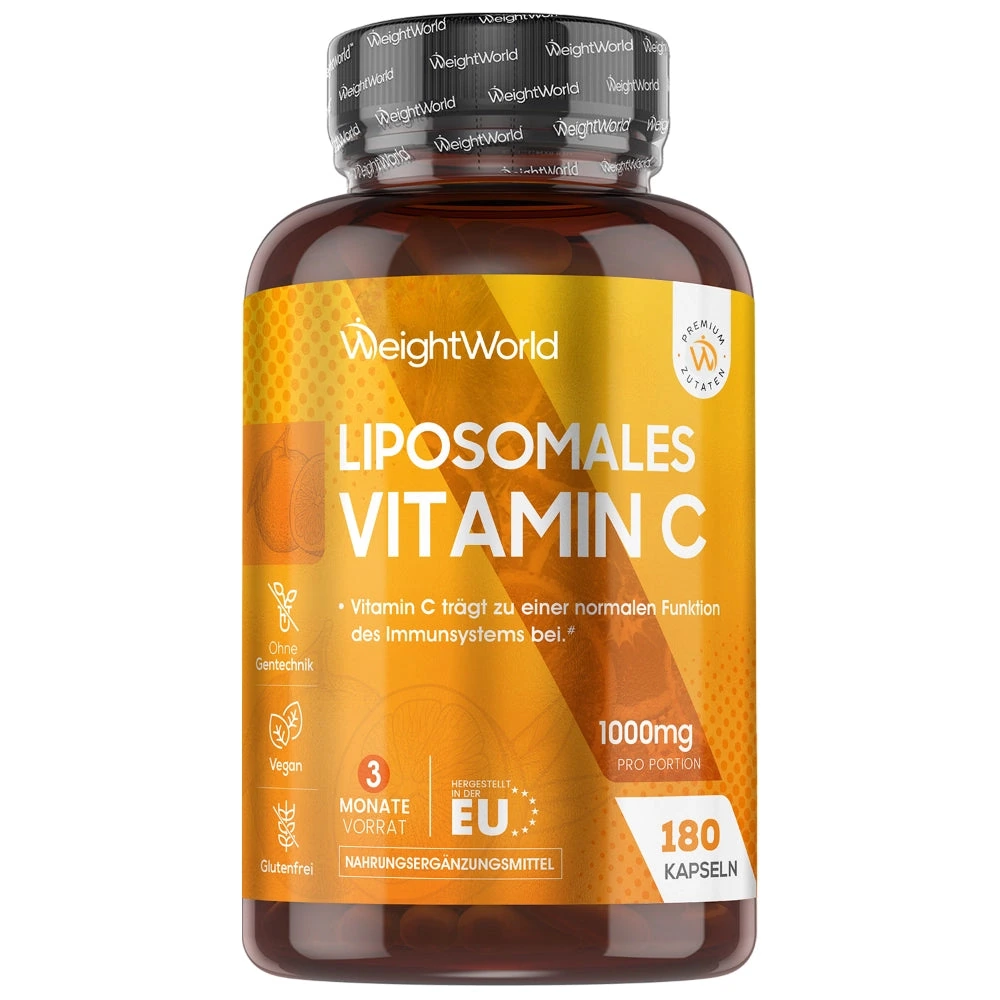
Two capsules provide 1000 mg vitamin C and 100.2 mg sunflower phospholipids; 180 capsules provide 90 servings.
- Actual vitamin C per unit
- 500 mg
- Labelled daily serving
- 2 capsules · 1000 mg C
- Pack
- 180 capsules
- Form / other ingredients
- L-ascorbic acid + sunflower phospholipids, rosehip
Above the BfR proposal of 250 mg per daily serving
Liposomal marketing makes this product relevant to a critical comparison. Small studies may show higher blood concentrations for particular liposomal formulations. This does not prove better infection prevention and cannot automatically be transferred to these WeightWorld capsules. The labelled daily serving is well above the BfR proposal. Eighth place recognises the clear serving declaration but reflects the high amount and lack of demonstrated clinical superiority for this exact formula. At two daily, 180 capsules last three months, not six.
+ Pros
- Vitamin C and phospholipid amounts listed separately
- Vegan capsules with a clear daily serving
− Cons & limitations
- 1000 mg per daily serving is not a default for a small gap
- The word liposomal does not establish a clinical advantage for this product
Best suited to
A comparison option for a specifically requested liposomal formula, not our everyday winner.
Manufacturer / product sourceEster-C with plant additions
SOLGAR Ester-C Plus 500
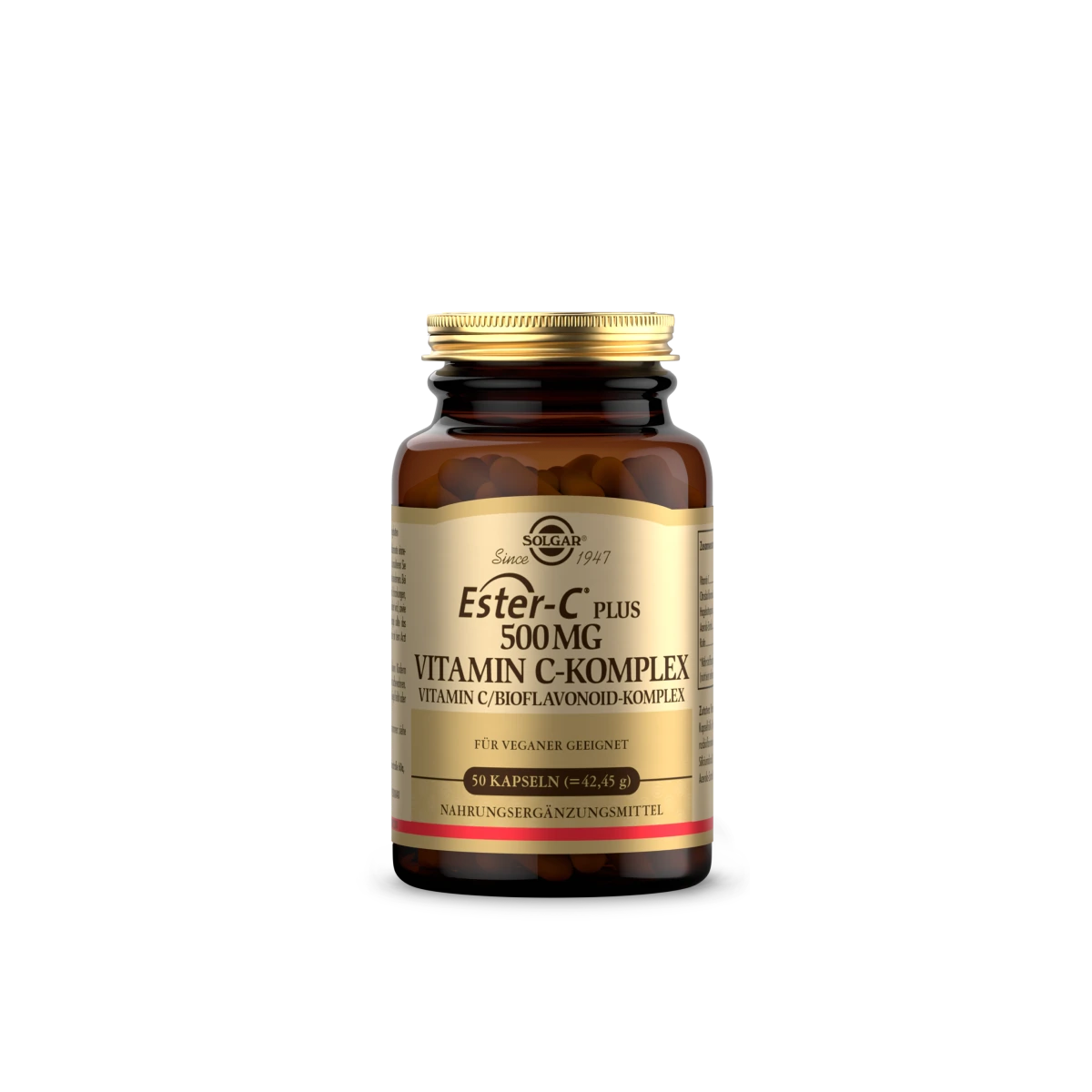
500 mg vitamin C per capsule with bioflavonoids, acerola, rosehip and rutin; 50 capsules.
- Actual vitamin C per unit
- 500 mg
- Labelled daily serving
- 1–2 capsules · 500–1000 mg C
- Pack
- 50 capsules
- Form / other ingredients
- Ester-C + bioflavonoids, acerola, rosehip, rutin
Above the BfR proposal of 250 mg per daily serving
SOLGAR uses calcium L-ascorbate as Ester-C. Its directions allow one to a maximum of two capsules daily: 500–1000 mg C, not always 500 mg a day. The 50-capsule pack therefore lasts 25–50 days. Seventh place acknowledges the clear declaration while taking account of a high serving and a more complex formula. Studies of particular blood or cell concentrations do not establish better infection outcomes or recovery for this retail product.
+ Pros
- Clearly stated 500 mg C per capsule
- Buffered form; small 50-capsule pack
− Cons & limitations
- Even one capsule exceeds the BfR proposal
- Ester-C and plant additions do not prove clinical superiority
Best suited to
A deliberate choice of this specific formula after checking dose and ingredients.
Manufacturer / product source3. Colds, exercise and recovery: what the studies support
Regular use differs from starting treatment at the first sore throat
The 2013 Cochrane review found no meaningful reduction in cold incidence in the general population from regular supplementation. Adult cold duration was about 8% shorter on average. For a hypothetical seven-day cold, that calculates to roughly half a day; it is an illustration, not an individual prediction. Starting only after symptoms appeared did not show consistent benefit. [5]
A 2023 meta-analysis focused more closely on severity. Ten trials with 15 comparisons, using at least 1 g daily, found an average reduction in severity of approximately 15%. Many underlying trials were old. The analysis establishes neither an ideal self-treatment dose nor the effectiveness of a modern branded product. It supports a nuanced discussion, not a recommendation to treat every infection with gram doses. [6]
Extreme exertion is not the same as every workout
Small trial groups exposed to brief extreme physical exertion—including marathon running, skiing and military exercises in cold conditions—had a lower cold risk with regular supplementation. That cannot establish the same effect for an ordinary gym session or every outdoor working day. Sleep, sufficient energy intake and a balanced diet remain central to recovery. [5]
The EU permits a specific claim concerning normal immune function during and after intense physical exercise with an additional 200 mg C daily on top of the recommended intake. That condition is not a universal requirement for sport and does not show that 1000 mg works better. [10]
In an 11-week randomised trial of 54 young adults, the combination of 1000 mg C and 235 mg E adversely affected some cellular endurance adaptations; performance improvements did not clearly differ. This was a combination trial, not vitamin C alone. We therefore do not claim that a C capsule prevents muscle growth. There is nevertheless little basis for routinely planning high-dose antioxidants as training boosters when intake is already adequate. [7]
Large buffered supply
ProFuel Vitamin C gepuffert
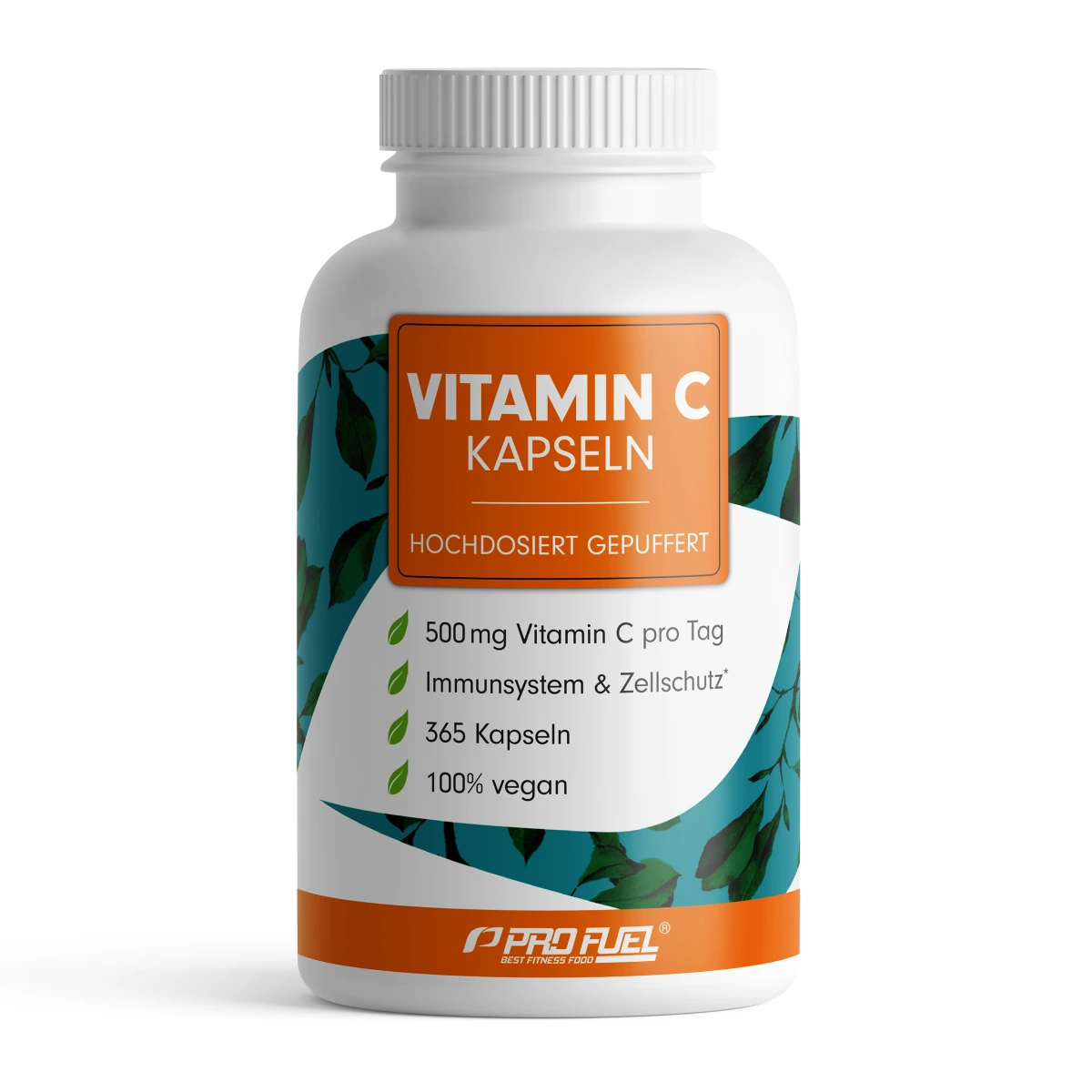
365 vegan capsules providing 500 mg vitamin C each from calcium ascorbate, without an added zinc combination.
- Actual vitamin C per unit
- 500 mg
- Labelled daily serving
- 1 capsule · 500 mg C
- Pack
- 365 capsules
- Form / other ingredients
- Buffered mineral ascorbates
Above the BfR proposal of 250 mg per daily serving
At one capsule daily, ProFuel supplies 365 servings. This is practical when the formula is already tolerated and an appropriate dose has been established. It is less attractive for a first trial or occasional supplementation. There is no demonstrated efficacy advantage over fifth place; pack size and excipient formula are the main differences. Laboratory and manufacturing information can inform quality assessment, but does not establish a clinical benefit for an individual buyer.
+ Pros
- Calcium ascorbate and a vegan capsule shell
- 365 individual capsules; no added zinc or D3
− Cons & limitations
- 500 mg daily exceeds the BfR proposal
- Large pack commits the buyer to a fixed dose for a long time
Best suited to
An already established, justified use of a buffered 500 mg formula.
Manufacturer / product sourceSimple 500 mg capsule
natural elements Vitamin C 500
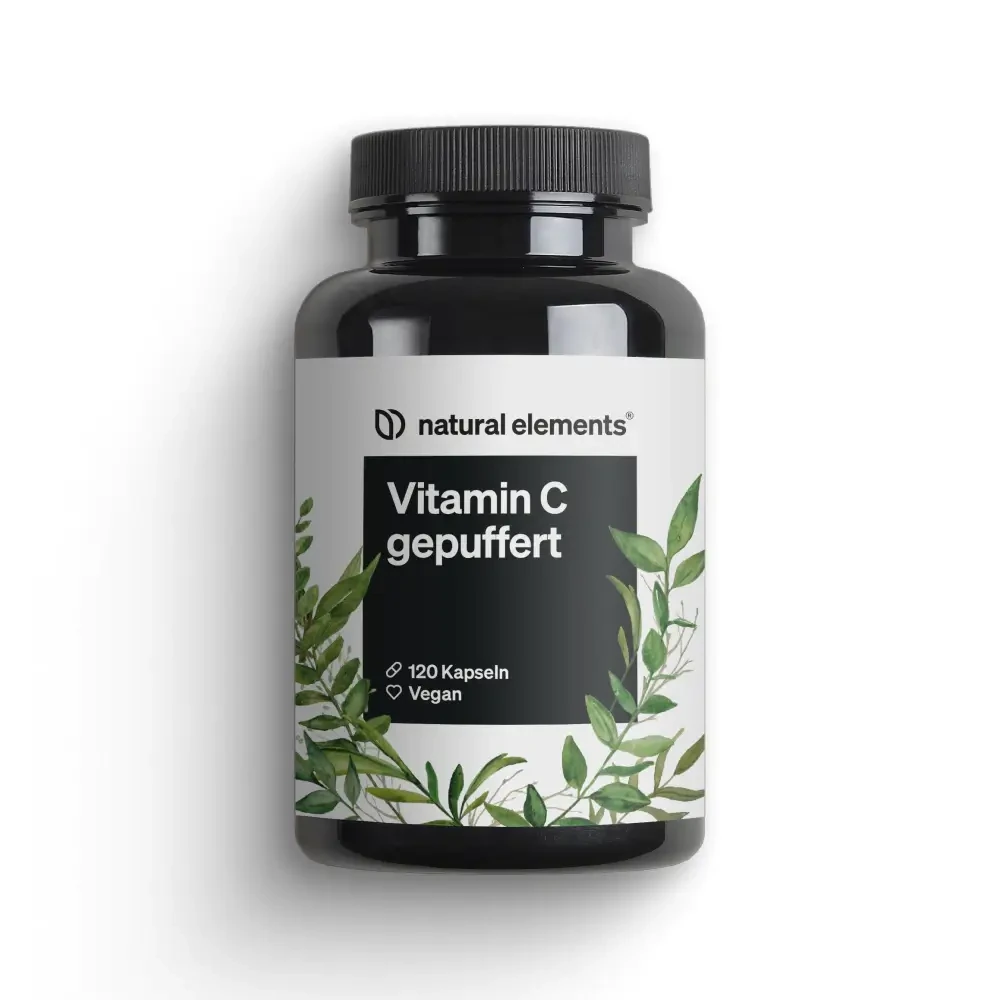
500 mg buffered vitamin C per capsule without added zinc; the linked pack contains 120 capsules.
- Actual vitamin C per unit
- 500 mg
- Labelled daily serving
- 1 capsule · 500 mg C
- Pack
- 120 capsules
- Form / other ingredients
- Buffered mineral ascorbates
Above the BfR proposal of 250 mg per daily serving
This natural elements version differs from the C-plus-zinc formula in tenth place. One capsule is the manufacturer's daily serving, so 120 capsules provide 120 servings. A relatively simple formula is useful, but the dose is still high for a small dietary gap. Fermentation and a pH-neutral description do not demonstrate better cold prevention or establish a need for 500 mg. Fifth place is therefore a conditional formulation choice, not an invitation to take it routinely regardless of diet.
+ Pros
- Buffered source without an additional zinc dose
- One labelled daily capsule; manageable 120-capsule pack
− Cons & limitations
- 500 mg is twice the BfR's supplement proposal
- Fixed capsule serving is inflexible for a small intake gap
Best suited to
An intentionally selected 500 mg formula when that amount has been professionally justified.
Manufacturer / product source4. Food, possible intake gaps and the limits of symptoms
For many people, a varied diet is the most practical vitamin C strategy. Peppers, kiwi, citrus fruit, berries and brassica vegetables provide more than vitamin C alone. One DGE example combines half a red pepper with a small glass of orange juice to provide more than 155 mg. This is an illustration using ordinary portions; variety, storage and preparation affect the actual amount. [2]
Brief washing and gentle cooking help limit losses. Potatoes can also contribute because of the amounts commonly eaten. An exotic fruit extract is therefore not necessarily the more useful purchase: what matters is the food eaten regularly. Vitamin C can enhance absorption of plant non-haem iron. A vitamin-rich accompaniment to pulses is a practical food-based approach; medically treated anaemia needs its own treatment plan. [2][10]
When closer assessment makes sense
A highly restricted diet, major limitations in food choice or certain malabsorption disorders can make adequate intake harder. Severe deficiency may cause gum problems, poor wound healing and bleeding signs. These symptoms also have other causes, so persistent fatigue or bleeding gums should not be managed solely with an online supplement. Medical assessment can consider diet, illness and laboratory findings where appropriate. [4]
An abnormal blood result is not a reason to select the highest dose based on a product name. Baseline intake and the clinical context determine whether supplementation is needed at all. Our ranking concerns adult food supplements and does not replace treatment of a diagnosed deficiency.
Buffered C plus fruit ingredients
NATURTREU Vitamin C Komplex
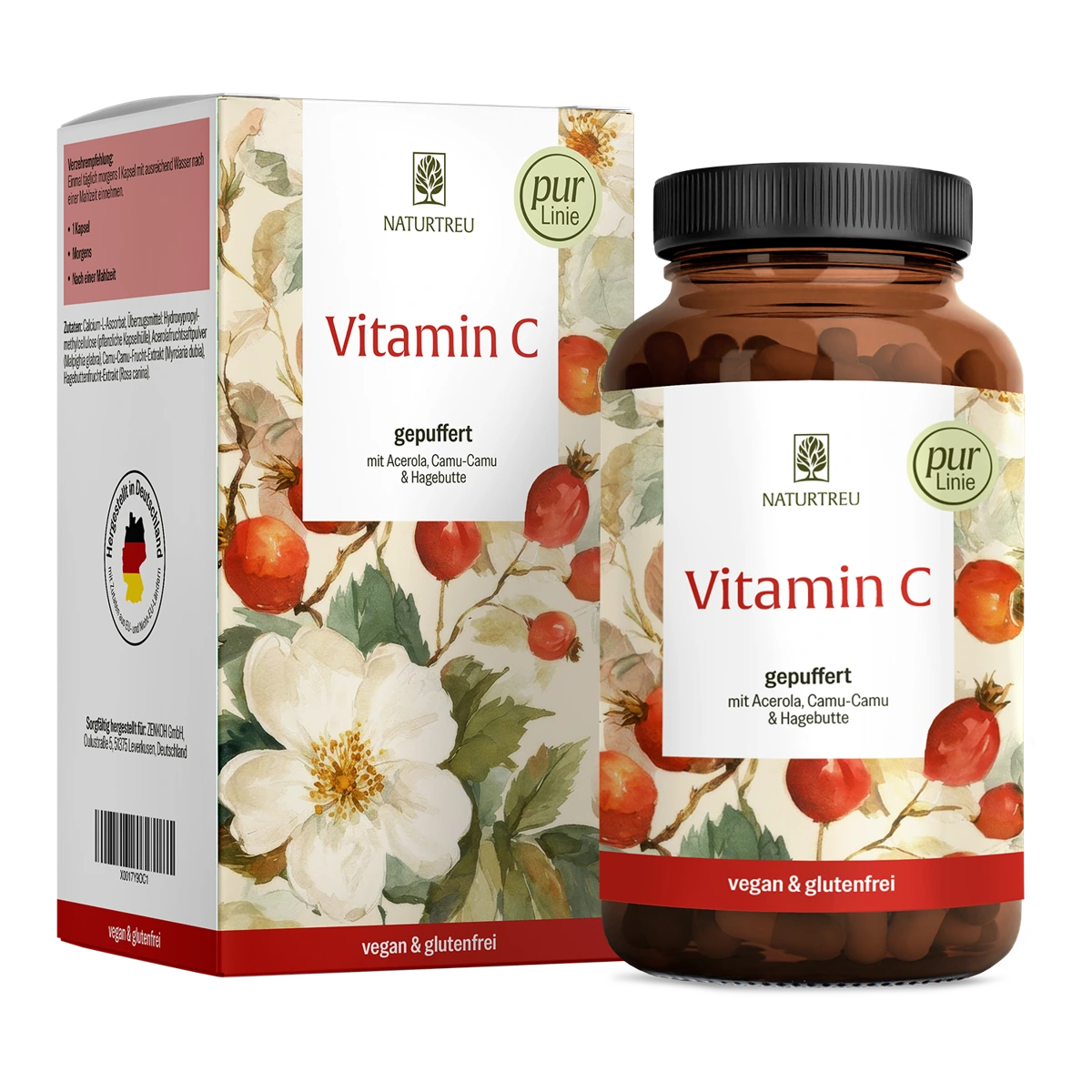
304 mg vitamin C per capsule in a formula containing calcium ascorbate, acerola, camu camu and rosehip.
- Actual vitamin C per unit
- 304 mg
- Labelled daily serving
- 1 capsule · 304 mg C
- Pack
- 180 capsules
- Form / other ingredients
- Calcium ascorbate + acerola, camu camu, rosehip
Above the BfR proposal of 250 mg per daily serving
NATURTREU combines buffered C with three fruit ingredients. Its current ingredient declaration explicitly includes calcium L-ascorbate, so this is not a product made exclusively from fruit-derived vitamin C. At one capsule daily, 180 capsules provide 180 servings. Fourth place recognises the convenient single capsule and its relatively restrained amount within the high-dose market. A health benefit from this fruit combination beyond the same amount of C alone has not been established for the finished formula.
+ Pros
- One capsule per daily serving; no added zinc
- 304 mg actual vitamin C clearly declared
− Cons & limitations
- 304 mg exceeds the BfR's 250 mg proposal
- Multiple fruit ingredients without demonstrated additional clinical benefit
Best suited to
People deliberately choosing a buffered formula with fruit ingredients.
Manufacturer / product sourceBuffered, with 300 mg actual C
Pure Encapsulations Vitamin C 400 gepuffert
The name refers to 400 mg of buffered compound; the manufacturer declares 300 mg actual vitamin C per capsule.
- Actual vitamin C per unit
- 300 mg (400 mg compound)
- Labelled daily serving
- 1 capsule · 300 mg C
- Pack
- 180 capsules
- Form / other ingredients
- Buffered mineral ascorbates
Above the BfR proposal of 250 mg per daily serving
This distinction is the key to understanding the product. Calcium, sodium and potassium ascorbates together provide 300 mg vitamin C, not 400 mg. One capsule daily makes the 180-capsule pack 180 servings. A buffered formulation may interest people who find acidic supplements uncomfortable, but individual tolerance is not guaranteed. Third place reflects the relatively simple formula and lower C content than the 500 mg products. Even 300 mg exceeds the BfR proposal for a supplement's daily serving.
+ Pros
- 300 mg actual vitamin C distinguished from 400 mg compound
- Buffered mineral ascorbates without added zinc or vitamin D
− Cons & limitations
- More than 250 mg per labelled daily serving
- The number 400 in the name can cause confusion about C content
Best suited to
A deliberate buffered-form choice after assessing the actual need for supplementation.
Manufacturer / product source5. Choosing safely: dose, combinations and the label
Water-soluble does not mean unlimited tolerance. High intakes can cause diarrhoea, nausea and abdominal discomfort. Kidney disease, a tendency to oxalate stones or iron overload require medical guidance before supplementing. During cancer treatment, discuss use with the treatment team. The US adult upper limit of 2000 mg is a different safety concept from Germany's 250 mg product proposal and is not a recommended intake. [4]
The BfR's 250 mg proposal accounts for other sources and fortified foods. EFSA's inability to establish a general upper limit from insufficient data does not certify unlimited safety. A 1000 mg capsule is often poorly matched to a small dietary gap, even if it can be bought without a prescription. [3]
A useful order for the purchasing decision
- Review the usual diet and any multivitamin already used.
- Clarify a real intake gap or special need; adequate intake may mean no purchase is needed.
- Distinguish vitamin C per capsule or measure from the manufacturer's full daily serving.
- Add zinc, D3 and other nutrients from all products. A combination is not automatically a quality advantage.
- Choose a suitable pack size, tolerable form, complete label and identifiable supplier.
Manufacturer directions are documented in the comparison, but they are not individual dosing instructions from FitRecover. Do not exceed the stated serving. Do not arbitrarily split capsules; modify sustained-release tablets only if explicitly permitted on the label. Measure powder carefully. Store products cool, dry, securely closed and out of reach of young children.
A laboratory-tested claim is meaningful only when the batch, test date and measured parameters are clear. A purity report does not establish disease treatment or a benefit for well-nourished people. Before ordering, confirm the exact formulation, pack size, current supplier and delivery to Germany on Amazon. The buttons target specific product identifiers; marketplace offers can change.
Powder with a small serving
AMOSVITAL Vitamin C Pulver
Plain ascorbic acid: the directions specify one measuring spoon of approximately 120 mg daily; this comparison covers the 100 g tub.
- Actual vitamin C per unit
- 120 mg
- Labelled daily serving
- 1 measuring spoon ≈ 120 mg powder · 120 mg C
- Pack
- 100 g
- Form / other ingredients
- Plain L-ascorbic acid
A small serving and a single active ingredient put AMOSVITAL in second place. There is no capsule shell or additional mineral to count. Accurate measurement matters: 120 mg is 0.12 g, not an ordinary teaspoon. Use the intended measuring spoon; a kitchen scale with coarse resolution is unsuitable. The illustration and Amazon link refer to the 100 g version compared here. A large tub is not a reason to increase intake.
+ Pros
- Approximately 120 mg in the intended serving
- Plain ascorbic acid without a capsule shell; mixes into a drink
− Cons & limitations
- Very small serving requires careful measurement
- Acidic taste; avoid sipping an acidic drink over many hours
Best suited to
Adults who prefer powder and can reliably use the appropriate measuring spoon.
Manufacturer / product sourceModerate capsule option
NATURE LOVE Bio Acerola
160 mg vitamin C from organic acerola per two capsules: our first capsule candidate when a supplement is actually needed.
- Actual vitamin C per unit
- 80 mg
- Labelled daily serving
- 2 capsules · 160 mg C
- Pack
- 180 capsules
- Form / other ingredients
- Organic acerola extract
This formula takes first place primarily because of its moderate daily serving and short ingredient list: organic acerola extract and a plant-based capsule shell. At two capsules daily, the 180-capsule bottle provides 90 servings. Organic certification concerns agricultural production; it does not make the vitamin C molecule clinically superior. Adequate dietary intake can still make this supplement unnecessary. The powder in second place is a practical alternative for people who dislike swallowing capsules.
+ Pros
- 160 mg per labelled daily serving, below the BfR's 250 mg proposal
- Organic acerola and vegan shell; no added zinc combination
− Cons & limitations
- Two capsules per daily serving
- No established clinical advantage over plain ascorbic acid
Best suited to
Adults with a justified intake gap who prefer a moderately dosed acerola capsule.
Manufacturer / product sourceFrequently asked questions about vitamin C
Do I need a vitamin C capsule every day?
Not automatically. Review your diet and existing supplements first. DGE intake targets include all sources; they do not mean an extra capsule is required.
Is 1000 mg more useful than 160 mg in winter?
The season alone does not justify a gram dose. Regular supplementation does not reliably prevent colds in the general population. An actual intake gap should guide supplementation.
Is natural vitamin C better than synthetic C?
Biologically active L-ascorbic acid is the same substance. A fruit extract can match a dietary preference, but does not establish greater clinical efficacy.
Why does the Pure product say 400 while the table says 300 mg?
The 400 mg refers to buffered compound. The manufacturer states that it contains 300 mg vitamin C. We compare the actual nutrient amount.
Does liposomal C prevent colds better?
A higher blood concentration with a studied formulation does not prove better infection prevention. Such an advantage has not been established for the WeightWorld formula listed here.
Must vitamin C be taken on an empty stomach?
Fasting is not a requirement in this comparison. Follow the label; several listed products recommend taking them with a meal. If discomfort occurs, reassess the form and the need for supplementation.
Are these products also suitable for children?
This ranking is for adults. Do not transfer adult servings to children. Pregnancy and breastfeeding also require an individual review of the product and total intake.
Why do all four languages link to Amazon.de?
The selection covers the German marketplace. The articles are fully translated, while purchase destinations remain on Amazon.de. Check delivery country, label and product variant before ordering.
Which choice makes sense for you?
Start with your diet and an actual intake gap. Where supplementation makes sense, the moderate acerola serving in first place or the small powder measure in second place are our initial options. A buffered form may be a deliberate alternative without automatically requiring 1000 mg. If you already have enough, you do not need to buy anything from this top 10. The ranking supports a focused choice; it does not establish a health need for ten products.
Sources and product information
The linked scientific and official sources support the health analysis; each product profile also links to its specific formula. The ranking is FitRecover’s editorial judgement. Product images: the respective brands via the indicated product sources; graphics: FitRecover.
- DGE · Vitamin C: reference values
- DGE · FAQ Vitamin C
- BfR · Vitamin C: proposed maximum amounts, 2021
- NIH ODS · Vitamin C, Health Professional Fact Sheet, 2025
- Hemilä & Chalker · Cochrane review, 2013 · CD000980
- Hemilä & Chalker · Cold severity meta-analysis, 2023
- Paulsen et al. · Vitamin C + E and endurance adaptation, 2014
- Levine et al. · Vitamin C pharmacokinetics, 1996
- Purpura et al. · Liposomal C crossover trial, 2024
- EU · Regulation 432/2012: permitted health claims
- EFSA · Dietary reference values for vitamin C, 2013
- BfR · Vitamin C FAQ, 16.03.2026
- EU · Regulation 1169/2011, Annex XIII: 80 mg NRV
- NATURE LOVE Bio Acerola
- AMOSVITAL Vitamin C Pulver
- Pure Encapsulations Vitamin C 400 gepuffert
- NATURTREU Vitamin C Komplex
- natural elements Vitamin C 500
- ProFuel Vitamin C gepuffert
- SOLGAR Ester-C Plus 500
- WeightWorld Liposomal Vitamin C
- Doppelherz Vitamin C 1000 + D3 + Zink DEPOT
- natural elements Vitamin C + Zink