
Winter sports · Equipment & safety
Adult Ski Helmets: Protection, Fit and 10 Models
The best starting point is a helmet suitable for skiing and snowboarding that fits securely without pressure points and works with your goggles. This guide explains the technology and compares ten different model concepts. Trying a helmet on yourself remains more important than its position in a list.
For adult recreational skiers and snowboarders. Fit and labelling appropriate to your intended use come before a model's position in the list.
Three starting points for trying helmets on
* Amazon affiliate links: As an Amazon Associate, FitRecover earns from qualifying purchases. This does not incur any additional cost to you.
uvex wanted
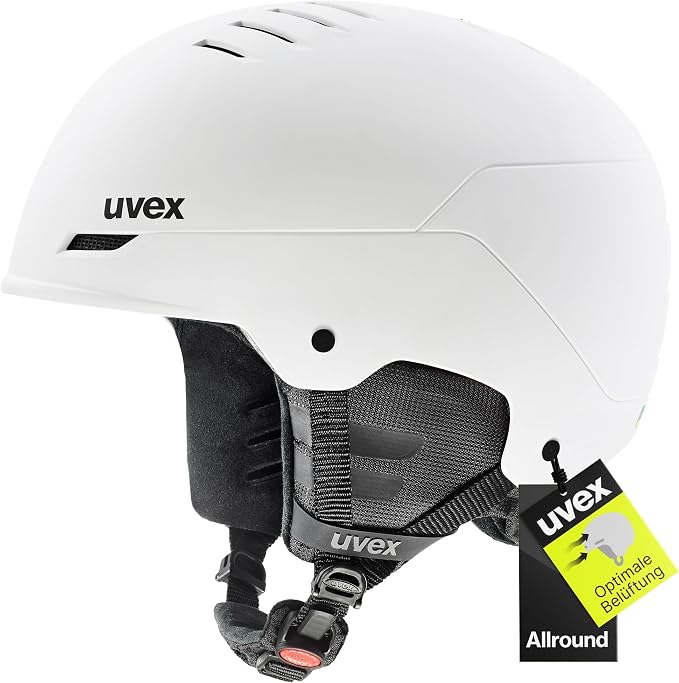
For straightforward days on the slopes: ABS hardshell, IAS adjustment and adjustable ventilation.
Manufacturer information ↗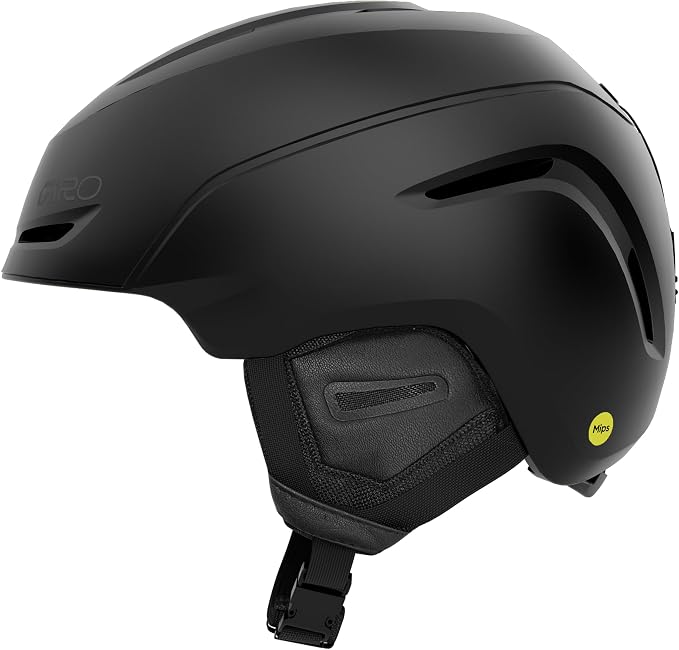
Giro Neo Mips
For changing temperatures: In-Mold construction, Mips and Thermostat ventilation with In-Form adjustment.
Manufacturer information ↗Smith Mission Mips
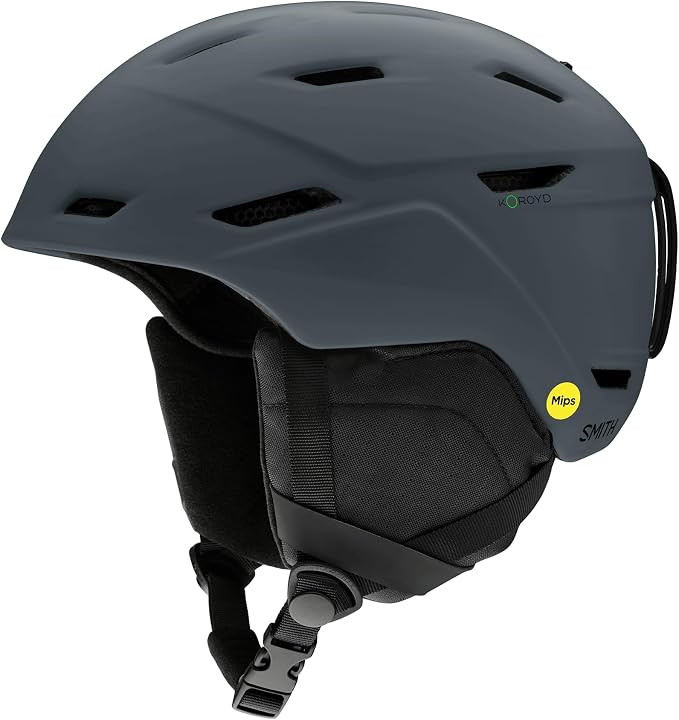
For comfort-focused all-mountain skiing: In-Mold, zonal Koroyd, Mips and adjustable ventilation.
Manufacturer information ↗Amazon Top 10: Models compared
This selection is an editorial model comparison, not an Amazon bestseller list. The yellow buttons link directly to the Amazon.de product pages checked on 4 November 2026. For each model, a specifically identified variant was checked for an offer in new condition and delivery to Germany. The check does not cover every colour and size. Prices, sellers and delivery dates may change. Before ordering, please check the stated size, model version, Mips equipment and “New” condition. Product photos may show a different colour variant.
How this selection was made · Your decision in five steps
| Rank | Image | Model | Reason to consider it | Important limitation | Amazon |
|---|---|---|---|---|---|
| 10 | | uvex wanted | For straightforward days on the slopes: ABS hardshell, IAS adjustment and adjustable ventilation. | No documented Mips | View on Amazon*Linked variant: 54–58 cm · white matt |
| 9 | 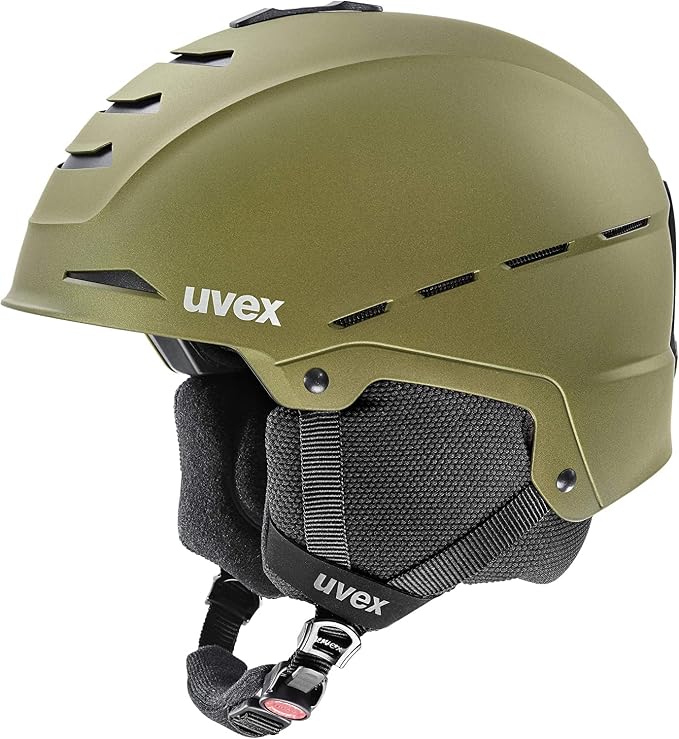 | uvex legend 2.0 | For skiers needing more fit adjustment: a hardshell and 3D-IAS combine width and height adjustment. | Older model generation | View on Amazon*Linked variant: 52–55 cm · Croco Matt |
| 8 | 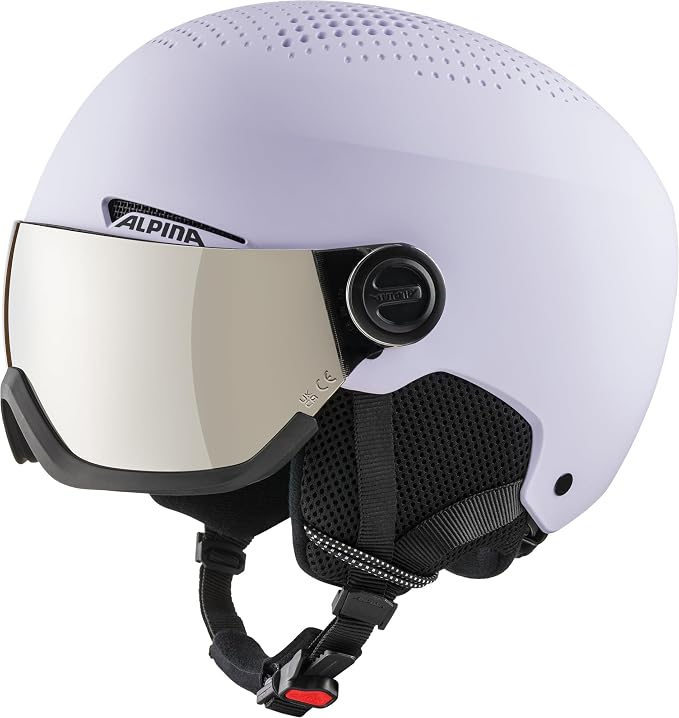 | Alpina Arber Visor Q-Lite | For an integrated vision system: hardshell, Q-Lite visor and washable padding. | No verified photochromic visor | View on Amazon*Linked variant: M (54–58 cm) · lilac matt |
| 7 | 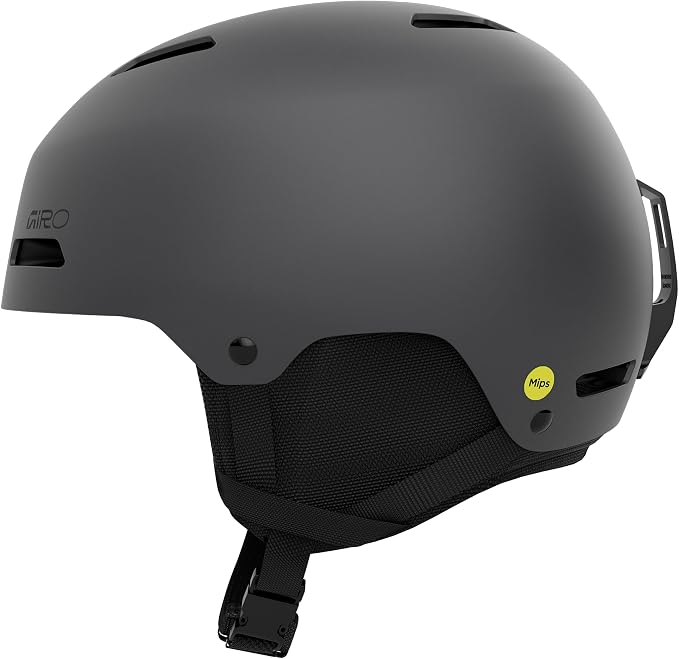 | Giro Ledge FS Mips | For freestyle-oriented skiers: hardshell and Mips. | Check the FS-Mips version and size | View on Amazon*Linked variant: S (52–55,5 cm) · Graphite |
| 6 | 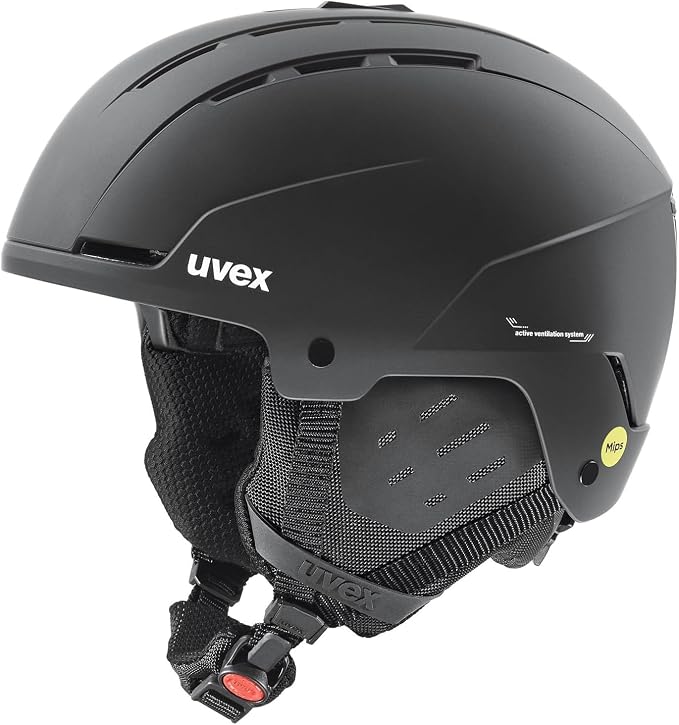 | uvex stance MIPS | For a robust Mips alternative: ABS shell, IAS and closable ventilation. | 540 g according to the manufacturer | View on Amazon*Linked variant: 58–62 cm · black matt |
| 5 | | Giro Neo Mips | For changing temperatures: In-Mold construction, Mips and Thermostat ventilation with In-Form adjustment. | Not Neo Mips II | View on Amazon*Linked variant: S (52–55,5 cm) · Matte Black |
| 4 | 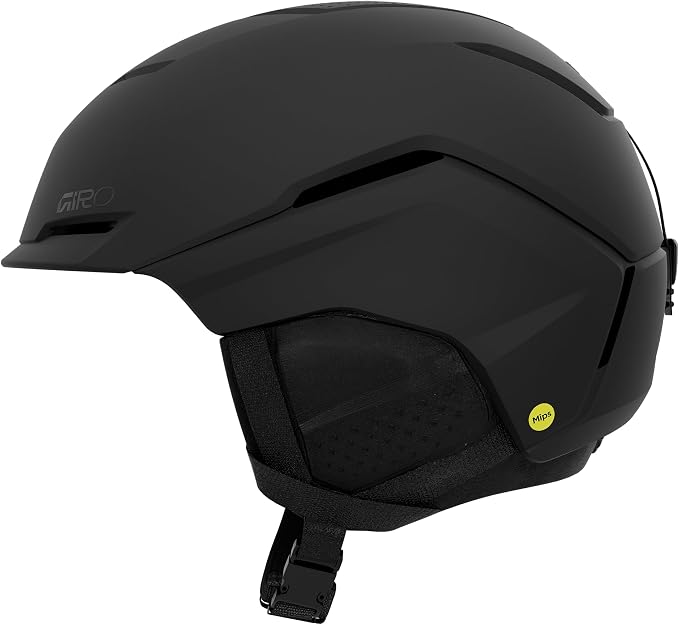 | Giro Tenet Mips | For frequent ski days: hybrid construction combines a hard upper shell and In-Mold lower section with Mips. | No measured protection advantage established | View on Amazon*Linked variant: M (55,5–59 cm) |
| 3 | | Smith Mission Mips | For comfort-focused all-mountain skiing: In-Mold, zonal Koroyd, Mips and adjustable ventilation. | Non-Mips variants also available | View on Amazon*Linked variant: 59–63 cm · MATTE SLATE · MIPS |
| 2 | 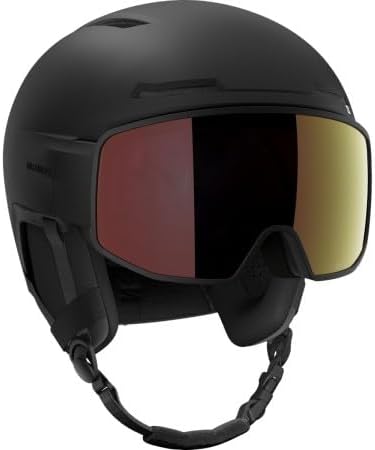 | Salomon Driver Pro Sigma Photo Mips | For a photochromic visor: Sigma Photo, Mips and 360° adjustment. | 720 g for the documented version | View on Amazon*Linked variant: L · Black · PRO SIGPHOTO MIPS; offers in new condition via the offer list |
| 1 | 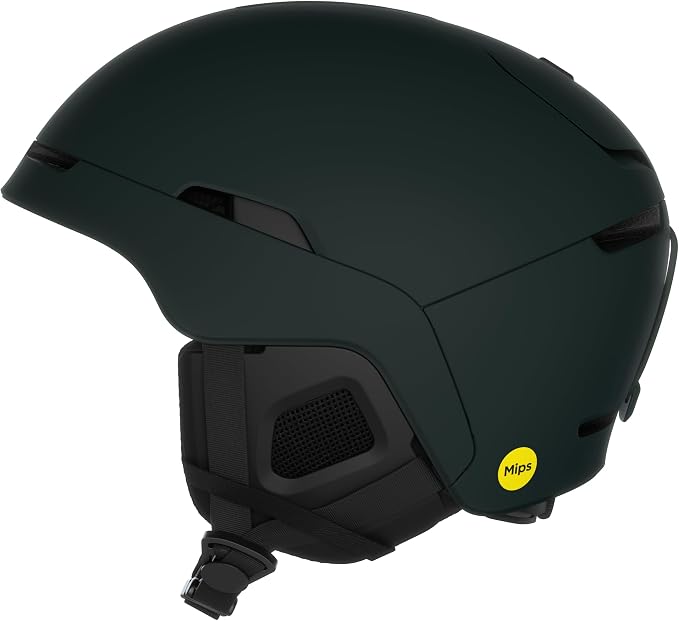 | POC Obex Mips | Our versatile first priority for trying on: Mips, 360° adjustment and documented EN-1077-B suitability. | Weight and fit depend on size | View on Amazon*Linked variant: M–L (55–58 cm) · Pargasite Green Matt |
How this selection was made
We compare documented construction, adjustment, eyewear solutions, temperature management and relevant compromises. Fit and appropriate certification are essential requirements that no other advantage can compensate for. The order prioritises versatile candidates to try on and ends at number 1; it is neither our own laboratory test nor a safety or sales ranking. The entire changing Amazon catalogue was not covered. Without comparable measurements, we do not award protection scores that suggest false precision.
What can a ski helmet protect against — and what can it not?
A ski helmet can reduce the severity of serious head injuries; no helmet offers complete protection against concussion. Even a high-quality model cannot replace controlled speed and keeping your distance. The CDC explicitly warns against such absolute protection claims. [1]
When making a purchase decision, it is worth checking three aspects separately: the required suitability, the specific model's performance in transparent tests, and its actual fit on your own head. Additional comfort features cannot compensate for a problem in any of these areas.
Number 10
uvex wanted
For straightforward days on the slopes: ABS hardshell, IAS adjustment and adjustable ventilation. Worth considering when ease of use matters more than additional technology. This Wanted version is not a Mips model. Its equipment is simpler than the Stance Mips, but getting the fit right must still come first.
EN 1077: What do Class A and B mean?
EN 1077 describes requirements for ski and snowboard helmets, including impact absorption and penetration resistance. Class A covers more of the head, including the area around the ears. Class B provides less coverage and generally allows more ventilation and comfort. The letters are not grades. [2]
For your selection, this means first checking the intended use and the markings on the specific helmet. A warm hat does not turn a cycling helmet into a ski helmet. For touring or competitions, you must also take account of the requirements of the activity or organiser.
Number 9
uvex legend 2.0
For skiers needing more fit adjustment: a hardshell and 3D-IAS combine width and height adjustment. This may help with goggle positioning. It cannot replace a suitable fit for your head shape. The documentation relates to an older model generation; do not equate it with current successors.
Separating Mips, test results and marketing
Mips uses a low-friction layer intended to reduce rotational motion of the head in certain angled impacts. This is the technology provider's description of how it works, not a guarantee against injury. [3]
Virginia Tech also examines linear acceleration and rotational velocity in snow sport helmets. A lower STAR value is more favourable within this test procedure. It does not indicate your personal probability of an accident or allow comparison with scores for other sports. [4]
Number 8
Alpina Arber Visor Q-Lite
For an integrated vision system: hardshell, Q-Lite visor and washable padding. Practical if separate goggles bother you. The visor must fit around your nose and cheeks. Compared with the Salomon, the documented photochromic Photo visor functionality is absent here; check replacement lenses beforehand.
Manufacturer information ↗ (Reference address currently unavailable)
Trying helmets on: from head circumference to a secure fit
Measure your head circumference horizontally and use the relevant manufacturer's size chart. Size M is not a standard measurement across brands. Try the helmet on with your usual hairstyle and the ski goggles you intend to use. [6]
- Put the helmet on level. It should protect your forehead and leave your vision unobstructed.
- Fasten the chin strap and set the adjustment system according to the instructions.
- Move your head and check whether the helmet shifts noticeably.
- Check for pressure on your forehead and temples. Tightening the dial further does not correct an unsuitable shell shape.
- Test the goggles, buckle and adjustment while wearing your gloves.
- If you are between sizes, keep both models in the comparison initially. Decide on the basis of a secure fit without pressure points, rather than the smaller size letter.
A wraparound adjustment system increases the scope for fitting, but it cannot freely change the shell's basic shape. The practical implication for choosing a helmet is this: if a model slips or creates a single pressure point, a different shape is often a better option than tightening it further. The DSV's buying advice also includes operation with gloves. [7]
Number 7
Giro Ledge FS Mips
For freestyle-oriented skiers: the Ledge FS Mips combines a robust hardshell with Mips and an adjustable fit. In the detailed specifications, Giro describes the In-Form system with a dial, along with removable ear pads and Super-Cool ventilation. This comparison specifically covers the FS-Mips version, not the older Ledge with Auto Loc 2. The linked version is Graphite in S (52–55,5 cm).
Visor or separate ski goggles?
A visor reduces the number of separate parts. Separate goggles, on the other hand, can be replaced independently of the helmet. For prescription glasses wearers, trying everything on is decisive: the temples, nose bridge, interior space and moving visor must work together. “Suitable for glasses” is no substitute for this check.
As a technical example, Salomon's Driver Pro Sigma Photo Mips combines a helmet with a photochromic visor. This establishes that it has this feature, but not that it has a universal advantage over every helmet-and-goggles combination. [8]
Before buying, check replacement lenses, a tint suitable for your conditions and ease of operation. A helmet that pushes your ski goggles onto your nose does not work as a combination. [9]
Number 6
uvex stance MIPS
For a robust Mips alternative: ABS shell, IAS and closable ventilation. At a stated 540 g, it is not a particularly light candidate. Compared with Wanted, Mips adds to the equipment; this does not establish an independently proven overall protection advantage. Pay attention to how it feels on your neck when trying it on.
Manufacturer information ↗ (Reference address currently unavailable)
Making meaningful comparisons of ventilation and weight
Adjustable ventilation is worth considering if you alternate between warm descents and cold lift rides. Do not just count vents: check whether you can operate them with gloves. Giro specifies a hybrid construction and an adjustable ventilation system for the Tenet Mips. This describes the construction, not independently measured cooling performance. [10]
Weights are only comparable when the size is stated. For the Obex Mips, for example, POC specifies 460 g in XS–S and 550 g in XL–XXL. A lower specification-sheet weight for another helmet may therefore be partly due to its size. [11]
For a practical comparison, leave the visor and intended equipment on the helmet and assess both candidates in your size. Specifications help narrow the field; only trying them on can establish how they feel to wear.
Number 5
Giro Neo Mips
For changing temperatures: In-Mold construction, Mips and Thermostat ventilation with In-Form adjustment. Worth considering as a versatile all-rounder. The version compared here is called Neo Mips, not Neo Mips II. Compared with the Ledge FS Mips, adjustable temperature management is more of a focus on the Neo.
Which construction suits your intended use?
In-Mold, hardshell and hybrid describe different construction methods. By themselves, they do not rank protective performance. The DSV distinguishes these construction methods and explains their material combinations. [7]
| Situation | What matters | Typical buying mistake |
|---|---|---|
| Occasional days on the slopes | Fit, suitability, ease of use | Putting extra features ahead of fit |
| Many full days of skiing | Freedom from pressure, temperature management, easy-care lining | Comparing weight alone |
| Prescription glasses | Trying the entire system on together | Relying on “OTG” or a visor alone |
| Uphill travel and touring | Appropriate certifications and equipment | Assuming any piste helmet is suitable for any tour |
| Child | A size that fits now and an easy-to-use strap | Buying too large to allow room to grow |
Atomic lists the Backland as a touring model with multiple certifications. This does not mean that every model with a similar name has the same approvals. The markings and instructions for the product you buy remain decisive. [12]
Number 4
Giro Tenet Mips
For frequent ski days: hybrid construction combines a hard upper shell and In-Mold lower section with Mips. Those specifically seeking this construction have an alternative to the Neo. More material technology does not prove superior performance in an accident. Fit, ventilation controls and the goggle combination remain decisive in a direct comparison.
Putting additional features in perspective
A magnetic buckle makes operation easier for some users; a removable lining can simplify care. Such features are useful, but they cannot replace the right size and verifiable protection data.
A RECCO reflector helps suitably equipped professional rescue teams locate a person. It does not replace an avalanche transceiver. This distinction matters for a freeride helmet with RECCO. [13]
Number 3
Smith Mission Mips
For comfort-focused all-mountain skiing: In-Mold, zonal Koroyd, Mips and adjustable ventilation. Worth considering for long days. Be sure to check that it is the Mips version: Smith also lists variants without Mips. Compared with Neo, the additional material solution is a point of interest; fit and price must justify the difference.
Care, age and replacement after a fall
Follow the manufacturer's cleaning and storage instructions. Do not use solvents or dry the helmet near a strong heat source. If it has cracks, damaged straps or missing parts, it should not be used on the slopes. [6]
For service life, follow the instructions of the relevant brand. uvex currently specifies a maximum of five years of use and eight years from manufacture; this is not a universal limit for all manufacturers. After an accident, uvex requires replacement even if there is no visible damage. [uvex]
Do not simply continue using a helmet after a fall involving a head impact. uvex requires replacement after a fall even if there is no visible damage. An outer shell that looks undamaged does not prove that the impact-absorbing structure is intact. [15]
Number 2
Salomon Driver Pro Sigma Photo Mips
For a photochromic visor: Sigma Photo, Mips and 360° adjustment. Salomon specifies 720 g for the documented version. Prescription glasses wearers should try them on together. More versatile light adaptation than the Arber, but a more complex vision system and substantial overall weight; not an automatic recommendation for every head.
What to check before ordering online
Note the full model name, version, size and colour. Make sure the photos and description correspond exactly to them. Mips and non-Mips versions must not be silently grouped together: Smith explicitly points out variants without Mips for the Mission. [16]
Also check whether the product is new or used, the seller, delivery destination, returns and spare parts. A search result or an existing product page does not establish that stock is available for delivery in your size. A used helmet with an unknown history is particularly difficult to assess.
For a fair comparison, duplicate colour offers belong under the same model. A different construction or visor version, however, may be a separate product. This avoids confusing the number of search results with the number of helmets that can meaningfully be compared.
Number 1
POC Obex Mips
Our versatile first priority for trying on: Mips, 360° adjustment and documented EN-1077-B suitability. POC specifies 500 g in M–L. A worthwhile all-round candidate if it fits securely. Different fit and construction from the Mission; first place is an editorial buying aid, not a measured safety title.
A practical decision guide
Start with two or three models that suit your intended use. Eliminate unsuitable sizes and shapes first. Then compare the evidence for the exact model, followed by goggles, ventilation and operation. Price becomes a meaningful deciding factor only among the candidates that remain.
Example: A well-equipped helmet presses on your temples, while a simpler one fits securely and comfortably. Do not choose the longer feature list. If necessary, look for a third alternative that fits better and offers the features you want. The same principle applies to children's ski lessons: the right fit today comes before supposed room to spare for next year.
Your decision in five steps
- Check intended use and markings.
- Measure head circumference and try several shapes on.
- Rule out pressure points, slipping and restricted vision.
- Try goggles, buckle and ventilation together.
- Only then compare features, total price and the exact variant available for delivery.
Frequently asked questions
Is Mips necessarily better?
The logo alone cannot establish a ranking. Compare models that fit and transparent tests.
Is a visor helmet always more suitable for prescription glasses wearers?
No. Your own glasses and the helmet must be tried on together. Temples or the nose bridge can also cause problems under a visor.
Can I use the size stated by another brand?
Use the chart for the specific model. Matching size letters do not guarantee the same fit.
Is the most expensive helmet automatically the best choice?
No. Price cannot replace suitability or fit. Additional features must offer a clear benefit for your intended use.
Sources
- CDC HEADS UP: Helmet Safety
- TÜV SÜD: Safety on the slopes
- Mips: Snow helmets
- Virginia Tech: Snow Sport Helmet Ratings / STAR method
- Stiftung Warentest: Ski helmets, 20 November 2025 — publicly accessible overview
- CDC: Ski Helmet Fact Sheet
- DSV aktiv: Protective equipment for skiers
- Salomon DRIVER PRO SIGMA PHOTO MIPS: Manufacturer documentation
- DSV aktiv: Ski helmet equipment check
- Giro Tenet Mips: Manufacturer documentation
- POC Obex Mips: Manufacturer documentation
- Atomic BACKLAND: Manufacturer documentation
- RECCO: Questions and answers
- uvex: FAQ / Service life
- uvex: When do I need to replace my helmet?
- Smith Mission Mips Past Season: Manufacturer documentation
- uvex: When do I need to replace my helmet?
- Russell et al. (2010), CMAJ: meta-analysis
- uvex wanted — Manufacturer information
- uvex legend 2.0 — Manufacturer information
- Alpina Arber Visor Q-Lite — Manufacturer information (Reference address currently unavailable)
- Giro Ledge FS Mips — Manufacturer information
- uvex stance MIPS — Manufacturer information (Reference address currently unavailable)
- Giro Neo Mips — Manufacturer information
- Giro Tenet Mips — Manufacturer information
- Smith Mission Mips — Manufacturer information
- Salomon Driver Pro Sigma Photo Mips — Manufacturer information
- POC Obex Mips — Manufacturer information