
Which skis suit you? In-depth guide and top 10 ski categories
The best ski is one you can control on the terrain you normally ski, including when the snow deteriorates and your legs get tired. This guide explains the key relationships and compares ten categories by their intended use.
An aggressive race ski can give an expert precise feedback while overwhelming a holiday beginner. A wide freeride ski can help in soft snow while introducing different compromises on a hard piste. More material, more length and a higher price do not create a universal quality ranking.
Start with the terrain you actually use most, the turns you can control and the effort you want to sustain throughout the day. Only then compare dimensions, technologies and offers. When assembling a complete setup, begin with properly fitting boots. [1][8]
* Advertising / affiliate links: As an Amazon Associate, FitRecover earns from qualifying purchases. This does not add a surcharge to your purchase price.
Three useful starting points
For your first controlled turns
Easy steering and controlled learning
Schematic illustration, not a product photograph; not to scale.View on Amazon.de*For a typical piste holiday
Versatility on groomed pistes
Schematic illustration, not a product photograph; not to scale.View on Amazon.de*For changing resort snow
Groomers plus softer and chopped snow
Schematic illustration, not a product photograph; not to scale.View on Amazon.de*The top 10 at a glance
Ten ski categories, each with a specific model suggestion. For ordinary piste holidays we start with all-round and easy carvers; freeride, touring and park skiing have different priorities. Categories overlap. The numbering is a navigation aid, not a quality judgment across different disciplines. Cross-country and telemark are outside this alpine guide.
Select an appropriate length on the product page and check model year, bindings and package contents. Some links open a particular variant; that size is not a universal sizing recommendation.
| No. | Diagram | Category / model suggestion | Strength / use | Amazon.de |
|---|---|---|---|---|
| 01 | | All-round carverAtomic Redster MX + M 10 GW | Versatility on groomed pistes | View model* |
| 02 | | Easy carver / beginner skiHEAD Shape V2 | Easy steering and controlled learning | View model* |
| 03 | | Piste-focused all-mountain skiHEAD Kore 87 | Groomers plus softer and chopped snow | View model* |
| 04 | 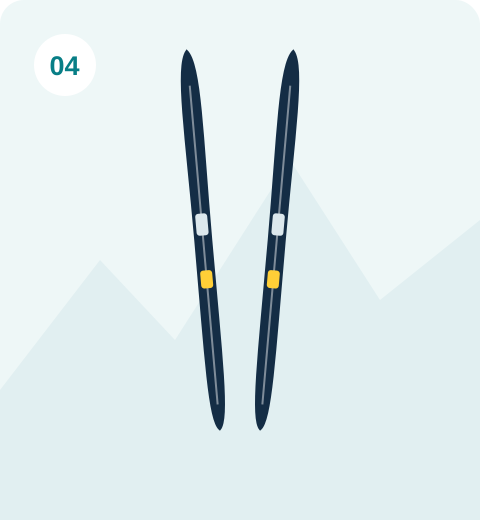 | Sport carverHEAD Supershape e-Magnum + PRD 12 GW (2024) | Precise and active piste skiing | View model* |
| 05 | 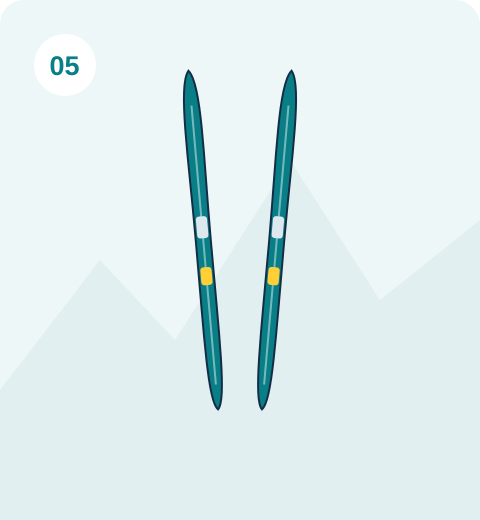 | Slalom carverHEAD Supershape e-Original SW Set | Frequent direction changes and short arcs | View model* |
| 06 | 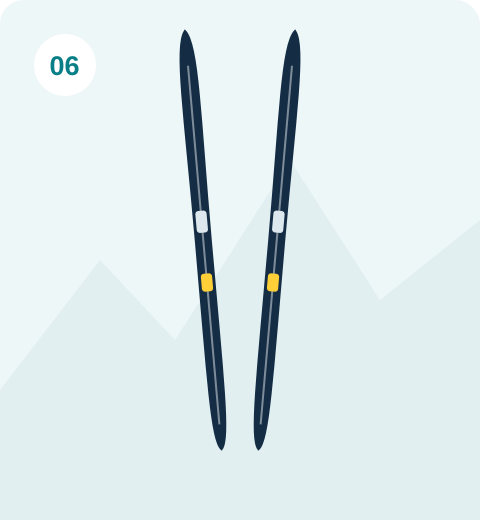 | Race carver / long-turn carverHEAD Supershape e-Speed SW Set | Wide, dynamic piste arcs | View model* |
| 07 | 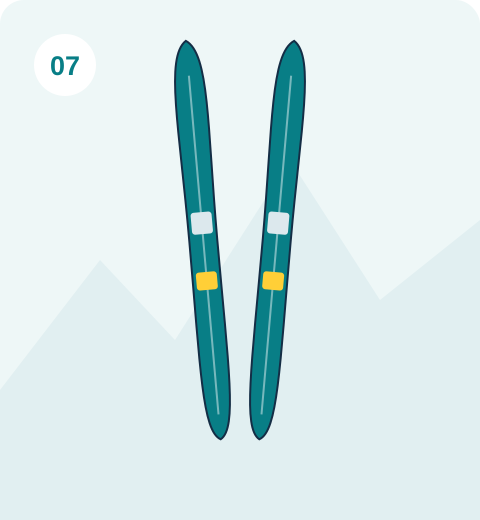 | Freeride / powder skiAtomic Bent 100 | Soft snow and off-piste flotation | View model* |
| 08 | 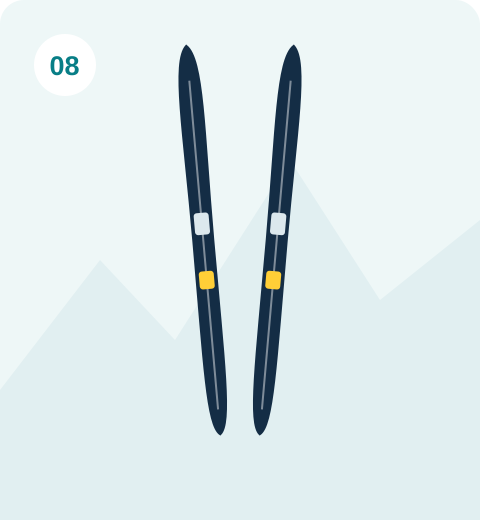 | Touring / free-touring skiAtomic Backland 88 | Human-powered ascent and descent | View model* |
| 09 | 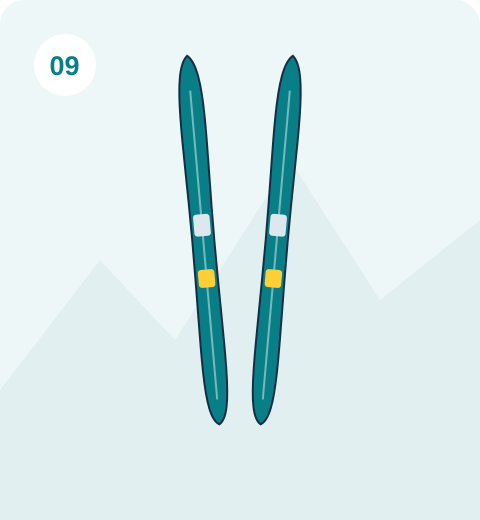 | Freestyle / twin-tip skiK2 Reckoner 92 | Park, playful skiing and switch | View model* |
| 10 | 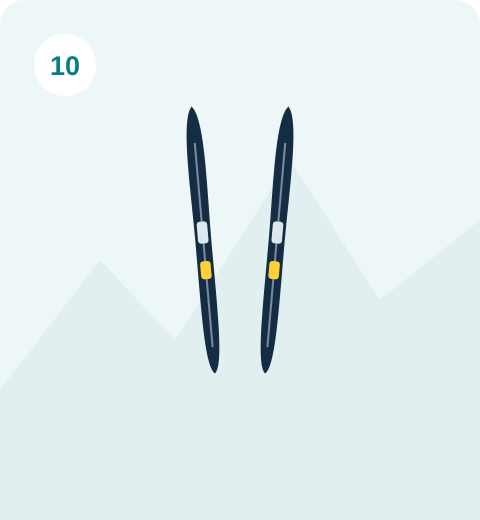 | Children's and junior skisHEAD Supershape Team Easy + JRS 7.5 GW | Equipment matched to body mass and learning | View model* |
How to read our selection
The selection combines manufacturer guidance on ski types, construction, sizing and binding compatibility with the practical requirements of each style. A model suggestion is useful when its intended use matches your skills and body mass. Width ranges provide orientation; specifications for the actual model and chosen length take priority. [1][2][3][4][5][6]
What really determines how a ski behaves
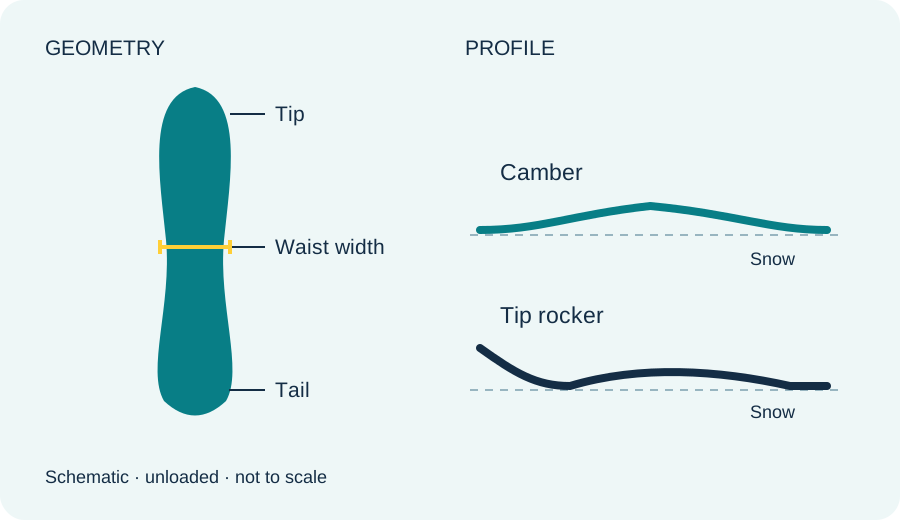
Waist width: flotation versus quick edge changes
Width under the boot is a useful first filter. Narrow piste skis are generally easier to move from edge to edge; more surface area helps in soft snow. Wider does not automatically mean safer or more versatile. If you spend nearly all your time on firm groomers, identify what extra width would actually offer you. Damping, flex and technique also matter in chopped-up snow. [1][2]
Radius: a design measurement, not a fixed turn size
The printed radius describes the sidecut of a particular ski length. A smaller number encourages tighter carved arcs; a larger one favours longer turns. Your actual turn also depends on edge angle, loading, bending and how much you skid. A 14-metre ski does not force every turn to follow a 14-metre arc. Compare specifications at the same or clearly stated length. [2]
Camber and rocker: contact length can change
Camber is the arch under the middle of an unloaded ski; rocker raises the tip or tail earlier. Their combination affects how the edge engages as you load it and how easily the ski pivots. More rocker can help in soft snow, but it cannot replace suitable construction or well-maintained edges on ice. Two skis with the same stated length can therefore feel quite different. [3]
Longitudinal flex, torsion and damping are different
Longitudinal flex concerns bending, torsion concerns twisting and damping concerns the decay of vibration. A ski can bend readily yet provide useful edge support. Very stiff construction may be harder to use at low speed or with little loading. The goal is a match to the skier, rather than the highest possible value for every property.
Wood, foam, metal and carbon: assess the whole construction
A wood core can support stability and a deliberately tuned flex. Lightweight foam elements can aid handling and weight; their presence alone does not prove poor durability. Metal laminates and carbon alter stiffness and damping depending on their arrangement. Topsheet labels do not tell you layer thickness or the overall character. One manufacturer, for example, combines wood and Densolite within a single ski. [9][10]
Weight: easy handling and settled feedback are different goals
Every extra gram is repeatedly lifted on an ascent. On the descent, mass and a well-tuned structure can support a more settled feel. Low weight is therefore a different target from maximum damping. Compare pairs with pairs, and skis including bindings with equivalent complete setups. Weight figures without a length and package description are of limited use.
Waist width as an initial filter
| Approximate waist width | Typical emphasis | Main compromise |
|---|---|---|
| 65–75 mm | Pistes, short to sporty turns | Limited surface area for deep soft snow |
| 75–85 mm | Comfort and piste-focused all-mountain use | Not a deep-powder specialist |
| 85–100 mm | Mixed conditions and more off-piste use | More ski to move onto an edge on firm snow |
| Around 100 mm and above | Freeride and powder | Often unnecessarily specialised for piste-only days |
These ranges overlap. Width alone determines neither ability level nor suitability. This table is an editorial decision aid based on the design principles. [1][2][3]
Start with the skier and the intended style
A family comparison needs a dedicated junior category. An adult rule of thumb for length or stiffness does not transfer directly to a light child.
Children's and junior skis
Children need a matched ski, boot and binding system. A junior recreational ski and a junior race ski may differ substantially even at similar lengths. Development, body mass and skill matter. Buying excessively large equipment for several future seasons can make learning unnecessarily difficult.
Our model suggestion
HEAD Supershape Team Easy + JRS 7.5 GW
The Team Easy package with JRS 7.5 GW is a specific junior option. Choose by body mass, skill and compatible boot standard, rather than age alone. The linked offer specifies 137 cm; a smaller or lighter child may need a different version. [17]
Strengths
- Lengths and flex tuned to smaller skiers
- Recreational and performance options
- Season rentals can accommodate growth
Limitations
- Child and adult boot soles are not freely interchangeable
- Race models may overwhelm beginners
Suitable for: Children and teenagers with professionally matched sizes and bindings.
Check boot-sole markings alongside the binding's approval. Appropriate sizing helps avoid a poor purchase, but does not replace lessons or professional binding adjustment. [6][11]
Style determines the equipment here. An occasional small jump does not automatically require a strongly park-focused ski, while regular switch skiing introduces different priorities.
Freestyle / twin-tip ski
Upturned tails assist backward skiing and particular park movements. Flex, mounting position and durability priorities vary considerably. A park ski is not necessarily symmetrical, and a central mounting point cannot be assumed suitable for every model.
Our model suggestion
K2 Reckoner 92
The Reckoner 92 is a twin-tip option for playful skiing and park interest. That does not make it the first choice for exclusively precise piste carving. The link opens the 149 cm version without bindings; select length and mounting point deliberately. [18]
Strengths
- Designed for playful styles and park use
- Twin-tip shape supports switch skiing
- Different constructions for different park goals
Limitations
- Mounting position materially changes handling
- Often less suitable for dedicated precision piste carving
Suitable for: Skiers with specific park or freestyle goals and an appropriate learning environment.
Choose the mounting point and binding according to model guidance. Progress in the park depends on technique and an appropriate practice setting; a soft twin-tip does not make jumps manageable by itself.
Uphill travel and powder change the priorities
An ordinary all-mountain ski does not become a complete touring package through a label. A first purchase must also address the interfaces between boots, bindings and skins.

Touring / free-touring ski
Touring skis balance uphill weight, edge grip and downhill capability. Narrow lightweight models and wider descent-focused free-tourers serve different goals. Plan the skis, bindings, boots, skins and, where needed, ski crampons as a compatible system.
Our model suggestion
Atomic Backland 88
The Backland 88 is a specific all-round touring option. Plan it with compatible touring boots, bindings and skins rather than comparing ski weight alone. This link opens the 176 cm version; geometry and skin size depend on the chosen length. [19]
Strengths
- Construction and skin options suited to uphill travel
- Choices from lightweight to descent-focused
- Access to self-powered winter routes
Limitations
- Additional components and often higher total costs
- Very light construction can have different downhill reserves
Suitable for: Tourers with appropriate training, planning and a compatible complete setup.
Compare complete pair weights including bindings. Saving grams in the ski is not the answer when the real problem is an unsuitable boot or binding. [4][5]
Once unsecured terrain becomes the objective, the decision changes. Width comes after assessing whether the route, snow conditions and group are a suitable match.
Freeride / powder ski
Wide tips, more surface area and pronounced rocker support soft-snow skiing. A versatile freeride ski and a highly specialised powder ski can be very different. Deep snow remains technically and environmentally demanding; the ski does not provide safe snow conditions or avalanche protection.
Our model suggestion
Atomic Bent 100
The Bent 100 is a freeride-oriented option when soft snow and playful skiing regularly form part of your day. A narrower ski is often more focused for exclusively firm pistes. The linked ski is 186 cm long; that is not a universally suitable size, and binding inclusion needs a separate check.
Strengths
- More flotation in soft snow
- Off-piste shape and pivoting ability
- Specialised choices for different powder days
Limitations
- Often a substantial compromise on hard pistes
- Requires additional mountain and rescue competence
Suitable for: Experienced off-piste skiers with appropriate training and conservative planning.
An avalanche bulletin, planning and practised use of a transceiver, probe and shovel belong in the complete approach. Neither an airbag nor wide skis replaces those foundations. [7]
Short and long turns need different tools
If you want more composure in long turns, consider radius, length and damping together. A longer edge is helpful only when you can control the ski at your chosen speed.
Race carver / long-turn carver
Longer piste skis with settled construction and a larger sidecut radius suit long arcs. They require room and reliable technique. A recreational race carver should not be confused with a FIS giant-slalom competition ski.
Our model suggestion
HEAD Supershape e-Speed SW Set
Within the Supershape family, the e-Speed is oriented towards flowing, longer piste turns. It does not replace a FIS giant-slalom ski and still requires sound technique and room. This link opens the 163 cm version. [16]
Strengths
- Support for long, clean carved turns
- Settled feel when correctly matched
- Clear focus on sporty piste skiing
Limitations
- Less suitable for narrow or crowded runs
- Demands technique, strength and anticipation
Suitable for: Experienced skiers who can control wide turns on suitable open pistes.
The specialisation can become a constraint on short, tight runs. Buy for your normal conditions rather than an occasional perfect morning on an empty slope.
Short-radius carving can be enjoyable on a suitable slope but still requires space and anticipation. A crowded holiday run is not always the place to exploit the design.
Slalom carver
Pronounced sidecut encourages short carved turns. A slalom carver can feel lively and, with sporty construction, needs accurate active guidance. Recreational models and actual FIS race skis are different products. A short radius does not automatically make a ski easy to use.
Our model suggestion
HEAD Supershape e-Original SW Set
The e-Original favours short carved piste turns. It offers a sporty alternative in the slalom-carver role without choosing a FIS competition ski. This link opens the 156 cm version; check whether that length suits you. [15]
Strengths
- Lively turn initiation under appropriate loading
- Clear emphasis on short carved arcs
- Narrow construction for quick edge changes
Limitations
- Less relaxed for long sweeping turns
- Can be demanding when tired or off balance
Suitable for: Technically confident skiers who specifically prefer short carved turns.
Compare radius at your intended length and distinguish a slalom carver from a competition ski. A sporty label is not a universal learning aid. [2]

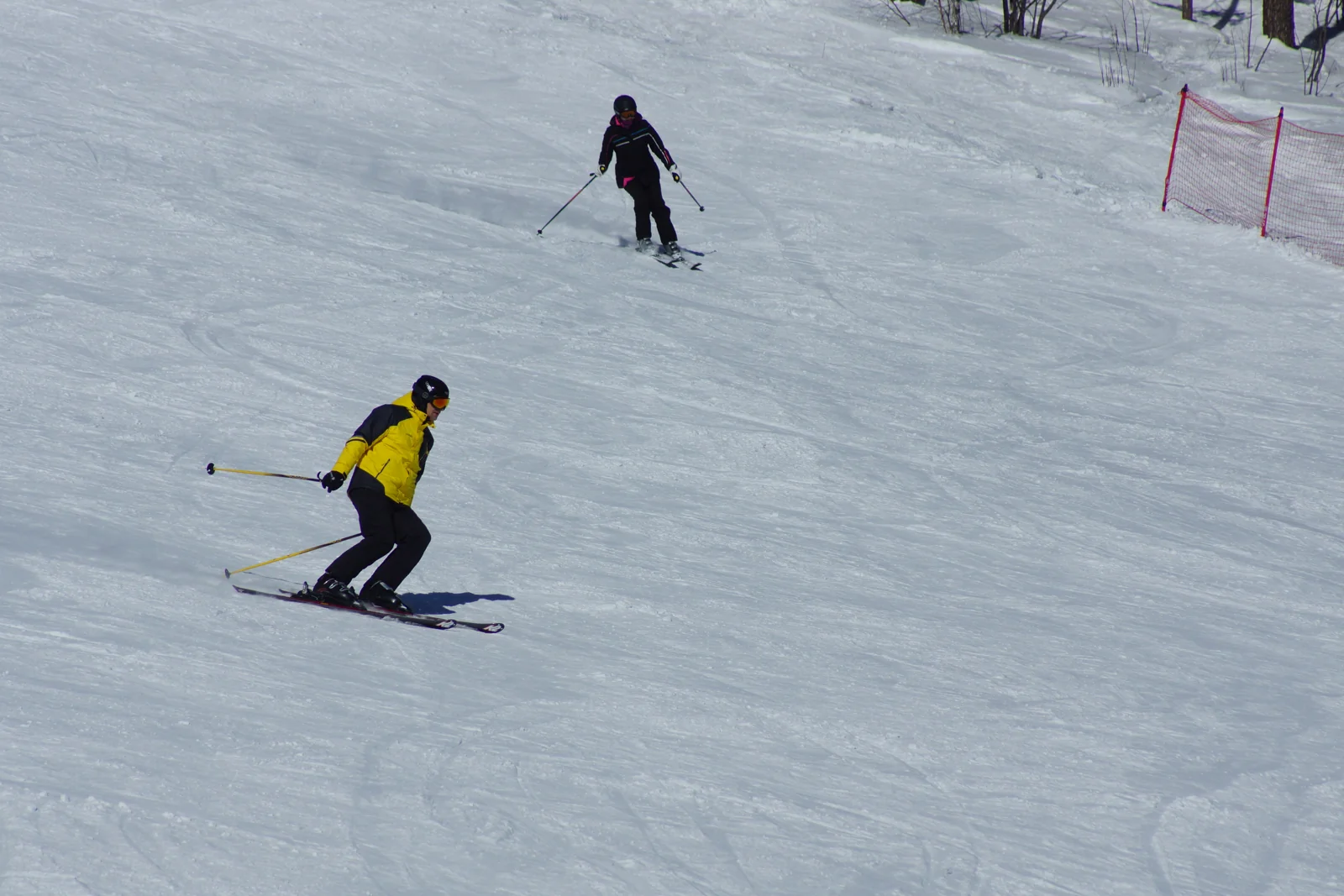
Sporty piste precision or more soft-snow versatility?
If you can reliably use the edges on firm pistes, sportier construction may become useful. New equipment should support an existing skill rather than substitute for the hope of automatically better turns.
Sport carver
Sport carvers target skiers who load their skis actively and want precise edge guidance. Compared with comfortable all-rounders, support and feedback often take priority. How demanding this becomes depends on construction, length and the plate; the category name alone is not sufficient.
Our model suggestion
HEAD Supershape e-Magnum + PRD 12 GW (2024)
The linked 2024-generation e-Magnum package with PRD 12 GW is an option for sporty piste skiers. It suits active loading and established technique more than first learning days. Match the exact model year because construction and binding packages can change between generations.
Strengths
- Useful platform for deliberate carved turns
- More support under sporty loading
- Often less specialised than dedicated race geometries
Limitations
- Can become more demanding when tired
- Often unnecessary capability for relaxed learning
Suitable for: Advanced skiers with consistent technique who enjoy active piste skiing.
During a demo, check whether the ski also responds to gentle input. Choose a speed that suits visibility, traffic and your control, regardless of advertised performance reserves.
Snow and fatigue change over the course of a day. A skier who wants one pair for those changes may value versatility, with width only one part of the solution.
Piste-focused all-mountain ski
This category can make sense when a dedicated piste ski feels too specialised for changing resort snow. Some extra width and usually an early-rise tip add flexibility. On hard snow it remains a compromise against an equivalently tuned narrower model. All-mountain also does not automatically mean suitable for touring.
Our model suggestion
HEAD Kore 87
The Kore 87 is a narrower off-piste and all-mountain candidate for advanced skiers. Its priorities differ from a dedicated piste carver. If firm groomers dominate your skiing, compare it with a narrower model. Check bindings and mounting separately.
Strengths
- More surface area in soft and chopped snow
- Broader use within a resort
- Often approachable turn initiation
Limitations
- Less immediate edge changes than on narrower skis
- Does not replace a powder or touring setup
Suitable for: Confident piste skiers who regularly encounter changing snow conditions.
Consider how frequently you will actually use the extra capability. An 84-millimetre ski may already be versatile enough for your holiday; reaching 100 millimetres is not an automatic upgrade. [1][10]
Learning and relaxed skiing depend on control
Learning benefits from equipment that tolerates small errors. A demanding construction can consume attention that would be better spent on balance and choosing a line.
Easy carver / beginner ski
A beginner ski should remain manageable at low speeds and with uneven loading. Accessible flex and suitable length matter more than a race-inspired name. A cheap ski is not automatically a good learning ski, and not every lightweight skier requires an adult entry-level construction.
Our model suggestion
HEAD Shape V2
The Shape V2 is worth considering for approachable piste skiing. For learning, appropriate length and controllable handling matter more than maximum performance. Check the included binding in this offer and have the setup adjusted for your boots.
Strengths
- Limited effort needed to initiate a turn
- Supports practice at moderate speeds
- Useful for cautious returning skiers
Limitations
- Less support for very powerful skiing
- Choosing too short can become restrictive
Suitable for: Beginners and relaxed returning skiers; renting is often useful on a first trip.
Do not automatically buy the shortest available length. Body mass, movement experience and construction can change the recommendation. Lessons and a suitable rental ski often provide a better basis for deciding.
If groomed runs account for most of your skiing, start by asking how controllable a ski will be in everyday use. A suitable all-rounder answers that question more usefully than a long list of technology labels.
All-round carver
For many holiday skiers, a moderate all-round carver is the most sensible place to start. It should remain manageable at different speeds without demanding a highly active technique all day. The category includes both comfortable and sporty models, so the specific description and a rental comparison still matter.
Our model suggestion
Atomic Redster MX + M 10 GW
The package with M 10 GW is a concrete starting point for piste-focused skiers looking for an everyday carver. Match the intended length to your skill. The Redster name alone does not make it a FIS race ski or a universal beginner ski.
Strengths
- Useful range for ordinary piste days
- Manageable effort when correctly matched
- Often available as a binding system package
Limitations
- Less flotation than a wide off-piste ski
- Less specialised than slalom or long-turn carvers
Suitable for: Recreational piste skiers seeking predictable handling across several turn sizes.
Compare similar candidates with the same boots on the same slope. Easy braking, controlled skidding and confidence late in the day belong in the decision alongside a clean carved turn.
Choose a justified length range, rather than one formula
Height is a starting point, not a result. Many piste skis are selected below body height, while heavily rockered freeride skis may be longer. Manufacturer ranges differ because intended uses and constructions differ. The recommendation for the particular model matters most. [1][2][12]
A heavier or more active skier may need more support than a lighter skier of the same height. More rocker can make a longer stated length manageable, while a long stiff ski may still overwhelm a cautious skier. Equal height does not imply an identical recommendation.
Consider two adults who are both 180 cm tall and ski red runs. One weighs 65 kg, skis slowly and often skids; the other weighs 95 kg and loads the edges actively. Both need an individual choice of model and length. Giving a precise centimetre measurement from height alone would suggest unjustified accuracy.
Boots and bindings must be compatible
Establish whether you are buying a system package with the appropriate plate and binding or a flat ski without bindings. Check the sole standard, adult/child approval, sole length in millimetres, adjustment range, brake width and mounting instructions. Mondo size and the printed boot-sole length are different measurements. [4][5][6]
GripWalk is not blanket approval for every touring boot. The specific boot marking must match the specific binding. Tech/pin systems need appropriate inserts and manufacturer approval. A pre-mounted binding is not yet a binding adjusted and checked for you.
Have mounting, adjustment and release/function checks carried out by a qualified technician. Do not derive a DIN/Z setting from body mass alone: further personal and equipment information is relevant. [5][6]
Buy or rent? Compare the total costs
Renting may make sense for a few holiday days, very different destinations or growing children. Ownership can suit someone who regularly uses the same category and already knows the right length. A demo often reduces uncertainty more than another product description.
Include the complete setup: skis, bindings, mounting, adjustment, servicing, transport and storage, plus skins and further equipment for touring. A discounted flat ski is not directly comparable with a complete personally adjusted package. An unused older model can still suit you if its condition, specification and support are appropriate.
A simple calculation divides annual ownership costs by daily rental costs. This only gives a rough threshold; resale value, convenience and the opportunity to try different models change the result. Without your actual costs, there is no sound fixed number of ski days at which ownership is always better.
Check these details on the listing before buying
- Exact model name and year; colour alone is not sufficient identification.
- Desired length and specifications for that length, rather than another variant.
- Pair or individual component, bindings included or excluded, binding model and mounting/adjustment services.
- Condition, seller support, return conditions and delivery to your German address.
- Compatible boot standard, adjustment range, brakes and future serviceability.
Maintenance is part of the skiing experience
A well-chosen ski can disappoint with damaged bases or neglected edges. Remove snow and moisture after skiing and store the equipment dry. Have significant damage, detached edges or delamination assessed before using it again.
Waxing and edge work depend on snow, use and condition. A dry-looking pale base or poorer glide can indicate the need for servicing. Repair deep damage reaching the core promptly. One rigid servicing interval cannot suit every skier. [13]
Frequently asked questions
Are wider skis always better?
No. More surface area can help in soft snow, but edge changes on hard pistes can be less immediate. Choose for your most frequent conditions.
Can I tour on all-mountain skis?
The category name alone does not answer that. You need a suitable complete system with compatible bindings, boots and skins. Weight, mounting approval and mountain requirements must also fit.
Are women's skis the right choice for every woman?
Body mass, strength, skill and preferred feel are more informative than the gender label. Lighter constructions can suit different people; actual geometry and available lengths decide.
Does a small radius mean beginner-friendly?
No. A short radius says little about how demanding the flex, plate and feedback will be. A sporty slalom ski may be much more demanding than a moderate all-rounder.
Can I immediately ski on a set bought online?
Only after compatibility, mounting, personal adjustment and function checks are resolved. Pre-mounted does not automatically mean ready for you.
How do I choose the right version through an Amazon link?
Compare the exact model and year, select an appropriate length and check the included binding. Flat skis require bindings and mounting separately. A linked length example is not personalised sizing advice.
What is the starting point for an ordinary piste holiday?
Our editorial starting point is an appropriately matched all-round carver, or an accessible easy carver for beginners. Regular softer snow can make a piste-focused all-mountain ski interesting. This is not individual model approval.
Our assessment
Buy for your usual terrain, assess your technique realistically and match the complete system. That approach is generally more useful than pursuing the most elaborate ski. We start with all-round carvers for mainly piste days and easy carvers for learning. More off-piste use, park skiing or uphill travel justifies different categories. No position in this list replaces appropriate length, well-fitting boots and a checked binding.
Sources and image credits
- Salomon — How to choose the right type of skis
- Atomic — How to choose the right alpine ski
- Salomon — Camber and rocker
- Salomon — How to choose ski bindings
- HEAD / TYROLIA — How to choose your ski bindings
- Salomon — Ski boot and binding compatibility
- Deutscher Alpenverein — Skitouren: 10 Empfehlungen
- Salomon — How to choose ski boots
- Atomic — Alpine / Race catalogue 2025/26: construction technologies (Reference address currently unavailable)
- Atomic — Maverick 84 + M 10 GW: construction example
- Rossignol — Hero Pro: junior construction example
- Völkl — Ski sizing guide
- Salomon — How to tune your skis
- HEAD — Ski collection 2024/25
- HEAD — Supershape e-Original
- HEAD — Supershape e-Speed
- HEAD — Supershape Team Easy JRS
- K2 — Reckoner 92
- Atomic — Backland 88: touring collection