Winter sports · Equipment & safety
Children's Ski Helmets: Fit, Protection and 10 Models
A good children's ski helmet fits today, leaves vision unobstructed and stays secure when the child moves their head. Here you will find a dedicated buying guide for parents: from head circumference and weight to visors, operation, replacement and ten different model candidates.
For parents and carers of children who ski recreationally. The size must fit on the current ski day.
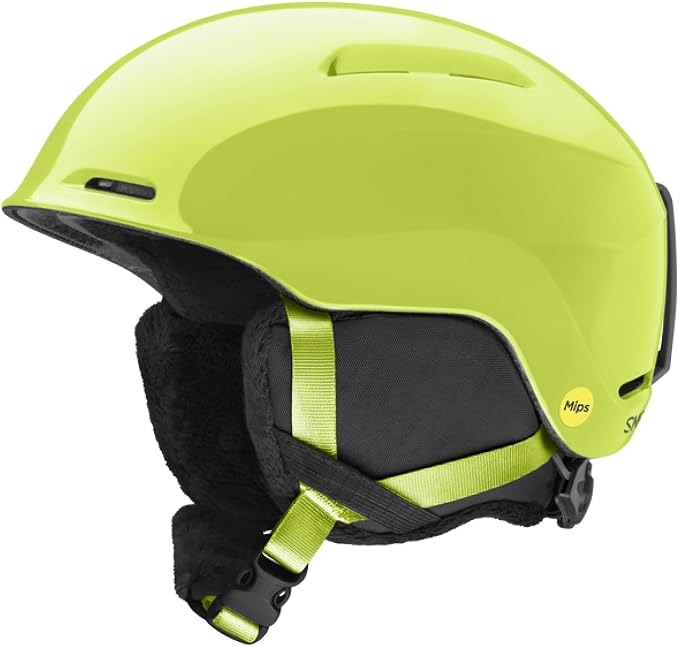
Three starting points for trying helmets on
* Amazon affiliate links: As an Amazon Associate, FitRecover earns from qualifying purchases. This does not incur any additional cost to you.
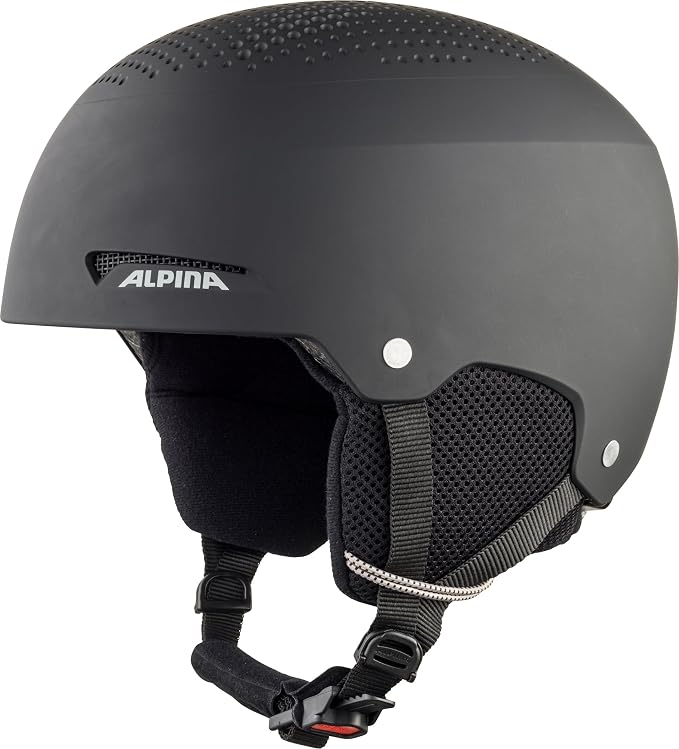
Alpina Zupo
For families who prefer a hardshell: Zupo combines a hard outer shell and EPS with soft ear pads.
Manufacturer information ↗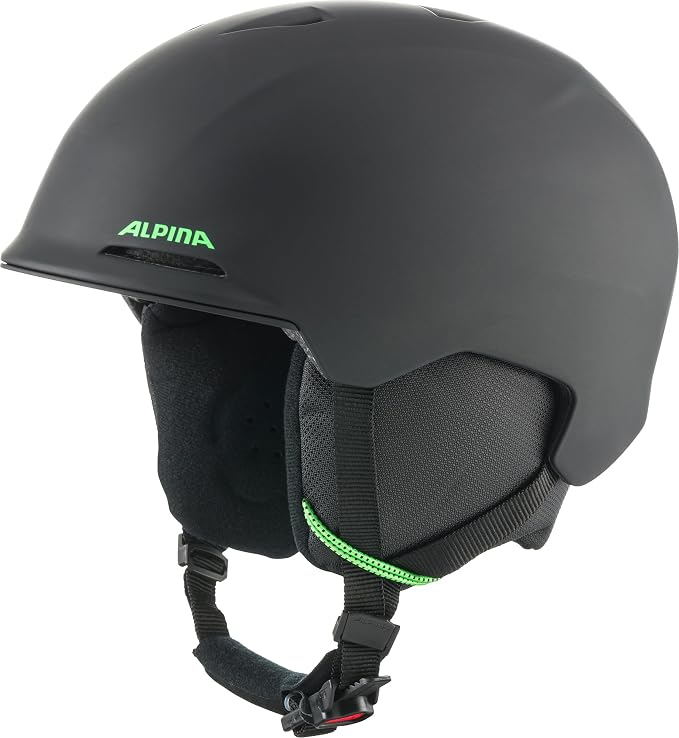
Alpina Brix Jr
For active children and teenagers: In-Mold, removable lining and a height-adjustable fit system.
Manufacturer information ↗Smith Glide Jr. Mips
For a lightweight, straightforward Mips all-rounder: In-Mold, adjustment dial and fixed ventilation.
Manufacturer information ↗Amazon Top 10: Models compared
This selection is an editorial model comparison, not an Amazon bestseller list. The yellow buttons link directly to the Amazon.de product pages checked on 4 November 2026. For each model, a specifically identified variant was checked for an offer in new condition and delivery to Germany. The check does not cover every colour and size. Prices, sellers and delivery dates may change. Before ordering, please check the stated size, model version, Mips equipment and “New” condition. Product photos may show a different colour variant.
How this selection was made · Your decision in five steps
| Rank | Image | Model | Reason to consider it | Important limitation | Amazon |
|---|---|---|---|---|---|
| 10 | 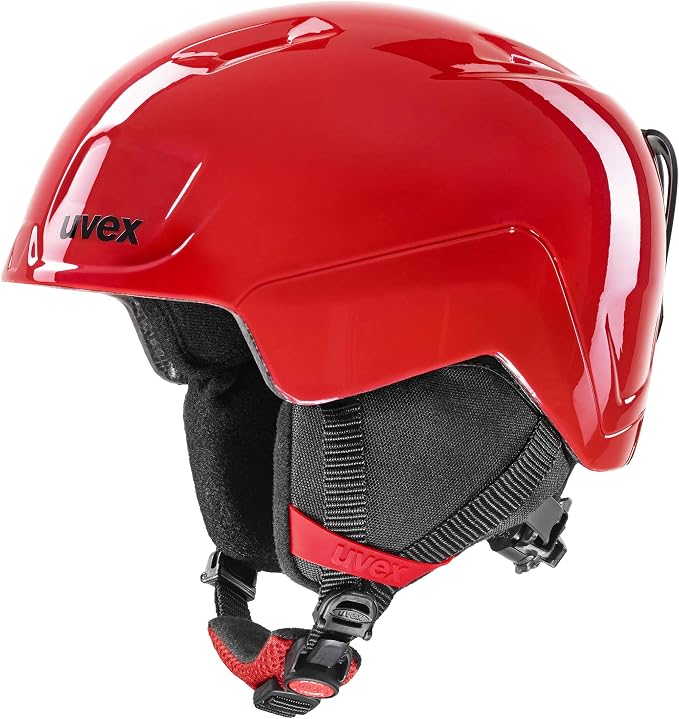 | uvex heyya | For a straightforward introduction: In-Mold, IAS and Monomatic. | Older catalogue source | View on Amazon*Linked variant: 51–55 cm · fire red · New condition |
| 9 | 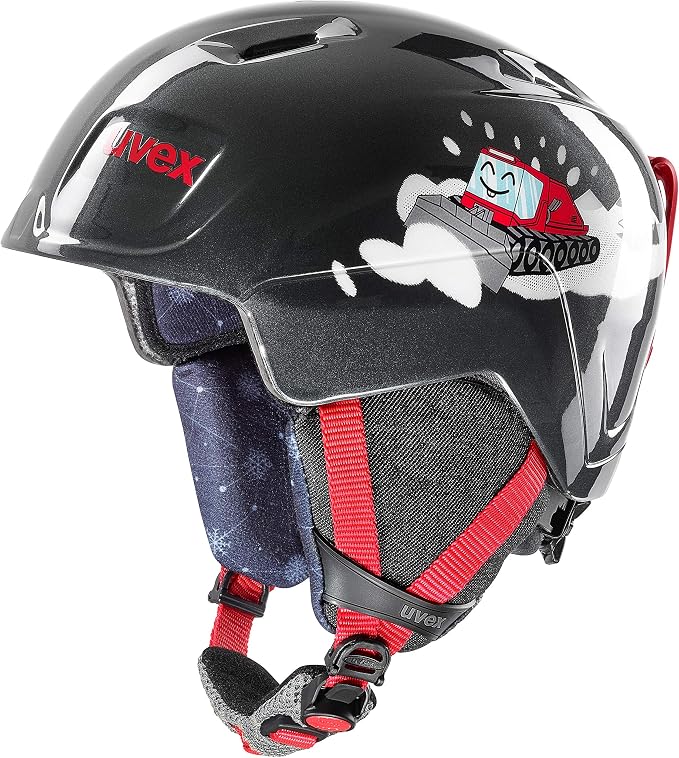 | uvex manic | For a second fit option: In-Mold, IAS and removable lining according to the manufacturer's catalogue. | Check fit and the specific size | View on Amazon*Linked variant: 46–50 cm · Black |
| 8 | | Alpina Zupo | For families who prefer a hardshell: Zupo combines a hard outer shell and EPS with soft ear pads. | Still replace after a head impact | View on Amazon*Linked variant: L (54–58 cm) · black matt |
| 7 | | Alpina Brix Jr | For active children and teenagers: In-Mold, removable lining and a height-adjustable fit system. | No documented Mips | View on Amazon*Linked variant: M (55–59 cm) · black-neon matt |
| 6 | 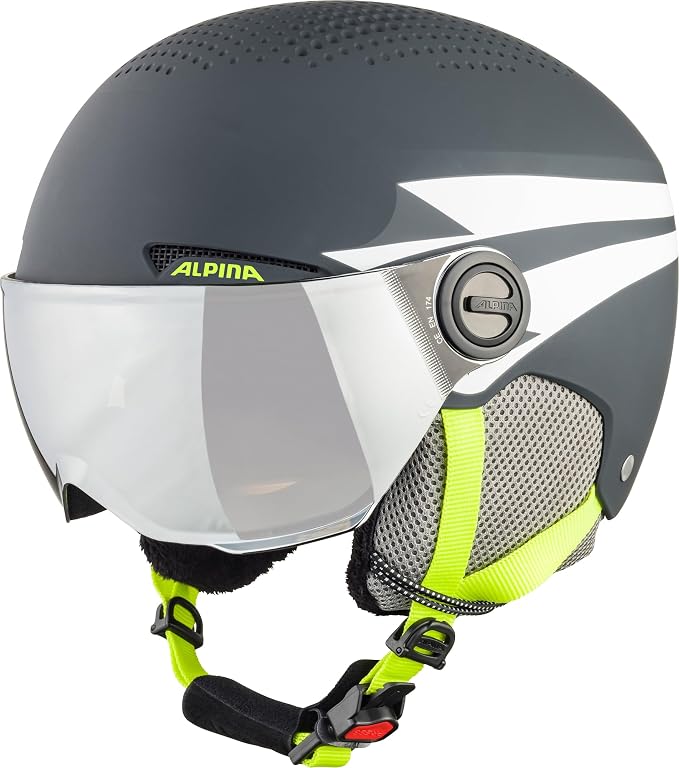 | Alpina Zupo Visor Q-Lite | For a combined helmet and vision system: Zupo Visor Q-Lite adds a visor to the hardshell. | Check the face and visor fit together | View on Amazon*Linked variant: L (54–58 cm) · charcoal-neon matt |
| 5 | 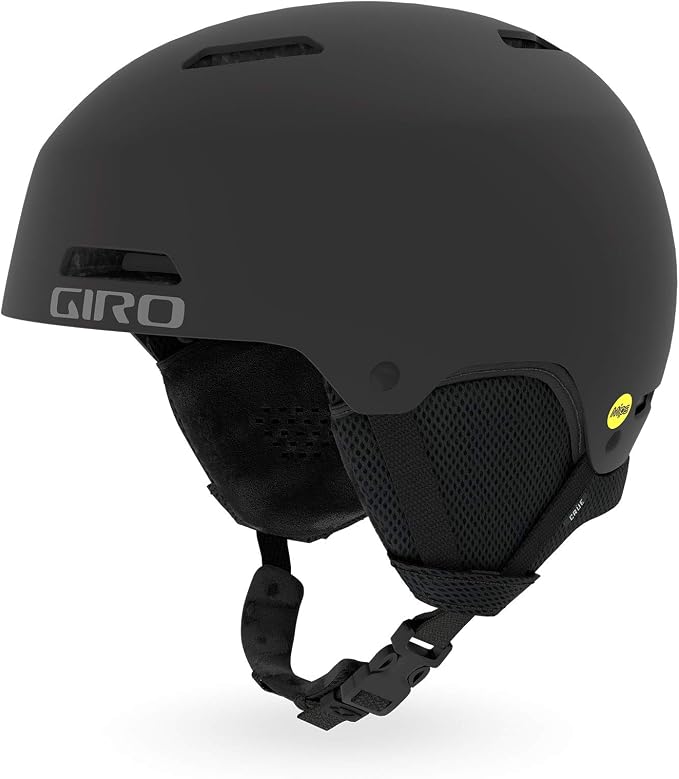 | Giro Crue Mips | For children who prefer the robust freestyle shape: hardshell and Mips. | Check the model generation and delivery date | View on Amazon*Linked variant: M (55,5–59 cm) · matte black · New condition. Estimated delivery at the time of checking: 24–30 November 2026; seller: Fast Media Ships From USA. |
| 4 | 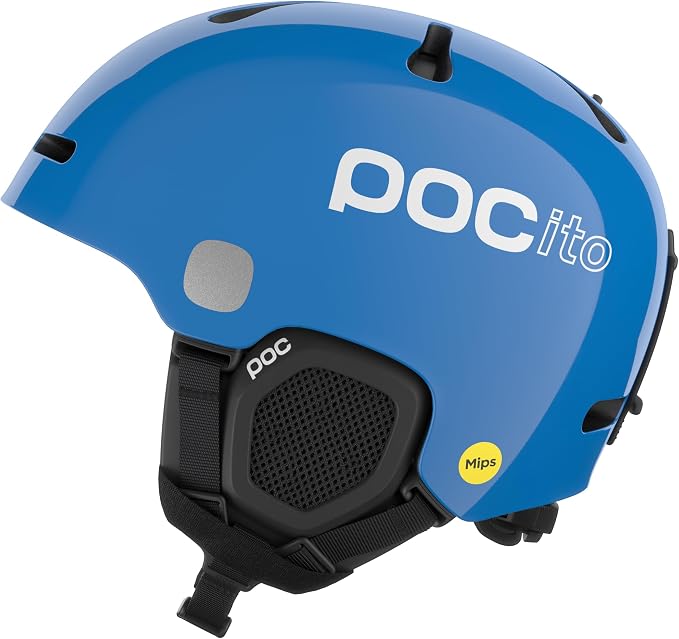 | POCito Fornix Mips | For families interested in extra equipment: Mips, RECCO and Twiceme, along with conspicuous colours. | Extras do not guarantee rescue | View on Amazon*Linked variant: XS–S (51–54 cm) · Fluorescent Blue |
| 3 | 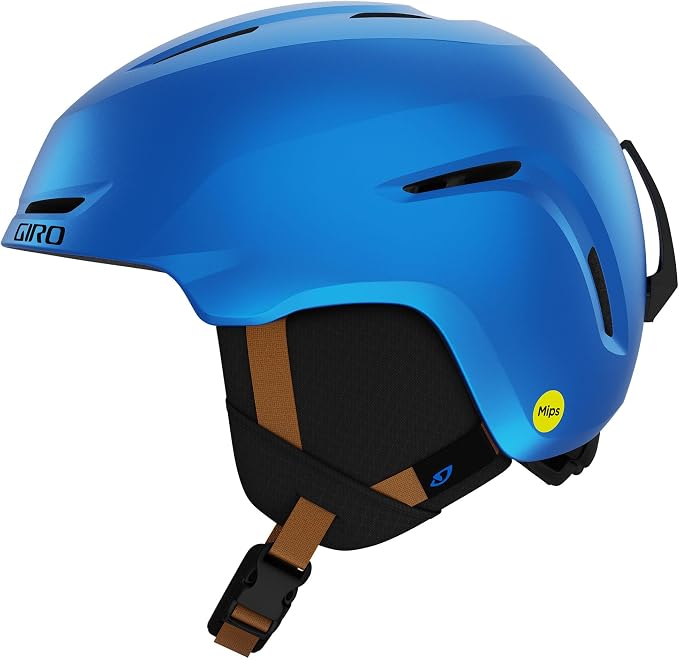 | Giro Spur Mips | For an adjustable In-Mold Mips option: In Form and Vertical Tuning help align the helmet with goggles. | Vent openings do not mean adjustable ventilation | View on Amazon*Linked variant: XS · BLUE SHREDDY YETI |
| 2 | | Smith Glide Jr. Mips | For a lightweight, straightforward Mips all-rounder: In-Mold, adjustment dial and fixed ventilation. | Fixed ventilation openings | View on Amazon*Linked variant: Youth Small (51–55 cm) · Electric Lime · Model code E005253SJ5155. Size identified from the model code; Amazon shows the shortened label “One size”. |
| 1 | 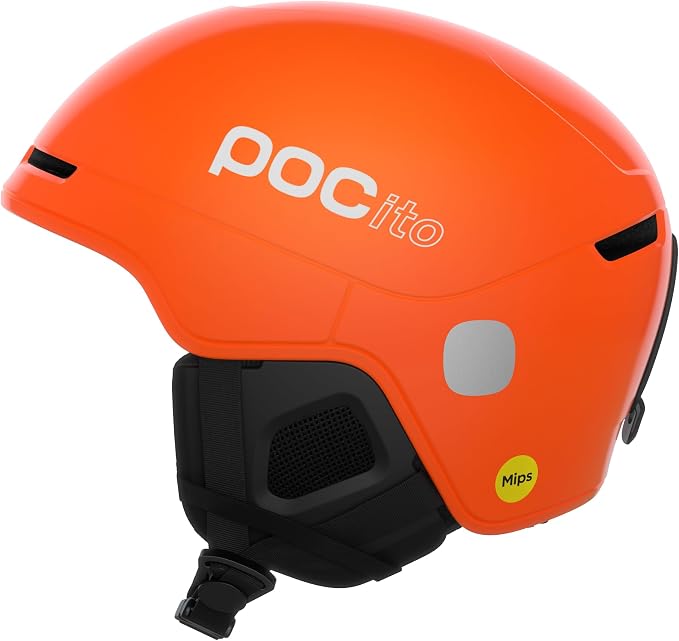 | POCito Obex Mips | Our versatile first priority for children to try on: Mips, a readily adjustable design and conspicuous POCito colour variants. | Manufacturer weights are for different sizes | View on Amazon*Linked variant: XSS (48–52 cm) · Fluorescent Orange |
How this selection was made
We compare documented construction, adjustment, eyewear solutions, temperature management and relevant compromises. Fit and appropriate certification are essential requirements that no other advantage can compensate for. The order prioritises versatile candidates to try on and ends at number 1; it is neither our own laboratory test nor a safety or sales ranking. The entire changing Amazon catalogue was not covered. Without comparable measurements, we do not award protection scores that suggest false precision.
Why the helmet must fit today
A children's ski helmet must fit securely from the very first ski day. Do not buy a larger size for next year: an adjustment dial cannot make a fundamentally oversized or unsuitably shaped helmet fit. Age and height do not provide a reliable helmet size. Measure head circumference horizontally above the eyebrows and ears and use the chart for the specific model. Let the child have a say when trying it on, but do not put a favourite design ahead of fit. [CDC]
Number 10
uvex heyya
For a straightforward introduction: In-Mold, IAS and Monomatic. The model focuses on simple adjustment rather than many extras. Choose it only if it fits now. Its basic concept remains similar to the Manic; head shape decides. The manufacturer source available here is an older catalogue.
EN 1077, protection and limitations
Check the ski helmet markings and EN 1077 on the specific product. Classes A and B differ in requirements and coverage; they are not grades. A helmet marked only for cycling is not an equivalent substitute. Studies support wearing ski helmets, but no helmet prevents every concussion. For race training or other sports, additional requirements must be met separately. [TUV]
Number 9
uvex manic
For another fit option: In-Mold construction, IAS adjustment and a removable liner according to the manufacturer’s catalogue. Worth trying as an alternative to the Heyya. On 4 November 2026, the linked black version in 46–50 cm was offered new with delivery to Germany. A similar construction does not imply an identical fit. If you specifically want Mips, choose another model with documented Mips equipment.
Understanding hardshell, In-Mold and weight
In-Mold bonds the outer shell to the impact-absorbing foam; a hardshell uses a more robust, separate outer shell. The term alone does not establish a safety ranking. Compare weights only across a similar size range and with all equipment included. A visor is part of the total weight. There is no verified general weight limit in grams here for every age of child. What matters is whether the child can move their head comfortably while the helmet stays secure. [DSV]
Number 8
Alpina Zupo
For families who prefer a hardshell: Zupo combines a hard outer shell and EPS with soft ear pads. Practical as an alternative to the Brix Jr's In-Mold concept. Robustness during transport does not mean it can continue to be used after a head impact. Try it with separate goggles that fit well.
Mips: assessing useful additional technology appropriately
Mips is intended to reduce rotational motion of the head in certain angled impacts. It cannot replace the right size or ski helmet certification. Therefore, do not choose a Mips helmet that creates pressure over a well-fitting model simply because it has one more logo. If necessary, look for a third alternative that fits. Ratings for an adult version must not be silently transferred to a similarly named children's helmet. [MIPS]
Number 7
Alpina Brix Jr
For active children and teenagers: In-Mold, removable lining and a height-adjustable fit system. Worth considering if care and precise fit matter. Compared with Zupo, the emphasis is on a lighter construction concept. No documented Mips in this version; check the specific size together.
Visor or separate ski goggles for children?
A visor stays on the helmet and reduces loose individual parts. Separate ski goggles can be replaced independently and adapted to the weather and face shape. Check with the child whether the goggles put pressure on the nose or the visor leaves gaps at the cheeks. For prescription glasses, the temples and nose bridge must also fit under the system. A good combined system is only good if the child has unobstructed vision straight ahead and to the sides. [CDC]
Number 6
Alpina Zupo Visor Q-Lite
For a combined helmet and vision system: Zupo Visor Q-Lite adds a visor to the hardshell. Less separate equipment, but the fit at the nose and cheeks remains critical. Compared with Zupo, the eye protection is harder to replace independently. Do not confuse it with Zupo 2 Visor Q-Lite.
Manufacturer information ↗ (Reference address currently unavailable)
Trying the helmet on with a short movement test
Put the helmet on level and adjust the rear fit system and straps according to the instructions. Ask the child to nod, turn their head and open their mouth. The helmet should move with the head without tipping into the face or towards the back of the neck. Ask specifically about pressure on the forehead, temples and ears. Repeat the test with ski goggles, the usual hairstyle and only a thin underlayer permitted by the manufacturer. A thick hat is not a size adapter. [CDC]
Number 5
Giro Crue Mips
For children who prefer the robust freestyle shape: hardshell and Mips. The linked Crüe-Junior-Mips version is matte black in M (55,5–59 cm). Do not take weight and adjustment system details from another model generation. At the time of checking, an offer in new condition was shown with delivery from 24 to 30 November 2026; the seller ships from the USA. Check goggles, field of vision and the current delivery date together before ordering.
Distinguishing visibility from rescue functions
Conspicuous colours and reflective elements can help others spot a child; they do not automatically make a child visible in every situation. Additional systems such as RECCO or a readable emergency profile serve other purposes. RECCO requires appropriate rescue equipment and does not replace an avalanche transceiver. For ordinary ski lessons, supervision, a suitable slope and agreed meeting points remain important. Technical equipment cannot replace supervision. [RECCO]
Number 4
POCito Fornix Mips
For families interested in extra equipment: Mips, RECCO and Twiceme, along with conspicuous colours. More technology than Obex, but not automatically necessary for ski lessons. RECCO does not replace an avalanche transceiver; a stored profile is no guarantee of rescue or medical care.
Warmth, ventilation and independent operation
Being too warm causes discomfort; being too cold is distracting. Let the child try the buckle and adjustment with gloves, and check the secure fit yourself. Fixed openings and closable ventilation are different solutions. Before taking the lift, check that the ear pads sit comfortably and the goggles are not fogging up. If there are problems, check fit and clothing first, rather than wearing the helmet loose or removing parts without manufacturer approval. [DSV]
Number 3
Giro Spur Mips
For an adjustable In-Mold Mips option: In Form and Vertical Tuning help align the helmet with goggles. A different construction concept from Crue. Worth considering if this fit works better. Do not confuse the ventilation openings with an explicitly continuously adjustable closure system.
After a fall, when hiring and when passing on to siblings
After a head impact, stop using the helmet and follow the manufacturer's replacement requirements. An intact exterior does not prove that the impact-absorbing core is undamaged. With a used helmet, its origin, age, previous accidents and completeness must be known; if uncertain, a new helmet or a reliably managed hire helmet is a better option. Check hire helmets together with the rental provider. Clean and store according to the instructions, without strong heat or solvents. [UVEX]
Number 2
Smith Glide Jr. Mips
For a lightweight, straightforward Mips all-rounder: In-Mold, adjustment dial and fixed ventilation. Smith specifies 350 g in YM. Appealing where weight is a concern, but fixed openings do not offer freely adjustable temperature management. Compared with POCito Obex, the described concept has fewer visibility features; fit decides first.
The linked Electric Lime version carries model code E005253SJ5155. The retailer's part-number table assigns it to Youth Small; the Smith catalogue specifies 51–55 cm for that size. Model code and size ↗ · Smith catalogue 2025/26 ↗
Making the right decision before the next ski day
Start with two or three suitable sizes and different shapes. Eliminate models with pressure points, a poor field of vision or an unstable fit. Then compare goggles, operation, temperature management and verified additional features. Measure again before each season; growth is no reason to buy an oversized helmet in advance. Check the fit again after a new hairstyle or a change of underlayer. Price and position in the list become deciding factors only among the candidates that are actually suitable. [CDC]
Number 1
POCito Obex Mips
Our versatile first priority for children to try on: Mips, a readily adjustable design and conspicuous POCito colour variants. POC specifies 410 g in XXS and 450 g in XS–S. Heavier than Glide in these manufacturer examples, whose sizes are not directly equivalent. First place cannot replace an individual fitting.
Your decision in five steps
- Check intended use and markings.
- Measure head circumference and try several shapes on.
- Rule out pressure points, slipping and restricted vision.
- Try goggles, buckle and ventilation together.
- Only then compare features, total price and the exact variant available for delivery.
Frequently asked questions
What size does a seven-year-old child need?
Age is not enough. Measure head circumference, check the model's size chart and try it on with the child. A general age chart cannot replace these steps.
Can a sibling take over the old helmet?
Only if the size fits, the helmet is complete, its accident-free history is known and its age is permitted by the manufacturer's instructions. An unknown fall history is a reason not to continue using it.
Is a visor always lighter?
No. Compare the complete helmet and vision system in the right size. A permanently attached visor reduces loose parts, but does not automatically reduce weight.
Is the number-one helmet right for every child?
No. Another candidate may suit the child's head and face shape better. A list favourite that is unsuitable must be ruled out.
Sources and model documentation
- CDC: Ski Helmet Safety
- TÜV SÜD: Safety on the slopes
- Mips: Snow helmets
- DSV aktiv: Protective equipment for skiers
- uvex: When do I need to replace my helmet?
- Russell et al. (2010), CMAJ: meta-analysis
- RECCO: FAQ
- Virginia Tech: Snow Sport Helmet Ratings
- uvex heyya — Manufacturer information
- uvex manic — Manufacturer information
- Alpina Zupo — Manufacturer information
- Alpina Brix Jr — Manufacturer information
- Alpina Zupo Visor Q-Lite — Manufacturer information (Reference address currently unavailable)
- Giro Crue Mips — Manufacturer information
- POCito Fornix Mips — Manufacturer information
- Giro Spur Mips — Manufacturer information
- Smith Glide Jr. Mips — Manufacturer information
- POCito Obex Mips — Manufacturer information