
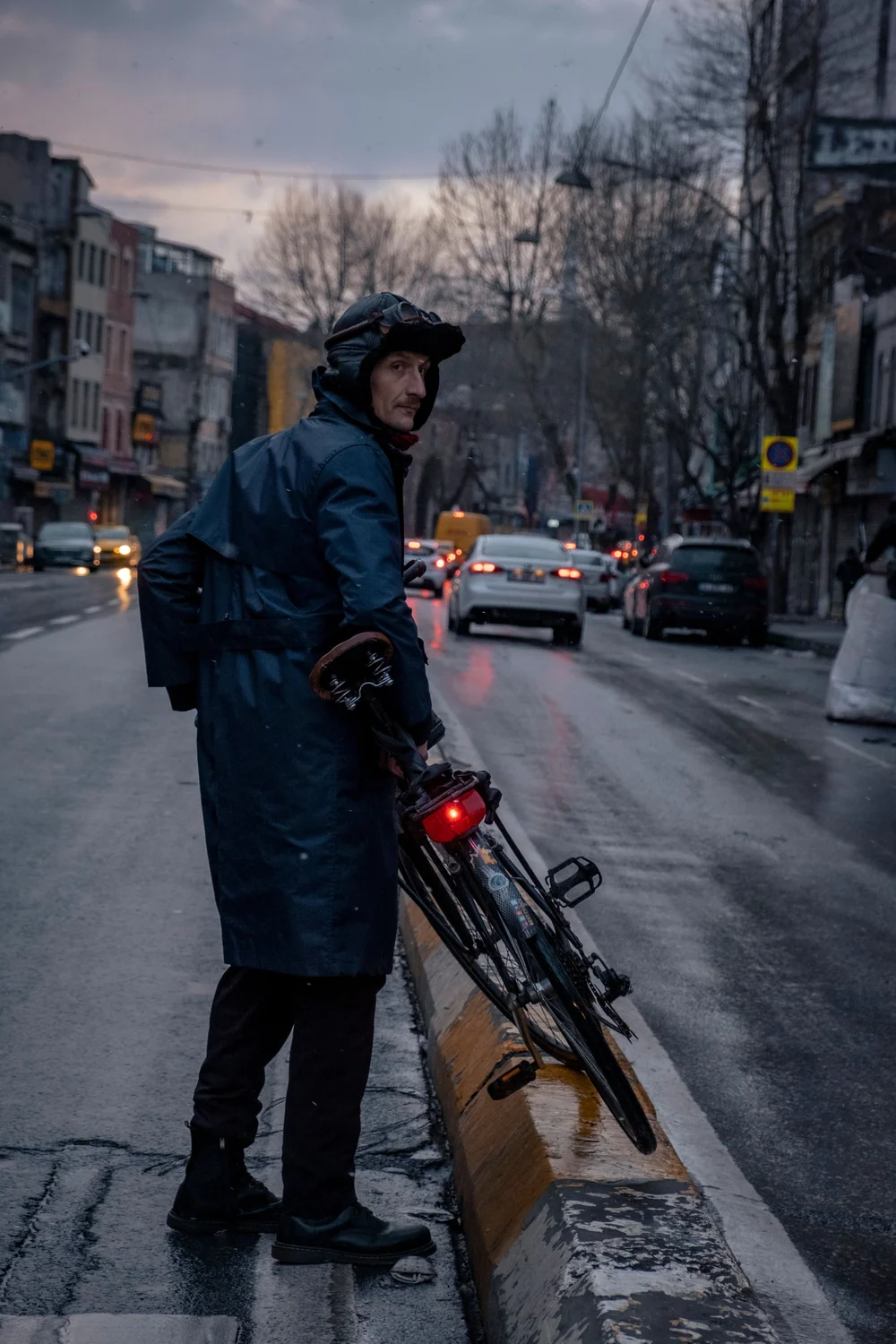
Choose a commute you can comfortably repeat.
Your first cycling commute brings two tasks together: getting to work on time and handling a route you may only know from the car. Start with a trial ride without a deadline. Check the route in daylight, including junctions, roadworks, lighting and the final stretch to the bike parking area.
Prefer a route with fewer conflicts and clear transitions. A slightly longer, well-lit route may be more comfortable in autumn than a poorly visible shortcut. Check the journey home too: a quiet park route at midday may be dark, covered in leaves or closed in the evening.
Include traffic lights, locking the bike and any time needed to change clothes. Record that total on your trial ride and allow roughly ten extra minutes for the first workdays. This is a planning buffer, rather than a universal travel-time formula.
A map does not replace local signs. In Germany, signs 237, 240 and 241 impose the relevant cycle-path use requirement. Follow the signs and give appropriate consideration to others on shared or permitted routes. [2]
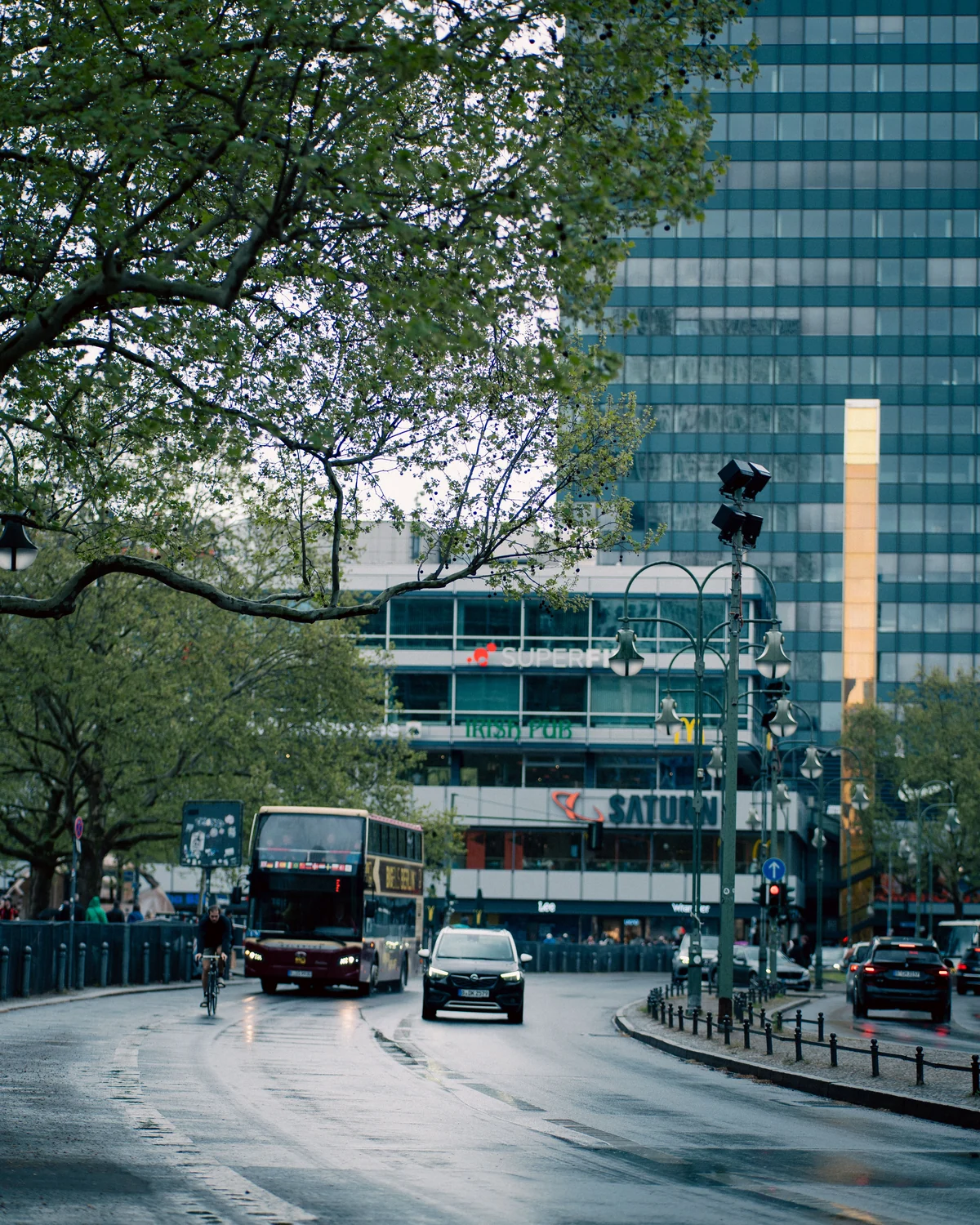
Better visibility. Less rushing.
Check narrow sections and transitions on your trial ride. Prepare an alternative if a stretch becomes difficult to see after dark.
Foto / Photo: Zubair Rafiq / Pexels
Your lighting check happens before you leave.
Test both lights before setting off. They must be securely mounted and unobstructed by clothing or bags. Aim the front light according to its mounting instructions so that it illuminates the road without dazzling other people.
For ordinary bicycles in Germany, approved white dipped light at the front and steady red light at the rear are required. Battery-powered and rechargeable lights are allowed. Removable lights must be fitted at twilight, after dark or when visibility requires them. Flashing front and rear bicycle lights are prohibited. White front, red category-Z rear, yellow pedal and the specified wheel-side reflectors are also required. [1]
Lights and reflectors work together
Schematic illustration. The side-reflector requirement can also be met with the reflective strips or spoke options specified in § 67. [1]
Reflective clothing complements the bike equipment. It does not replace front or rear lights. An additional helmet light is not a substitute for the required lights mounted on the bike.
Check battery levels after riding home and charge as needed according to the manufacturer’s instructions. Keep a reserve for both journeys. The maximum stated run time is not a good reason to run a battery close to empty every day.
Wet roads call for earlier decisions.
The German statutory accident insurance body DGUV recommends reducing speed, leaving more space and using the brakes and steering gently in slippery conditions. Notice surface changes early and adjust your speed before reaching them. [3]
Whenever possible, slow down on the straight section before a bend. Use both brakes progressively rather than grabbing them abruptly. Strong braking and steering inputs on wet leaves can exceed the available grip. An unavoidable emergency stop still requires an emergency response; the aim of planning ahead is to reduce how often you face one. [4]
| Surface | What to notice | Practical response |
|---|---|---|
| Leaves | Moisture, holes or edges may be hidden below the upper layer. | Slow down early, leave space and avoid sharp direction changes. |
| Paint & metal | Wet markings, grates and covers may be slippery. | Keep the bike steady as you cross; complete manoeuvres beforehand. |
| Puddles | Depth and the surface underneath can be difficult to judge. | Avoid riding in blindly. Move around one only when you have safe space. |
| Tram rails | Grooves can guide or trap a narrow tyre. | Plan the angle early and cross close to a right angle when safely possible. |
Tram rails: plan your crossing angle
The front wheel can enter the groove. Avoid a sudden swerve between vehicles.
Look early, slow down and cross only when you have room. Otherwise stop somewhere safe and walk.
If you cannot cross safely, stop in a suitable place and walk the bike over the section. A sudden swerve into traffic is not a solution.
Black ice, frozen paths, thunderstorms, strong crosswinds or visibility that prevents safe navigation are reasons to travel another way. A commute is not a handling test. Arrange an alternative that will also work early in the morning.
Arrive ready for work: clothing and luggage.
Dress so that you do not overheat unnecessarily after the first few minutes. A thin layer suited to the temperature under a rain jacket is usually easier to regulate than a very warm jacket. Use ventilation before you become too hot, where the garment allows it. For longer journeys, dry spare clothes and a small towel at work may be more useful than extra bike equipment.
Gloves should combine warmth with a secure grip. Check that you can operate the brake levers and gears accurately while wearing them. Keep loose trouser legs and straps clear of the chain and wheels. A hood must not obstruct a shoulder check, and a properly fitting cycle helmet should stay correctly adjusted.
Pack the night before when possible. Secure bags so that they do not swing while steering or reach the spokes. With a rack bag, check the attachment, heel clearance and visibility of the rear light. A laptop needs suitable padding and protection from water; a “water-repellent” label alone is not a dependable transport arrangement.
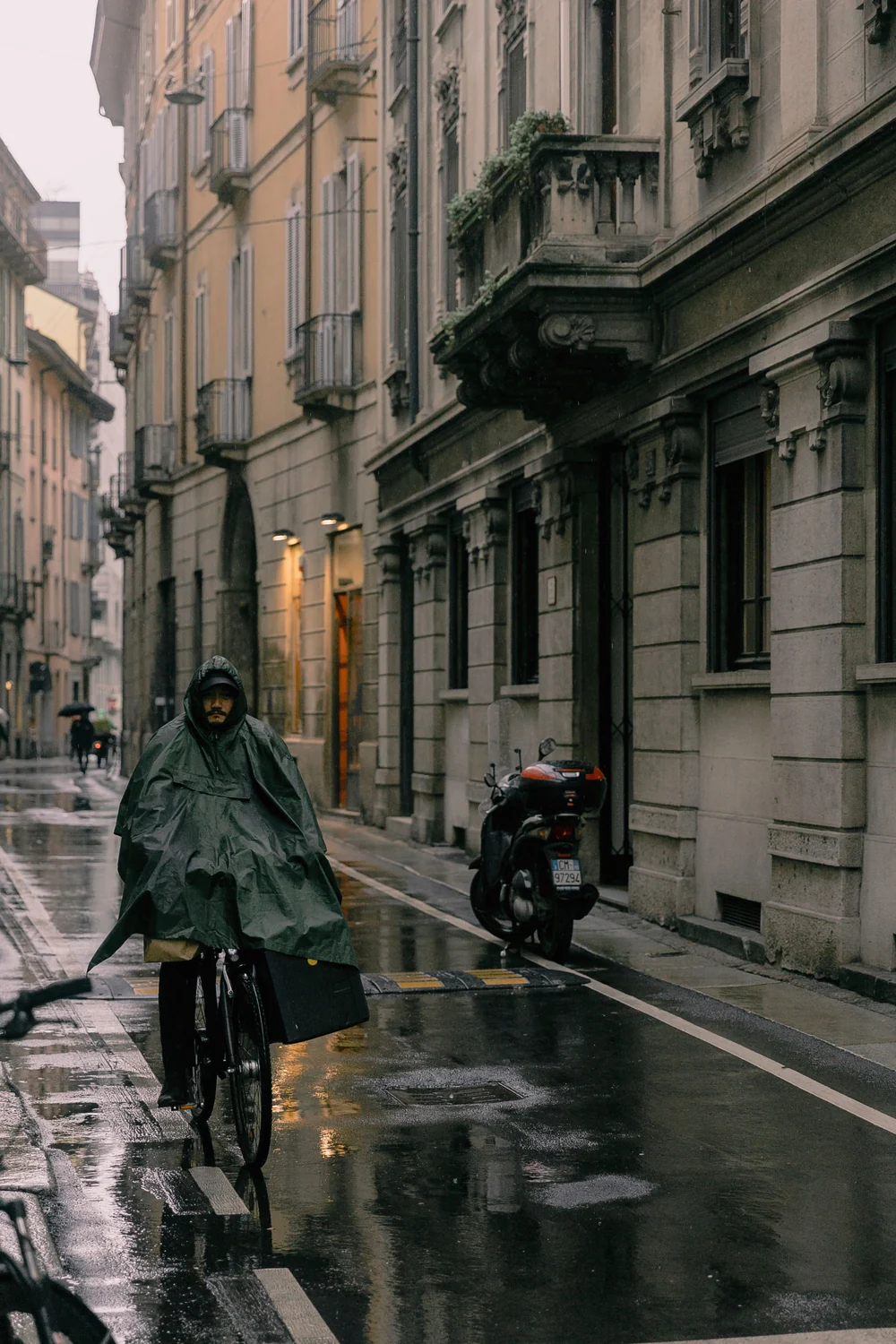
Prepare for the rain.
Clear vision, reliable controls and dry luggage matter in daily use. This photograph shows a rainy street scene; choose clothing for freedom of movement and helmet compatibility.
Foto / Photo: Elina Volkova / Pexels
Keep the last few minutes easy and allow time to change. If you sweat heavily, first reduce the pace and unnecessarily warm layers. The journey to work can be useful physical activity without becoming a hard training session.
Collect activity without turning the commute into a race.
Regular physical activity supports health and well-being, and cycling for transport counts. WHO recommends 150–300 minutes of moderate aerobic activity per week for adults, or an equivalent combination with vigorous activity, plus muscle-strengthening activities on at least two days. [5]
Five days with 15 minutes of genuinely moderate cycling in each direction add up to 150 minutes. Waiting at traffic lights is not moderate activity in this calculation. Very easy riding may also fall below that intensity.
A sensible pace for most first commutes allows comfortable conversation and full attention to traffic. The route and safety take priority over a heart-rate number. A sports watch is not necessary.
If you work shifts, do physically demanding work or already train, include the extra cycling in your total workload. Avoid shortening your sleep to add another cycling day. Unusually heavy legs, persistent exhaustion or increasing knee pain are reasons to adjust the load and seek professional advice if symptoms persist.
Four weeks to establish a routine that fits work.
This FitRecover example is for adults who can handle a bicycle safely and comfortably tolerate 10–15 minutes of easy riding. It is a practical way to organise a gradual start, rather than a commuting programme validated in a study. If your commute is much longer, begin with a suitable part of the route or just one direction and arrange the return journey separately.
| Week | Cycling days | Each way | Focus |
|---|---|---|---|
| 1 | 2 | 10–15 min | Learn the route and arrive comfortably. |
| 2 | 2 | 15–20 min | Settle packing, lighting and parking routines. |
| 3 | 3 | 15–20 min | Add one day if recovery remains good. |
| 4 | 3–4 | 15–25 min | Maintain a manageable amount; avoid increasing speed at the same time. |
The minutes are guide values for a suitable section of your journey. A return commute means two rides. There is no need to artificially extend a shorter fixed route. Repeat a week or reduce the amount when work, weather or recovery calls for it.
Add a short practice session in a safe place.
On a dry, level area away from traffic, practise starting slowly, stopping under control, making a wide turn and looking behind before turning. Begin at walking pace and progress only when comfortable. Avoid testing traction limits on leaves or ice. Consider a handling course if you feel unsure about braking, turning or shoulder checks.
Your first goal is a commute after which you can manage the working day normally, and which you would be happy to repeat next week.
Prepare the ride home when you park.
Park in a suitable place and lock the frame to a fixed object. Take removable lights with you when appropriate. Before riding home, check that the rear light is visible, both brakes respond and the tyres look normal.
After a wet ride, wiping the light lenses and reflectors and drying and correctly maintaining the drivetrain can help. Keep oil and cleaning products away from braking surfaces and discs. Check tyre pressure, wear and fasteners against the component manufacturer’s instructions. Reducing pressure by the same amount is not appropriate for every tyre or load.
If a brake rubs, works noticeably worse or a component’s mounting is uncertain, resolve it before the next journey. Use a bike workshop for safety-critical work you do not know how to perform.
The 60-second check before you set off.
Go through these points calmly. The timing describes a brief routine check; it does not replace maintenance or a repair.
Make the next journey easy to plan.
Prepare your route, clothing and lights today. Start with a few suitable days, keep the pace comfortable and use your alternative when conditions become unsafe. A dependable routine is the goal.
Common questions about cycling to work.
Do I need a new bike to start?
Not automatically. Correct fit, safe handling, dependable brakes, sound tyres and the required equipment matter. Check your existing bicycle before planning a replacement.
Are rechargeable lights allowed in Germany?
Yes. They must have the required approval and be correctly mounted when visibility requires them. Check the separate reflector equipment and aim the front light to avoid glare.
How can I manage without a shower at work?
Keep the pace easier, avoid unnecessarily warm layers and allow time to change. For a long or hilly commute, a partial route and dry spare clothes may be more suitable.
How often should I cycle to work at first?
Two suitable days are one possible start. The right amount depends on the route, fitness, work and recovery. One direction or a partial route can also be an appropriate first step.
What if my light fails during the ride?
Stop somewhere safe. After dark or when visibility requires lighting, continue cycling only once compliant lighting has been restored. Otherwise arrange a suitable onward journey.
Should I ride on black ice?
Choose another way to travel when the route is icy or cannot be ridden safely. A helmet or more tyre tread does not automatically make the route safe.
Sources and image credits.
- § 67 StVZO · Lichttechnische Einrichtungen an Fahrrädern
- § 2 StVO · Straßenbenutzung durch Fahrzeuge
- DGUV / Arbeit & Gesundheit · Das Fahrrad auf den Winter vorbereiten
- ADFC Bayern · Mit dem Rad durch Herbst und Winter
- WHO/Europe · Physical activity
- SIGMA · AURA 80 USB / BLAZE
Legal and product information checked on 13 October 2026. The four-week plan and checklist are practical FitRecover examples. Traffic rules, weather and your individual capacity remain decisive.
Image credits
Photographs: Zeynep Sude Emek (dusk), Zubair Rafiq (Berlin), Elina Volkova (rain) / Pexels. Optimised web versions; crops vary with screen format. Product photograph: SIGMA-ELEKTRO GmbH, official AURA 80 USB / BLAZE multimedia image pack. Schematic graphics: FitRecover. Pexels License
Stop exercising and seek medical help for acute symptoms such as chest pain, fainting or unusually severe breathlessness. With a known condition or during rehabilitation, agree on appropriate activity with your healthcare professional.