
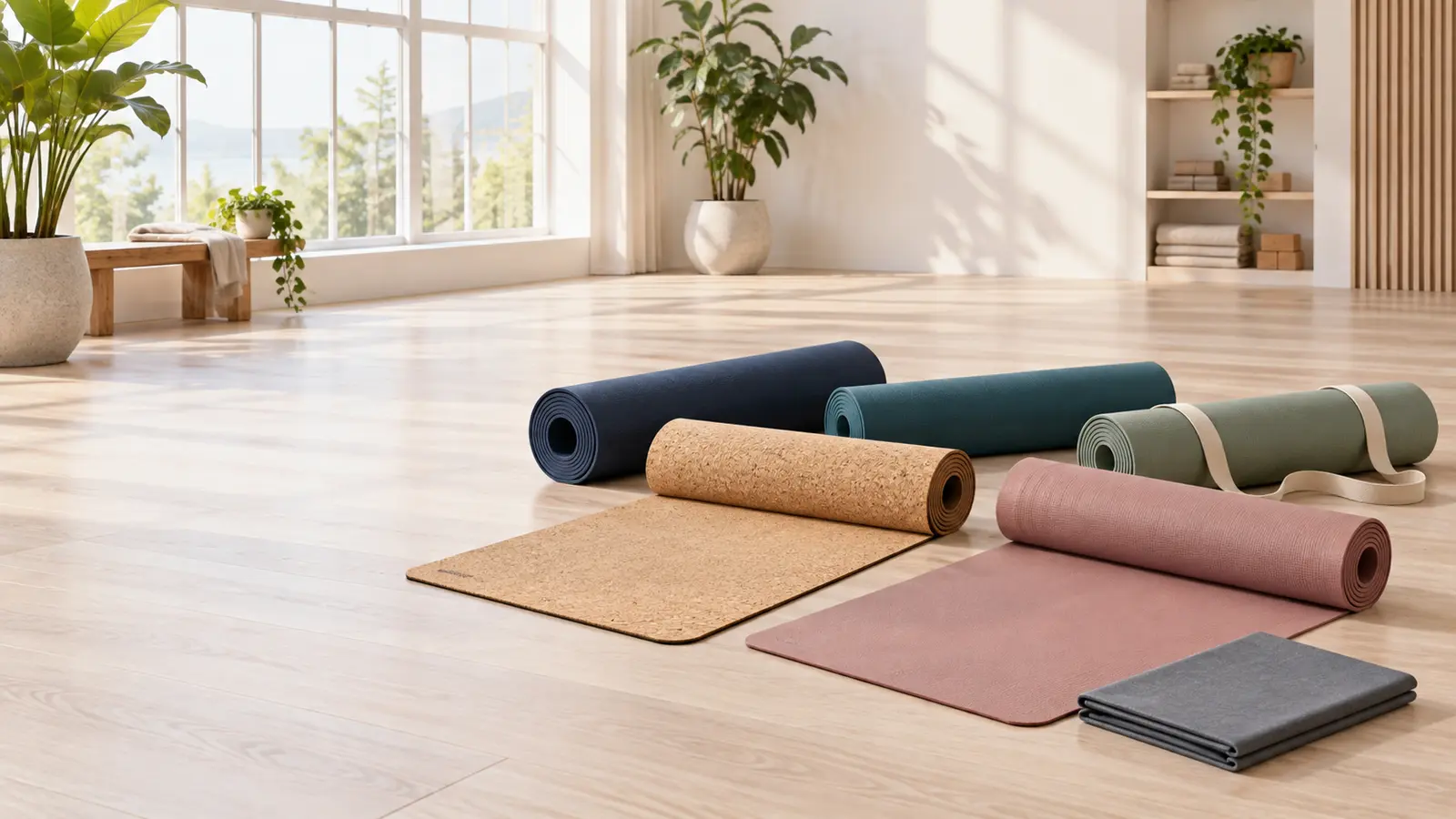
Quick answer: which yoga mat is best?
The BACKLAxx Cork Yoga Mat is our most balanced all-rounder: a grippy cork surface, stable natural-rubber underside and practical 4 mm profile. For very sweaty sessions, the Lotuscrafts PURE offers particularly strong hold, while the lightweight NEOLYMP Premium makes a comfort-focused introduction easier. Anyone wanting a mat that folds genuinely small for travel will find the JadeYoga Voyager the most focused travel solution – although with almost no cushioning.
Important: The best mat is not automatically the thickest or most expensive. Grip, stability, material tolerance and transport needs must suit your practice.
The key points before buying
How this yoga mat comparison was compiled
This article is an editorial buying guide, not our own laboratory test. The selection is based on publicly available hands-on tests, manufacturer claims, material and dimension data, and a dated snapshot of visible Amazon ratings. We did not simply choose the highest star rating: a travel mat can be excellent yet still be the wrong choice for sensitive knees.
Our assessment criteria
We deliberately omit prices because they can change at short notice. Availability, star ratings and combined variant reviews can also shift after the data cut-off. Always check the exact model, size and material before buying.
The best yoga mats of 2026 compared directly
| Rank | Model | Material and dimensions | Best for | Main limitation | Market signal* |
|---|---|---|---|---|---|
| 1 | BACKLAxx Cork Overall winner | Cork / natural rubber 183 × 61 × 0.4 cm | Versatile practice, natural feel | Not lightweight at 2.34 kg | 4.5/5 from 515 Amazon reviews |
| 2 | Lotuscrafts PURE Best wet grip | PU / natural rubber 183 × 66 × 0.4 cm | Dynamic yoga, sweaty hands | Heavy and more care-sensitive | 4.63/5 from 854 manufacturer-site reviews |
| 3 | Bodhi EcoPro Material focus | Natural rubber 185 × 60 × 0.4 cm | Simpler material mix, grip on both sides | Consider latex and inherent smell | 4.5/5 from 672 Amazon reviews |
| 4 | Divasya Premium Luxury comfort | Eco-PU / natural rubber 185 × 68 × 0.45 cm | Wide surface, intensive practice | Very heavy at approx. 3.2 kg | 4.4/5 from 101 Amazon reviews |
| 5 | NEOLYMP Premium YM320 Value-for-money pick | Check the specific version 183 × 61 × 0.6 cm | Beginners, comfort, easy transport | Material information is not consistent everywhere | Value pick in the F.A.Z. comparison |
| 6 | JadeYoga Harmony 188 | Natural rubber 188 × 61 × 0.5 cm | Maximum dry grip, taller people | Dust, smell and weight | 4.3/5 from 5,490 Amazon reviews** |
| 7 | Manduka PROlite | Closed-cell PVC approx. 180 × 61 × 0.47 cm | Studio, frequent use, easy care | Expensive; grip may need breaking in | 4.4/5 from 1,978 Amazon reviews |
| 8 | B YOGA B MAT Everyday | Natural rubber 180 × 66 × 0.4 cm | Direct, very grippy contact | Can attract dust and smell initially | 4.6/5 from 850 Amazon reviews** |
| 9 | Lotuscrafts MUDRA Studio | PVC 183 × 61 × 0.5 cm | Budget, studio, straightforward care | Less secure with very sweaty hands | 4.4/5 from 3,610 Amazon reviews |
| 10 | JadeYoga Voyager Best travel mat | Natural rubber 173 × 61 × 0.16 cm | Travel, folding, overlay mat | Almost no cushioning | Travel recommendation in the F.A.Z. comparison |
* Visible data as of 7 September 2026. ** Amazon sometimes combines reviews across colours, sizes or closely related versions; the figure is therefore a market signal, not a separate product test.
Top 10: the yoga mats in detail
The order reflects usefulness for different users. A lower position does not automatically mean poorer quality – a specialised travel mat simply solves a different problem from a heavy studio all-rounder.
BACKLAxx Cork Yoga Mat
The most balanced all-rounder with a natural surface
The BACKLAxx combines the pleasantly dry feel of cork with a heavy natural-rubber base that grips the floor. In F.A.Z.'s extensive hands-on test, it was recommended for most users. This fits its position here: 4 mm preserves a controlled connection with the floor, while its weight reduces unwanted movement and curling corners.
Cork is particularly interesting if you dislike smooth, rubbery surfaces. Grip typically increases with slightly damp hands. When dry, it may feel less sticky than aggressive PU or open-cell natural rubber – but the balance remains convincing for gentle through to dynamic flows.
Strengths
- Stable construction that lies flat
- Pleasant cork surface
- Good balance of grip and ground feel
- Carrying strap included
Limitations
- Relatively heavy for regular studio journeys
- Natural rubber is problematic with latex allergy
- Cork may need a little moisture with very dry hands
Suits you if: you want a high-quality mat for home or short studio journeys and prefer a natural surface that is not excessively sticky.
Lotuscrafts PURE
The specialist for dynamic, sweaty practice
The PURE follows an established performance formula: grippy polyurethane on top, slip-resistant natural rubber underneath. At 66 cm wide, it is noticeably broader than many standard mats. This gives more freedom in Vinyasa, Ashtanga or Hot Yoga – and the surface stays controllable when hands become damp.
Strong grip has a downside: PU is more sensitive to body oils, creams and unsuitable cleaners. The mat is also more a permanent studio or home companion than a commuting model. Fuck Lucky Go Happy named the PURE its 2026 yoga mat test winner.
Strengths
- Very reliable grip, even with sweat
- Generous 66 cm width
- Good balance of 4 mm cushioning and stability
- Transparent care and material information
Limitations
- Noticeably heavy at 2.7 kg
- PU can absorb oil and cream stains
- Not suitable for latex allergy
Suits you if: your priority is maximum hold during dynamic yoga or with sweaty hands, and the mat mainly stays in one place.
Bodhi EcoPro
Grip on both sides and a simpler material mix
People seeking a grippy natural-rubber mat without an additional textile or PU top layer quickly encounter the EcoPro. Both sides are usable, and the dense rubber structure sits steadily, providing direct feedback in standing and balance positions. F.A.Z. recommends it for sensitive skin and cites OEKO-TEX Standard 100, Product Class I certification.
However, natural does not automatically mean allergy-friendly: natural rubber can contain latex. The characteristic rubber smell and some attraction to dust are also realistic compromises.
Strengths
- Excellent grip on both sides
- Stable, direct ground feel
- Moderate weight for natural rubber
- Viewed positively in an independent comparison
Limitations
- Not for known latex allergy
- Possible rubber smell initially
- Only 60 cm wide
Suits you if: you want a simple, reversible natural-rubber mat with firm ground contact and tolerate latex.
Divasya Premium Yoga Mat
Wide premium mat with uncompromising wet grip
The Divasya is the most generously sized mat in this selection. Its 68 cm width gives hands and feet more room, while the PU surface provides strong hold even in damp conditions. F.A.Z.'s hands-on test praises grip and stability and recommends it as a luxury choice.
That assurance comes with weight: around 3.2 kilograms is not something most people want to carry across the city every day. For a permanent home-studio location, however, the weight is more advantage than problem, keeping the mat firmly in place.
Strengths
- Very strong grip with dry and damp hands
- Extra-wide 68 cm surface
- Sits steadily and securely
- Comfortable 4.5 mm profile
Limitations
- Heaviest model in the comparison
- Upper price segment
- PU and natural rubber need careful maintenance
Suits you if: you want a wide, extremely grippy premium mat at home or in the studio and transport weight hardly matters.
NEOLYMP Premium Yoga Mat YM320
Lightweight comfort pick for beginners
At 6 mm, the NEOLYMP offers more padding than conventional 4 mm mats while remaining strikingly light according to comparison data. This makes it attractive for beginners, gentle sessions, Yin Yoga and travelling to classes. F.A.Z. Kaufkompass classified it as a value pick.
Transparency note: Public listings give different material information depending on version or retailer, including TPE and PVC. We therefore assess fit and intended use here, not a blanket material advantage. Before buying, check the model code, material, dimensions and package contents on the specific product page. When first unrolled, the lightweight mat may also need time to lie completely flat.
Strengths
- Comfortable 6 mm thickness
- Very low carrying weight
- Beginner-friendly price range
- Good choice for gentler practice
Limitations
- Material information must be cross-checked before buying
- Less direct ground feel than 4 mm
- Ends may curl slightly at first
Suits you if: you want a lightweight, slightly softer mat for starting yoga or gentle sessions and carefully check the exact offer version.
JadeYoga Harmony 188
An exceptionally grippy natural-rubber classic
The Harmony is made for practitioners who value grip more than a smooth, easy-clean surface. Its more open natural-rubber structure gives strong contact with hands, feet and floor. At 188 cm, it also provides extra length; 5 mm offers moderate comfort without feeling like a fitness mat.
The grippy material collects dust and lint more easily, may smell strongly of rubber initially and needs protection from sunlight and heat. Accept those characteristics and you get a highly dependable partner for demanding standing sequences.
Strengths
- Exceptionally high grip
- 188 cm length
- 5 mm as a comfortable all-round compromise
- Lies flat and stable
Limitations
- Attracts dust and hair more easily
- Typical natural-rubber smell possible
- Not latex-free and relatively heavy
Suits you if: you want maximum dry-hand grip and a little extra length – and can accept natural rubber's typical characteristics.
Manduka PROlite
Dense, closed-cell studio mat for frequent use
The PROlite takes a different approach from natural-rubber mats: its dense, closed-cell PVC absorbs sweat less readily and wipes clean easily. The stable profile feels controlled even after many sessions, making it interesting for studio use and regular practice.
When new, the surface may need breaking in before reaching its best grip. PVC also remains an environmental trade-off – the design's strengths lie more in long use, easy care and latex-free construction than in a promise of natural materials.
Strengths
- Dense, stable ground feel
- Closed-cell and easy to wipe clean
- Latex-free option
- Designed for frequent studio use
Limitations
- Surface may need breaking in
- Relatively high purchase price
- PVC is not everyone's preferred material
Suits you if: you want a robust, easy-care, latex-free mat for frequent use and find PVC acceptable.
B YOGA B MAT Everyday
Direct 4 mm grip for dynamic flows
The B MAT Everyday combines a pleasantly wide surface with the immediate grip of natural rubber. It feels less hard than ultra-thin performance mats, but at 4 mm stays close enough to the ground for controlled transitions and balance work.
Its almost dry-sticky grip is a matter of taste: some love the security, while others prefer smoother transitions on cork or closed-cell PVC. Dust, hair and an initial material smell are possible here too.
Strengths
- Very high grip immediately
- Comfortable 66 cm width
- Good ground feel at 4 mm
- Suitable for dynamic practice
Limitations
- Surface may feel too sticky for flowing transitions
- Dust and hair cling more readily
- Consider latex and rubber smell
Suits you if: you want a slightly wider mat with immediate, strong natural-rubber grip.
Lotuscrafts MUDRA Studio
Straightforward budget mat for gentle to moderate sessions
The MUDRA Studio is less spectacular than grip specialists, but that makes it practical: sensible dimensions, comfortable 5 mm thickness and an easy-clean surface. It suits beginners, studios and gentler practice without the weight of many natural-rubber mats.
With dry hands, it offers reasonable control. Heavy sweating or fast, forceful transitions usually leave more grip in reserve on PU, cork or grippy natural rubber. Its advantage is accessibility and straightforward everyday use.
Strengths
- Good value for money
- 5 mm provides comfortable basic cushioning
- Lighter than many rubber mats
- Easy to wipe clean
Limitations
- Less grip with very sweaty hands
- PVC as a material compromise
- Less firmly planted than heavier models
Suits you if: you want an affordable, conventional yoga mat for beginners, Hatha or studio use and do not need maximum wet grip.
JadeYoga Voyager
The folding solution for hand luggage and hotel rooms
Just 1.6 mm thick and around 700 grams: the Voyager folds to occupy about as much luggage space as a yoga block while retaining JadeYoga's characteristically strong grip. That is convincing for travel or as a hygienic, grippy overlay on a studio mat.
As a standalone mat on a hard floor, however, it is uncompromisingly thin. Knees, spine and wrists receive very little padding; at 173 cm, it is also shorter than every other model here. This is precisely why it remains a specialist rather than an overall winner.
Strengths
- Foldable and suitcase-friendly
- Only around 700 g
- Strong natural-rubber grip
- Good as an overlay on shared mats
Limitations
- Virtually no cushioning
- Relatively short at 173 cm
- Consider latex, smell and dust attraction
Suits you if: small packed size clearly matters more than comfort, or you want a grippy personal overlay for studio and borrowed mats.
Which yoga mat suits which use?
Usually start with 4–5 mm. The BACKLAxx is the stable all-rounder; the 6 mm NEOLYMP provides more comfort but requires slightly more balance control.
Lotuscrafts PURE and Divasya prioritise wet grip. Cork, as used by BACKLAxx, is a more natural-feeling, less sticky alternative.
5–6 mm may feel more comfortable. MUDRA, NEOLYMP or Harmony are obvious candidates; a small additional knee pad can help where needed.
4 mm models such as EcoPro, PURE and B MAT generally provide clearer feedback than very soft, thick mats.
Many grip favourites contain natural rubber. The explicitly latex-free Manduka PROlite is the obvious alternative; recheck specifications before buying.
The JadeYoga Voyager folds and stays light. On a hard floor, a second mat underneath makes sense if you need more padding.
Cork, natural rubber, PU, PVC or TPE?
Material alone does not determine whether a yoga mat is good. However, it influences grip, smell, care and weight more than any marketing label. The complete construction of top and underside is always decisive.
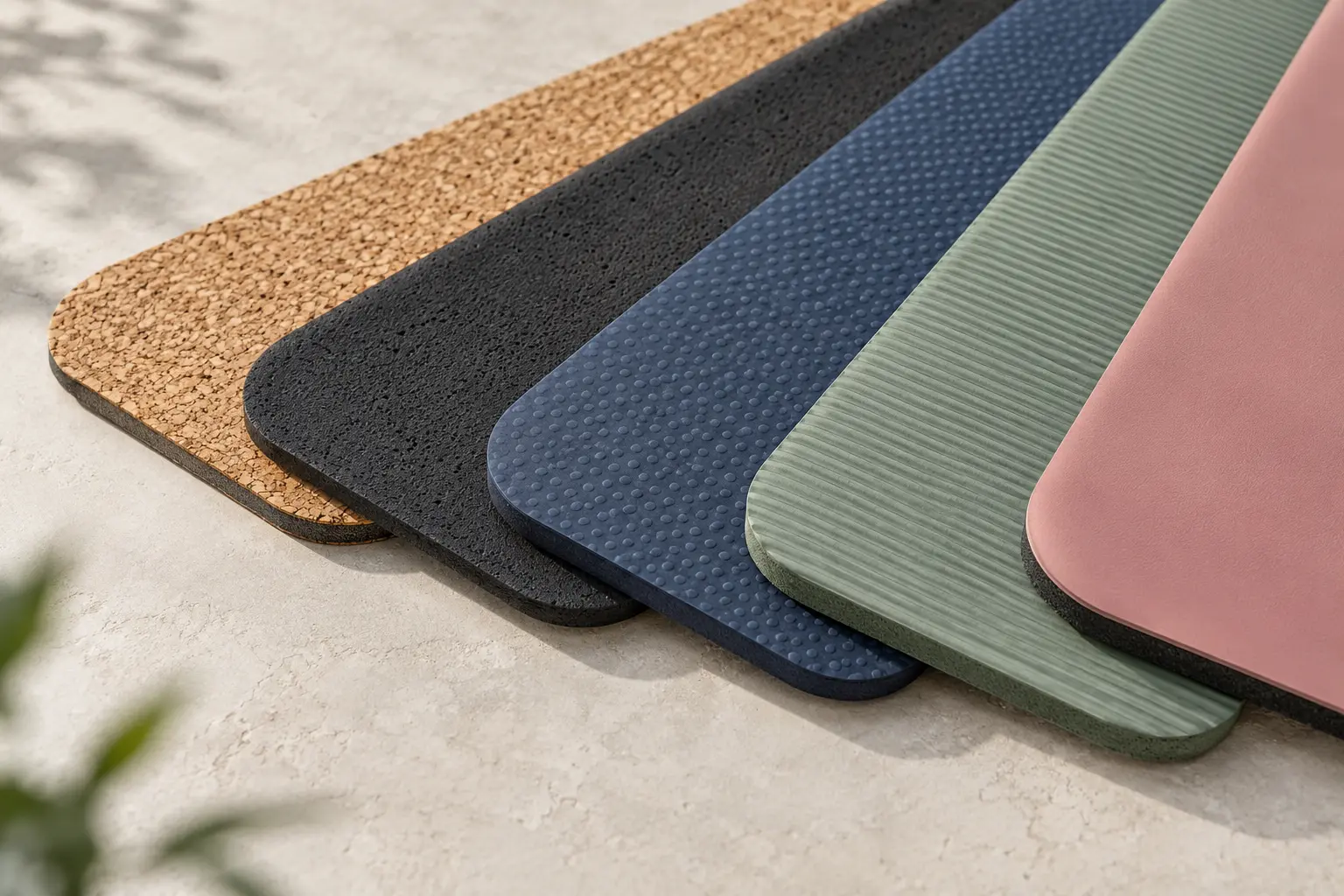
Cork + natural rubber
Dry, warm feel; often becomes grippier with light moisture. Usually heavier and, because of the rubber base, not intended for latex allergy.
PU + natural rubber
Very high dry and wet grip, popular for dynamic yoga. More sensitive to creams, oils and unsuitable cleaners; often heavy.
Natural rubber
Direct, strong grip and good floor contact. May smell initially, attract dust and be unsuitable for latex allergy; avoid sun and heat.
Closed-cell PVC
Durable, shape-stable and easy to wipe clean. Absorbs less moisture, may need breaking in and involves a deliberate environmental trade-off.
TPE
Often light, soft and portable. Compositions and durability vary greatly – compare specific material and care information.
Why mixed constructions?
An absorbent or grippy top can be combined with a heavy, floor-gripping base. This improves performance but complicates recycling and care.
How thick should a good yoga mat be?
4–5 millimetres is the most sensible starting point for most yoga styles. You can still feel the floor clearly enough for balance poses while gaining more comfort than an ultra-thin travel mat.
- 1.5–2 mm: light and foldable, ideal for travel or as an overlay – little cushioning on hard floors.
- 4–5 mm: a good all-round compromise for Hatha, Vinyasa and mixed practice.
- 6 mm and above: more comfortable for gentle floor positions and sensitive contact points, but often less stable in single-leg and balance poses.
Grip and stability: what really matters
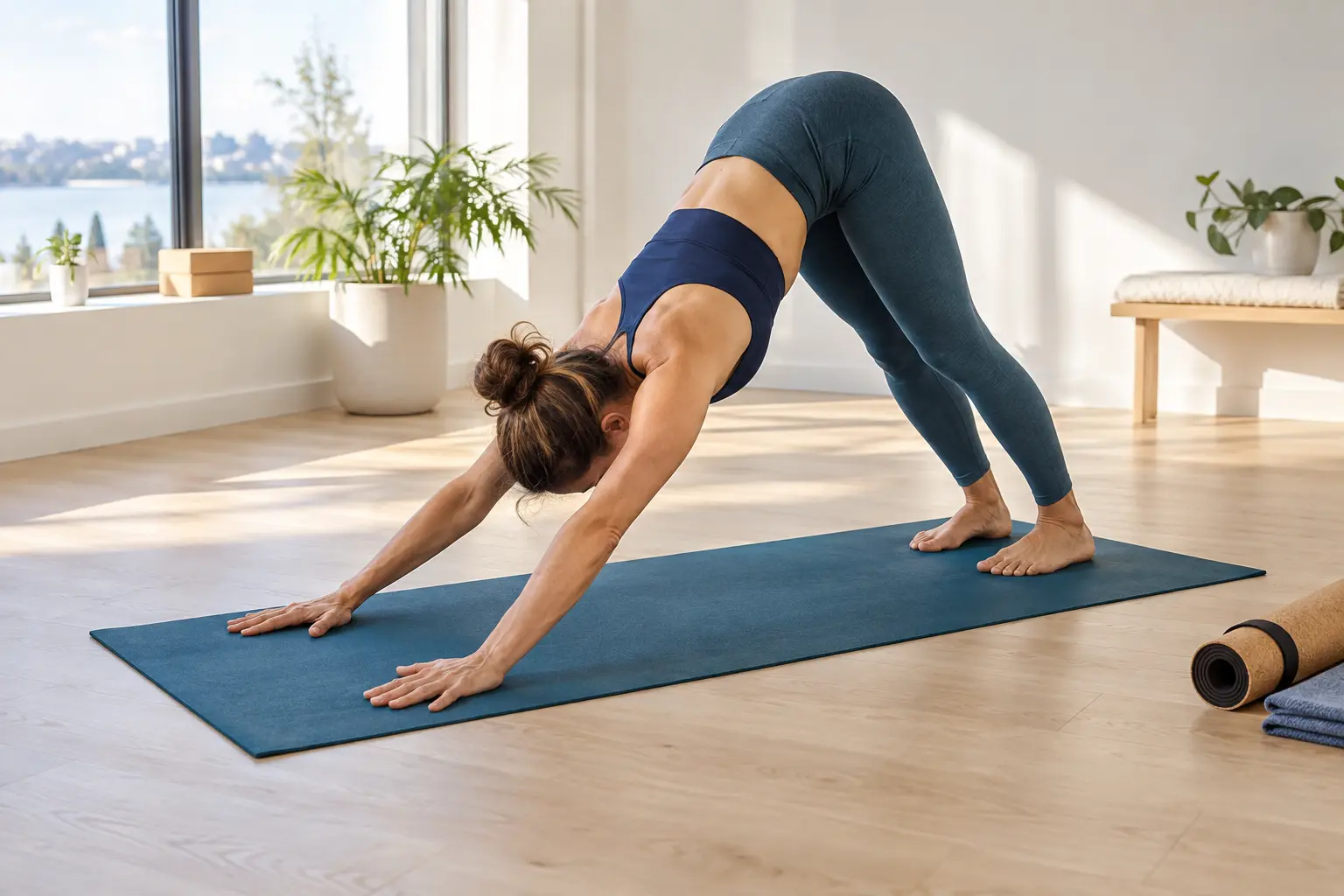
A non-slip yoga mat has two jobs: your hands and feet must not slide unpredictably on top, and the underside must not shift on parquet or tiles. Strong surface grip alone is therefore not enough.
Also test how you move on the mat. An extremely sticky surface can feel secure but may slow flowing transitions. Conversely, a smoother mat can feel elegant but often requires a yoga towel when you sweat. Before each session, the floor should be dry, clean and free of dust.
Cleaning a yoga mat without ruining its grip
Incorrect care can degrade a good mat faster than regular use. Manufacturer instructions always take priority, because even similar-looking surfaces can react differently.
- PU surfaces: avoid body oils and rich creams before practice. Usually wipe gently with a damp cloth; do not use harsh cleaners or oily sprays.
- Natural rubber: clean with a soft, damp cloth, allow to dry fully in the shade, and avoid direct sunlight, radiators and prolonged soaking.
- Cork: wipe surface sweat promptly and allow to dry well. Do not scrub or use strong chemicals.
- PVC or TPE: follow manufacturer approval. Not every foam formula tolerates disinfectant, a bath or a washing machine.
Roll up the mat only once completely dry. For natural rubber, keeping the upper surface on the outside is preferable to reduce tight creases and pressure marks.
Frequently asked questions about yoga mats
What thickness makes sense for yoga beginners?
For many beginners, around 4–5 mm is a good compromise between comfort and stable ground feel. Sensitive knees may benefit from more cushioning, while very soft mats can make balance poses harder.
Which yoga mat suits sweaty hands or Hot Yoga?
PU surfaces and many cork mats develop particularly strong grip with moisture. In our selection, Lotuscrafts PURE and Divasya are the clear performance options; BACKLAxx offers a cork alternative. The exact surface and care instructions remain decisive.
Is a cork yoga mat recommended?
Yes, if you prefer a dry, natural feel. Cork often becomes grippier with slightly damp hands. However, the underside is frequently natural rubber, adding weight and potentially making it unsuitable for latex allergy.
Is natural rubber suitable for latex allergy?
Natural rubber can contain latex proteins. With a known latex allergy, seek medical advice before buying and choose an explicitly latex-free model. The Manduka PROlite is the obvious option here; still recheck the current manufacturer specification.
How does a yoga mat differ from a fitness mat?
Yoga mats prioritise slip resistance and controlled ground contact. Fitness mats are often thicker and softer, which can feel comfortable for floor exercises but less stable for standing balance poses.
How do you clean a yoga mat correctly?
A soft, damp cloth is usually enough. Avoid harsh cleaners, oils, prolonged soaking and rolling it up damp. Always follow instructions for the specific material.
How long does a new natural-rubber mat smell?
This varies by model and personal perception. Airing it unrolled in a shaded, well-ventilated place usually reduces the characteristic smell gradually. Direct sun and heat can damage the material.
Conclusion: grip beats marketing
The BACKLAxx Cork Yoga Mat wins this comparison because it offers many practitioners the best balance of grip, stability, material feel and everyday usability. The Lotuscrafts PURE is more specialised and particularly convincing with sweat. Comfort-focused beginners should choose the NEOLYMP Premium only after checking the exact version; travellers get with the JadeYoga Voyager a genuinely folding mat rather than a half-hearted compromise.
Ultimately, your use matters more than the biggest promise: how much do you sweat? Does the mat stay at home? Do you need more knee comfort? Can you tolerate latex? Answer these four questions honestly and you can quickly find a suitable yoga mat in this Top 10.
Sources and data
- F.A.Z. Kaufkompass: the best yoga mat – updated hands-on test of 54 mats, as of June 2026.
- Fuck Lucky Go Happy: yoga mat test 2026 – specialist assessment including Lotuscrafts PURE, B MAT and JadeYoga.
- Lotuscrafts PURE – manufacturer information on dimensions, construction and care.
- BACKLAxx – manufacturer information on cork surface, natural-rubber base, weight and dimensions.
- Manduka PROlite – manufacturer information on thickness, cell structure and use.
- B MAT Everyday – manufacturer information on construction, thickness and surface.
- JadeYoga Harmony – manufacturer information and JadeYoga Voyager – manufacturer information.
Amazon stars and review counts were read publicly on 7 September 2026. They may change and may refer to several versions. Product data was cross-checked to the best of our knowledge; contradictions are identified. This buying guide does not replace individual medical advice.
Related reading
Editorial data cut-off: 7 September 2026. Models, availability and external ratings will be checked again in future updates.