
The Best Foam Rollers for Beginners in 2026: Soft, Medium or Firm?
The best foam roller is not the hardest one, but the one whose pressure you can control well. We compare four sensible models and show when soft, medium or firm makes sense — without marketing myths or pretending to have performed a laboratory test.
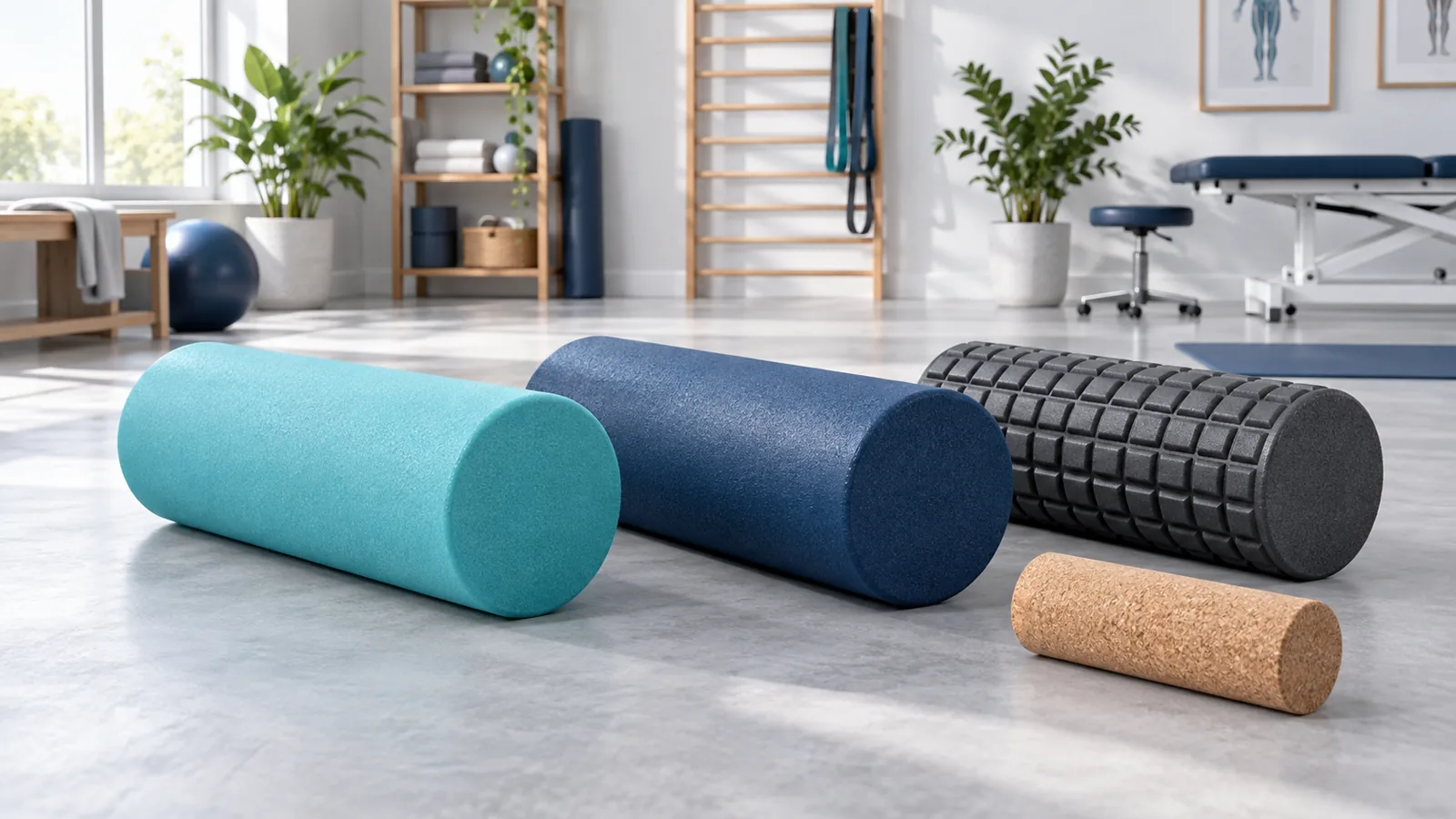
The key takeaway
Soft makes sense if you have never rolled before, quickly tense protectively or tolerate pressure poorly. Medium is the most versatile compromise for many healthy beginners. Firm is better suited to experienced users who can regulate pressure precisely.
Harder is not automatically more effective. In a small randomised study, soft, medium and firm rollers produced similar immediate changes in range of motion and pressure-pain threshold. Being able to relax and breathe calmly remains the key.
Advertising / affiliate links: This article contains Amazon links. As an Amazon Associate, FitRecover earns from qualifying purchases, at no extra cost to you. We deliberately do not list prices because they can change at short notice.
The key points before buying
Use a wall, your arms and your other leg to manage the load. Good technique matters more than maximum firmness.
A smooth surface spreads pressure more evenly. Ridges and knobs apply more localised, often more intense pressure.
Compact rollers are practical for the legs and glutes. A 45 cm roller provides more contact and stability for your back.
Important: terms such as “soft”, “medium” and “firm” are not uniformly standardised across brands. Compare not just the label, but also diameter, surface, construction and manufacturer guidance.
Four foam rollers for beginners compared
| Model | Feel | Surface / material | Best for | Important limitation |
|---|---|---|---|---|
| Gentle introduction BLACKROLL MED |
Soft; according to the manufacturer, 20% softer than STANDARD | Smooth EPP foam | Pressure-sensitive beginners and gentle self-massage | Manufacturer limit: 75 kg; not for standing balance exercises |
| Versatile all-rounder TriggerPoint GRID 1.0 |
Feels medium to firm | GRID texture, EVA over a hollow core | Beginners wanting variable, more targeted pressure | Texture may be too intense for highly pressure-sensitive users |
| Smooth classic BLACKROLL STANDARD |
Medium-firm | Smooth, 100% EPP | A shape-stable roller for massage and functional exercises | Less yielding than MED |
| Firm cork option Yosana cork foam roller |
Firm and direct | Cork with a grippy natural texture | Users specifically seeking a firm, plastic-free roller | Often too intense for sensitive beginners; smaller diameter |
Our recommendations in detail
BLACKROLL MED
Soft · Smooth · 30 × 15 cm · 106 g
The MED is the logical choice when your main goal is an easily controlled introduction. According to BLACKROLL, it is 20% softer than the STANDARD. Its smooth surface distributes pressure evenly instead of concentrating it through knobs.
- Comfortable starting point for pressure-sensitive users
- Lightweight, water-insoluble and easy to clean
- Exercise card included according to the manufacturer
Caution: BLACKROLL recommends the MED only for body weights up to 75 kg and not for standing balance exercises. Heavier users should choose a more shape-stable model rated for their weight.
Suits you if: you want to start as gently as possible and are within the manufacturer's weight limit.
Check the current price on AmazonTriggerPoint GRID 1.0
Variable · Textured · Approximately 33 × 14 cm
The GRID 1.0 combines a shape-stable hollow core with a water- and sweat-resistant EVA surface. Flatter zones, wide channels and denser areas offer different pressure sensations without buying several rollers.
- Compact, but long enough for most major muscle groups
- Texture allows even or more focused pressure
- Suitable for beginners and experienced users according to the manufacturer
Its hollow core makes it less yielding than a soft solid-foam roller. Very sensitive beginners should test it against a wall first or choose the MED.
Suits you if: you want one versatile roller and find texture comfortable.
Check the current price on AmazonBLACKROLL STANDARD
Medium-firm · Smooth · 30 × 15 cm · 152 g
The STANDARD is the straightforward middle ground: a smooth surface, medium firmness and shape-stable EPP construction. It suits broad-area rolling and, unlike the softer MED, many functional exercises too.
- Even, predictable pressure
- 100% EPP according to the manufacturer
- Compact and easy to clean
People who tense up even under light pressure may initially find it unnecessarily firm. Start against a wall or choose a softer alternative.
Suits you if: you want a durable all-rounder without pronounced knobs.
Check the current price on AmazonYosana cork foam roller
Firm · Cork · Approximately 30 × 10 cm
The cork roller is the deliberately firm option in this comparison. Its smaller contact area and minimally yielding material produce more direct pressure. This can be precise, but it is not automatically better — and is considerably more intense for many beginners.
- Grippy, firm surface
- Plastic-free material choice according to the seller
- Compact diameter for more targeted use
A cork product's sustainability cannot be judged by the material name alone; sourcing, processing and durability matter too. The seller's medical claims are not a selection criterion in this comparison.
Suits you if: you specifically want a firm cork roller and can already regulate pressure well.
Check the current price on AmazonSoft, medium or firm: which firmness suits you?
Soft
Choose soft if you are rolling for the first time, quickly find pressure uncomfortable or cannot relax on a firmer roller.
Advantage: easier pressure control. Limitation: very soft rollers may compress substantially under higher body weights.
Medium
Choose medium if you want a versatile all-rounder for your legs, glutes and upper back and tolerate moderate pressure well.
Advantage: a good compromise. Limitation: brands define “medium” differently.
Firm
Choose firm if you already have experience, can support your body securely and deliberately want very direct pressure.
Advantage: holds its shape. Limitation: easier to overdo and often unnecessary for sensitive areas.
What does research say about firmness?
A randomised study of 36 physically active adults compared two minutes of rolling with soft-, medium- and high-density rollers. There were no statistically significant differences between groups in immediately measured knee range of motion or pressure-pain threshold. This is not definitive proof of equivalence — the study was small and examined only short-term effects — but it clearly challenges the simple rule that “harder is more effective”.
BLACKROLL MED vs STANDARD: which is better for beginners?
BLACKROLL MED
- 20% softer than STANDARD
- Gentler and easier to tolerate
- 30 × 15 cm, 106 g
- Manufacturer limit: maximum 75 kg
- Not for standing balance exercises
BLACKROLL STANDARD
- Medium-firm and more shape-stable
- Even, smooth surface
- 30 × 15 cm, 152 g
- More versatile for massage and exercises
- Pressure-sensitive users should test against a wall first
Our verdict: For pressure-sensitive beginners under 75 kg, the MED is the more comfortable starting roller. For most other beginners wanting one versatile roller for long-term use, the STANDARD is the sturdier compromise. The manufacturer describes both as beginner-friendly; individual pressure tolerance is decisive.
Cork or foam roller?
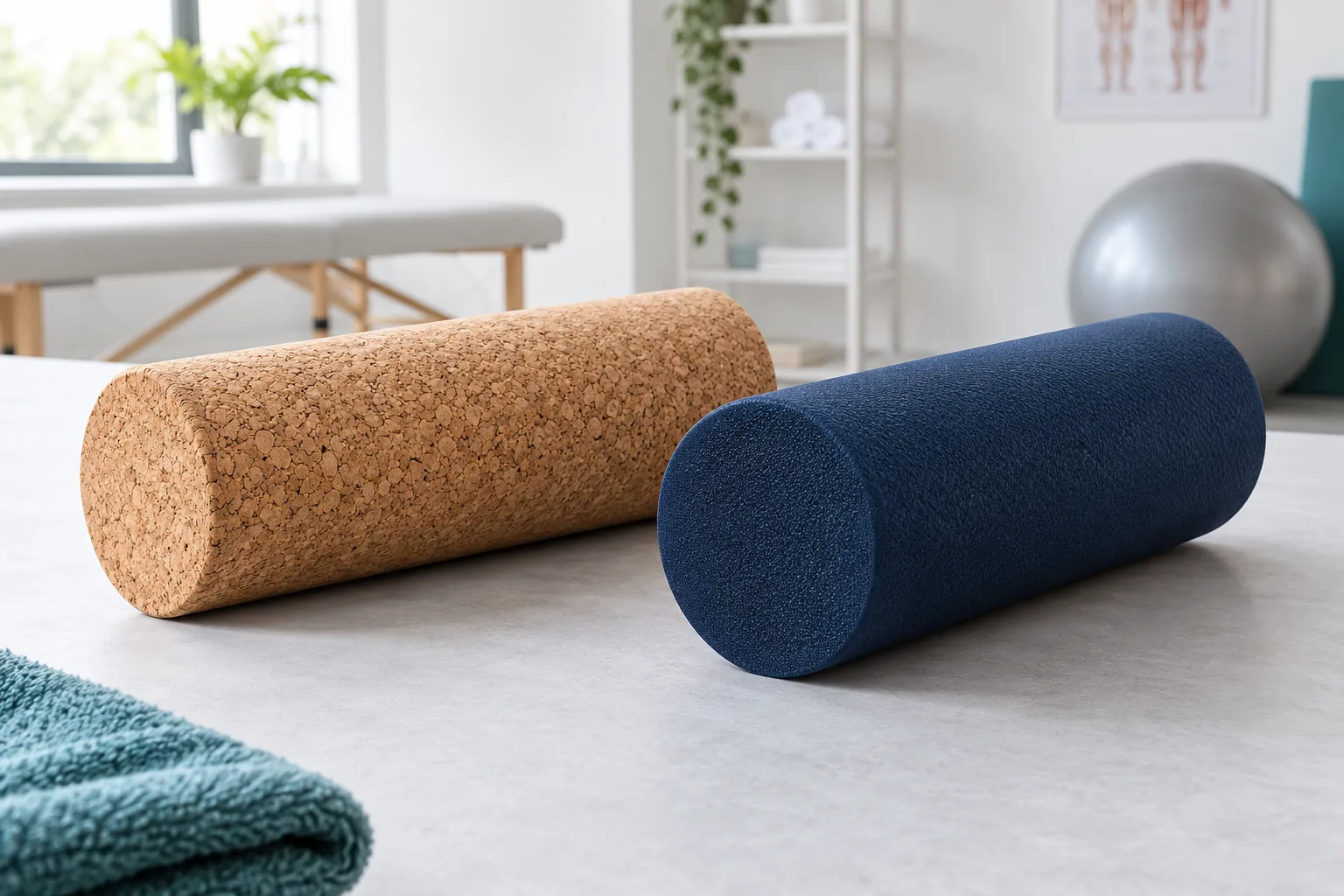
Cork
Cork rollers typically feel firm, grippy and shape-stable. They suit users who deliberately want to avoid plastic and prefer direct feedback. A smaller diameter further increases the perceived pressure.
For beginners? Yes, if you tolerate pressure well and start against a wall. Rarely the first choice for very sensitive users.
Foam
EPP and EVA rollers are light, wipeable and available in soft, medium and firm versions. This makes it easier to match the roller to your body weight and pressure tolerance.
For beginners? Usually yes. A smooth, soft or medium-firm foam roller is the most predictable choice.
Important sustainability context: “Cork” does not automatically mean the whole product is more climate-friendly. Sourcing, binders, transport, lifespan and a credible material declaration also matter. With foam, look for durability and specific recycling information from the manufacturer.
Smooth or ridged: which surface makes sense?
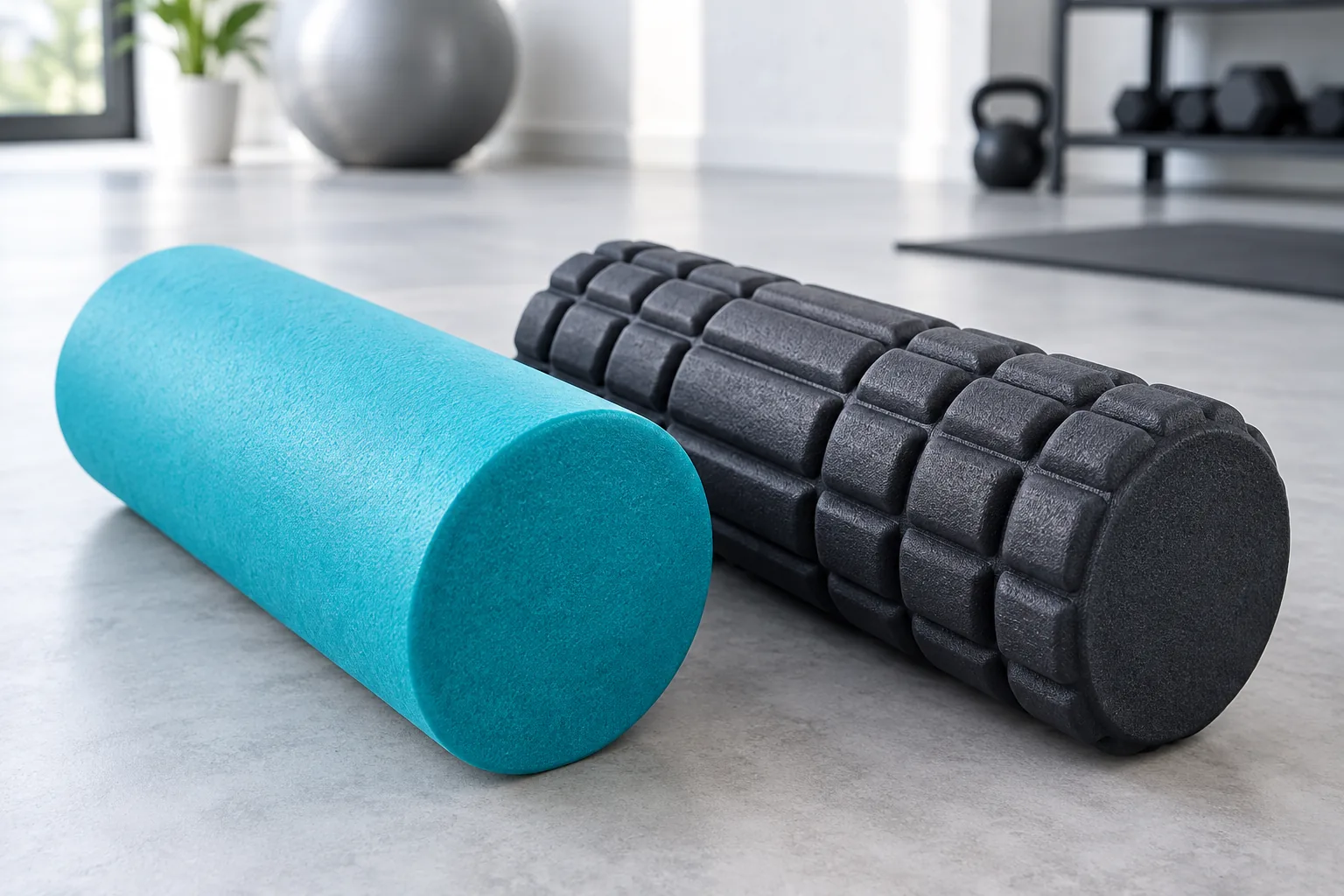
Smooth roller
It provides even, predictable contact. This makes technique errors easier to recognise and helps you avoid reflexively tensing against the pressure. Smooth is therefore the dependable default recommendation for a first purchase.
Ridges or knobs
They reduce the contact area and concentrate pressure. This can feel more targeted but can also become too intense more quickly. Moderate, rounded textures make more sense for beginners than sharp-edged patterns.
There is currently no strong basis for the blanket claim that knobs “release adhesions” or inherently deliver better results. Systematic reviews report possible short-term benefits for flexibility and recovery, but also emphasise the wide variation in protocols. Judge a surface by how easily you can control it, not by a spectacular appearance.
What length and diameter?
- 30–33 cm long: compact and useful for calves, thighs, glutes and many upper-back applications.
- 45 cm long: more lateral stability, often more comfortable for back exercises, Pilates or uncertain positioning.
- Around 15 cm in diameter: a common all-round standard with a moderate rolling angle.
- Around 10 cm in diameter: more direct pressure and less height; may feel more intense even with the same material.
For a first roller, a smooth model around 30 × 15 cm is usually straightforward. A longer roller is worthwhile when stability matters more than packed size.
The 60-second test before deciding
- Test against a wall first. Roll slowly over a calf, thigh or upper-back area. Far less body weight is then on the roller than when using it on the floor.
- Observe your breathing and tension. Can you keep breathing calmly and relax the muscle being worked? If you hold your breath or move away, the pressure is too high.
- Check your response afterwards. An intense but manageable sensation can occur. Sharp pain, numbness, tingling, visible bruising or persistent worsening are stop signals.
If you buy online without trying first, a smooth, soft-to-medium roller is the lower-risk first choice. You can progress later through more body weight, single-leg rolling or a firmer roller.
Start safely
Begin with around 30–60 seconds per muscle area and only a few minutes overall. Roll slowly over muscles, not directly over joints, bony edges or the spine. Strong or sharp pain is not a sign of quality.
Do not roll over open wounds or recent fractures. Seek professional advice first with acute injury or inflammation, vascular disease or thrombosis, pronounced varicose veins, osteoporosis, reduced sensation, bleeding disorders or blood-thinning medication, and during pregnancy. An international Delphi process also shows that evidence on contraindications remains limited; when in doubt, do not experiment — ask a doctor or physiotherapist.
Which foam roller should you buy?
- You are pressure-sensitive and weigh no more than 75 kg: BLACKROLL MED.
- You want a versatile roller with variable texture: TriggerPoint GRID 1.0.
- You want a smooth, shape-stable all-rounder: BLACKROLL STANDARD.
- You deliberately want a firm cork roller: Yosana cork roller — ideally after testing it against a wall.
What can foam rolling realistically achieve?
Foam rolling can temporarily improve range of motion and support the subjective feeling of recovery after exercise, typically without impairing subsequent strength or jumping performance. A 2024 systematic review also found indications of reduced perceived soreness in athletes, although the methods studied varied considerably.
Over the longer term, both foam rolling and static stretching can improve range of motion. A 2024 meta-analysis found no clear overall difference between them, although static stretching performed better in programmes lasting up to four weeks. A foam roller is therefore one possible tool, not essential equipment or a replacement for movement, strength training, sleep or medically necessary treatment.
Frequently asked questions
Which foam roller is best for beginners: soft or firm?
For pressure-sensitive beginners, soft is usually the most comfortable start. Medium suits users who tolerate moderate pressure while staying relaxed. Firm is rarely necessary for beginners and is not automatically more effective.
BLACKROLL MED or STANDARD — which should I choose?
The MED is gentler but, according to the manufacturer, is suitable only up to 75 kg and not for standing balance exercises. The STANDARD is medium-firm, more shape-stable and more versatile long term. If you are unsure and weigh under 75 kg, start with MED; otherwise, first test STANDARD against a wall.
Is a cork roller better than foam?
No, just different. Cork is usually firm, grippy and shape-stable. Foam is lighter and available in several firmness levels. Most beginners find a soft or medium-firm foam roller easier to control.
Are knobs or ridges more effective?
They concentrate pressure and therefore feel more targeted. There is insufficient evidence that they generally produce better results. A smooth roller is more predictable; moderate texture can suit you if you control the intensity.
How often and how long should I roll?
Start with 30–60 seconds per muscle area and a few minutes overall, for example two or three times per week or as needed. More is not automatically better. Adapt frequency and pressure to how the area feels during the session and the following day.
Can a foam roller treat back pain?
A roller can feel pleasant in the short term and support mobility, but it does not automatically treat the cause of back pain. Do not roll directly over the spine. Seek professional assessment for severe, radiating, recurring or unexplained symptoms.
Sources and data
- BLACKROLL: MED — manufacturer information on firmness, dimensions and weight limit.
- BLACKROLL: STANDARD — manufacturer information on material, dimensions and use.
- TriggerPoint: GRID 1.0 — manufacturer information on construction, material and dimensions.
- Cheatham & Stull (2018): Comparison of three different density type foam rollers.
- Martínez-Aranda et al. (2024): Effects of Self-Myofascial Release on Athletes' Physical Performance – Systematic Review.
- Konrad et al. (2024): Static Stretch Training versus Foam Rolling Training Effects on Range of Motion — meta-analysis.
- Bartsch et al. (2021): Expert Consensus on Contraindications and Cautions of Foam Rolling.
Manufacturer and retailer information describes products, not their medical effectiveness. This article provides general information and does not replace diagnosis, treatment or individual medical advice.