
TECHNOLOGY · TRAVEL · ACTIVE LIVING
Power banks and portable chargers: Top 10 for everyday use, travel and laptops
A manageable 10,000mAh power bank is a sensible starting point for a phone. Several days away or a USB-C laptop require more energy, together with the right port, charging protocol and cable.
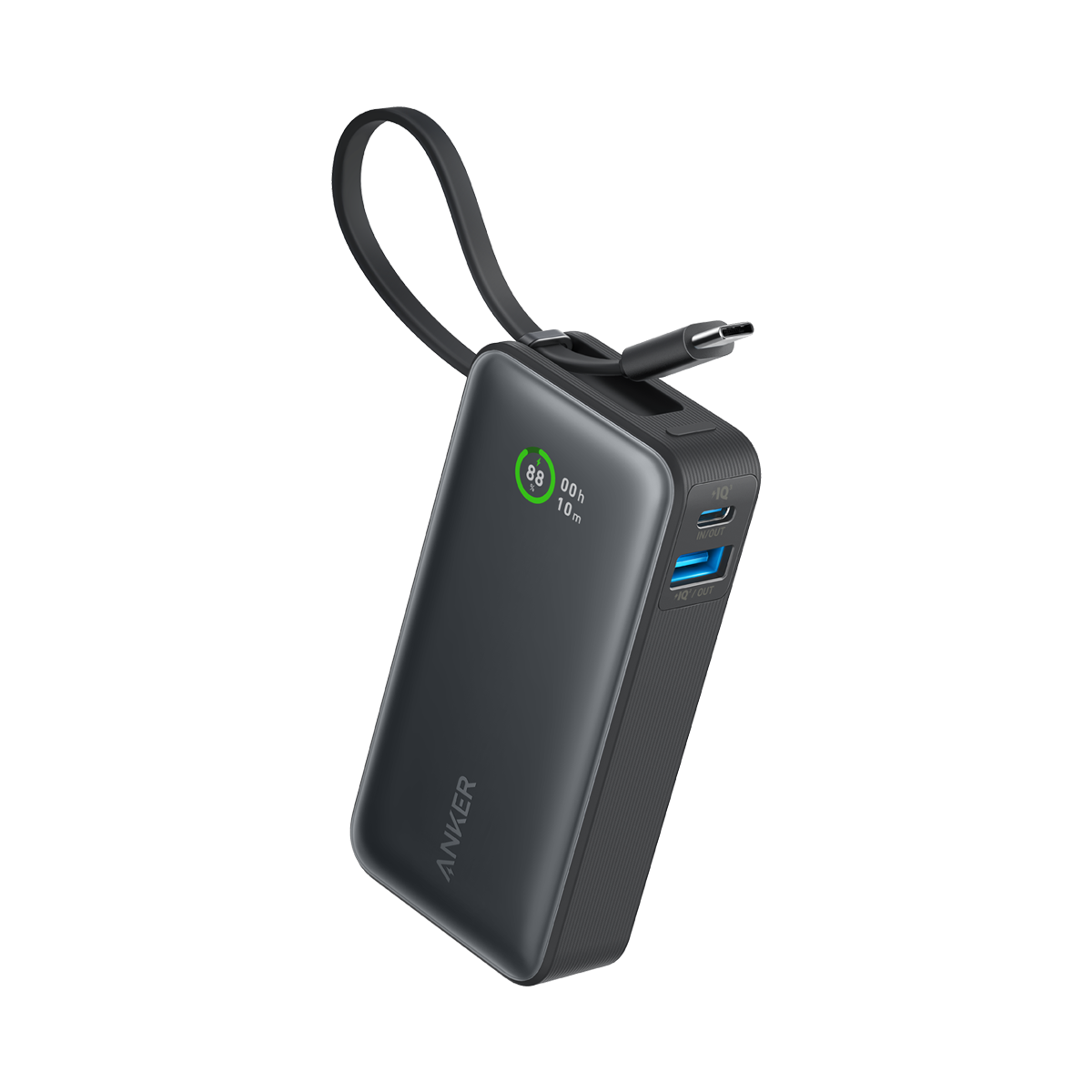
A flat battery while hiking, after a workout or on your commute is frustrating. The biggest number on the box does not automatically solve it: milliamp-hours describe charge, watts describe power and watt-hours describe stored energy. This guide turns those differences into a practical choice. A power bank contains a battery; a compact mains charger needs a socket. Large power stations with AC outlets are a separate product category.
Advertising / affiliate links: As an Amazon Associate, FitRecover earns from qualifying purchases. Links marked * lead to Amazon.de. This adds no extra cost for you. Offers, variants and package contents may change.
Three recommendations for different needs
More reserve for compatible Galaxy devices
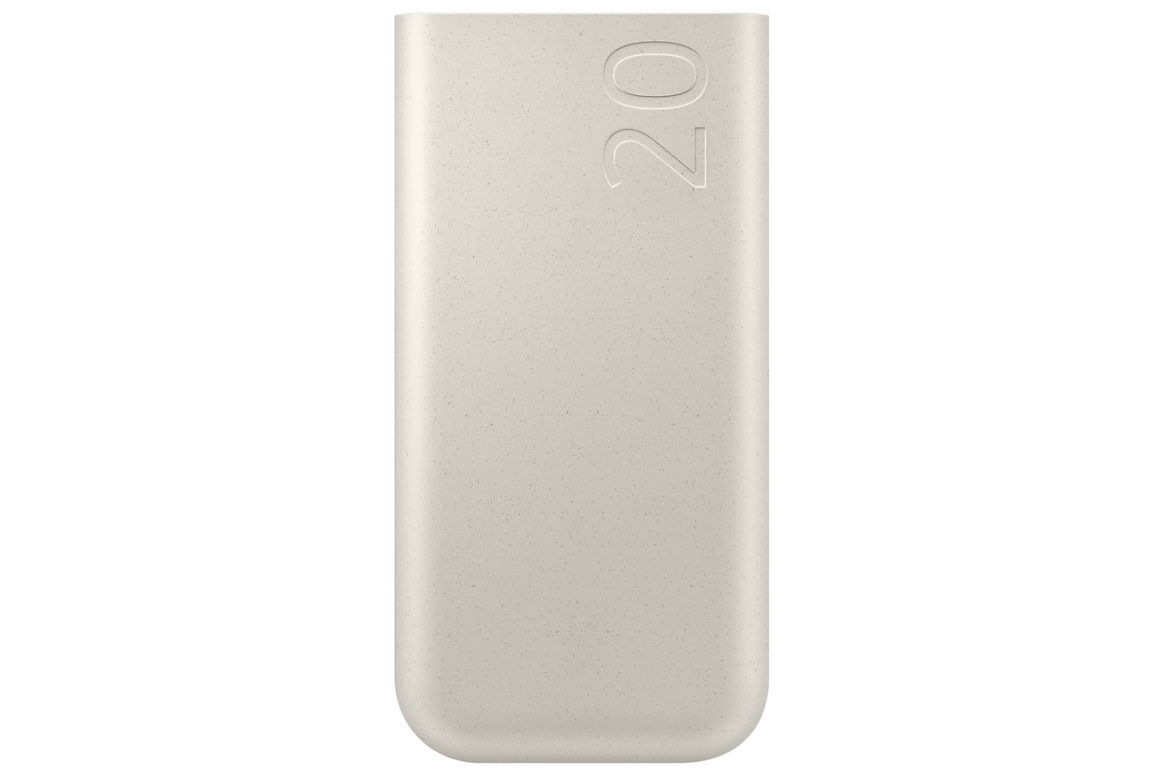
Samsung 20000 · EB-P4520
20,000mAh and up to 45WRank 7 · 45W needs compatible devices and cables
View on Amazon*Laptop and phone with fewer loose cables
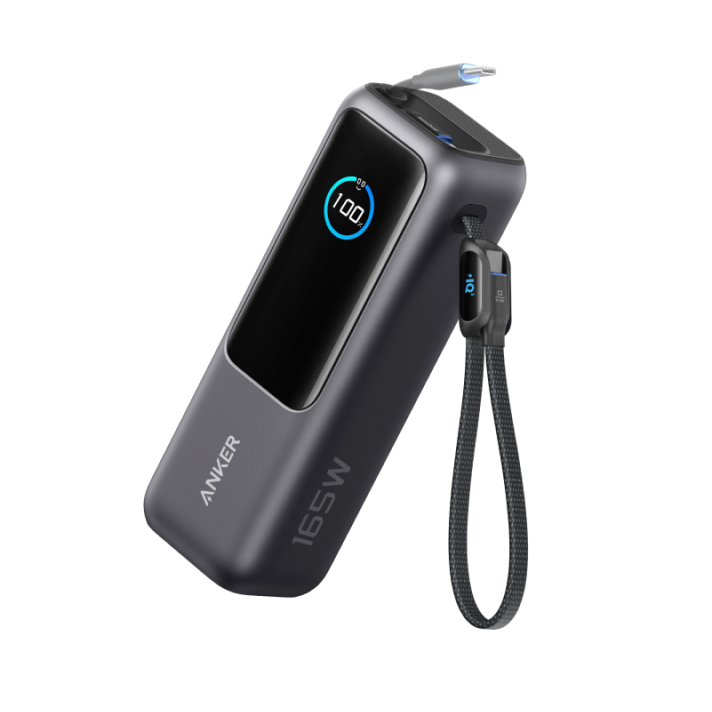
Anker Laptop 25000 · A1695
25,000mAh and two built-in USB-C cablesRank 2 · About 595g; maximum 100W individually
View on Amazon*Our balanced everyday choice
Anker Nano 10000 · A1259
10,000mAh; 30W input and outputRank 1 · No magnetic charging or 65W laptop replacement
View on Amazon*Top 10: from number 10 to number 1
| Rank | Product photography | Model / cell capacity | Main benefit | Important limitation | Product link |
|---|---|---|---|---|---|
| 10 | 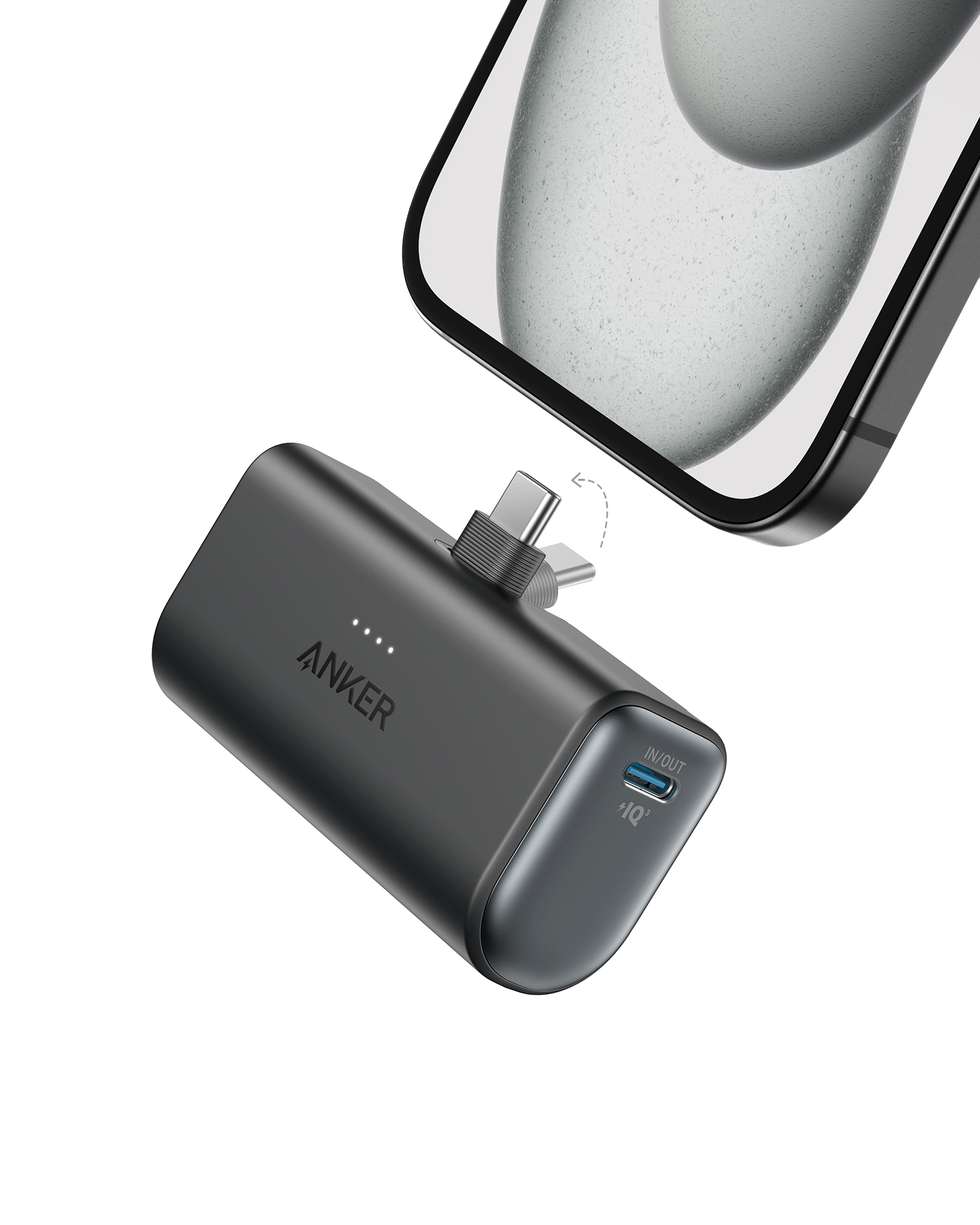 | Anker Nano 5000 · A16535,000 mAh | Folding USB-C plug | Only 5,000mAh; case must fit | View on Amazon* |
| 9 | 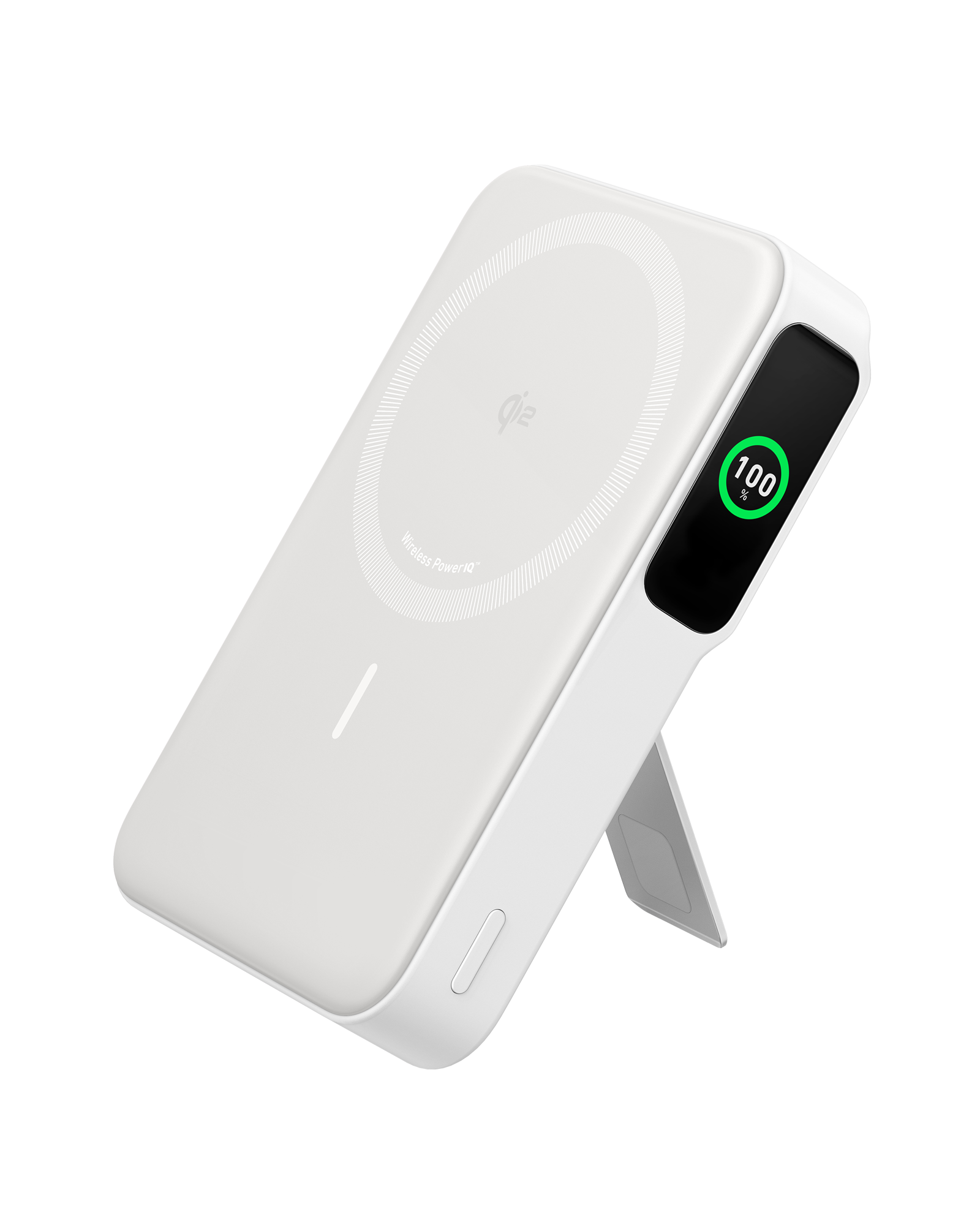 | Anker MagGo 10K · A165410,000 mAh | 15W Qi2 and a stand | Phone and case must be compatible | View on Amazon* |
| 8 | 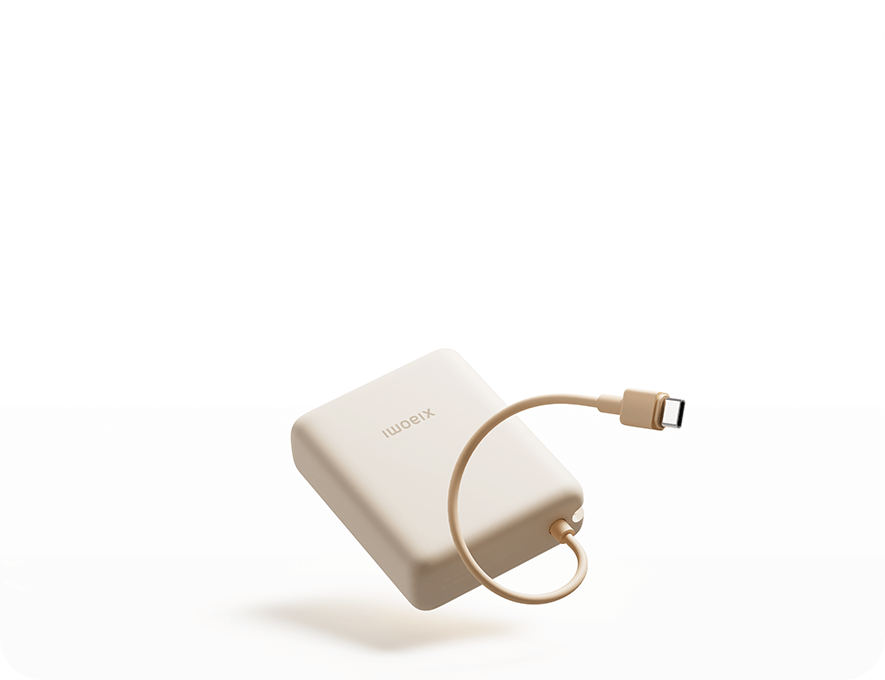 | Xiaomi 33W 10000 · PB1033MI10,000 mAh | Built-in cable; up to 33W | 33W is not a promise for every phone | View on Amazon* |
| 7 | | Samsung 20000 · EB-P452020,000 mAh | 20,000mAh and up to 45W | 45W needs compatible devices and cables | View on Amazon* |
| 6 | 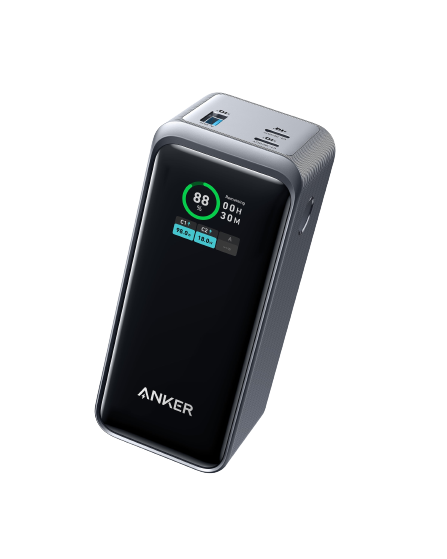 | Anker Prime 20000 · A133620,000 mAh | 200W total; up to 100W per USB-C | High power does not mean 200Wh of energy | View on Amazon* |
| 5 | 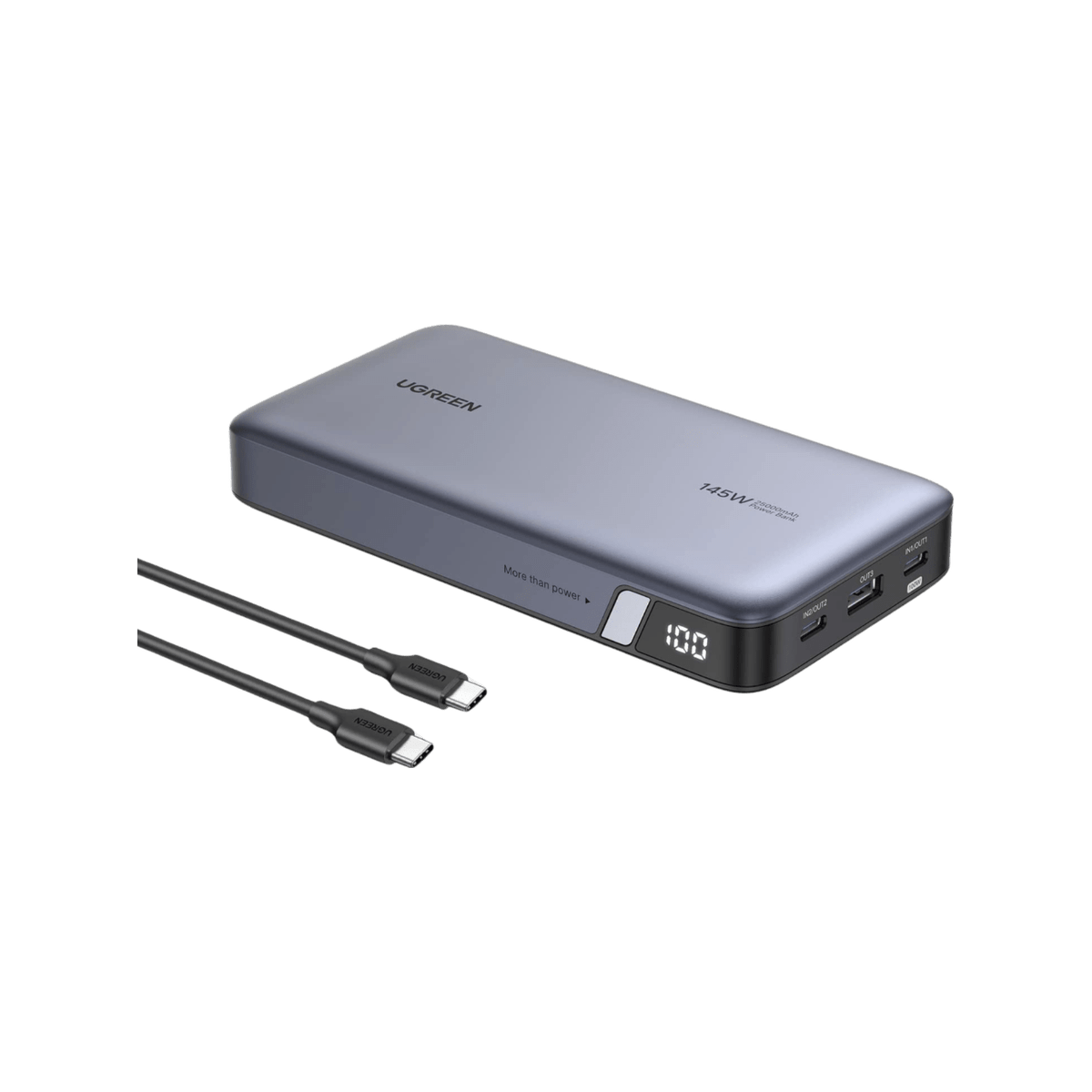 | UGREEN Nexode 25000 · 145W25,000 mAh | 25,000mAh; C1 up to 140W | Check revision; EPR cable required | View on Amazon* |
| 4 | 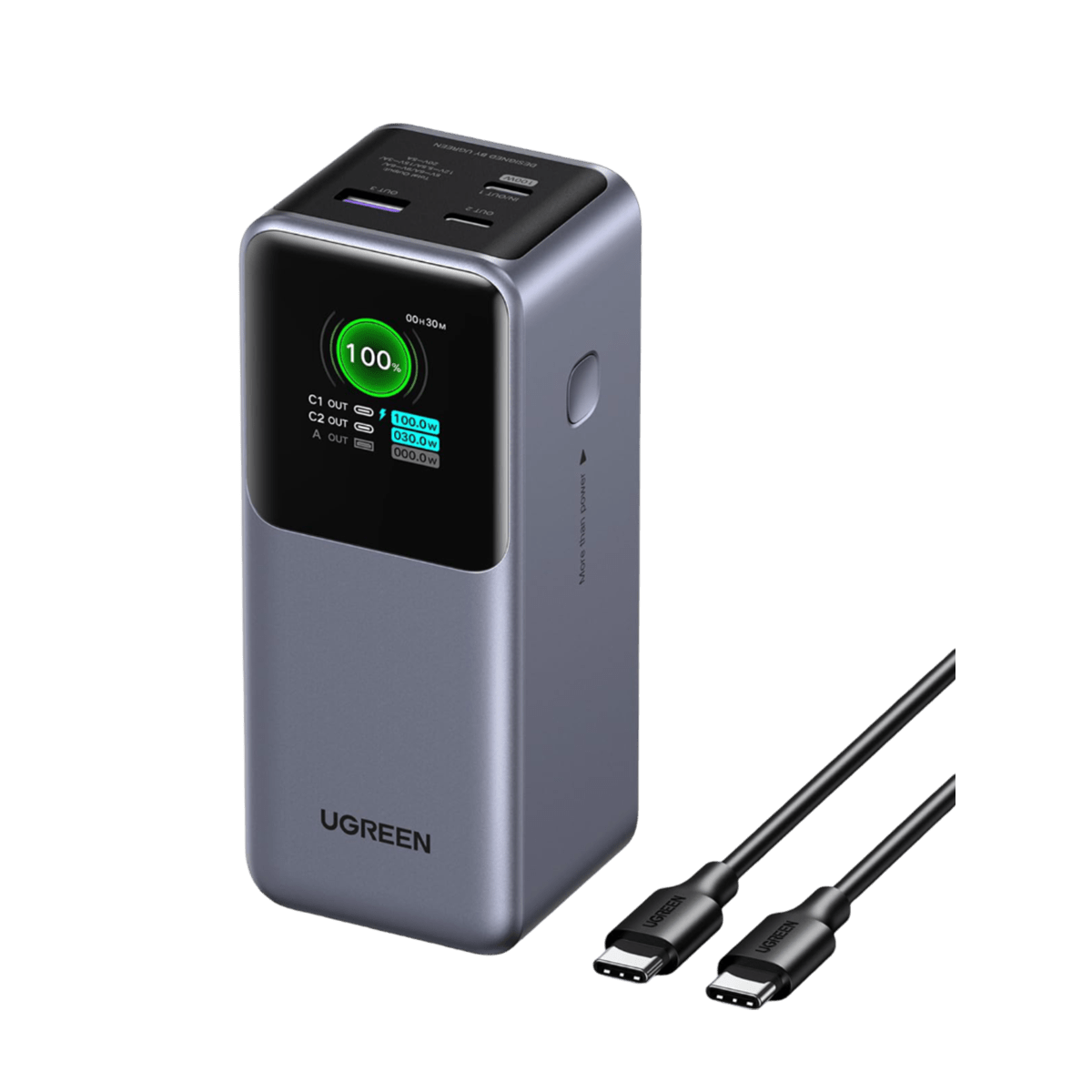 | UGREEN Nexode 20000 · 130W20,000 mAh | 100W on C1; 130W combined | A 20K energy reserve is still finite | View on Amazon* |
| 3 | 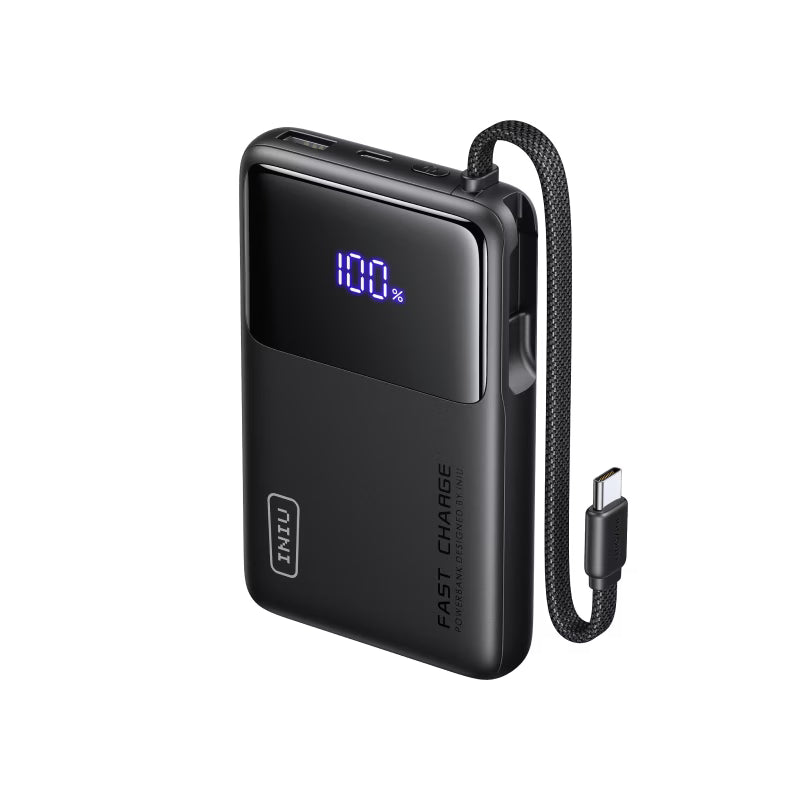 | INIU Carry P55L · 10000 45W10,000 mAh | 10,000mAh, cable and up to 45W | Check the exact P55L revision | View on Amazon* |
| 2 | | Anker Laptop 25000 · A169525,000 mAh | 25,000mAh and two built-in USB-C cables | About 595g; maximum 100W individually | View on Amazon* |
| 1 | | Anker Nano 10000 · A125910,000 mAh | 10,000mAh; 30W input and output | No magnetic charging or 65W laptop replacement | View on Amazon* |
Maximum ratings are not guaranteed sustained output. Power may fall with several devices. No current price or delivery promises.
How we chose these models
This is an editorial comparison of manufacturer specifications and manuals, not our own laboratory or hands-on test, or an Amazon sales ranking. We prioritise everyday usefulness, suitable connections, clearly specified power and the benefits of each design. A specialist model may suit your needs better than number 1. Five brands are represented; five Anker models cover different shapes and power profiles. The ranking does not establish measured safety or lifespan. Revisions may differ: check the actual unit's label and manual.
How much capacity do you actually need?
The 5,000mAh class can be enough for a small emergency reserve. For navigation, music and communication over a long day, 10,000mAh is a sensible place to start. Around 20,000–25,000mAh is more relevant to several devices, longer gaps between sockets or a laptop. These are use-case recommendations, not guaranteed charging counts. Start with your real daily consumption: if your phone normally finishes the day at 35%, you do not need to carry two complete replacement charges every day. A smaller battery that stays in your bag can be more useful than a heavy one left at home.
Rank 10 · Small emergency reserve
Anker Nano 5000 · A1653
The A1653 saves a loose cable by plugging directly into suitable USB-C phones. Compactness is the reason to choose it; 22.5W is a maximum power specification.
Cell capacity: 5,000 mAh
Max. single output: 22.5 W
Suitable for: For short days and a very small reserve.
Less suitable for: For several full charges or laptop work.
Folding USB-C plug
Only 5,000mAh; case must fit
Compared with an alternative: The Nano A1259 offers more reserve and a flexible cable, while taking up more space.
View on Amazon*Magnetic wireless charging: convenient, but not automatically faster
Qi2 uses magnetic alignment to position the phone and charging coil correctly. The selected MagGo model supplies up to 15W wirelessly; newer Qi2 25W products occupy a different power class. Adding a magnetic case does not turn an arbitrary phone into a Qi2 device. Check phone, case and charging profile together. Wireless charging is convenient on a desk; a cable is often more practical when conserving your energy reserve outdoors. Heat and active phone use can reduce charging power. Do not put cards or metal objects between the phone and charging surface. [12]
Rank 9 · Wireless convenience
Anker MagGo 10K · A1654
The A1654 combines 10,000mAh with magnetic charging, a display and a stand. USB-C output is rated up to 27W. Its appeal is convenience, rather than universally fast charging.
Cell capacity: 10,000 mAh
Max. single output: 27 W
Suitable for: For suitable iPhones and convenient charging at a desk.
Less suitable for: For maximum wired efficiency or 25W wireless charging.
15W Qi2 and a stand
Phone and case must be compatible
Compared with an alternative: The Nano A1259 is the simpler wired choice; choose MagGo for its magnetic use.
View on Amazon*Why 10,000mAh does not guarantee two phone charges
Compare energy at the same reference voltage. The formula is Wh = mAh × V ÷ 1,000. For example, 10,000mAh at 3.7V equals 37Wh. A 5,000mAh phone battery at an assumed 3.85V stores 19.25Wh. Assume, purely for illustration, that 80% of the bank's energy ends up in the phone battery: 37 × 0.8 ÷ 19.25 gives about 1.54 complete charges. That 80% is an assumption, not a measurement of these products. A running phone also consumes energy. Xiaomi specifies 36.5Wh and a rated output capacity of 5,600mAh at 5V/3A for the selected model; output mAh cannot be directly equated with cell mAh. [3]
| Cell capacity | Cell energy | Calculated full charges |
|---|---|---|
| 5,000 mAh | 18.5 Wh | 0.77 |
| 10,000 mAh | 37 Wh | 1.54 |
| 20,000 mAh | 74 Wh | 3.08 |
Rank 8 · For compatible Xiaomi phones
Xiaomi 33W 10000 · PB1033MI
The PB1033MI offers 10,000mAh cell capacity and up to 33W with suitable Xiaomi devices. Other phones charge at the speed supported by their shared protocol.
Cell capacity: 10,000 mAh
Max. single output: 33 W
Suitable for: For a compact reserve with a USB-C cable.
Less suitable for: For expecting Xiaomi's highest HyperCharge mode.
Built-in cable; up to 33W
33W is not a promise for every phone
Compared with an alternative: Against the Nano A1259, exact phone compatibility matters more than the small wattage difference.
View on Amazon*USB-C, Power Delivery and PPS: what has to match?
USB-C initially describes the connector. USB Power Delivery, or PD, negotiates the power supply; PPS allows an adjustable supply with suitable devices. A high wattage alone therefore does not prove that your phone can reach its fastest charging mode. Samsung Super Fast Charging requires a compatible phone, PPS profile and cable. Xiaomi, OnePlus and other proprietary fast charging systems do not automatically deliver their original advertised charging rate from a universal PD bank. Check the exact phone and output profiles. To investigate slow charging, connect just one device, use the intended USB-C output and try another appropriate cable. [11] [4]
Rank 7 · More reserve for Galaxy
Samsung 20000 · EB-P4520
The EB-P4520 provides three USB-C ports, PD 3.0 and Samsung Super Fast Charging 2.0. When connecting several devices, plan around shared power rather than three times the maximum single-port output.
Cell capacity: 20,000 mAh
Max. single output: 45 W
Suitable for: For compatible Galaxy devices and more energy than a 10K bank.
Less suitable for: For the lightest possible pocket reserve.
20,000mAh and up to 45W
45W needs compatible devices and cables
Compared with an alternative: It prioritises greater reserve over the Xiaomi 10K; the UGREEN models better suit a higher-power laptop.
View on Amazon*Laptop charging: the individual port matters
First check whether your laptop actually accepts power through its USB-C port. A USB-C data port or a round power connector does not establish this. Then compare voltage and power requirements: a notebook needing 65W requires a matching PD output and an appropriate cable. A bank advertising 200W total may supply two devices at up to 100W each; that does not mean 200W for a single laptop. Under heavy load, a notebook may still slowly discharge while connected. More output power also does not increase the energy stored in the bank. [5]
Rank 6 · Two demanding devices
Anker Prime 20000 · A1336
The Prime A1336 combines 20,000mAh, two USB-C ports and USB-A. Its 200W describes the possible total output. Simultaneous supply to suitable devices is its main advantage.
Cell capacity: 20,000 mAh
Max. single output: 100 W
Suitable for: For two compatible high-power USB-C devices.
Less suitable for: For charging just one phone.
200W total; up to 100W per USB-C
High power does not mean 200Wh of energy
Compared with an alternative: The A1695 offers more nominal capacity and built-in cables; Prime prioritises higher combined output.
View on Amazon*When is a 140W USB-C output useful?
A compatible high-power laptop can benefit from a 140W output. The notebook must support the appropriate PD profile and the cable must support EPR; an unsuitable combination delivers less power. A 240W cable cannot make a 30W bank more powerful. For many phones, moving from 100W to 140W brings no benefit. Older and newer specifications circulate for the UGREEN 145W family: the currently described version specifies 140W on C1 and 145W combined. Explicitly choose the 140W-C1 version and check the markings on the delivered unit. [11] [6]
Rank 5 · 140W USB-C for suitable laptops
UGREEN Nexode 25000 · 145W
The selected Nexode version combines 90Wh with 145W total output. Its 140W main output requires the right device and cable; other port combinations share the available power.
Cell capacity: 25,000 mAh
Max. single output: 140 W
Suitable for: For a compatible laptop needing more than 100W.
Less suitable for: For phone use without that power requirement.
25,000mAh; C1 up to 140W
Check revision; EPR cable required
Compared with an alternative: Compared with the A1695, the emphasis is a more powerful single C1 output rather than integrated cables.
View on Amazon*Watts describe speed; watt-hours describe endurance
A powerful output helps with rapid charging; operating time depends on stored energy and consumption. A laptop example: 72Wh × an assumed 80% usable energy equals 57.6Wh. At a constant 20W draw, that would work out to 2.88 hours; at 60W, only 0.96 hours. This is not a measured runtime: display settings, workload, losses and state of charge change the outcome. If you only need to finish a document, first reduce screen brightness and unnecessary load. For a weekend without sockets, add up the energy requirements of all your devices and allow a reserve.
Rank 4 · For mobile USB-C work
UGREEN Nexode 20000 · 130W
The 20,000mAh Nexode 130W provides two USB-C ports, USB-A and a power display. Its column-shaped body is better suited to a work or travel bag than a small trouser pocket.
Cell capacity: 20,000 mAh
Max. single output: 100 W
Suitable for: For a laptop and a second smaller device.
Less suitable for: For laptops needing more than 100W from one port.
100W on C1; 130W combined
A 20K energy reserve is still finite
Compared with an alternative: The 145W version offers more nominal capacity and a stronger main output; this one suits the usual 100W USB-C profile.
View on Amazon*Built-in cable or separate cable?
A built-in cable prevents the most important part of the charging kit being left at home. A separate cable is easier to replace and choose in a convenient length. A folding plug saves even more accessories, but must fit fully despite your case; avoid putting leverage on the phone's socket. An additional USB-C port is valuable on a bank with a built-in cable because it offers another connection. Also consider how many outputs you will use simultaneously. Connecting a second device can redistribute power and briefly interrupt charging. The headline single-device wattage does not automatically apply to every output at once.
Rank 3 · A cable reserve for your phone
INIU Carry P55L · 10000 45W
The Carry P55L family combines a flat body, USB-C cable and charge display. Its 45W is a ceiling for suitable devices. The current manufacturer page describes P55L-E2; functions and power sharing must match the delivered revision.
Cell capacity: 10,000 mAh
Max. single output: 45 W
Suitable for: For a compact phone kit with an integrated cable.
Less suitable for: For laptop use based solely on the 45W figure.
10,000mAh, cable and up to 45W
Check the exact P55L revision
Compared with an alternative: A higher peak than the Nano A1259 only helps if your phone uses that charging profile.
View on Amazon*How quickly can the bank itself recharge?
Input power and output power are different specifications. Fast recharging requires a suitable mains charger and cable. Energy ÷ input power gives a theoretical lower bound: 90Wh ÷ 100W equals 0.9 hours. Real charging takes longer because of losses and declining power near the end. An old low-power USB adaptor can greatly extend the wait. Only charge the bank and connected devices simultaneously when the exact manual permits it. Pass-through capability does not automatically make it an uninterruptible power supply. Before travelling, recharge in good time and check the remaining level before packing. [9]
Rank 2 · More reserve, fewer cables
Anker Laptop 25000 · A1695
The A1695 provides 90Wh, one retractable and another integrated USB-C cable, plus extra ports. Up to 165W is available in total, with a maximum of 100W through one USB-C output.
Cell capacity: 25,000 mAh
Max. single output: 100 W
Suitable for: For work and travel with a laptop and phone.
Less suitable for: For a small reserve while running.
25,000mAh and two built-in USB-C cables
About 595g; maximum 100W individually
Compared with an alternative: Against the Prime A1336, it prioritises nominal reserve and cable convenience; for 140W to one laptop, compare UGREEN 145W.
View on Amazon*Build a practical charging kit for everyday life and sport
For commuting and workouts, a phone kit with a bank and short suitable cable is usually enough. A sports watch often still needs its own charging puck; an earbud case drawing little power may require a low-current mode. Without an explicit protection rating, an ordinary bank is not a rain charging device: keep it dry and do not use wet ports. Stay within the manual's temperature limits in winter and avoid leaving it in a sunny car in hot weather. Choose your devices first, energy requirements second and extra functions last. Where a socket is already available, your existing mains charger may suffice. [15]
Rank 1 · Our everyday choice
Anker Nano 10000 · A1259
The Nano A1259 combines a useful everyday reserve with an integrated USB-C cable, additional USB-C, USB-A and a display. It leads this selection because that combination is straightforward for many phone users without specialist needs.
Cell capacity: 10,000 mAh
Max. single output: 30 W
Suitable for: For commuting, workouts and a typical phone day.
Less suitable for: For 140W laptops or wireless charging.
10,000mAh; 30W input and output
No magnetic charging or 65W laptop replacement
Compared with an alternative: Choose A1653 for less luggage, MagGo for magnetic convenience or A1695 for substantially more reserve.
View on Amazon*Flying with a power bank: what applies in 2026?
Plan for no more than two power banks, readable Wh markings and protected terminals in cabin baggage; do not recharge the bank on board. IATA's March 2026 documents distinguish transitional provisions from the coming DGR edition: above 100Wh, do not rely on a blanket 160Wh exception. Choose no more than 100Wh for straightforward planning and check your airline. [13] Since 15 January 2026, Lufthansa Group also prohibits using or charging banks on board and storing them in overhead lockers; carry them on your person, in the seat pocket or in cabin baggage under the seat. [14]
Charge safely and take recalls seriously
Charge on a firm, unobstructed surface within the manual's temperature limits. Stop using or charging a bank if it swells, cracks, smells unusual or becomes excessively hot. A brand name does not replace inspection: for an older or used bank, check its model and serial number against the manufacturer's current recall page. Affected units belong in the specified recall or return process, rather than household waste. [15] [16]
Which bank fits your needs?
| Your use | Models to compare | Check before buying |
|---|---|---|
| Small emergency reserve | Anker Nano A1653 | Compact; check direct USB-C connection and case clearance. |
| Everyday phone use | Anker Nano A1259 or INIU P55L | Match capacity, cable convenience and phone profile. |
| Compatible Galaxy, more reserve | Samsung EB-P4520 | Check 45W support and an appropriate cable. |
| Magnetic desk charging | Anker MagGo A1654 | 15W Qi2 version with a suitable phone and case. |
| Laptop and phone | UGREEN 130W or Anker A1695 | Allow for a 100W port, sufficient Wh and suitable cables. |
| Laptop above 100W | UGREEN 145W, 140W-C1 version | Check PD EPR compatibility at both ends. |
Frequently asked questions
Will a 100W bank damage my 20W phone?
With compliant, compatible equipment, an appropriate supply is negotiated. The bank does not simply force its maximum output into the phone. Use suitable, undamaged devices and cables.
Can I charge my watch or earbuds?
Generally, with the right cable or charging puck. Low-power devices may need a low-current mode. The specific model's manual determines how to use it.
How long will a power bank last?
Cell quality, age, temperature and use all matter. Manufacturer wattages do not establish an individual unit's lifespan. Replace damaged equipment regardless of age.
Does 20,000mAh always mean twice as much as 10,000mAh?
Only at the same reference voltage does it represent approximately twice the cell energy. Compare Wh and documented output capacity; the heavier bank does not automatically deliver exactly twice as many full charges.
Can a USB bank charge my electric car or e-bike?
These models are intended for suitable USB devices. A traction battery or an AC mains charger requires another power source and explicitly compatible technology.
Do I need a solar power bank?
A small built-in solar surface is not a dependable substitute for charging before a hike. If you need to recharge away from sockets, size an appropriate separate solar system around yield, weather and consumption.
Sources and further reading
- Anker Nano 5000 · A1653
- Anker MagGo 10K · A1654
- Xiaomi 33W 10000 · PB1033MI
- Samsung 20000 · EB-P4520
- Anker Prime 20000 · A1336
- UGREEN Nexode 25000 · 145W
- UGREEN Nexode 20000 · 130W
- INIU Carry P55L · 10000 45W
- Anker Laptop 25000 · A1695
- Anker Nano 10000 · A1259
- USB-IF · USB Power Delivery
- Wireless Power Consortium · Qi / Qi2
- IATA · Power Banks Guidance 2026
- Lufthansa Group · Power banks, 15 January 2026
- Samsung · Battery pack safety
- Anker · Product recalls