
Practical guide · Checked 11 September 2026
How to Use a Massage Gun: 7 Mistakes to Avoid
More pressure, more speed and more time do not automatically mean better results. Good technique feels controlled, stays on large muscle groups and ends before strong vibration becomes pain, numbness or a bruise.
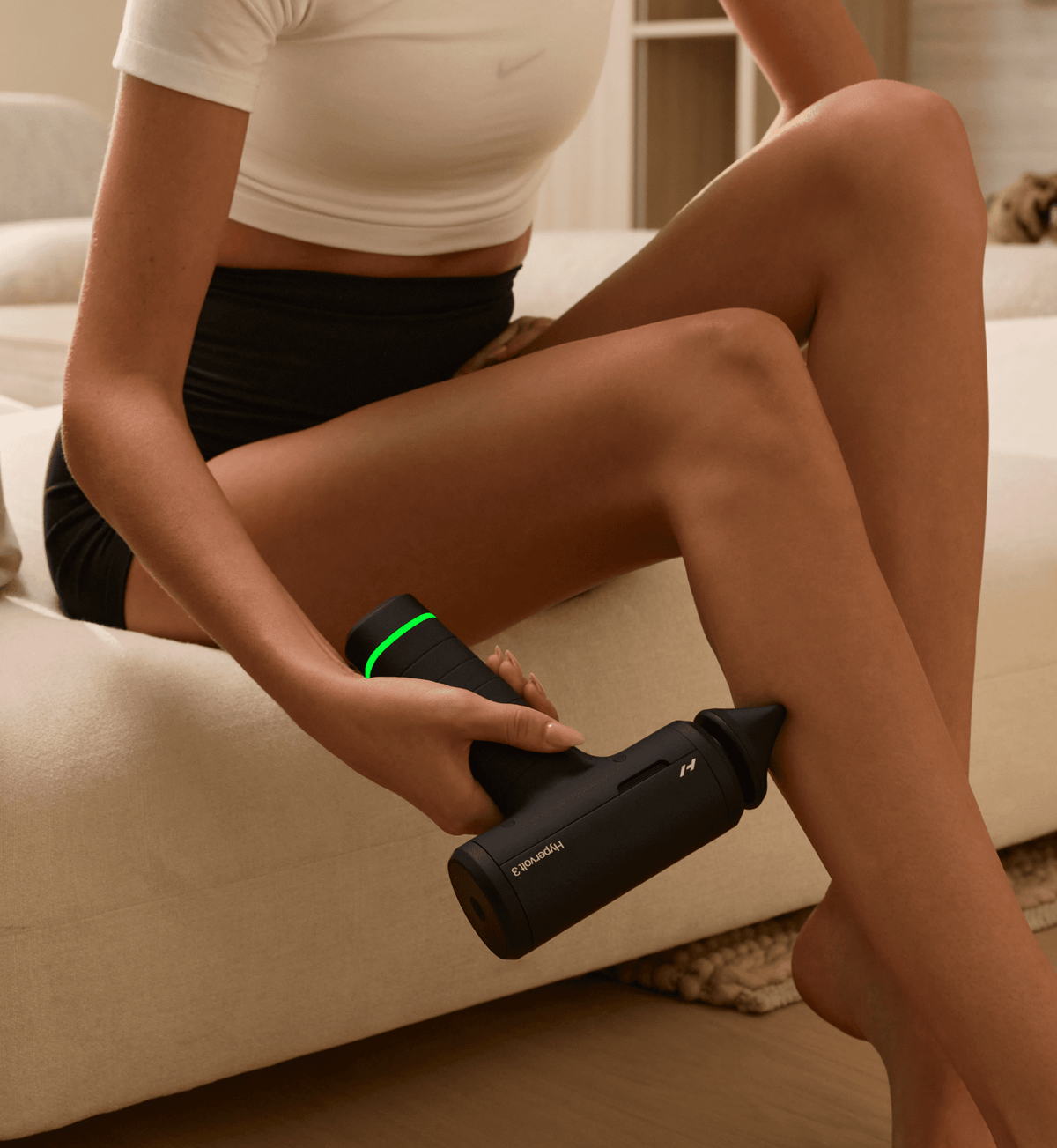
How to start more safely
- Choose a large, soft attachment.
- Start on the lowest setting.
- Add very little extra pressure.
- Glide slowly over the muscle.
- Stop if you feel pain, numbness or dizziness.
Advertising disclosure: This article contains Amazon affiliate links. As an Amazon Associate, we earn from qualifying purchases, at no extra cost to you. Prices and availability can change, so we do not list fixed daily prices.
What can a massage gun realistically do?
Research is still limited, and the protocols studied vary considerably. Systematic reviews suggest that percussion massage may improve short-term flexibility and certain recovery-related measures. Results for strength, balance, sprinting and explosive performance are inconsistent. This is a good reason to view a massage gun as an adjustable tool, not a healing device or a substitute for training, sleep, physiotherapy or diagnosis.
Important context on the evidence: The systematic literature review published in 2023 found positive signals, but judged all 13 included studies to have methodological or reporting limitations. We therefore use deliberately cautious wording.
The simple 5-step protocol
This starting framework is deliberately conservative. The operating and safety instructions for your specific device always take priority.
Remember: The smaller and harder the attachment, the higher the setting and the more pressure you add, the greater the local load becomes.
Where to use it — and where not to
- Calf muscles
- Front and back of the thighs
- Glute muscles
- Latissimus dorsi — not on the spine
- Chest and shoulder muscles with carefully controlled intensity
- Upper-arm and forearm muscles
- Head, front and sides of the neck
- Spine, bony prominences and joints
- Ribcage, groin and back of the knee
- Broken skin, rashes, bruises or significant swelling
- Recent injuries, fractures or surgical areas
- Areas with numbness or significantly reduced sensation
Seek medical advice beforehand: including during pregnancy, with a bleeding disorder or blood-thinning medication, thrombosis or thrombosis risk, osteoporosis, vascular or heart disease, diabetes with reduced sensation, implants, recent surgery and severe or unexplained pain.
The 7 most common massage-gun mistakes
Starting immediately at full power
The highest setting is not proof of good technique.
High frequency, a hard attachment and added hand pressure compound one another. If you are cold, sensitive or inexperienced, you can quickly apply more stimulation than intended. Pain is not the only warning sign: involuntary tensing can also indicate excessive intensity.
Search for BLACKROLL FASCIA GUN on Amazon* — worth considering when a particularly low starting frequency matters.

Pressing hard and staying on one spot
More pressure does not automatically mean deeper or better recovery.

The device's own weight can already produce a strong effect. Staying in one place with heavy pressure increases local loading and may irritate sensitive tissue or encourage bruising. Interpreting pain as proof of an “effective” treatment is particularly problematic.
Search for Hyperice Hypervolt 3 on Amazon* — its pressure indicator provides guidance, but does not replace your own perception.
Working over bones, joints or the neck
A massage gun belongs on muscle, not indiscriminately on every painful spot.
Sensitive blood vessels and nerves run along the front and sides of the neck. The spine, shinbone, kneecap, top of the shoulder and other bony prominences are not targets for direct percussion either. Applying a device to a painful structure without knowing what is irritated may mask or worsen the underlying problem.
Search for Theragun Mini Gen 3 on Amazon* — compact and easier to handle, but the same safety limits apply.
Using the wrong attachment
A small, hard head concentrates force more than a broad, soft attachment.

A ball or dampener attachment spreads contact over a larger area. A trigger or bullet head concentrates it on a small surface and can therefore feel considerably more aggressive. Depending on the manufacturer, the fork is intended for parallel muscle bands, not for striking directly against the spine or a tendon.
Trying to “massage away” a fresh injury
Swelling, bruising or sudden sharp pain are not invitations to stronger percussion.
With an acute strain, contusion, inflammation, wound or possible fracture, it may not yet be clear which structure is affected. A massage gun cannot make a diagnosis. Rare case reports describe serious complications after very intensive use; this does not imply a high general risk, but it gives a clear reason not to work injured tissue excessively.
Heat and cold attachments are additional features — they do not turn a device into a medical treatment instrument.
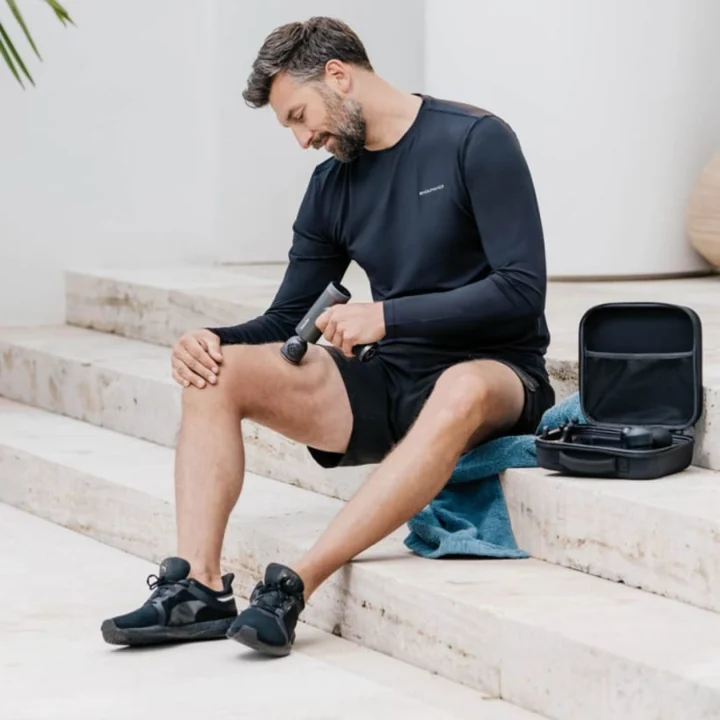
Using it the same way before and after training
Activation and a calm post-exercise routine have different goals.

Before training, you want to prepare the muscles without tiring them. Brief, moving application can be part of a warm-up, but does not replace sport-specific movements. After training, a calmer and usually lower dose is more appropriate. A long, intense session immediately before maximum performance is not automatically helpful.
Ignoring warning signs and personal risks
Not all tissue provides a reliable pain signal.
Reduced sensation can make intensity difficult to judge. Blood thinners, vascular problems, thrombosis risk, osteoporosis, recent surgery or other conditions can change the risk assessment. Even a particularly expensive device does not make these factors irrelevant.
Our full comparison explains differences in weight, minimum intensity, grip and features.
Which attachment suits which purpose?
Names vary between manufacturers. Surface area, firmness and shape matter more than the marketing name.

Massage gun before or after training?
| Timing | Purpose | Conservative approach | Avoid |
|---|---|---|---|
| Before training | Subjective preparation and short-term flexibility | Brief, dynamic application to the main muscles you will work; follow with active movement | Long, painful application and fatigue |
| After training | A calm transition and subjective relaxation | Low to moderate setting, little pressure, manufacturer-recommended duration | Aggressive treatment of acute painful spots |
| On rest days | Relaxation or a movement routine | Only when it feels pleasant and there are no warning signs | Increasing intensity every day out of habit |
BLACKROLL, for example, gives very different durations depending on the mode: 30 seconds to two minutes before exercise, two to three minutes afterwards, and longer on the low Relax setting. This shows why one universal duration for all devices and purposes makes little sense.
Which massage gun suits your use?
This is not a second ranking, but a guide to usage types. All ten devices come from our current 2026 massage-gun comparison. The Amazon buttons deliberately open searches for the exact model; check the version, contents, seller and warranty before buying.
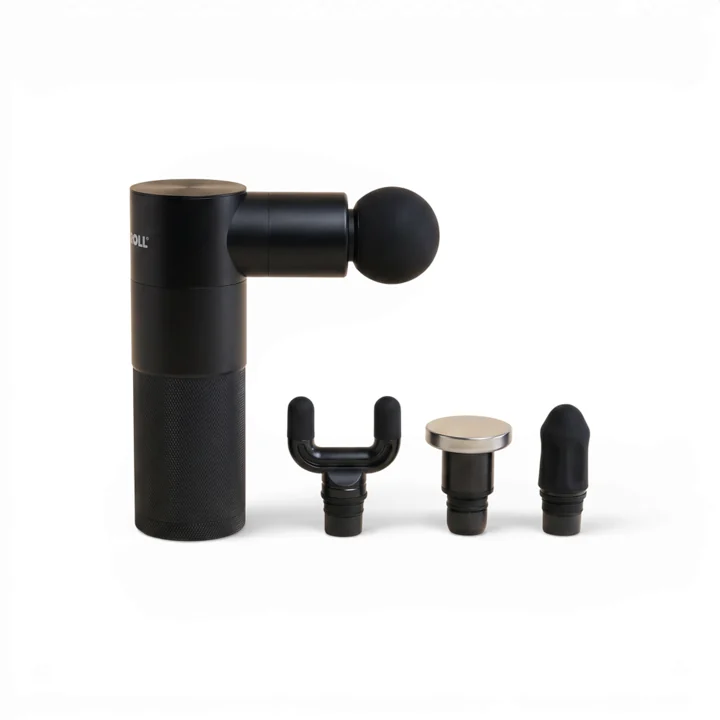
BLACKROLL FASCIA GUN
For users who value a very gentle starting point, low weight and simple operation more than maximum stroke depth.
Search on Amazon*Beurer MG 195 Hot & Cold
A versatile choice with nine intensity levels and seven attachments. At 1.04 kg, it is significantly heavier than compact models.
Search on Amazon*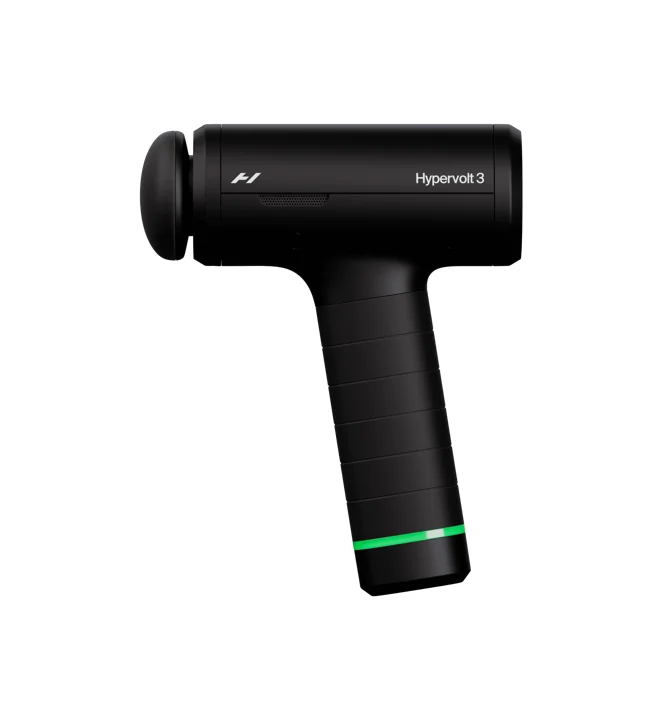
Hyperice Hypervolt 3
Five levels, a pressure sensor, five attachments including a heated head, and app connectivity for guided routines.
Search on Amazon*Theragun Prime Plus
For users seeking a powerful premium device with multiple grip positions and a heated attachment. Often more than sensitive beginners need.
Search on Amazon*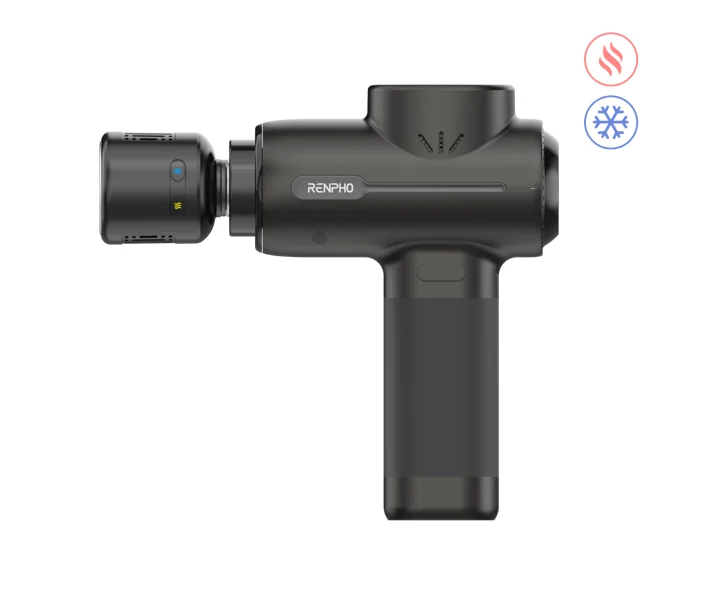
RENPHO Active+ Thermacool
Lighter than many heat-and-cold models and worth considering when extra features and price matter more than a European service network.
Search on Amazon*Bob and Brad D6 Pro
A 16 mm-class device with multiple grip positions for intensive users. Check the specific German version and warranty carefully before buying.
Search on Amazon*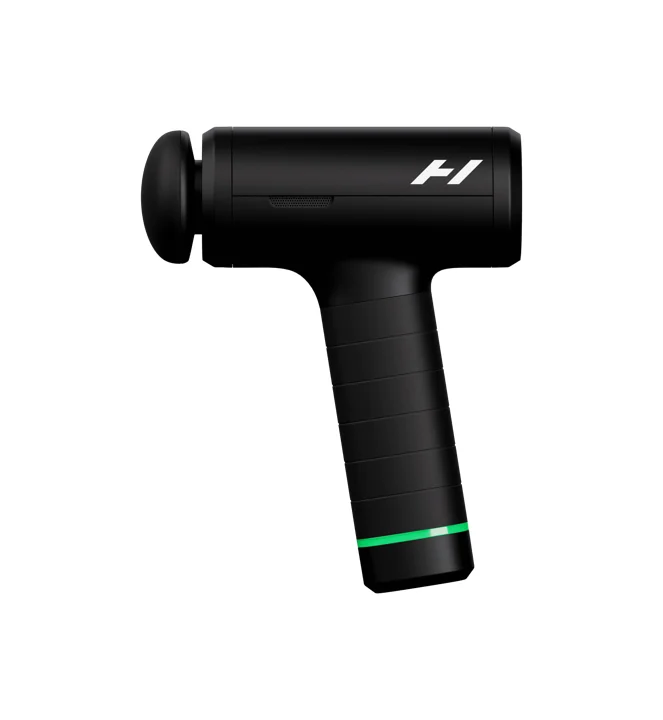
Hyperice Hypervolt 3 Pro
Performance-focused premium device with extensive features. Its weight and price make most sense for frequent, targeted use.
Search on Amazon*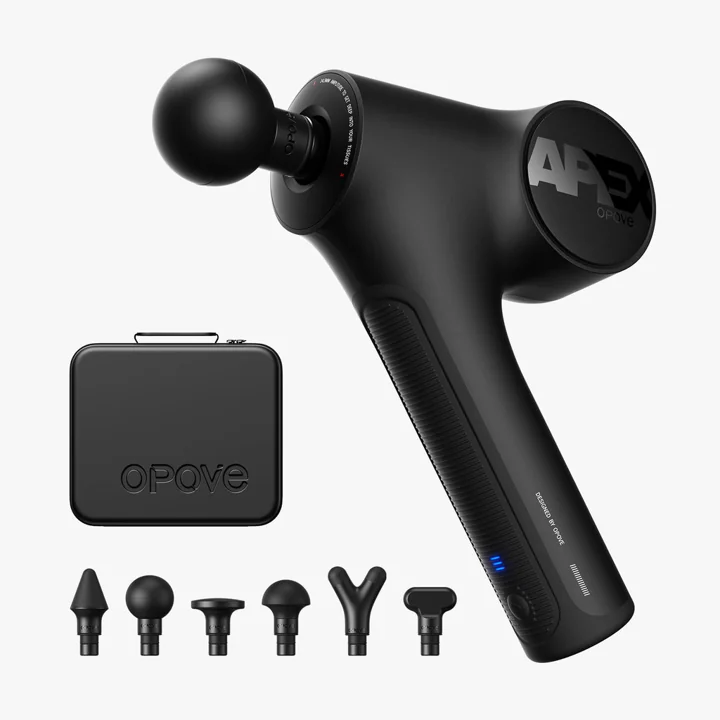
OPOVE Apex
A powerful device for users who prefer an angled handle. Check German availability and service beforehand.
Search on Amazon*Theragun Mini Gen 3
A compact, easy-to-control travel companion. Fewer grip positions and less reach than larger Theragun models.
Search on Amazon*Bob and Brad M7 Plus Mini
Small and powerful, with a heated attachment. The relatively high minimum speed may be too intense for sensitive users.
Search on Amazon*A massage gun is not always the best choice
A simple roller or ball is quiet, needs no battery and often allows fine pressure control through body weight or a wall. If you tense up even at a low massage-gun setting, a less dynamic tool may be a better starting point.
TriggerPoint GRID 1.0
Textured, shape-stable all-rounder for larger muscle areas.
View on Amazon*BLACKROLL STANDARD
Smooth, medium-firm classic without a motor or concentrated impacts.
View on Amazon*Yosana cork foam roller
A deliberately firm material alternative for users who can already regulate pressure well.
View on Amazon*Frequently asked questions
How long should you use a massage gun?
Start briefly and at low intensity. Around 30–60 seconds on a large muscle group may be enough to begin. Suitable duration depends on intensity, purpose, body area and model; the specific manufacturer's instructions take priority.
Can you hold a massage gun directly on a painful spot?
Not automatically. Pain can originate in muscle, tendon, joint, nerve or another structure. Direct, intensive application without a clear cause is not a good idea. Seek medical assessment for severe, unexplained or persistent pain.
Which setting is suitable for beginners?
The lowest available setting, with a large soft attachment and little added pressure. A higher number is not a goal; comfortable, controlled use matters more than maximum intensity.
Can you use a massage gun on your neck?
Do not use it on the head, spine or front or sides of the neck. Even on the muscles at the back of the shoulders, careful handling is needed. Seek medical assessment for neck pain accompanied by dizziness, numbness, radiating pain or other neurological symptoms.
Massage gun before or after training?
Before training, use it briefly and dynamically on the large muscles you will work; afterwards, use it more calmly and generally at a lower intensity. It does not replace general or sport-specific warming up.
Can you use a massage gun every day?
Daily use is not automatically necessary. Low intensity, healthy tissue, the device instructions and your response are what matter. Tenderness, pain or bruising suggest the need for a break and reassessment.
Which attachment is the gentlest?
A large, soft ball or dampener usually spreads contact most broadly. However, material and firmness differ between manufacturers, so check your specific model's description.
Sources, media and transparency
Editorial cut-off: 11 September 2026. This article distinguishes scientific findings, medical safety information and manufacturer specifications. Products were not retested against one another in a laboratory for this practical guide.
- Martin (2023): The Effect of Percussive Therapy on Musculoskeletal Performance and Experiences of Pain — systematic literature review
- Ferreira et al. (2023): The Effects of Massage Guns on Performance and Recovery — systematic review
- Konrad et al. (2020): Acute Effects of Percussion Massage on Range of Motion and Muscle Strength
- Chen et al. (2021): Rhabdomyolysis After the Use of Percussion Massage Gun — case report
- Therabody: official precautions and contraindications
- University of Utah Health: safe use and body areas to avoid
- BLACKROLL FASCIA GUN: official modes, durations, attachments and specifications
- Beurer MG 195 Hot & Cold: official product specifications
- Hyperice Hypervolt 3: official product specifications and real media
- Therabody Theragun Prime Plus: official EU product page
- RENPHO Active+ Thermacool: official product page
- Hyperice Hypervolt 3 Pro: official product page
- OPOVE Apex: official product page
- Therabody Theragun Mini Gen 3: official EU product page
Image and video credits: Only real manufacturer images clearly linked to the model, or embedded real product videos, are used — no AI-generated or symbolic product images. Media are loaded from the named external sources; embedded videos remain with their original provider. Rights remain with the respective rights holders.
Conclusion: control matters more than force
The best application is brief, targeted and clearly comfortable. Start softly and slowly, stay on large muscles, respect warning signs and never use the device for self-diagnosis. When choosing a suitable massage gun, prioritise minimum intensity, weight and grip before maximum depth and extra features.