
INDOOR AIR · BUYING GUIDE
Humidifiers compared: humidity, cleaning and our top 10
Measure first, humidify second. Improve dry indoor air while keeping moisture, maintenance and running costs under control.
A dry throat in the morning, tight skin and static electricity can make a humidifier appealing. But a full tank does not automatically mean better indoor air. The measured humidity, a clean device and enough output for the actual room matter more. This guide explains the trade-offs and compares ten specific models.
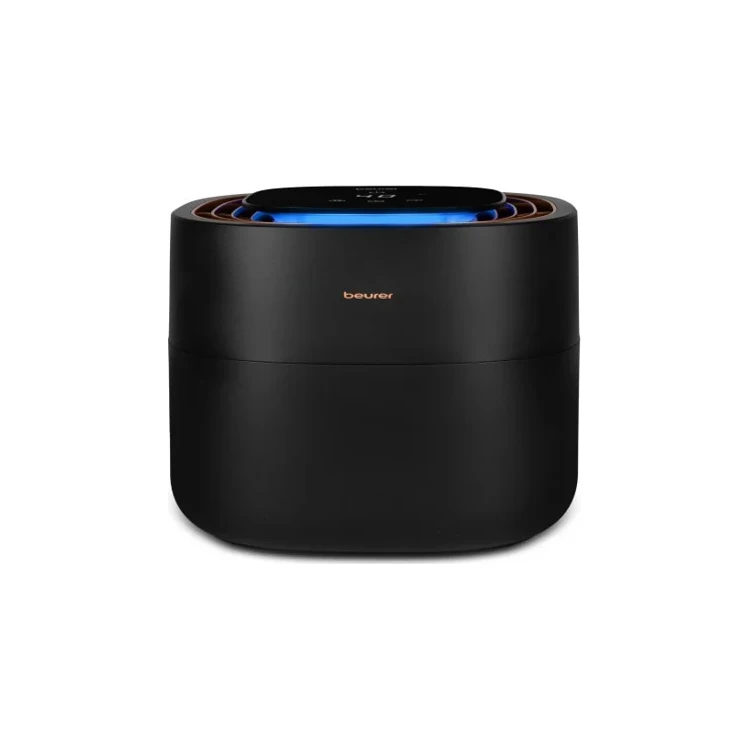
Editorial comparison based on manufacturer documents and health and environmental guidance; not an in-house laboratory test. The order prioritises controllability, maintenance, water mist and everyday usability. It is neither an Amazon sales ranking nor a universal quality verdict. Capacity and room-size figures are manufacturer claims measured under different conditions.
When is a humidifier useful?
A humidifier makes sense when measurements repeatedly show dry indoor air and you can maintain it consistently. Dry skin or a scratchy throat alone cannot establish low humidity: irritants, dust and health conditions can cause similar symptoms. Use a separate hygrometer for several days, morning and evening, away from the outlet, direct sunlight, radiators and cold windows.
If humidity is already around 40–50%, adding more moisture is usually not the best first step. Condensation, damp corners or a musty smell call for an investigation of moisture sources and ventilation. A humidifier cannot fix mould. Avoid unnecessary overheating, too: warming air lowers its relative humidity when its moisture content stays the same.
What humidity should you aim for?
Germany’s Umweltbundesamt gives 40–60% as a range for indoor air. The US EPA advises keeping humidity no higher than 50% when using a humidifier. We therefore use 40–50% as a cautious practical starting target, rather than automatically selecting the highest setting. [1, 2]
The building matters. Cold windows and exterior walls can collect condensation even when the room reading looks moderate. Lower the setting and investigate if this happens. A built-in sensor measures near the unit; an independent hygrometer elsewhere helps distinguish a local plume from the humidity across the room.
Evaporative, ultrasonic or steam?
Evaporative: A fan moves air across a wet wick or rotating discs. Moisture evaporates without a visible spray cloud. This is our starting preference for many homes where tap-water compatibility and straightforward daily use matter. Trade-offs include fan noise, cleaning and, depending on the design, replacement wicks or specified care products.
Ultrasonic: A vibrating membrane creates tiny water droplets. These units can be compact and convenient, but may release minerals and contamination from the water. Low-mineral water and consistent cleaning deserve particular attention. White deposits on furniture are a reason to review both the water and the operating routine. [1]
Steam: Heating water generally uses more electricity and requires descaling. Hot water and steam can cause burns, particularly around children. A warm-mist ultrasonic unit still disperses droplets; “warm” does not mean sterile steam. [4]
Benefits, limitations and sensitive airways
Moderate humidification may ease dryness of the nose, throat or skin when dry air is the cause. It may also reduce static electricity. This does not guarantee better sleep, less snoring or fewer infections. A humidifier is neither a medical treatment nor a replacement for an air purifier. [6]
More moisture is not automatically beneficial for asthma or dust-mite allergy: damp conditions favour mites. Clean water, appropriate humidity and avoiding unsuitable additives matter especially with sensitive airways. [5] Stop the unit and seek advice if symptoms worsen during use. For a child’s room, we favour no hot steam, a stable position, an inaccessible cable and no airflow directed at the bed.
How much output do you need?
A square-metre rating is a guide, not a room guarantee. Ceiling height, air exchange, open doors, temperature and starting humidity all affect demand. An open living area may need more output than a closed bedroom of the same floor area. Compare the operating principle, humidity control and cleaning access before the largest number on the box.
Maximum runtime is easy to misread. A 3-litre tank at a constant 300 ml/h would last roughly ten hours. A claim of “up to 30 hours” therefore involves lower settings or different conditions. A bigger tank is convenient but is not permission to leave old water standing. Judge sound in your actual sleeping environment: published decibel figures are not necessarily measured the same way.
Cleaning and water: the essential routine
- Daily: Unplug, empty remaining water, wipe accessible surfaces and refill with fresh water. Do not simply top up yesterday’s water. [4]
- Clean thoroughly and regularly: The EPA recommends cleaning portable units every third day. Follow the specific manual for compatible cleaners and filter care; address deposits or smells immediately. [1]
- Choose suitable water: For ultrasonic units, favour manufacturer-approved low-mineral water. Boiling does not reliably remove dissolved minerals. An ordinary filter jug does not make water sterile or necessarily low in minerals. [1, 3]
- Handle additives carefully: Do not mix cleaning chemicals and rinse thoroughly. Do not put fragrance oils, medicines or disinfectants into the tank unless the specific instructions expressly permit the product. An aroma pad is different from a water additive.
- Between uses: Empty, clean and let all suitable parts dry fully. Antibacterial cartridges, UV features and filter-drying modes do not replace cleaning. [3]
Use a stable, suitable surface and the clearances specified in the manual. Walls, carpets, furniture and bedding must stay dry. Visible wetness calls for an immediate change in placement or output.
Which model suits your home?
Bedroom: Prioritise a switchable display, acceptable operating sound and dependable humidity control. The Beurer LB 300 Plus is our everyday preference; the Philips HU5710/03 is an alternative when more rated output is useful. Include the cost of the correct replacement filter in the decision.
No replacement wick: Venta’s LW25 Comfort Plus uses discs instead of a replaceable evaporative mat. This avoids that specific filter change, but not cleaning or potential costs for specified care products. “Air washing” does not demonstrate fine-particle removal equivalent to a HEPA purifier.
Connected mist unit: Levoit’s Dual 200S suits users who value app control and accept the water-care routine. The Classic 300S and OasisMist offer different comfort priorities. If regular maintenance is unrealistic, postpone the purchase. A separate hygrometer is the most useful starting accessory.
How much does a humidifier cost to run?
Beyond the purchase price, budget for electricity, water, replacement filters and any required care products. Purchased low-mineral water can cost more than the electricity used by an ultrasonic unit. Use your own water and filter prices rather than comparing watts alone.
For an illustrative calculation at eight hours per day, 120 days and €0.35/kWh, 25 watts costs €8.40 and 300 watts costs €100.80. These are not measurements of the recommended models. Automatic cycling can change actual consumption. The calculator also includes your estimates for water and consumables.
Your seasonal running costs
Estimate at constant power, excluding purchase price.
10 → 1
Top 10: from specialist options to our everyday pick
Yellow buttons open a model-specific search on Amazon.de. Check the model number, contents, EU version and seller there. Amazon displays current prices and availability; a search result does not guarantee stock.
Ten models at a glance
| Rank | Model | Technology | Tank | Max. output | Room claim |
|---|---|---|---|---|---|
| 10 | Beurer LB 55 | Heated-water steam | 6 l | 400 ml/h | 50 m² |
| 9 | BONECO U250 | Ultrasonic | 3.5 l | 340 g/h | 50 m² |
| 8 | Levoit OasisMist 450S | Ultrasonic, warm/cool | 4.5 l | 550 ml/h | 40 m² |
| 7 | Levoit Dual 200S | Ultrasonic | 3 l | — | — |
| 6 | Levoit Classic 300S | Ultrasonic | 6 l | — | — |
| 5 | Stadler Form Oskar | Evaporative wick | 3.5 l | 370 g/h | 50 m² |
| 4 | Philips HU3916/10 | Evaporative wick | 3 l | 300 ml/h | 45 m² |
| 3 | Venta LW25 Comfort Plus | Evaporative discs | 7 l | — | 45 m² |
| 2 | Philips HU5710/03 | Evaporative wick | 4.5 l | 400 ml/h | 56 m² |
| 1 | Beurer LB 300 Plus | Evaporative wick | 3 l | 300 ml/h | 45 m² |
Manufacturer maximums; g/h and ml/h are not presented as standardised test results. “—” means no consistently documented value used here. Room claims are not performance guarantees.
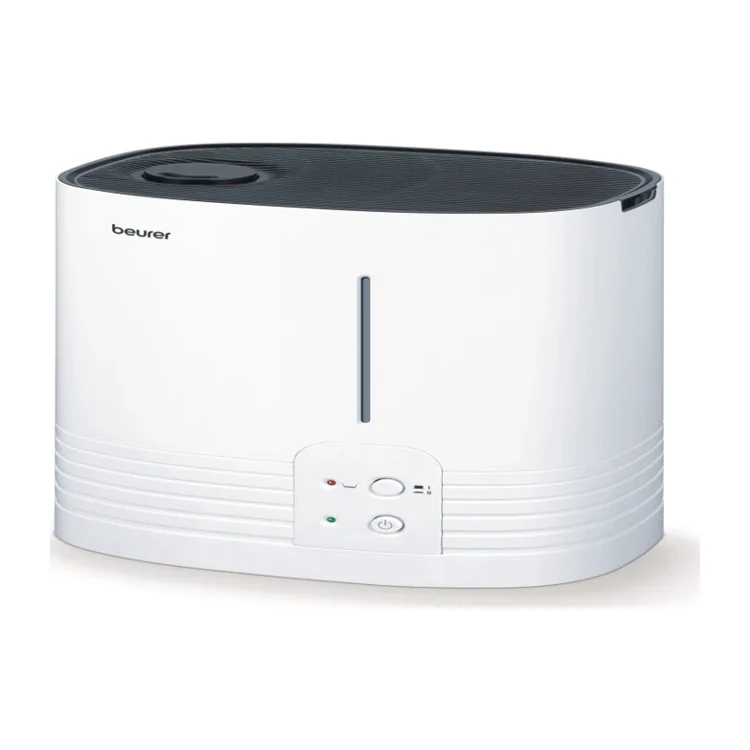
Beurer LB 55
The LB 55 is relevant if you specifically want heated-water steam and accept its energy demands. It would not be our first choice where a child can reach the unit or cable. Before buying, consider how you will independently limit room humidity and remove limescale.
Large tank; dedicated steam design.
Hot water; energy use and descaling.
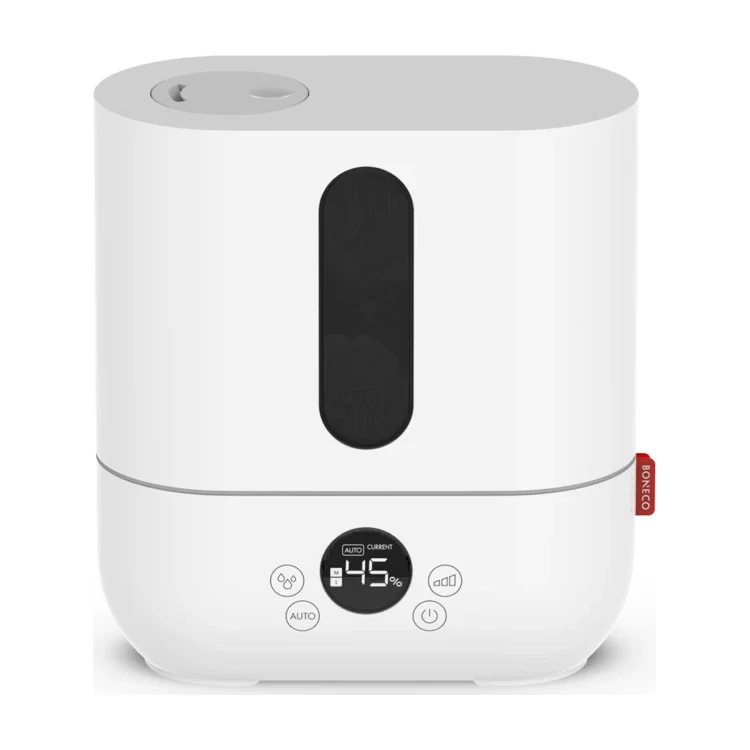
BONECO U250
The U250 is an option when a small footprint and humidity display outweigh a preference for evaporation. Its water cartridge is a consumable, not permission to ignore water hardness or cleaning. Compare the cost of the appropriate replacement parts before choosing the device.
Humidity display and automatic control.
Cartridge costs; ultrasonic water care.
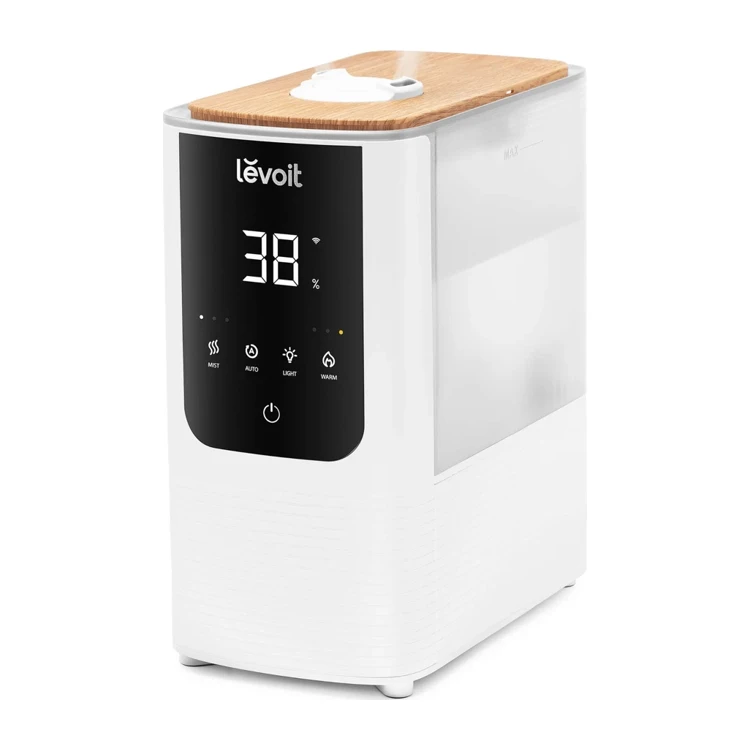
Levoit OasisMist 450S
The OasisMist 450S focuses on convenience. If you actually use both mist settings, the flexibility may be worthwhile. Without a need for warm mist, the extra heating system would not be my main buying criterion. Use oils only in the dedicated location allowed by its instructions.
Top-fill design; choice of mist settings.
Heating adds electricity use; maintenance remains.
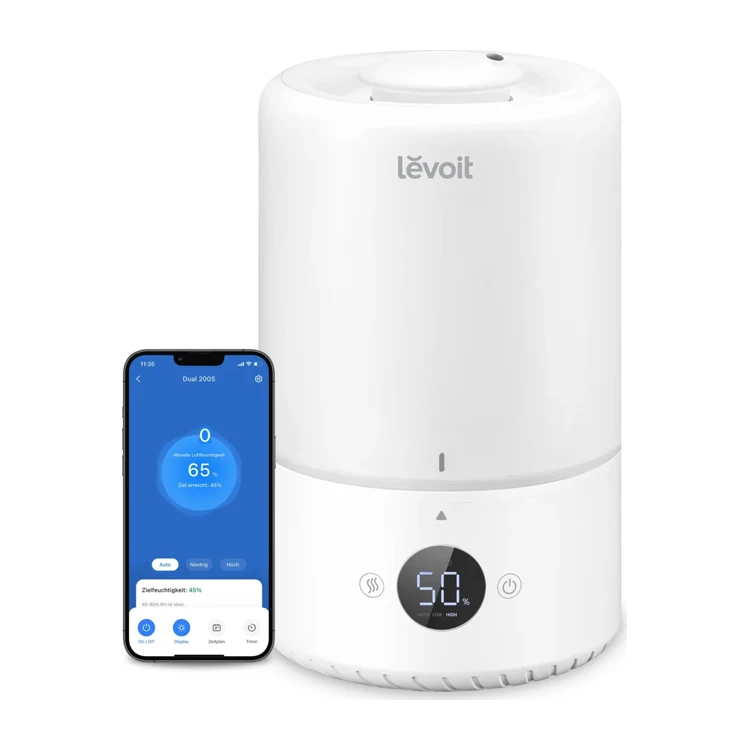
Levoit Dual 200S
The Dual 200S is the smaller connected option here. It suits one room and someone who can make water changes a daily habit. Check the full model name: Dual 200S and Dual 200S Pro are different versions, so their specifications and accessories must not be combined.
Compact body; app and top filling.
Smaller tank; allow for low-mineral water.
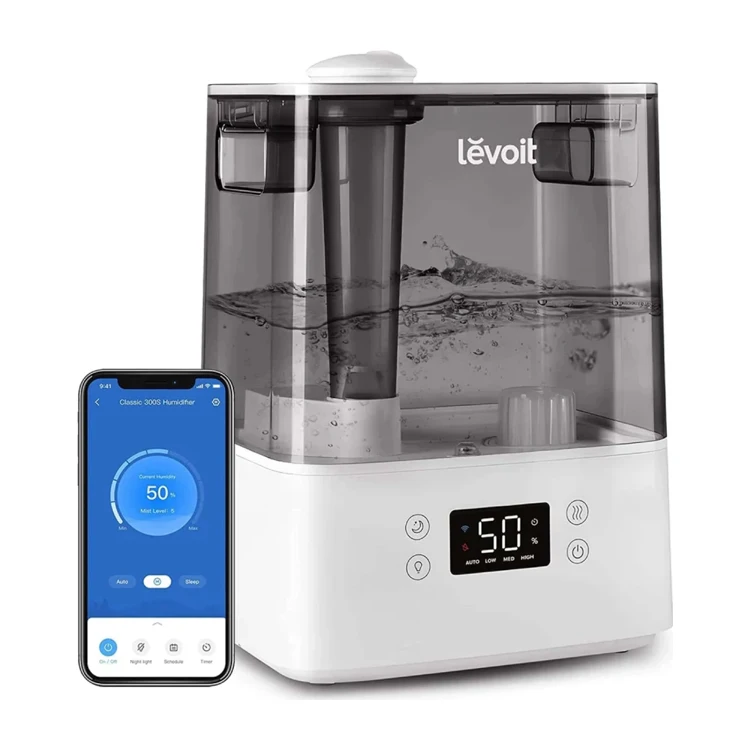
Levoit Classic 300S
The Classic 300S is appealing if you want a large tank and remote control. Maximum runtime is not a cleaning interval. The German product page contains different room-size claims, so we do not select a single area promise. Choose around your actual room and moisture demand.
6-litre tank; convenient controls.
Weight when full; ultrasonic cleaning routine.
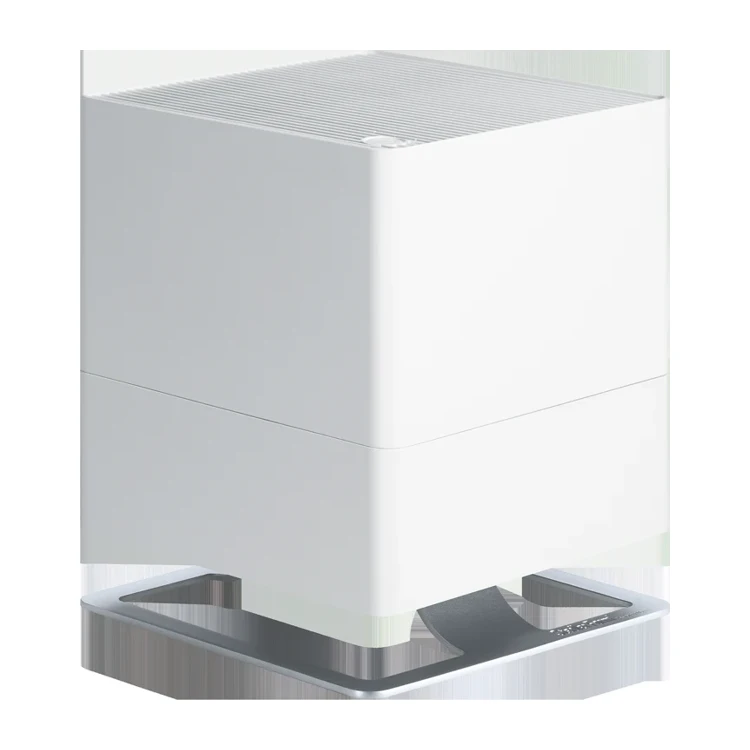
Stadler Form Oskar
Oskar suits buyers who want a traditional evaporative humidifier and simple controls. Include its two wicks in your running-cost calculation. The understated controls are useful if you want fewer apps; a separate hygrometer still helps check the setting in the room.
Humidistat; dimmable lighting.
Regular wick replacement and fan sound.
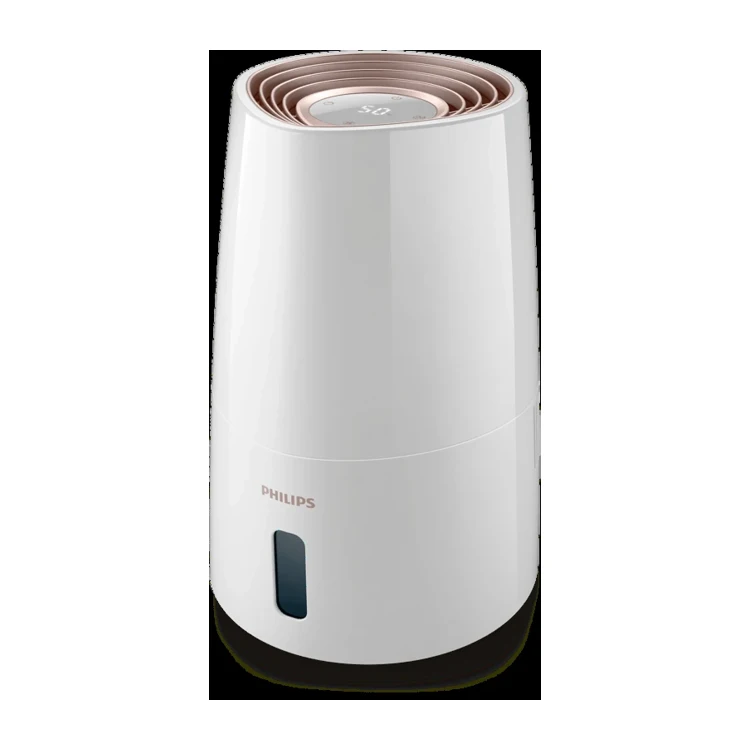
Philips HU3916/10
The HU3916/10 combines evaporation with selectable humidity targets. It becomes particularly attractive if the total cost including filters compares well with newer alternatives. Shop by exact unit and filter number: different Philips ranges do not automatically share accessories or specifications.
No visible spray cloud; humidity targets.
Filter costs; smaller tank than HU5710.
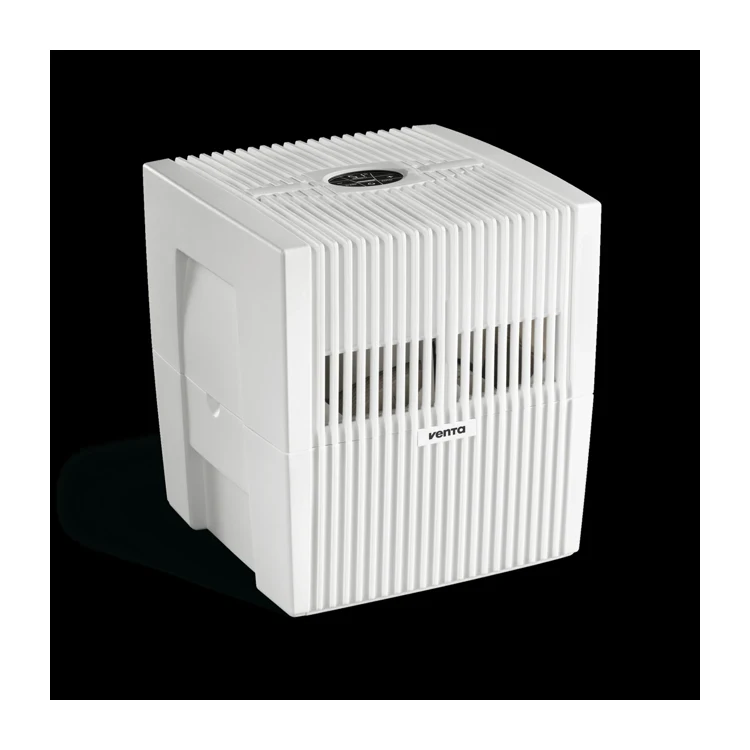
Venta LW25 Comfort Plus
The strongest argument for the LW25 Comfort Plus is avoiding replaceable evaporative mats. You still need good access to clean the disc stack and water tray. Specifications and revisions vary within this family; our table refers to the documented 45 m² version.
Large tank; no evaporative wick.
Larger footprint; care products and cleaning.
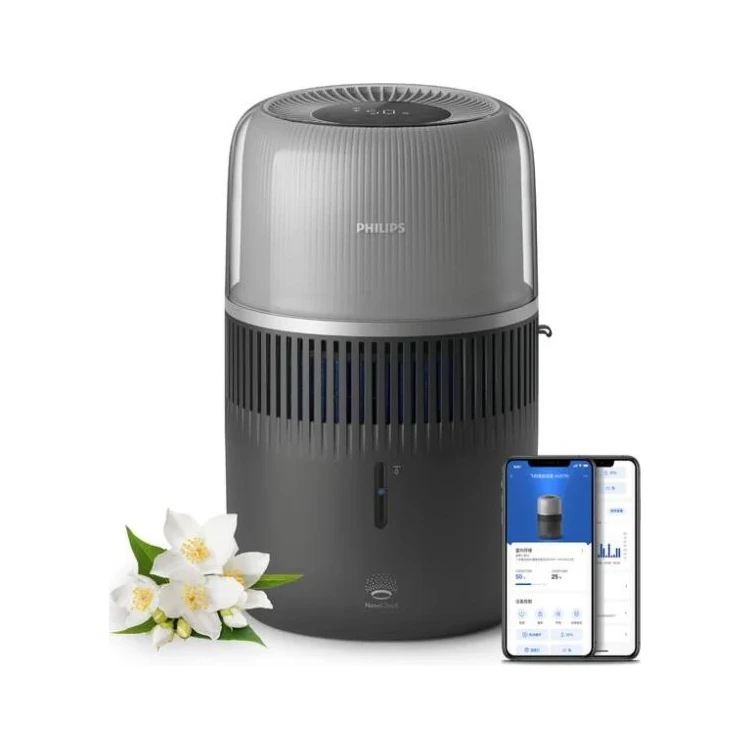
Philips HU5710/03
The HU5710/03 is our alternative when the smaller everyday pick’s stated output looks marginal. More capacity may help, but cannot guarantee a particular humidity in an open-plan room. Check the specific /03 version, filter and controls rather than assuming every regional version is identical.
Evaporation; 4.5-litre tank and higher rated output.
Filter replacement, space and version differences.
Beurer LB 300 Plus
The LB 300 Plus leads our selection because evaporation, automatic control and filter drying form a practical everyday combination. It is not a universal choice. If your demand exceeds its capability or you want to avoid wick filters, the second and third options point in a more suitable direction.
Humidity control, night mode and filter drying.
3-litre tank; recurring filter costs.
Frequently asked questions
Can a humidifier help with a cough?
It may ease dryness when dry air contributes. Coughs have many causes; persistent symptoms need assessment. Never direct mist at someone’s face.
Can I use tap water?
Many evaporative units allow it, subject to the manual. Mineral content matters particularly for ultrasonic models. Follow the specific water, cleaning and replacement instructions.
Should I see mist?
Not necessarily. An evaporative humidifier can work correctly without a visible plume. Check room humidity instead.
Can it run all night?
Only with suitable instructions, safe placement, a clean unit and appropriate humidity control. Check the room reading and condensation in the morning.
Will it remove mould?
No. Extra moisture may worsen mould. Investigate the moisture source, building surfaces and ventilation first.
Did you physically test all ten models?
No. This is an editorial assessment of published documents, without claimed hands-on experience or original comparative measurements.
Sources and comparison method
Product specifications and images come from the linked manufacturers. Health sources provide context; manufacturer hygiene or sleep claims are not clinical proof of benefit.
- EPA — Use and Care of Home Humidifiers
- Umweltbundesamt — Lüften, Luftfeuchte und Schimmel
- CDC — Preventing Waterborne Germs at Home
- MedlinePlus — Humidifiers and health
- AAAAI — Humidifiers and Indoor Allergies
- Mayo Clinic — Humidifiers: Ease skin, breathing symptoms
- Beurer LB 55
- BONECO U250
- Levoit OasisMist 450S
- Levoit Dual 200S
- Levoit Classic 300S
- Stadler Form Oskar
- Philips HU3916/10
- Venta LW25 Comfort Plus
- Philips HU5710/03
- Beurer LB 300 Plus
Editorial comparison based on manufacturer documents and health and environmental guidance; not an in-house laboratory test. The order prioritises controllability, maintenance, water mist and everyday usability. It is neither an Amazon sales ranking nor a universal quality verdict. Capacity and room-size figures are manufacturer claims measured under different conditions.