
KITCHEN · MEAL PREP · BUYING GUIDE
Glass Food Storage Containers: Buying Guide and Top 10 for Meal Prep
A useful glass container fits your meal, your fridge and your commute. The lid matters too.
Packed lunches, half a baked dish and last night’s side vegetables all benefit from a container that makes the contents easy to see. Approved glass dishes can also reduce transfers before reheating. Their value depends less on the number of pieces in a set than on useful sizes and clear instructions. Weight matters differently to someone carrying a backpack for miles and someone cooking mostly at home.
This guide explains when glass makes sense, how lids differ, and which ten models or sets suit different tasks. The order is our editorial selection for everyday kitchens; we have not carried out leak, drop or laboratory tests.
Advertising / affiliate links. As an Amazon Associate, FitRecover earns from qualifying purchases. Links marked * lead to Amazon.de. Check the selected version, price and package contents there.
Three choices for common needs
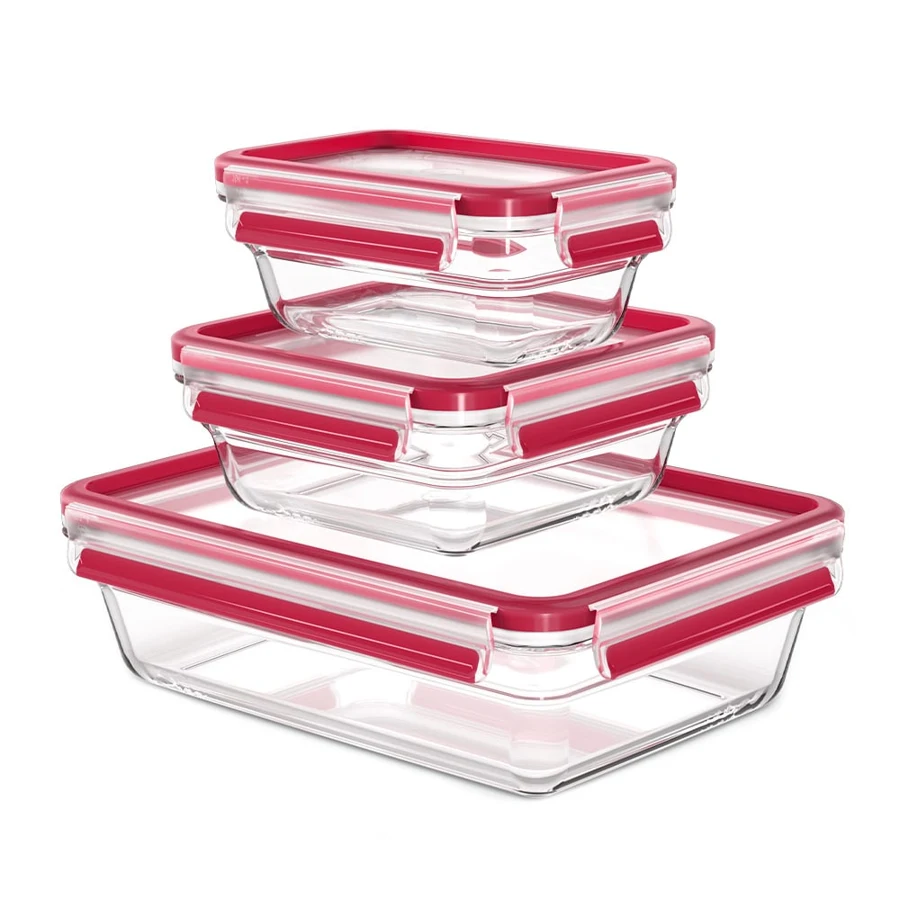
EMSAEMSA CLIP & CLOSE Glas N10509
0.45 + 0.8 + 2.0 L · Versatile starter set
 Mepal
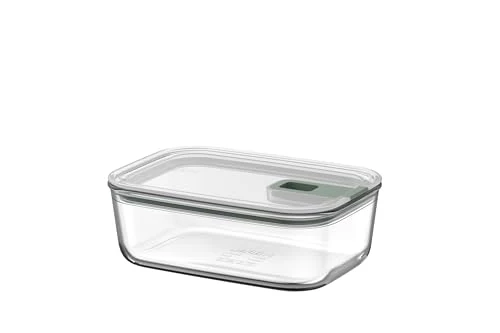
Mepal EasyClip Glas 1 L · Nordic sage
1 L · Single container for everyday lunches
 Pyrex
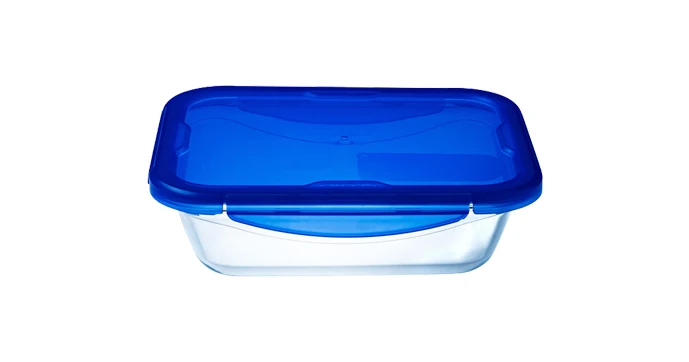
Pyrex Cook & Go 281PG00
0.8 L · 20 × 15 cm · Compact food to take along
Top 10 at a glance
The overview counts down from 10 to 1. Select a product name for its full profile. On small screens the table scrolls sideways.
| Rank | Photo | Model / size | Practical focus | Amazon |
|---|---|---|---|---|
| 10 | 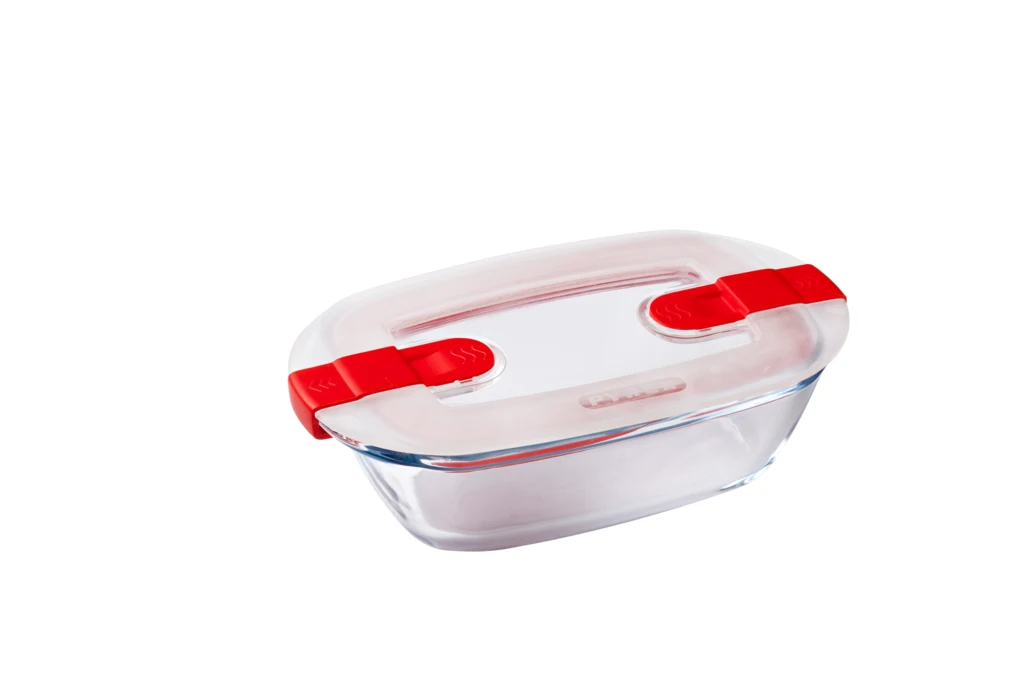 | Pyrex Cook & Heat 214PH000.4 L · 17 × 10 cm | Small leftovers rather than a full meal | View on Amazon* |
| 9 | 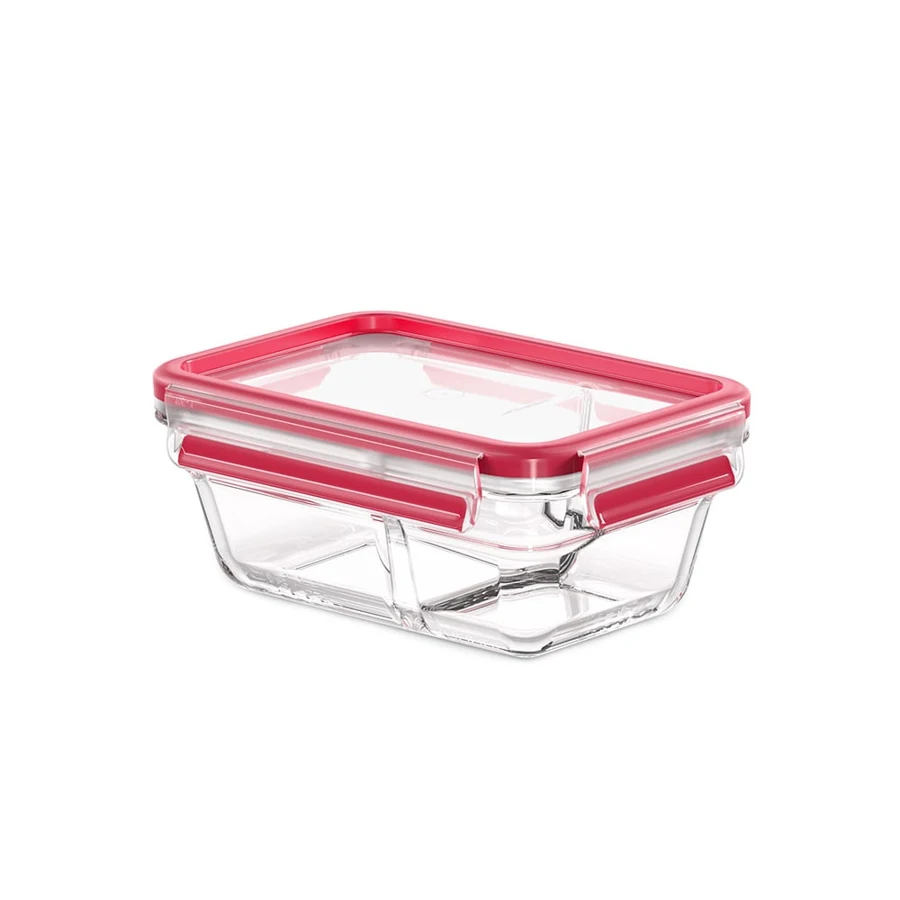 | EMSA CLIP & CLOSE Glas Divider N104070.8 L | Two meal components in one box | View on Amazon* |
| 8 | 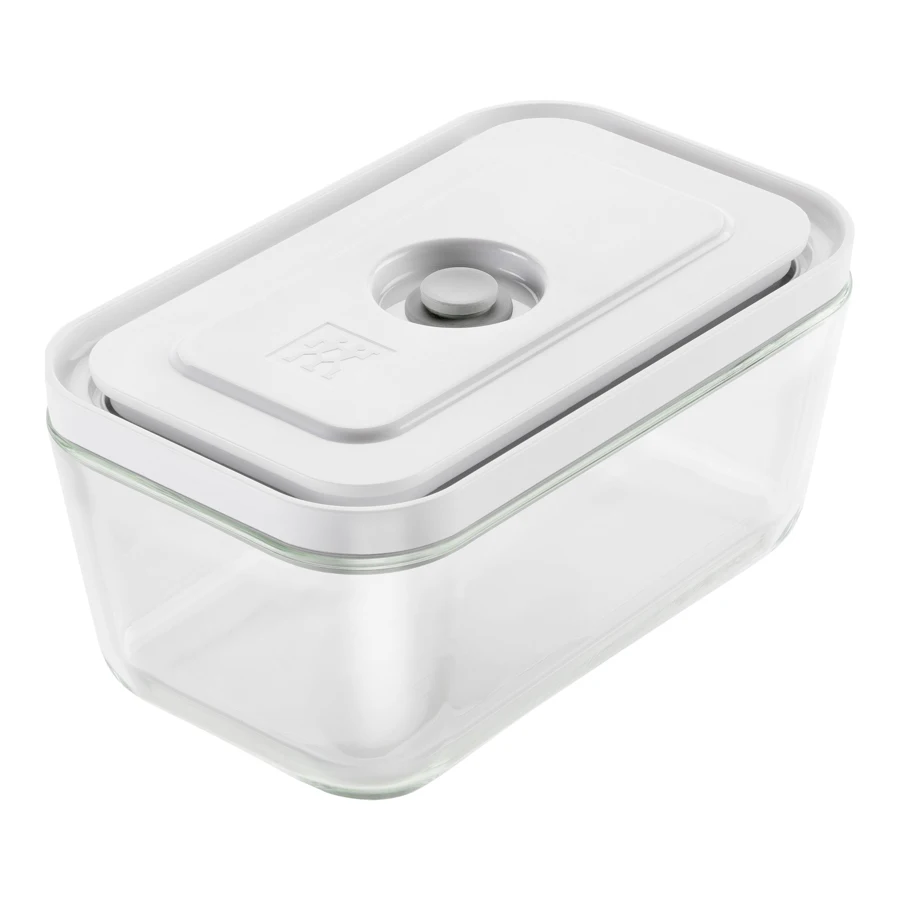 | ZWILLING Fresh & Save M · glass0.9 L / 0.75 L | For an existing vacuum pump | View on Amazon* |
| 7 | 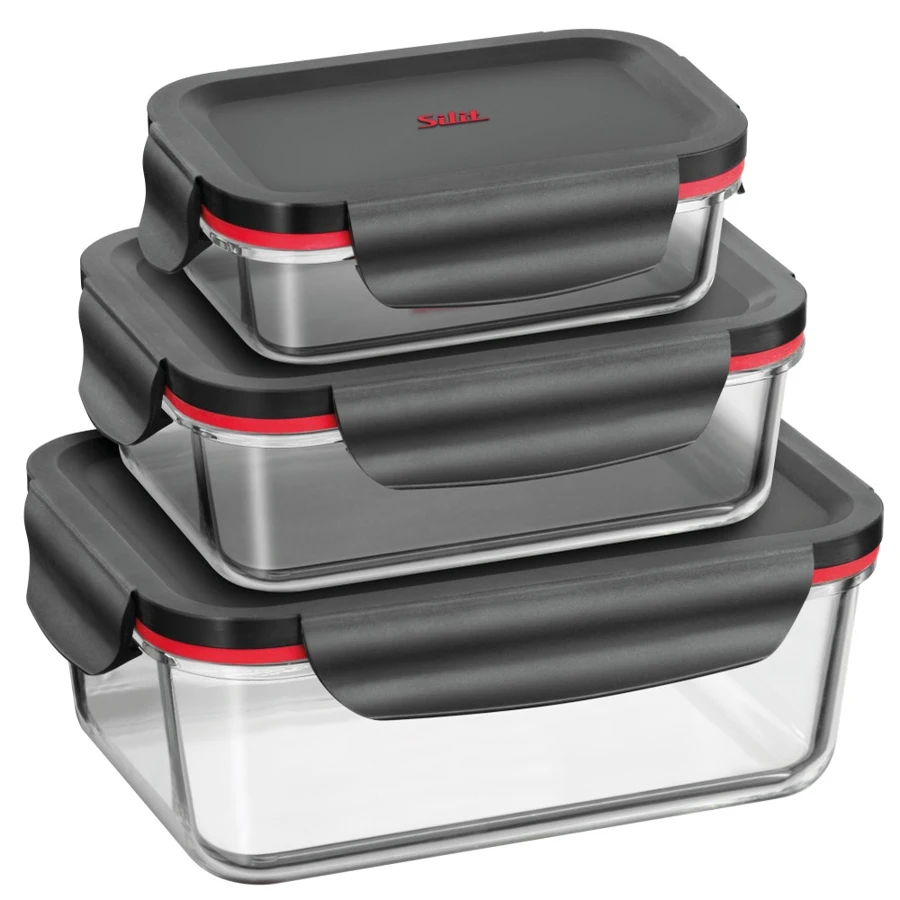 | Silit Storio · set of 30.25 + 0.75 + 1.4 L | Mixed portions at home | View on Amazon* |
| 6 | | Pyrex Cook & Go 281PG000.8 L · 20 × 15 cm | Compact food to take along | View on Amazon* |
| 5 | 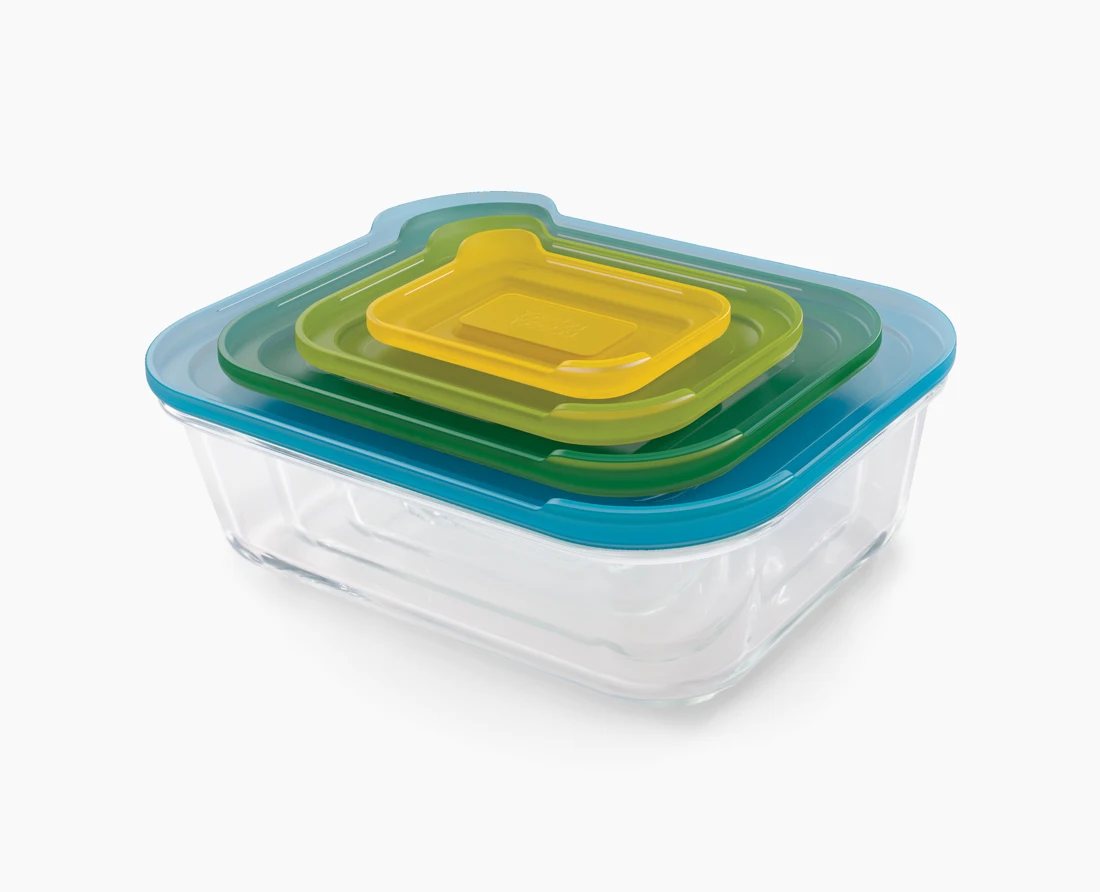 | Joseph Joseph Nest Glass 810600.13 + 0.55 + 1.3 + 2.5 L | Saving cupboard space | View on Amazon* |
| 4 | 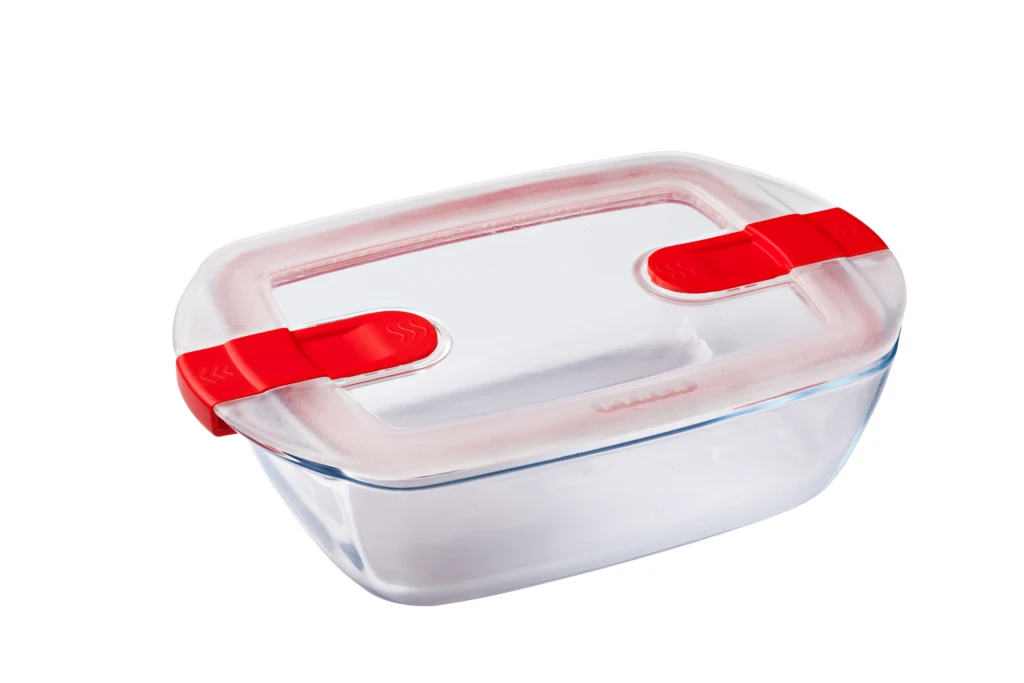 | Pyrex Cook & Heat 215PH0023 × 15 cm · 1.1 / 1.2 L | Reheating with a vented lid | View on Amazon* |
| 3 | 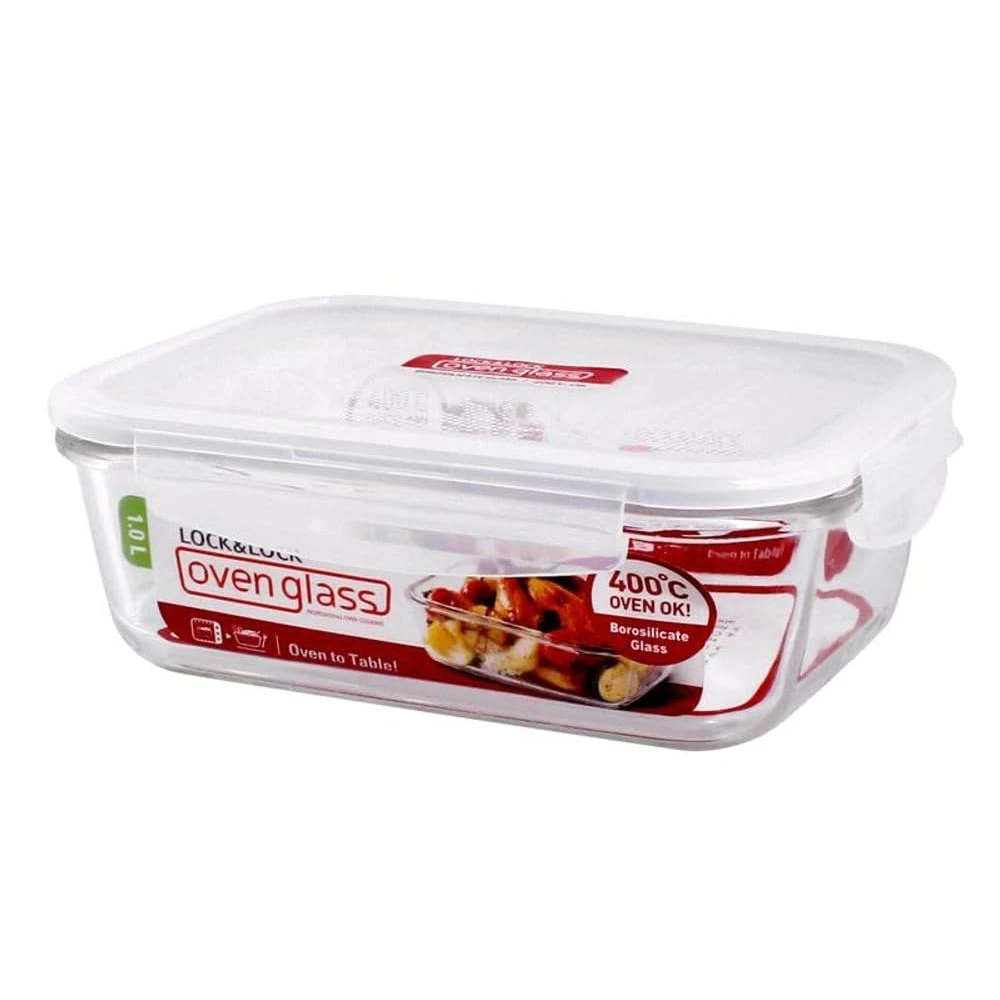 | LocknLock Oven Glass LLG4451 L | Conventional lunchbox without a separate system | View on Amazon* |
| 2 | | Mepal EasyClip Glas 1 L · Nordic sage1 L | Single container for everyday lunches | View on Amazon* |
| 1 | | EMSA CLIP & CLOSE Glas N105090.45 + 0.8 + 2.0 L | Versatile starter set | View on Amazon* |
How we selected the containers
We compare published manufacturer information about size, closures, cleaning and heating. Useful capacities and clear restrictions take priority. Specialist products appear lower because they cover fewer tasks, although they can be the right choice for a specific need. We use no invented scores, sales rankings or measurements. Check the current price, contents and selected variation at the retailer.
Glass: useful advantages and real trade-offs
Glass makes contents visible, and dishes specifically approved for heating can also serve as microwave or oven dishes. Tomato sauces and strongly seasoned meals are common reasons to choose a glass bowl. The main practical gain comes when one vessel handles several stages of preparation.
Weight, breakage and storage space are the trade-offs. A heavy set may be awkward for nursery, a gym bag or hiking. An intact plastic container suitable for its intended use does not automatically need replacing. A glass container is also rarely entirely plastic-free: lids, clips and seals often use other materials.
Borosilicate, toughened glass and ordinary storage jars
Borosilicate glass has low thermal expansion, but that is not permission for every temperature change. The actual product, damage and instructions still determine safe use. Toughening describes a glass treatment; the term alone does not establish oven suitability. An ordinary screw-top jar is not automatically a freezer container or baking dish. [1]
Choose capacity around the food you actually pack
These ranges are practical suggestions, not dietary targets. A leafy salad takes more space than the same weight of rice. Measure the shelf space in your fridge and the opening of your lunch bag.
| Capacity | Typical task | Consider |
|---|---|---|
| 0.25–0.45 L | Small side, leftovers, snack | An addition to a main lunchbox |
| 0.7–1.1 L | Many everyday single meals | Test your own serving |
| 1.2–1.5 L | Large meal or several sides | Allow space for mixing |
| 1.8–3 L | Batches or several servings | Divide for faster cooling |
Count bowls rather than total pieces: a “20-piece” set may contain ten bowls and ten lids. For regular meal prep, three to five matching main containers may be more convenient than many tiny sizes. That is an organisation suggestion, not a recommendation to refrigerate a whole week of cooked meals.
Treat the dish and lid as separate components
A high temperature rating often applies only to the glass dish. Plastic lids stay out of the oven. Never heat a container with a pressure-tight seal.
| Use | Glass dish | Lid / closure |
|---|---|---|
| Oven | Only with explicit approval for that model | Remove the plastic lid |
| Microwave | Only approved dishes | Remove lid or open vent as instructed |
| Freezer | Only freezer-approved models | Do not overfill; allow expansion space |
| Dishwasher | Check product approval | Follow rack and disassembly instructions |
Avoid thermal shock: no cold water in a hot dish, and no hot glass on a wet or cold surface. Use a dry, heat-resistant support. Separate freezer and oven approvals do not automatically permit any direct freezer-to-hot-oven transfer. Stop using a dish with chips or cracks. [2]
Small servings and divided meals
Small boxes complement main containers. They make sense when you regularly have small leftovers, but can be frustrating as your only containers for full meals. Think about the amount you really carry before ordering a set.
#10 · Small leftovers rather than a full meal
Pyrex Cook & Heat 214PH00
Size: 0.4 L · 17 × 10 cm
This small Cook & Heat dish is an extra container for side dishes, stewed fruit or small servings. Unlike the larger 215PH00, its 0.4 litres will not serve as a complete lunchbox for many adults.
Less empty space around small amounts; steam vents.
Too small for large meals; several mini boxes mean more lids to wash. Carry liquids upright with secondary protection.
#9 · Two meal components in one box
EMSA CLIP & CLOSE Glas Divider N10407
Size: 0.8 L
The integrated divider helps arrange two foods side by side, for example rice and vegetables. The stated 0.8 litres covers the entire container, not each compartment.
Fixed separation without loose inserts; compact for smaller meals.
A divider does not automatically make compartments liquid-tight against each other. Use separate containers for lots of sauce or very large portions.
A divider organises food; an airtight outer lid does not guarantee liquid-tight internal compartments. Pack dressing or runny sauce separately.
Vacuum systems and mixed sets
An extra mechanism is most useful when it fits your existing routine. Without a pump you regularly use, a vacuum container can be more complicated than a basic clip lid. A mixed set instead addresses different amounts of leftovers.
#8 · For an existing vacuum pump
ZWILLING Fresh & Save M · glass
Size: 0.9 L / 0.75 L
Fresh & Save M is primarily a system choice. The manufacturer distinguishes a 0.9-litre bowl from its 0.75-litre maximum fill. Vacuum operation requires a compatible pump, normally not supplied with a single container.
A relevant addition if you already use the Fresh & Save system.
Pump and valve cleaning add work. Glass is rated only to 180 °C without the lid; vacuum does not replace refrigeration or safe storage times.
#7 · Mixed portions at home
Silit Storio · set of 3
Size: 0.25 + 0.75 + 1.4 L
Storio combines 0.25, 0.75 and 1.4 litres. It suits kitchens with side dishes, small leftovers and larger servings to store at the same time. WMF expressly permits oven and microwave use without the lids.
Useful spread of capacities; clip closures and silicone seals.
Neither matching lunch portions nor a dedicated microwave vent lid. Remove plastic lids before heating.
Vacuum is neither sterilisation nor room-temperature preservation. Keep the cold chain regardless of how a container closes.
Cupboard space and compact transport
Nesting saves space when containers are empty; stacking saves space when they are full. These are different properties. For a single packed lunch, a useful footprint and an accessible seal may matter more than collecting many sizes.
#6 · Compact food to take along
Pyrex Cook & Go 281PG00
Size: 0.8 L · 20 × 15 cm
The 0.8-litre version is a relatively shallow lunchbox. Pyrex specifies a removable gasket and a writing area. Being able to reach the seal groove matters when a box travels to work regularly.
Accessible seal; compact rectangular footprint.
Limited room for very large salads or meals. Where microwave instructions conflict, removing the plastic lid is the straightforward option.
#5 · Saving cupboard space
Joseph Joseph Nest Glass 81060
Size: 0.13 + 0.55 + 1.3 + 2.5 L
Four differently sized borosilicate glass containers and lids that clip together make compact storage possible. This set suits changing amounts of leftovers. The largest dish handles larger meals, while the smallest serves as a tiny extra container.
Nesting dishes; lids can be grouped together for storage.
Only one container in each size, so it does not provide five identical meal-prep portions. Lids are not oven-safe and go on the dishwasher top rack.
Use an insulated bag and cold packs for perishable food on the journey. A leak-resistant box is not automatically insulated.
Reheating and matching portions
With daily use, opening, cleaning and resealing the lid become important. Steam vents help only when correctly operated. Four individual clips take a little more handling, but work without a separate device.
#4 · Reheating with a vented lid
Pyrex Cook & Heat 215PH00
Size: 23 × 15 cm · 1.1 / 1.2 L
Cook & Heat is especially relevant when a microwave is part of your daily routine. Model 215PH00 measures 23 × 15 cm. Older listings state 1.1 litres and current manufacturer information states 1.2 litres: compare the exact version and dimensions.
Steam vents for its intended reheating use; useful shape for rice and pasta.
Capacity varies across product revisions. Open the vents as instructed and never put the plastic lid in the oven.
#3 · Conventional lunchbox without a separate system
LocknLock Oven Glass LLG445
Size: 1 L
This rectangular one-litre container uses four side clips. If you prepare the same portion size each day, buying matching individual boxes can be more useful than accumulating a large mixed set.
Straightforward individual container; no pump or app needed.
All four clips must close properly. Check replacement lids and seals before committing to a whole collection.
Stir during reheating when the food allows it. A hot edge does not show that the centre has reached a suitable temperature.
One container or a versatile starter set
A single well-sized box lets you try the serving size and carrying weight. A mixed set covers more jobs at home. Your decision should reflect whether you pack matching lunches or changing amounts of leftovers.
#2 · Single container for everyday lunches
Mepal EasyClip Glas 1 L · Nordic sage
Size: 1 L
One litre is a sensible starting point when trying a first glass lunchbox. EasyClip combines a glass dish with a locking clip and steam vent. Choose the glass version: plastic containers also use the EasyClip name.
Simple closure; microwave-compatible lid with the steam vent open.
Glass adds weight to a daily bag. The lid cannot go in the oven; distinguish glass and plastic versions when ordering replacements.
#1 · Versatile starter set
EMSA CLIP & CLOSE Glas N10509
Size: 0.45 + 0.8 + 2.0 L
Three sizes cover small leftovers, one meal and larger batches. Borosilicate glass bowls are paired with clip lids. For a household replacing an awkward collection of mismatched containers, this spread of sizes makes practical sense.
Useful mix of capacities; rectangular shapes suit fridge shelves.
This is not three matching lunch portions. EMSA limits heating with the lid loosely resting on top to 1.5 minutes at 600 W.
Our first place goes to the versatile EMSA set. For one regular serving, Mepal is a sensible individual alternative. Keeping suitable containers you already own may be the most useful option.
Meal prep: a container does not make food safe by itself
Divide cooked leftovers into shallow portions and cool promptly. Germany’s BfR advises cooling below 7 °C within a few hours and using refrigerated leftovers within two to three days. Freeze suitable portions early for later days. [3]
A fridge temperature no higher than 7 °C, preferably 5 °C, is recommended. When reheating, all parts of the food should reach 70 °C for at least two minutes. Keep the cold chain and use clean hands and separate utensils for raw and cooked food. [4] [5]
Label portions with the dish and cooking date. Reheat only what you intend to eat where possible. A normal smell does not establish safety. Reheating cannot reliably rescue food with suspected spoilage or an unsafe cold chain: some bacterial toxins resist heat. [6]
Cleaning, lifespan and spare parts
Clean food from clips, steam valves and seal grooves as well as the bowl. Remove seals only where the instructions allow; do not pull out permanently moulded seals. Dry components fully before storing them closed for long periods. Warped lids, damaged clips and deteriorating seals can impair function.
Before buying a large set, check whether lids and seals can be replaced. A replaceable broken lid can be more valuable than a large collection of shapes. Glass alone does not establish a better environmental outcome: long use, avoided food waste, washing and transport all matter. Start with sizes you will regularly use.
Which option fits your routine?
For regular packed lunches: Start near one litre and test your actual meal. For varied leftovers: Three clearly different sizes offer flexibility. For limited cupboards: Look specifically for nesting bowls. For an existing vacuum pump: Add a compatible Fresh & Save container. For minimum carrying weight: Consider a suitable lightweight plastic or stainless-steel alternative; stainless steel generally cannot be microwaved.
Frequently asked questions
Can every glass container go in the oven?
No. Only a model expressly approved by its manufacturer. Remove plastic lids; glass type alone does not replace the instructions.
Can I microwave a sealed box?
Do not heat it pressure-tight. Remove the lid or open its designated vent or clips according to the instructions.
Are these containers completely plastic-free?
Usually not. Glass dishes commonly have plastic lids and flexible seals. Read the material details for every component.
Can the 0.9-litre Zwilling take 0.9 litres of food?
For Fresh & Save M the manufacturer specifies a maximum fill of 0.75 litres. Bowl volume without the lid is not the same as permitted filling capacity.
Can I keep five days of meals in the fridge?
The container itself does not establish that. BfR gives two to three days for chilled leftovers; freeze later portions promptly. Particular foods or conditions can require shorter storage.
Why are there no fixed prices or star scores?
Prices, variants and ratings change. This comparison assesses usefulness from documented features; the retailer shows the current offer.
Sources and product documents
- SCHOTT · Borosilicate glass
- Pyrex · Cook & Heat: use and precautions
- BfR · Korrektes Kühlen von Lebensmitteln im Privathaushalt
- BfR · Vorkochen für mehrere Tage
- BfR · Lebensmittelinfektionen im Privathaushalt
- BfR · Schutz vor Erkrankungen durch bakterielle Toxine
- EMSA CLIP & CLOSE Glas N10509 · Manufacturer information
- Mepal EasyClip Glas 1 L · Nordic sage · Manufacturer information
- LocknLock Oven Glass LLG445 · Manufacturer information
- Pyrex Cook & Heat 215PH00 · Manufacturer information
- Joseph Joseph Nest Glass 81060 · Manufacturer information
- Pyrex Cook & Go 281PG00 · Manufacturer information
- Silit Storio · set of 3 · Manufacturer information
- ZWILLING Fresh & Save M · glass · Manufacturer information
- EMSA CLIP & CLOSE Glas Divider N10407 · Manufacturer information
- Pyrex Cook & Heat 214PH00 · Manufacturer information
Product photographs help identify the model. The version selected at the retailer and its included contents remain decisive.