
Rigid-fork all-rounder
Airtracks TR.2870 Deore
Full everyday equipment and a rigid fork
View on Amazon ↗Read the detailed analysis →Top 10 trekking, hybrid, fitness and touring bikes on Amazon.de
A technical comparison of ten non-electric bicycles — with specific Amazon.de product links, clear riding briefs and a close look at their limitations.
10 models · Amazon.deRigid-fork all-rounder
Full everyday equipment and a rigid fork
View on Amazon ↗Read the detailed analysis →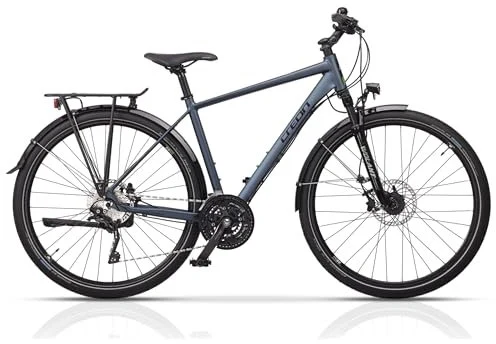
Touring with suspension
Touring equipment and an adjustable air fork
View on Amazon ↗Read the detailed analysis →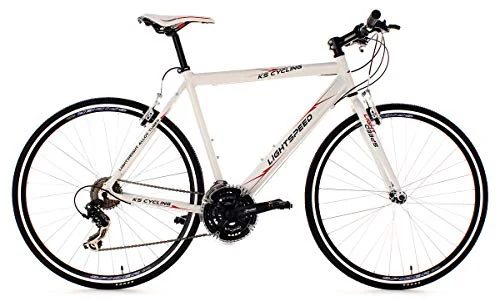
Fitness on tarmac
Asphalt fitness with a stated weight of about 12 kg
View on Amazon ↗Read the detailed analysis →The Amazon buttons open specific product pages. Check the frame size, colour, equipment and availability for your address there. Model versions and package contents may change.
A commute with one bag, a brisk evening workout and a multi-day cycle trip make different demands. This selection brings together bicycle types 3 to 6: trekking, cross/hybrid, fitness and touring. The shared order prioritises regular everyday riding and longer outings with moderate luggage. A pure training brief or higher total load may justify a different personal order.
Select a model name to jump to the full analysis.
| Rank | Image | Model / version | Key strength | Amazon.de |
|---|---|---|---|---|
| 01 | | Airtracks TR.2870 DeoreTrekking · 28″ · 55 cm · matt black · Deore 3×10 | Full everyday equipment and a rigid fork | View on Amazon ↗ |
| 02 | | Airtracks TRAIL 6.0Touring / cycle travel · 28″ · 50 cm · Deore XT 3×10 | Touring equipment and an adjustable air fork | View on Amazon ↗ |
| 03 | 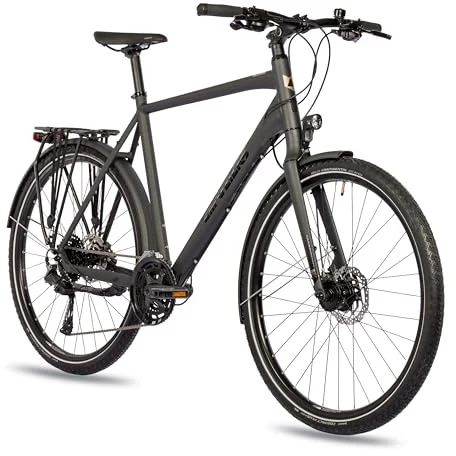 | Airtracks TR.2880-C XXLTouring / cycle travel · 28″ · 56 cm · matt black · CUES 2×10 | 150 kg system limit for rider and luggage | View on Amazon ↗ |
| 04 | 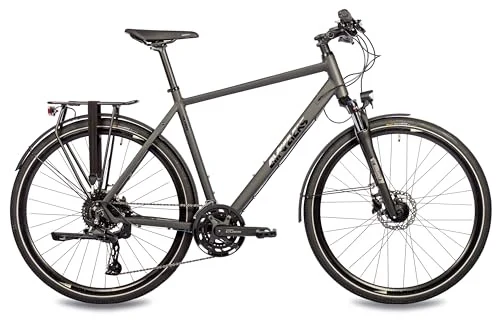 | Airtracks TR.2855-CTrekking · 28″ · 56 cm · black · CUES 2×10 | CUES and a complete commuter setup | View on Amazon ↗ |
| 05 | 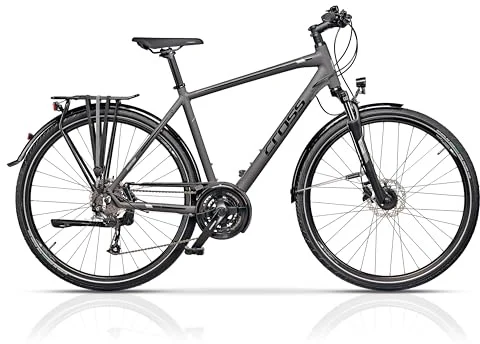 | Airtracks TRAVEL GentTrekking · 28″ · 52 cm · matt grey · Altus 3×8 | A complete trekking package with 3×8 gearing | View on Amazon ↗ |
| 06 | 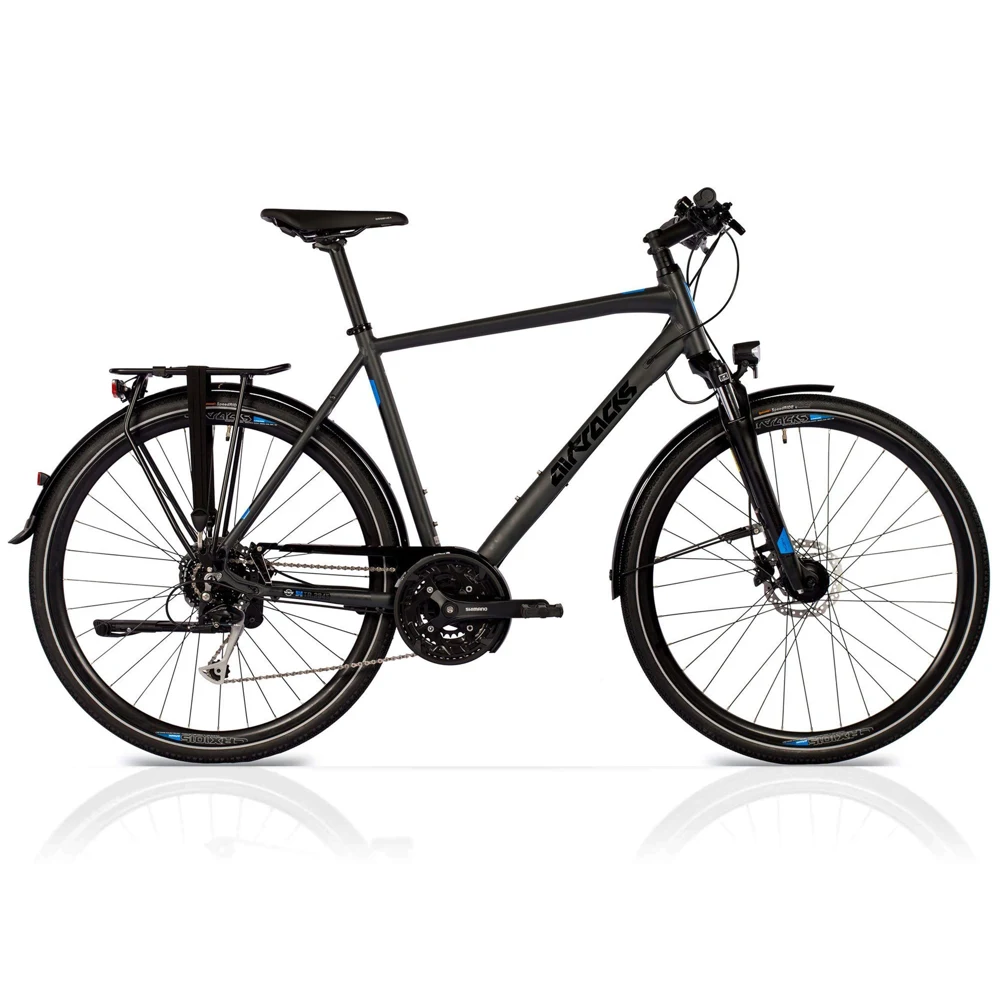 | Airtracks TR.2845 AlivioTrekking · 28″ · 52 cm · matt black · Alivio 27-speed | Complete trekking bike with Shimano brakes | View on Amazon ↗ |
| 07 | 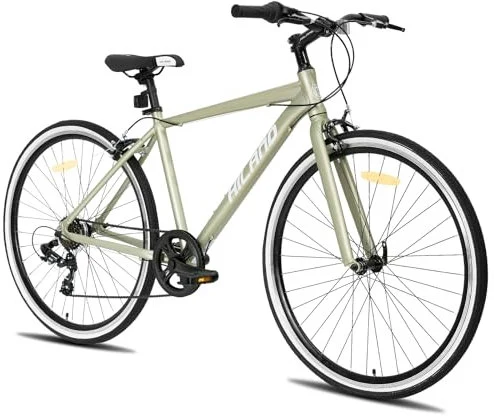 | Hiland 700C Hybrid 7-SpeedCross / hybrid · 700C · 18″ frame · grey-green · flat handlebar | Simple seven-speed drivetrain without a front derailleur | View on Amazon ↗ |
| 08 | | KS Cycling LightspeedFitness · 28″ · 56 cm · white · article 276B | Asphalt fitness with a stated weight of about 12 kg | View on Amazon ↗ |
| 09 | 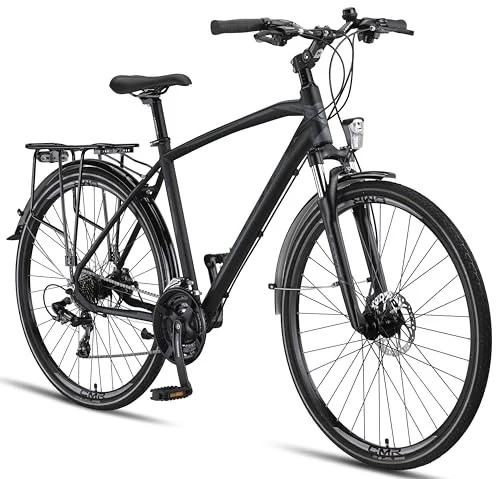 | Licorne Bike Touring 28″Trekking · 28″ · diamond frame · black · 21-speed | Trekking equipment with disc brakes | View on Amazon ↗ |
| 10 | 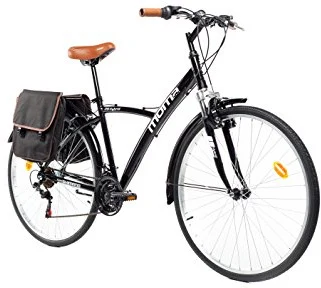 | Moma Bikes HYBRID 28″Cross / hybrid · 28″ · black · Shimano 18-speed | Leisure hybrid with extensive accessories | View on Amazon ↗ |
Fit and approved loads come first, followed by complete equipment, understandable gearing, servicing needs and suitability for the mixed-use brief. Positions are editorial judgements from published data. There are no hands-on ride tests, laboratory grades or claimed speed measurements. Missing data reduce recommendation confidence but do not prove a product defect.
The selection is limited to ten identifiable Amazon.de models. Different sizes or colours of one model do not occupy separate positions. This list does not represent the entire bicycle market.
Trekking bikes, as used here, combine an everyday drivetrain with lighting, a carrier and mudguards. Suspension is not required: the TR.2870 and TR.2880-C demonstrate the rigid approach. For regular journeys, the useful question is which equipment is already fitted and what the particular route still requires.
Cross and hybrid bikes combine flat handlebars with an approach to varied firm surfaces. The names do not define uniform equipment tiers. The simple Hiland and fully accessorised Moma are consequently very different interpretations. Here, hybrid describes the bicycle design, not an electric motor.
Fitness bikes focus on sporty riding without drop handlebars. The Lightspeed emphasises a reduced assembly and narrow tyres. It can serve a commute, but necessary accessories change weight and usefulness. Comparing a bare fitness bike with a fully equipped trekking bike by catalogue weight alone is misleading.
Cycle travel starts with load, fit and serviceability. The TRAIL 6.0 is a touring foundation for moderate luggage; the TR.2880-C offers a larger documented load allowance. None of the ten has documented expedition suitability for remote routes and heavy front-and-rear luggage in the reviewed material. That brief requires additional approvals and a different equipment assessment.
Cross / hybrid
The Moma HYBRID 28 combines leisure geometry and front suspension with extensive accessories. A carrier, mudguards, lighting and panniers belong to the described model package. It sits closer to a comfort-oriented hybrid trekking bike than to a stripped-back sporty cross bike. The selected Amazon mapping concerns the black 28-inch 18-speed model. [10]
Its 3×6 drivetrain uses a basic Shimano derailleur and twist shifters. Family documentation varies between TZ-50 and TZ500 rear-derailleur descriptions, so we promise no particular revision. Aluminium V-brakes are serviced through mechanical cables, but use the wheel rims as wear surfaces. Without a reliable weight figure, an aluminium frame and marketing language cannot establish a lightweight advantage.
The low position mainly reflects unresolved load and specification questions. Without a confirmed system limit, carrier approval and full tooth counts, recommending heavily loaded mountain tours would be unsound. Included panniers do not replace those approvals. For relaxed outings, the complete package may be practical if fit and supplied equipment are right. The manufacturer’s one-size height range is only a starting point; it replaces neither checking inseam and reach nor a test ride.
Trekking
The Licorne Touring combines an aluminium frame, suspension fork, disc brakes and lighting in an everyday trekking concept. The selected Amazon record identifies the black diamond-frame 21-speed version. “Premium Touring” is a product name, not a quality tier verified by us or an expedition approval. Its basic approach is plausible for day rides, but published information is insufficient for heavy touring loads. [9]
The manufacturer page supplies neither a clearly matched system limit nor a full component list. It also does not precisely identify brake actuation. We therefore do not label these disc brakes hydraulic without evidence. A count of 21 gears likewise cannot establish the lowest ratio. Some redistributed offer descriptions conflict over frame material; the relevant version here is the aluminium one.
The manufacturer describes 85 percent preassembly. Final assembly and adjustment of gears and brakes must be planned before use, particularly when no local workshop service accompanies the purchase. Ninth place reflects weaker technical comparability; it is not a demonstrated verdict on durability or handling. Size, actual supplied equipment and approved loads all need to fit the intended use before ordering.
Gear count describes possible combinations, not spacing or practical usefulness. Three chainrings and ten sprockets produce 30 nominal combinations, but overlaps and poor chainlines can remain. A first look at climbing gearing divides the smallest chainring’s tooth count by that of the largest rear sprocket.
At the same rolling circumference, a smaller ratio means less distance travelled per crank revolution. With 30/39, the CUES-equipped TR.2855-C and TR.2880-C reach about 0.77; the TRAVEL’s 28/32 gives about 0.88. Lower gearing may help on slowly ridden climbs. It guarantees no particular climbing performance.
Actual development requires ratio × measured wheel circumference. The other models lack consistently unambiguous tooth counts in the reviewed information. We do not replace those gaps with estimates. For loaded tours, check the lowest gear of the offered version rather than deriving suitability from 21, 24 or 30 gears.
| Model | Lowest established combination | Ratio |
|---|---|---|
| Airtracks TR.2880-C XXL | 30 / 39 | 0.77 |
| Airtracks TR.2855-C | 30 / 39 | 0.77 |
| Airtracks TRAVEL Gent | 28 / 32 | 0.88 |
Fitness
The Lightspeed is the clearest fitness specialist in this selection. An aluminium frame, flat handlebar, rigid steel fork and 28 mm Kenda tyres accompany a stated weight of around 12 kg. That is an understandable setup for sporty tarmac rides. A speed advantage would remain unproven without comparable ride measurements. [8]
The 21-speed Tourney drivetrain uses three chainrings and a seven-speed threaded freewheel. This differs from the cassette hubs and CUES drivetrains on the higher-ranked trekking bikes. Neither the larger nominal gear count nor the lower stated weight automatically makes it more versatile. On rougher routes and luggage rides, narrow tyres and absent accessories are significant compromises.
The manufacturer lists no lights, mudguards, carrier or kickstand. Adding them for commuting requires a fresh look at weight, approvals and mounting points. The 120 kg system limit, 90 kg rider and quoted bike weight leave an arithmetic allowance of 18 kg, but do not establish carrier approval. Eighth place in the everyday ranking and the fitness recommendation are consistent: this bike is more compelling for a narrower brief than for the whole mixed-use profile. The link identifies the white 56 cm version.
Cross / hybrid
This Hiland is the straightforward flat-bar hybrid with seven gears. The selected grey-green 700C version is advertised for commuting and leisure. Its concept fits firm paths more readily than the role of a loaded touring bike. The manufacturer’s family page describes a similar 18-inch hybrid, but individual material and equipment claims cannot be securely assigned to the German version. [7]
The simple drivetrain is the main attraction. Without a front derailleur, there is no choice among multiple chainrings. Seven sprockets alone do not establish a low climbing gear or a broad range. A climbing recommendation would be speculative without dependable tooth counts. Caliper brakes use the rims, so condition, adjustment, suitable pads and clean braking surfaces matter.
A reduced assembly can suit workouts and short daily rides. Year-round commuting requires specific answers about lighting, weather protection and luggage transport. The reviewed documentation provides no reliably matched bike weight, tyre width or system limit. This places the Hiland behind the better-documented trekking models. Buyers seeking a simple hybrid should judge fit and the actual supplied specification rather than general lightweight marketing.
The two rigid Airtracks concepts avoid a suspension unit and its setup and servicing. Suspension may help on uneven routes but introduces more moving parts. The TRAIL 6.0 air fork allows a different approach to adjustment from a basic NEX suspension fork. More travel alone does not establish better quality.
Tyre width and pressure influence suitability. The Lightspeed’s 28 mm tyres prioritise a different riding brief from the documented 47 mm tyres on several touring candidates. Width alone establishes neither measured speed, a particular comfort level nor puncture immunity. Rim compatibility, clearance and manufacturer limits still matter.
Hydraulic discs, mechanical discs, V-brakes and calipers differ in actuation and braking surface. Rim wear belongs in the maintenance plan for rim brakes. Disc brakes transfer braking duties to a rotor but remove neither pad wear nor setup and maintenance requirements. Equipment alone does not demonstrate a shorter stopping distance.
Everyday details also count: can a bag attach without heel contact? Do cables remain free at full steering lock? Are lights and mudguards securely installed? These need assessment on the completely assembled bike. Product photographs cannot replace that check.
Trekking
The TR.2845 Alivio has much the same basic brief as the TRAVEL: a fully equipped trekking bike with front suspension. Its specification lists hydraulic MT200 brakes, a Racktime carrier and 42 mm Continental tyres. This is a coherent commuting concept whose practical benefit comes from accessories already fitted. The assessment concerns the black Alivio version. [6]
The documentation limits closer drivetrain analysis. The Amazon-linked listing advertises RD-M4000, while the manufacturer page states RD-T4000; the latter also places a 3×8 shifter entry beside a 27-speed description. We do not turn those inconsistencies into a falsely precise groupset list. The written equipment for the offered version should be unambiguous before ordering. We consequently omit a calculated climbing ratio.
The fork provides 63 mm of travel but adds maintenance compared with a rigid fork. A stated bike weight of about 16.5 kg also matters when carrying it. The reviewed documents do not establish a reliably matched system limit, so they cannot support a credible luggage allowance. Sixth place therefore reflects both useful complete equipment and uncertainty over exact components and load limits.
Trekking
TRAVEL suggests long-distance touring, but the equipment initially describes a conventional trekking bike. Altus 3×8 gearing, hydraulic Clarks M2 brakes, a 63 mm NEX fork, lighting and a carrier form a complete everyday and leisure package. That alone does not make it an expedition machine with a lowrider and documented remote-touring capability. We therefore classify it as trekking. [5]
The documented lowest combination is 28/32, or about 0.88. At a comparable rolling circumference it is taller than 30/39 on the CUES candidates. For slow climbing with luggage, that distinction matters more than 24 rather than 20 nominal combinations. It establishes neither measured shifting quality nor an individual rider’s climbing performance.
Tyres deserve attention before purchase: the description mentions Continental Speed Ride, while the detailed specification lists Schwalbe Road Cruiser 47-622. We therefore promise no particular supplied tyre. Stated weight is about 16.5 kg; a 120 kg system limit and a 90 kg rider leave an arithmetic budget of 13.5 kg. Fifth place suits a rider prioritising complete equipment over low weight and checking the precise supplied version before ordering.
Permissible system weight includes bicycle, rider and carried load. Worn equipment belongs with the rider; locks, water, tools and additions also count. The table uses a 90 kg rider including worn equipment as an example. It is not a blanket approval for a particular luggage mass.
Despite its heavier bike weight, the TR.2880-C has the largest arithmetic allowance among the documented candidates. A conventional 120 kg system limit can be reached quickly with a heavier rider. “Up to 150 kg” must not be read as rider-only permission when the specification describes system weight.
Separately limited components may reduce usable capacity further. Carriers, lowriders, tyres and bag attachments have their own limits; load distribution matters too. Free system allowance cannot all be placed on a carrier approved for less. We show no payload budget where the system limit has not been established.
| Model | System limit | Approx. bike weight | Remaining at 90 kg rider |
|---|---|---|---|
| Airtracks TR.2870 Deore | 120 kg | 14.3 kg | 15.7 kg |
| Airtracks TRAIL 6.0 | 120 kg | 16.8 kg | 13.2 kg |
| Airtracks TR.2880-C XXL | 150 kg | 20.2 kg | 39.8 kg |
| Airtracks TR.2855-C | 120 kg | 16.8 kg | 13.2 kg |
| Airtracks TRAVEL Gent | 120 kg | 16.5 kg | 13.5 kg |
| KS Cycling Lightspeed | 120 kg | 12 kg | 18 kg |
Calculated from manufacturer figures, not measurements. Size, equipment and later changes can alter actual bike weight.
Trekking
The TR.2855-C is the balanced commuter with front suspension. This CUES version combines two chainrings, ten sprockets, hydraulic Shimano brakes and the usual trekking-bike accessories. It suits regular commuting in changing weather and day rides with a bag. The comparison concerns the black CUES model, not an older Deore-equipped TR.2855. [4]
Its 46/30 chainrings and 11–39 cassette produce the same calculated lowest ratio as the selected TR.2880-C. That does not mean equal load capacity: gearing and permissible system weight describe different properties. The NEX fork has 63 mm of travel, and the tyres are nominally 42 mm wide. Suspension usefulness depends on the route and setup.
Relative to the TR.2870, there is about 2.5 kg more bike to move, based on stated weights. Riders using smooth paths or carrying the bike upstairs may prefer a rigid fork. The 120 kg limit includes bike, rider and luggage. A 90 kg rider leaves an arithmetic allowance of 13.2 kg for everything else. Ready-fitted equipment is the main strength; it does not automatically qualify the bike for heavily loaded long-distance travel.
Touring / cycle travel
The XXL version is the most interesting candidate when load capacity drives the decision. The manufacturer specifies a 150 kg system limit and several reinforced components. That creates more allowance than the 120 kg models, despite a much heavier stated bike weight of about 20.2 kg. With a 90 kg rider, the arithmetic leaves 39.8 kg for additional equipment and luggage. It does not authorise putting that whole amount on the rear carrier. [3]
A rigid fork and 47 mm Contact Plus City tyres form an everyday and touring package. CUES 2×10 combines two chainrings with ten sprockets; 30/39 gives a lowest ratio of about 0.77. This describes gearing, not a guaranteed gradient for any rider and load. Factory dynamo lighting and a Racktime carrier reduce the need for additions.
Why only third? High bike weight is a clear disadvantage for ordinary commuting and frequent carrying. Riders who need the extra load allowance can reasonably put this model first. Despite the XXL label, the separate limits for tyres, carrier and accessories still apply. A higher system limit alone does not demonstrate expedition suitability.
Start with route and body measurements. Inseam, standover, reach and intended riding position matter more for fit than wheel size alone. Linked frame sizes identify specific product records; they are not personal sizing advice. Wide advertised height ranges do not replace checking geometry.
Next define the complete everyday setup. Riders expecting darkness, rain and a work bag often benefit from trekking bikes with accessories fitted. A fitness bike requires checking mounting points and the real effort of adding equipment. Fully equipped weight matters more on stairs or during transport than a stripped-back catalogue figure.
Finally, match the actual Amazon version: model suffix, colour, frame size and drivetrain must agree with the analysis. Deore and CUES versions sharing the TR.2870 name are not interchangeable records. Likewise, the 26- and 28-inch Moma versions differ. Buttons lead to product pages rather than search results.
Online-delivered bikes require competent final assembly and checks under the model instructions before riding. These include secure connections, correctly adjusted brakes and gears, and suitable tyre inflation. The remaining work and supplied tools vary. Riders unable to perform the work reliably should plan workshop assistance.
Touring / cycle travel
The TRAIL 6.0 is the pick for touring riders who want suspension and complete equipment together. Its RST Volant air fork offers 60 mm of travel, with 47 mm Marathon tyres, a carrier, mudguards and dynamo lighting completing the package. This is a useful foundation for longer trips on cycle routes. It does not establish suitability for remote expeditions or four heavily loaded panniers. [2]
The XT rear derailleur is only one part of the drivetrain: the specification lists Deore shifters and a Deore front derailleur. Calling it a complete XT groupset would be inaccurate. Three chainrings and ten sprockets provide 30 nominal combinations. The reviewed product page does not fully identify the tooth counts, so we do not invent a climbing ratio.
An air fork can be adjusted to rider and load, but needs appropriate setup and servicing. Stated weight rises to about 16.8 kg compared with the lighter TR.2870. A 90 kg rider leaves an arithmetic allowance of 13.2 kg within the 120 kg system limit. Touring riders with substantial luggage need to check that calculation before choosing by component tier. Second place assumes comfort-focused touring with a controlled load.
Trekking
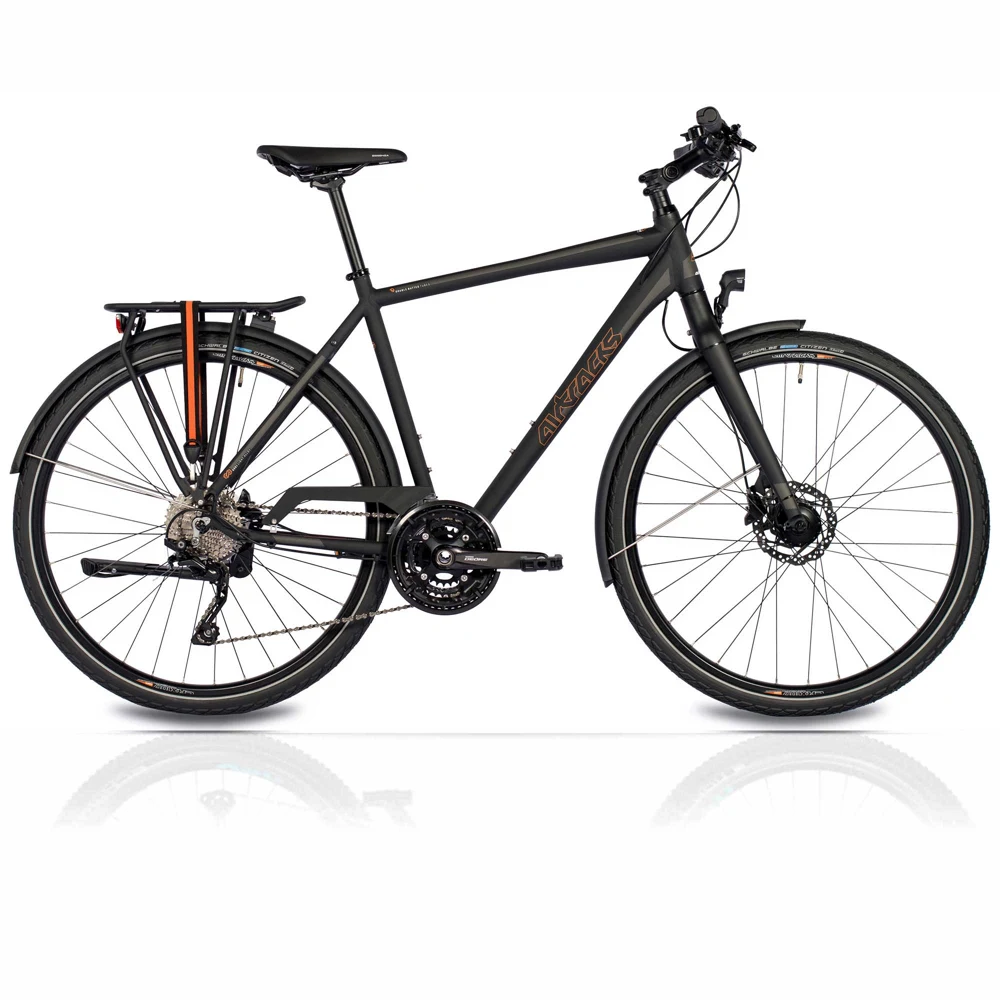
The TR.2870 wins for our mix of commuting, weekend riding and lightly loaded tours. It combines full everyday equipment with a rigid fork and a stated weight of about 14.3 kg. Lights, mudguards and the Racktime carrier therefore need no initial retrofit. Its 47 mm tyres provide a different starting point from narrow fitness-bike tyres; appropriate pressure still matters. [1]
The appeal is the straightforward assembly. The fork has no suspension unit to service, while hydraulic MT200 disc brakes remove the rim from braking duties. The Deore drivetrain uses three chainrings and ten sprockets. That brings more shifting decisions and an exposed drivetrain to maintain, alongside gearing for varied touring situations. It does not establish a measured advantage in speed or stopping distance.
Payload is the main limitation. With a 120 kg system limit and a 90 kg rider, the arithmetic leaves only 15.7 kg for additional equipment and luggage. The TR.2880-C therefore moves ahead for heavier touring. This Amazon link specifically identifies the older Deore version; the CUES version now also sold under the TR.2870 name is not silently substituted in the analysis.
| Brief | Look at first | Deciding point |
|---|---|---|
| Everyday + light touring | TR.2870 | Rigid fork and complete equipment |
| Touring with suspension | TRAIL 6.0 | More servicing, 120 kg system limit |
| Higher combined load | TR.2880-C | More bike weight, more load allowance |
| Commuting with CUES | TR.2855-C | Suspension and about 16.8 kg |
| Tarmac fitness | Lightspeed | Narrow tyres, accessories absent |
| Simple hybrid | Hiland 700C | Resolve load limits and exact specification |
| Expedition with heavy luggage | No model established | Additional approvals and suitable equipment required |
No. The ranking follows the stated everyday and touring brief. A lower-ranked model may fit fitness riding or higher loads better.
Availability depends on frame size, colour and delivery address. The linked Amazon.de product page shows the versions and delivery conditions currently offered.
The selection is limited to identifiable Amazon.de products and their documented specifications. It is not a complete market survey. Positions follow equipment and riding brief, not a claim of general brand superiority.
Only with limitations. These are manufacturer figures for different versions, not standardised measurements. Complete trekking equipment differs considerably from a bare fitness bike.
Technical facts come from the linked manufacturer and model documentation. Product mappings support ASIN and version matching. Assessments and riding recommendations are editorial inferences from those data; no hands-on ride tests were conducted.