
Body and Mind Balance Board Deluxe
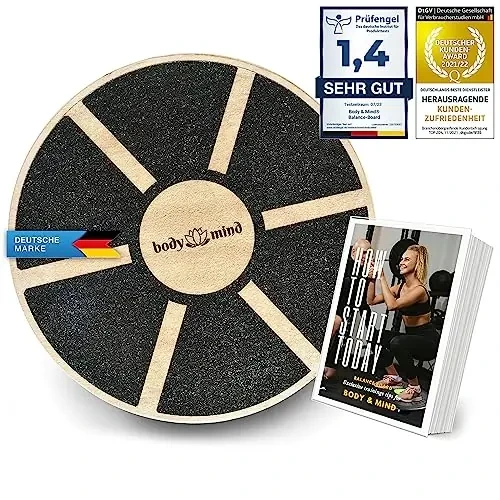
A round wobble board for brief basic sessions.
View on AmazonFitRecover · Home gym · Coordination
FitRecover editorial team
Which balance board actually fits your home, current ability and training goal? We distinguish simple wobble boards, roller-based surf trainers and adjustable coordination platforms, including where their benefits stop.
Research date: 11 November 2026
Affiliate disclosure: FitRecover may earn compensation from qualifying purchases made through labelled Amazon affiliate links. Commissions do not determine the selection or rankings.
A balance board is neither a shortcut to muscle growth nor a do-it-yourself medical treatment. Its central purpose is to practise controlled postural corrections on a less stable surface. Products differ not only in price but also in movement direction, difficulty, grip, platform dimensions and what comes in the box.
A round wobble board for brief basic sessions.
View on Amazon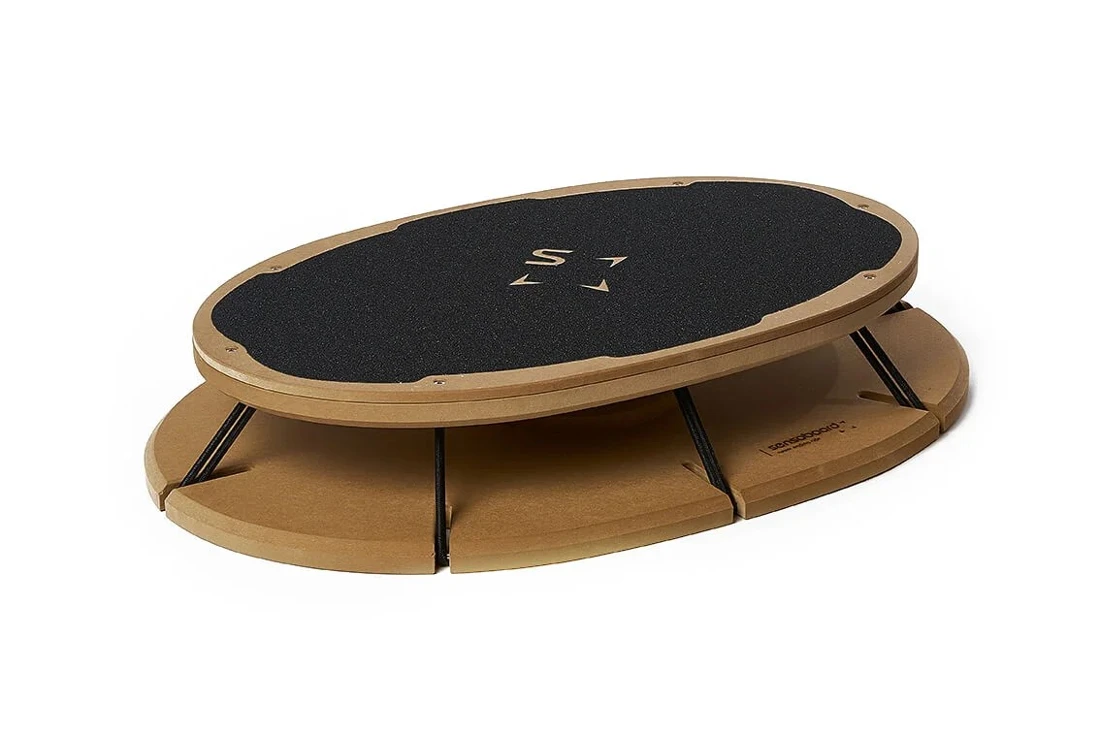
Adjustable cord system; 100 kg user limit, about 15 kg board weight.
View on Amazon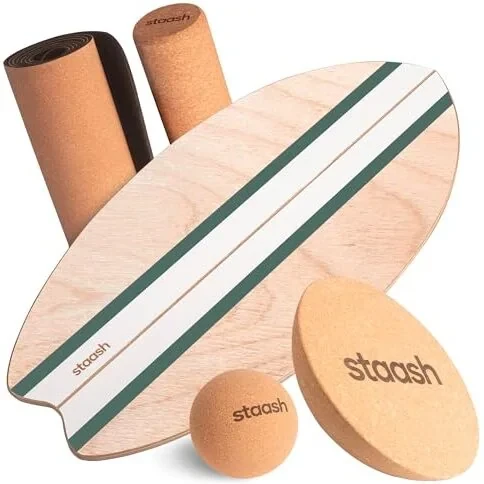
Five components for different balance tasks.
View on AmazonSkip directly to training and buying advice
| Rank | Model | Useful strength | Important limitation | Amazon |
|---|---|---|---|---|
| 10 | 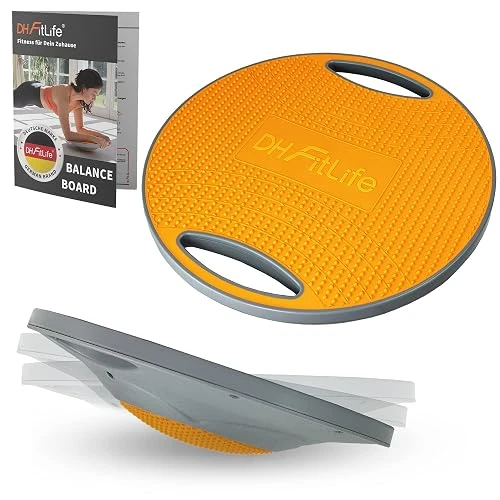 DH FitLife Balance Board | Simple handles | Quality concerns | View on Amazon |
| 9 | 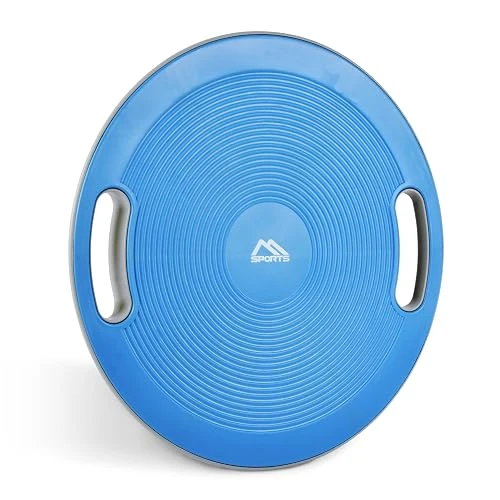 MSPORTS Balance Board Premium 40 cm | Integrated handles | Check load rating | View on Amazon |
| 8 | 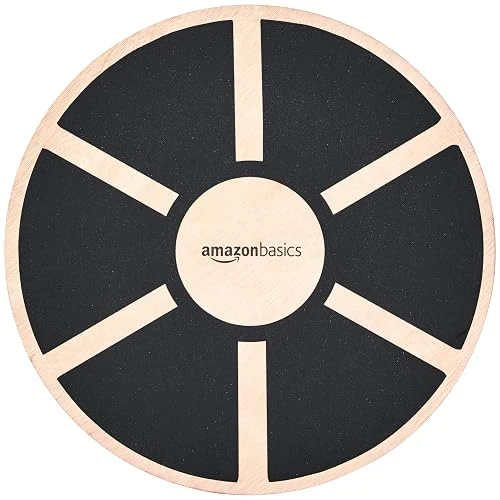 Amazon Basics Balancebrett aus Holz | Easy setup | Rough deck | View on Amazon |
| 7 | 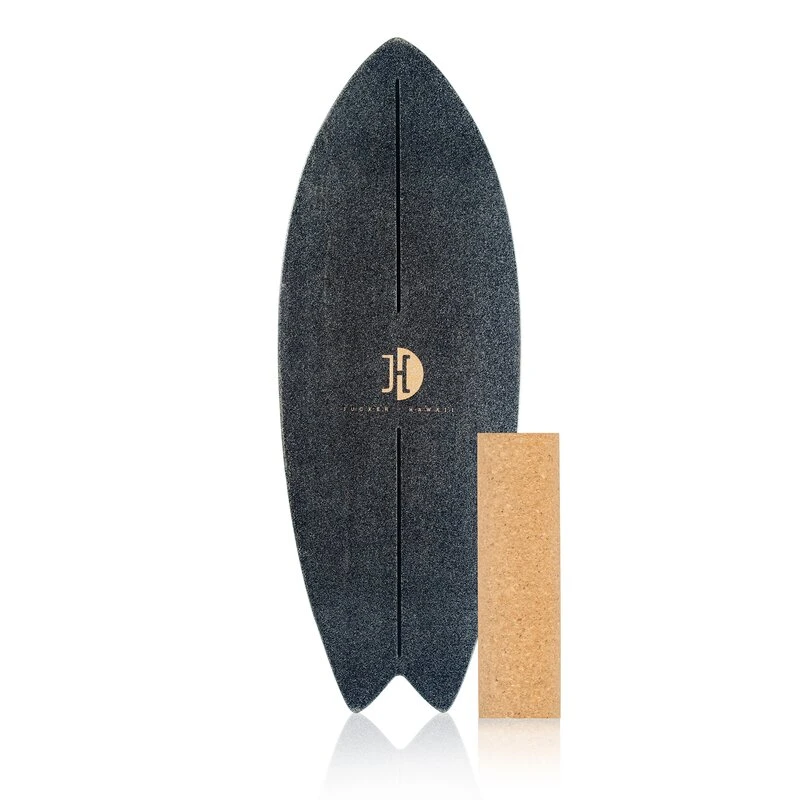 JUCKER HAWAII Ocean Rocker Black + Korkrolle | Very good grip | Needs room | View on Amazon |
| 6 | 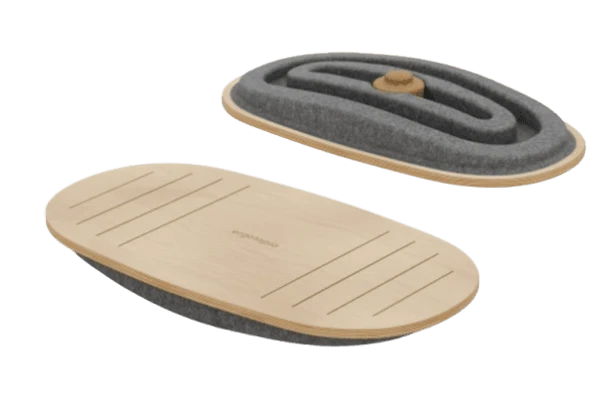 Ergotopia Corely | Two rocker levels | Indoor use | View on Amazon |
| 5 | 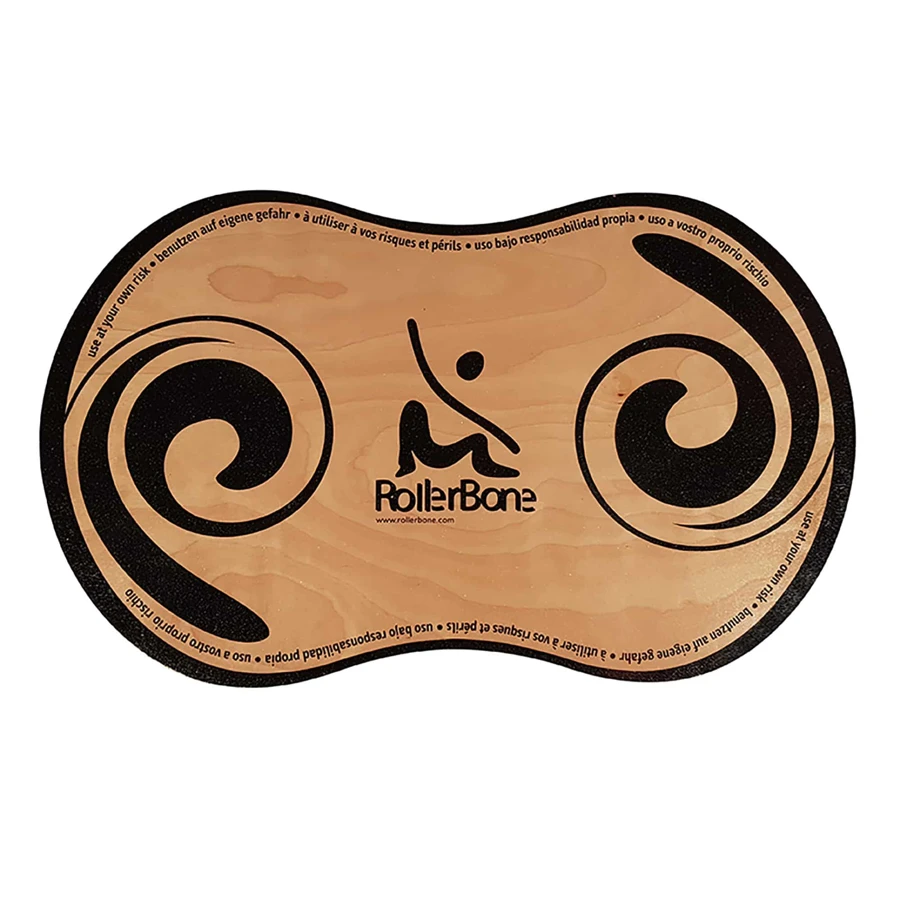 RollerBone Zero One | Sporty grip | Check roller included | View on Amazon |
| 4 | 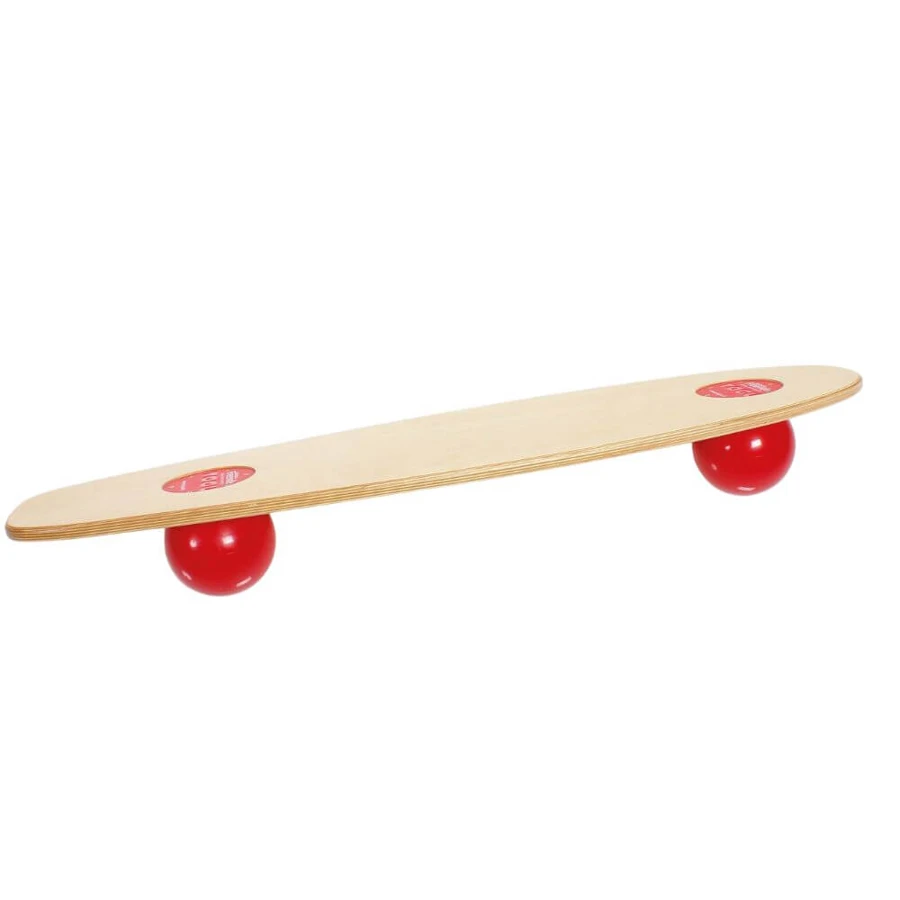 TOGU Balanza Freeride | Air-supported motion | Needs more space | View on Amazon |
| 3 | Body and Mind Balance Board Deluxe | Affordable starter | Rough coating | View on Amazon |
| 2 | SENSOSPORTS SENSOBOARD essential Griptape | Adjustable difficulty | 100 kg maximum | View on Amazon |
| 1 | Staash Balance Board 5-in-1-Set | Multiple training supports | Slippery deck risk | View on Amazon |
The selection combines manufacturer information, manuals and published hands-on tests. It covers round wobble boards, roller boards, air-supported devices, a cord system and a desk rocker. We consider controllable movement, grip, included parts, space and progression. The ranking is an editorial assessment of these needs, not a survey of every Amazon listing or our own hands-on product test. A higher position does not make a board better for everyone.
A simple wobble disc normally tilts in several directions. Beginners benefit from modest movements with a handhold nearby. A rough top surface feels different beneath hands and feet. A board that is constantly out of control does not automatically create better adaptation.
Rank 10
Features / manufacturer information: Ø 42 cm · 200 kg
A compact wobble board with hand openings. The design is easy to understand for simple balance drills, but the F.A.Z. practical review identified weaknesses in its workmanship.
Cost-conscious people considering basic drills.
Buyers who need consistently high finishing quality.
Handles and a textured base broaden some exercises.
The independent review reported poor construction details.
The limitations outweigh its simple format.
Its 42 cm platform and manufacturer-stated 200 kg limit distinguish it from the smaller Amazon Basics board. That limit does not authorise jumping or added weights. Inspect the screws, pivot and surface before each session.
Check the exact specified maximum user load. Plastic and timber supports, holes and fittings affect use and durability. An attractive listed price is of little value if the platform is not rated for your weight and intended exercise.
Rank 9
Features / manufacturer information: Ø 40 cm
This round platform combines standing balance with some hand-supported exercises. The independent review flags its relatively limited maximum load.
Beginners interested in both standing and supported exercises.
Anyone near the actual permitted weight limit of the selected version.
Grip surface and integrated handles.
The load limit must be checked for the exact variant.
Potentially practical, but less versatile without a confirmed capacity.
The manufacturer describes a rubberised pivot and a 15° tilt. Compared with Amazon Basics, the grip openings are the practical difference. A load rating from a different colour or model is not assumed here.
A basic wobble board takes little room and is ready quickly. Roller-and-dome kits allow more tasks but require a precise contents check. Do not assume every accessory seen in a promotional picture is included in the specific version you are ordering.
Rank 8
Features / manufacturer information: 40 × 40 × 8 cm · 120 kg
A conventional wobble board without a complex accessory system. The textured top helps standing grip but may feel uncomfortable beneath the hands in push-up variations.
People with limited storage space learning simple weight shifts.
Those who want a surf-style board on a roller.
Straightforward setup and small footprint.
Rough platform and relatively limited progression.
A practical basic option, though not ideal for all exercises.
The manual specifies 40 × 40 × 8 cm and a maximum of 120 kg. Unlike MSPORTS, it has no grip openings, but there are no loose accessories to collect before a session. The rough surface is less comfortable for hands than a soft covering.
A surfing-style roller board is more dynamic than a wobble disc. Sideways movement requires a clear area, secure flooring and ideally accessible support. Small rooms filled with fragile furniture are not ideal for this design.
Rank 7
Features / manufacturer information: 76.5 × 28.3 cm
The Ocean Rocker is aimed at board-sport enthusiasts wanting more pronounced lateral balance training. Good grip is an advantage, but the exact package needs close inspection.
Active users already confident on unstable surfaces.
People with cramped rooms or sensitive hands.
Strong surface grip in the independent review.
Coarse covering and a harder learning curve.
An appealing specialist, not an obvious first board.
This selection is the black version with a cork roller. Its 76.5 × 28.3 cm maple deck has Cleargrip. Unlike a round wobble board, it can slide completely off the roller: clear space in both directions and a fixed support are essential.
First maintain your centre over the platform, then shift weight slowly. Shorten the session rather than replacing control with frantic jumps. Athletic roller practice is possible in stages but does not have to be everybody’s objective.
Rank 6
Features / manufacturer information: 67.5 × 35.5 cm · 120 kg
Corely is a rocker board for brief movement breaks at a standing desk. A reversible cork plug changes its movement; it does not travel over a loose roller like a surf trainer.
Adults who want to alternate quiet standing with small weight shifts.
Surf tricks, jumps, outdoor use or users above 120 kg.
Two levels, a felt underside and a 67.5 × 35.5 cm platform. The manufacturer lists a board weight of 2.5 kg.
Adjust desk height to account for the board. Balancing can distract from typing or demanding tasks, and walking breaks are still needed.
It fits desk use more closely than RollerBone; RollerBone offers greater freedom for dedicated roller training.
Timber can be durable, but a smooth surface may not offer enough grip. Coarse coverings improve foot contact and may irritate hands. Consider sweat cleaning, floor protection and whether the accompanying mat remains stable on smooth floors.
Rank 5
Features / manufacturer information: 74 × 41.5 cm · 125 kg
Zero One offers a grippy deck for sport-oriented balancing. Buyers must check whether a roller is included in the exact configuration sold.
More experienced users prioritising roller work.
First-time buyers who want one effortless complete purchase.
Grip and workmanship were positively evaluated by the independent reviewer.
Accessory and bundle confusion can change practical value.
Good for dynamic balance, provided the box contents are clear.
The manufacturer specifies 74 × 41.5 cm and a maximum of 125 kg. The base product is a deck; rollers and sets are offered separately. It is wider than the Ocean Rocker. Choose an explicitly listed board-and-roller set if you do not already own a compatible roller.
Inflatable elements deform under load instead of rolling like rigid cylinders. This offers different coordination demands but requires sensible inflation and periodic inspection. It is not a replacement for cardiovascular or resistance exercise.
Rank 4
Features / manufacturer information: 100 × 30 × 14 cm · 200 kg
Two air-filled elements support the board, producing a different movement from a rigid wooden roller. The amount of air and resulting response shape the exercises.
People seeking varied coordination stimuli.
Buyers looking for a compact conventional wobble disc.
Manufacturer documents the floating platform and broad deck.
Bulkier and technically distinct from a roller board.
A credible alternative for specific stability exercises.
TOGU specifies 100 × 30 × 14 cm and a maximum of 200 kg. Its two attached air supports cannot roll freely away. Compared with RollerBone, movement is springy rather than travelling over a roller; the length still takes space. Check air filling, screws and wood regularly.
Suspended platforms with adjustable straps can provide graduated challenges, but they also increase size, weight and complexity. They are justified when the extra settings are genuinely used, not just because the product looks advanced.
Rank 3
Features / manufacturer information: Ø 39 cm
A simple inexpensive round board with good grip. It lets beginners find out whether balance exercises suit them without committing to a complex set.
Budget-minded beginners and short basic routines.
Users who require many adjustable difficulty levels.
Clear purpose with little setup.
Plastic underside and rough top surface.
Its particularly approachable entry function earns a high place.
This is the round Deluxe with a wooden deck and a plastic pivot. It is not a surf board or necessarily the similarly named wooden multi-piece set. Compared with Staash, it has fewer accessories and fewer ways to change the character of movement.
A 2025 systematic review of 14 randomised trials involving 450 athletes found improvements in several balance outcomes with instability training. Effects on jumping performance were limited. These findings neither prove clinical benefits for each device nor guarantee an individual result.
Yin et al., 2025Rank 2
Features / manufacturer information: 80 × 52 × 14 cm · 15 kg device weight · max. 100 kg
A sophisticated platform using two decks, a central ball and adjustable straps. Training intensity can be changed, but its mass and cost restrict everyday convenience.
Experienced users with dedicated space and structured coordination goals.
Small apartments and people with unstable standing balance.
Adjustable challenge and good foot grip.
Heavy and expensive; check current manufacturer limits.
Potentially excellent but unnecessarily demanding for many homes.
Crucially, the manufacturer limits the essential to 100 kg. It weighs about 15 kg and measures 80 × 52 × 14 cm. The Griptape version is intended for indoor use. Storage is more demanding than for a simple wobble board; cord tension changes the response, not the load limit.
Start with stable two-footed control, then reduce reliance on the handhold, then consider a less stable base. Slower precise weight shifts can be more useful than sudden jumps. Track movement quality, not made-up performance scores.
Rank 1
Features / manufacturer information: 5-in-1
The winner in the F.A.Z. comparison updated on 3 November 2026 includes a board, mat, cork dome, roller and ball. They allow gradual progression, although the smooth wooden deck can be slippery with unsuitable footwear.
People wanting accessible first steps plus room to progress.
Those who only need a small and inexpensive wobble disc.
Several balance supports in one kit.
Smooth wooden surface needs attention to grip.
Its versatility and documented independent assessment support the leading position.
The 5-in-1 comprises board, roller, half-sphere, ball and mat. Those supports distinguish it from the RollerBone deck. A full ball is not automatically a beginner setting. Several designs are now offered; compare the exact contents rather than the name alone.
First-time users are usually better served by a modest wobble board and stable support. Roller boards demand faster side-to-side correction and more open space. Air-supported or cord-suspended platforms can create more complex instability but are generally bigger or costlier. Select a manageable challenge, not maximum instability.
For healthy adults without acute symptoms; an editorial example, not rehabilitation. Begin on the floor with feet hip-width apart, soft knees and slow weight shifts. Use a low board only when mounting and stepping off are controlled with a fixed support.
Week 1: on three days, do four 20-second sets with both feet, resting 40 seconds on solid ground between sets. Hold a stable rail or worktop. Aim for normal breathing and controlled contact with the edge.
Week 2: if every set remains comfortable and controlled, increase to four 30-second sets or reduce hand support. Change only one difficulty at a time. Single-leg work, closed eyes and jumps are outside this beginner plan.
Step off immediately with pain, dizziness, numbness, repeated slipping or loss of control. Acute injury, recent surgery, unexplained dizziness or high fall risk calls for individual professional guidance first. A fixed support under a board alone does not make it safe.
For a cautious first attempt, the Body & Mind model offers a direct introduction. The Staash kit offers different bases for progression. Sensoboard Essential targets users who deliberately want a large, heavy and adjustable training system. Space, ability and safe setup usually matter more than sophisticated marketing claims.
Start with short bouts and regular rests, perhaps a few minutes at a time. Technique, safe control and sustained consistency matter more than records or very long sessions.
Yes, when instability is limited and firm support is within reach. A moving roller or ball under a long board may be too difficult for a first session.
It prompts continuous postural corrections and coordination. This alone does not prove that any particular board cures back pain or replaces conventional strength work.
Only when your treating clinician or therapist approves the load and timing. Post-injury rehabilitation should not be replaced with an unsupervised home-gym routine.
A roller tends to emphasise sideways balancing; a dome permits tilting in multiple directions. The actual movement depends on the design and any mechanical stops.
A gentle rocker can vary standing posture. Continuous wobbling is not a replacement for walking breaks, suitable desk ergonomics and movement.
No. Weight shifts and a safely supported single-leg stance on solid ground are simple starting exercises. A board adds a moving support surface; it is not required for every balance workout.
The Staash kit stands out through its varied supports and is also the current F.A.Z. review winner. For a cautious beginning, a simple wobble board may be enough. More complex designs make sense when ability, body weight, available space and budget support their use. Safe progression matters more than the number of accessories.
Walking pads 2026 · Adjustable dumbbells 2026
Editorial research: 11 November 2026. No in-house laboratory testing.