Best overall
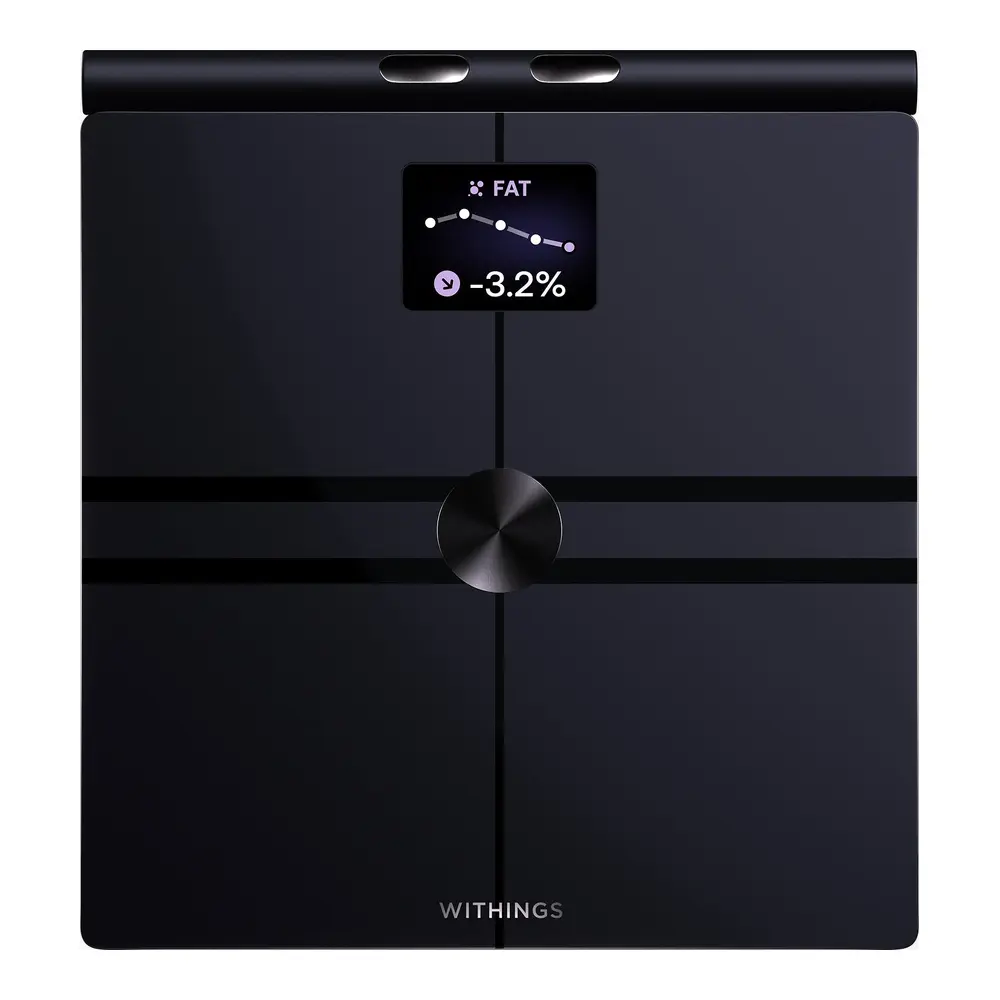
Withings BodyFit
Six body zones, excellent trend visualisation and automatic synchronisation.
Check on Amazon*
FitRecover Buying Guide · 2026 Edition
Four or eight electrodes, an app or deliberately offline? We compare ten current body composition scales according to how usefully they track weight and body trends – without confusing marketing metrics with a medical diagnosis.
The Withings BodyFit combines eight-electrode whole-body measurement across six body zones with an easy-to-understand app, automatic Wi-Fi synchronisation and a straightforward 20-second routine. This makes it the most balanced package for people who want to track fat and muscle trends over several weeks. The scale is new, so limited independent long-term experience remains an important caveat.
Six body zones, excellent trend visualisation and automatic synchronisation.
Check on Amazon*
Dual-frequency measurement, segmental readings and a five-year manufacturer warranty.
Check on Amazon*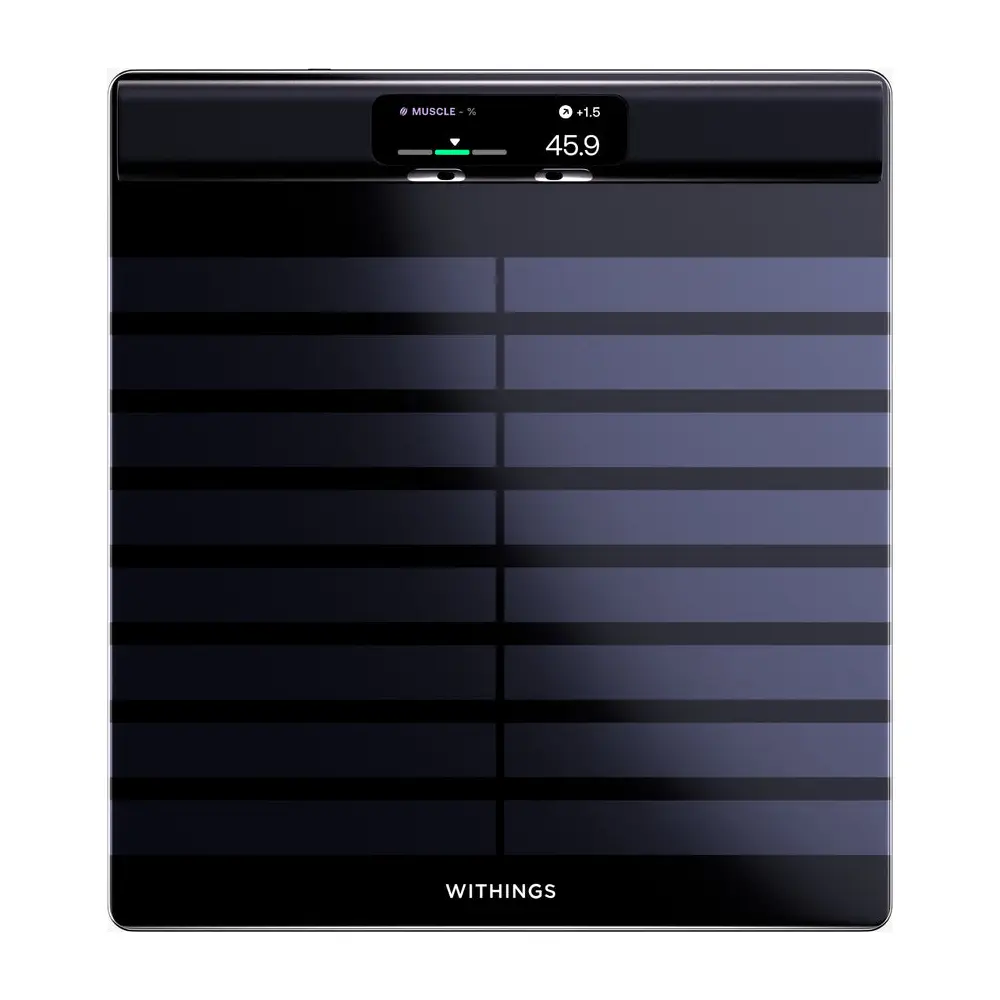
Twelve electrodes and particularly detailed body and cardiovascular insights.
Amazon availability*
Eight-sensor measurement, more than 20 app metrics and a rechargeable battery.
Check on Amazon*| Rank | Model | Score | Measurement approach | Sync | Max. | Best for | Amazon |
|---|---|---|---|---|---|---|---|
| 1 | Withings BodyFit |
92/100 | 8 electrodes, 6 zones, multi-frequency | Wi-Fi, Bluetooth | 200 kg | Best overall package | Amazon* |
| 2 | TANITA RD-545HR |
89/100 | 8 electrodes, segmental, dual-frequency | Bluetooth | 200 kg | Sport and body recomposition | Amazon* |
| 3 | Withings BodyScan 2 |
87/100 | 12 electrodes, 6 zones, multi-frequency | Wi-Fi, Bluetooth | 200 kg | Premium features and many metrics | Amazon* |
| 4 | medisana BS 850 connect |
84/100 | 8 electrodes, hands and feet | Bluetooth | 180 kg | Value for money | Amazon* |
| 5 | 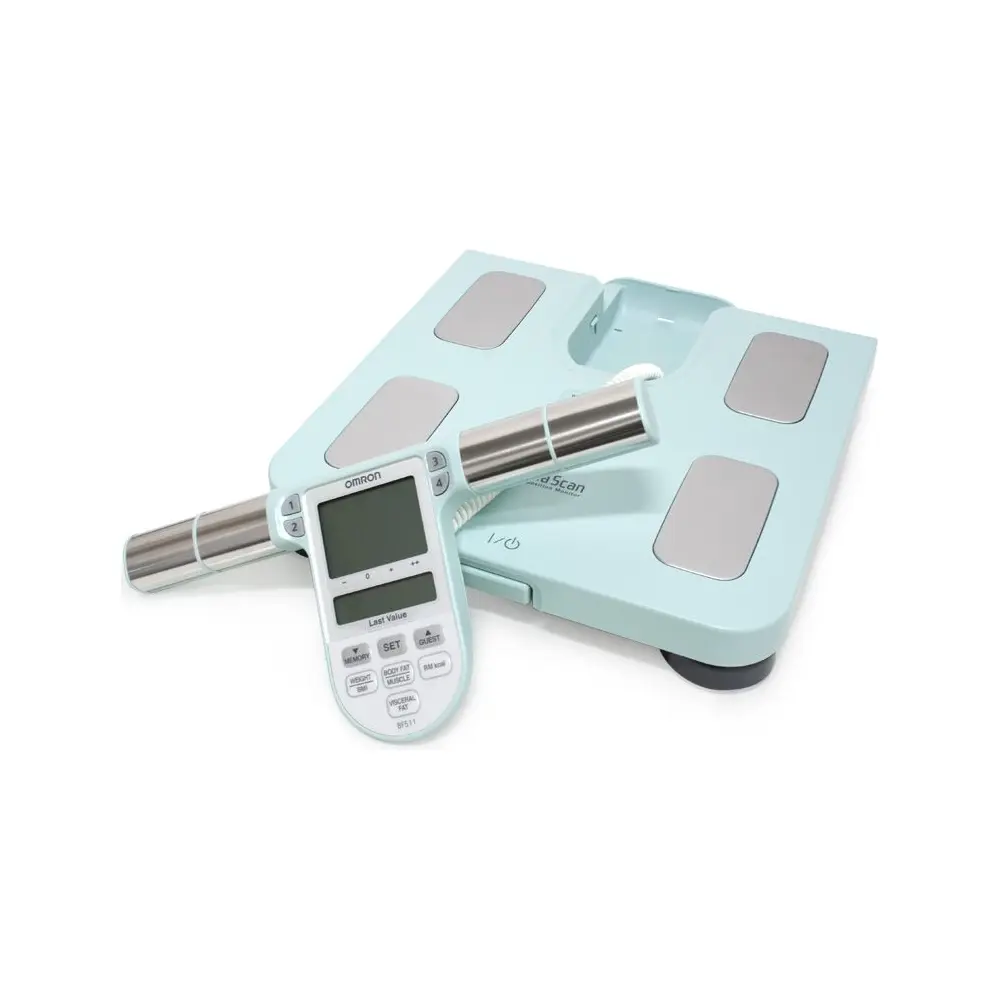 OMRON BF511 OMRON BF511 |
82/100 | 8 sensors, hands and feet | Offline | 150 kg | No app or cloud | Amazon* |
| 6 | 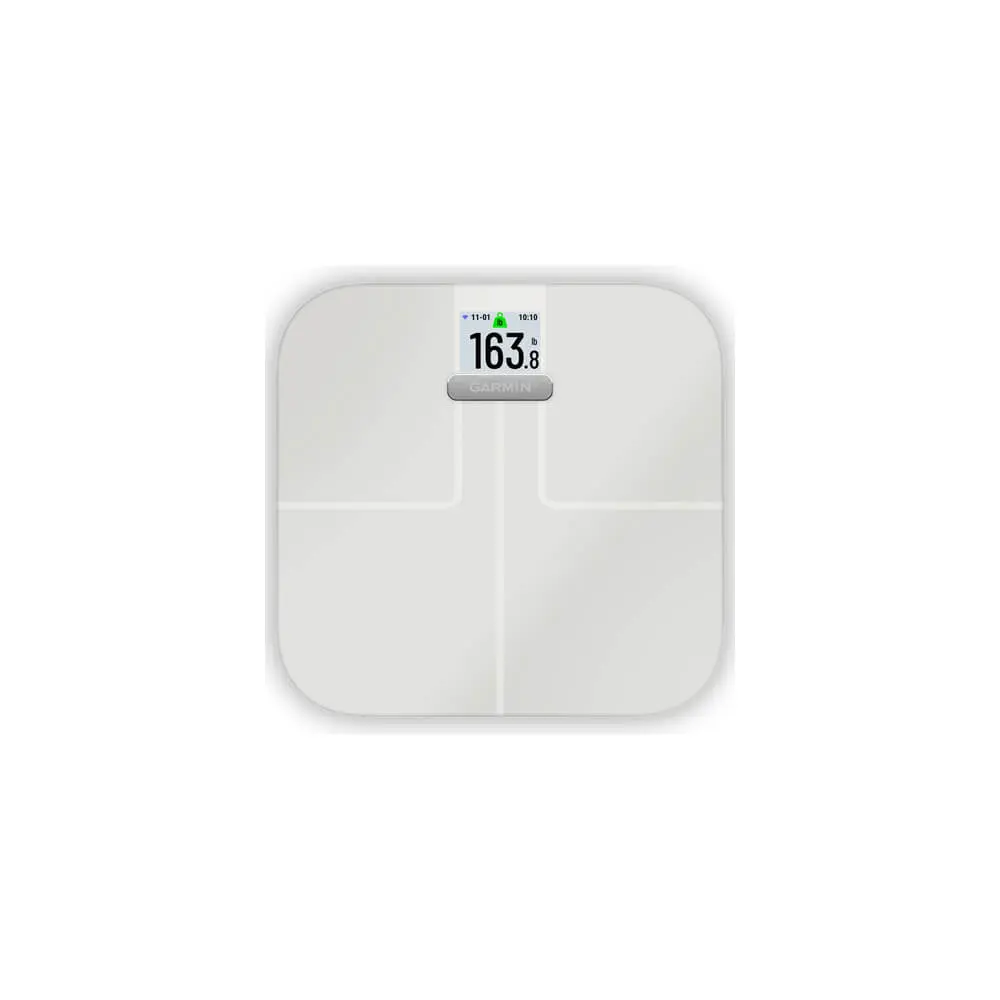 Garmin Index S2 Garmin Index S2 |
80/100 | Foot-to-foot BIA | Wi-Fi, Bluetooth | 181.4 kg | Garmin ecosystem | Amazon* |
| 7 | 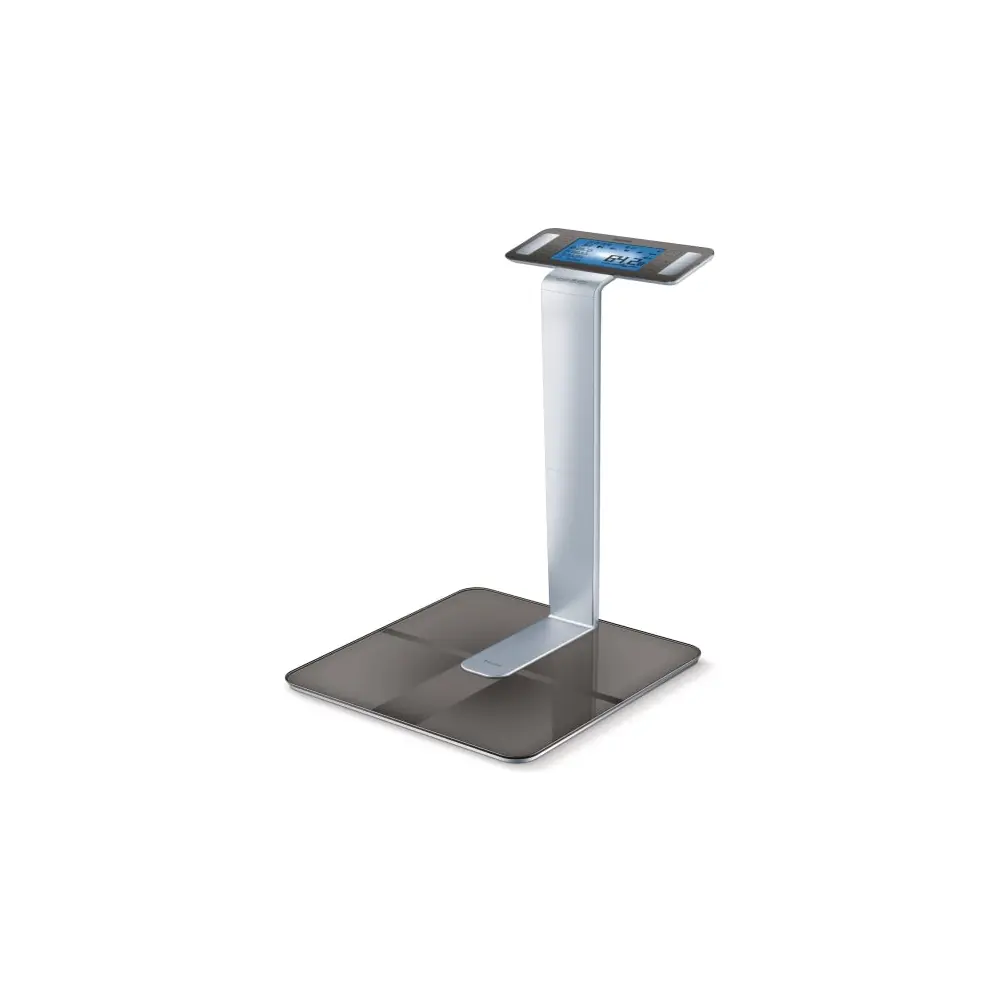 Beurer BF 1000 Beurer BF 1000 |
78/100 | 8 electrodes, cross-body measurement | Bluetooth | 200 kg | Gym-style operation | Amazon* |
| 8 | 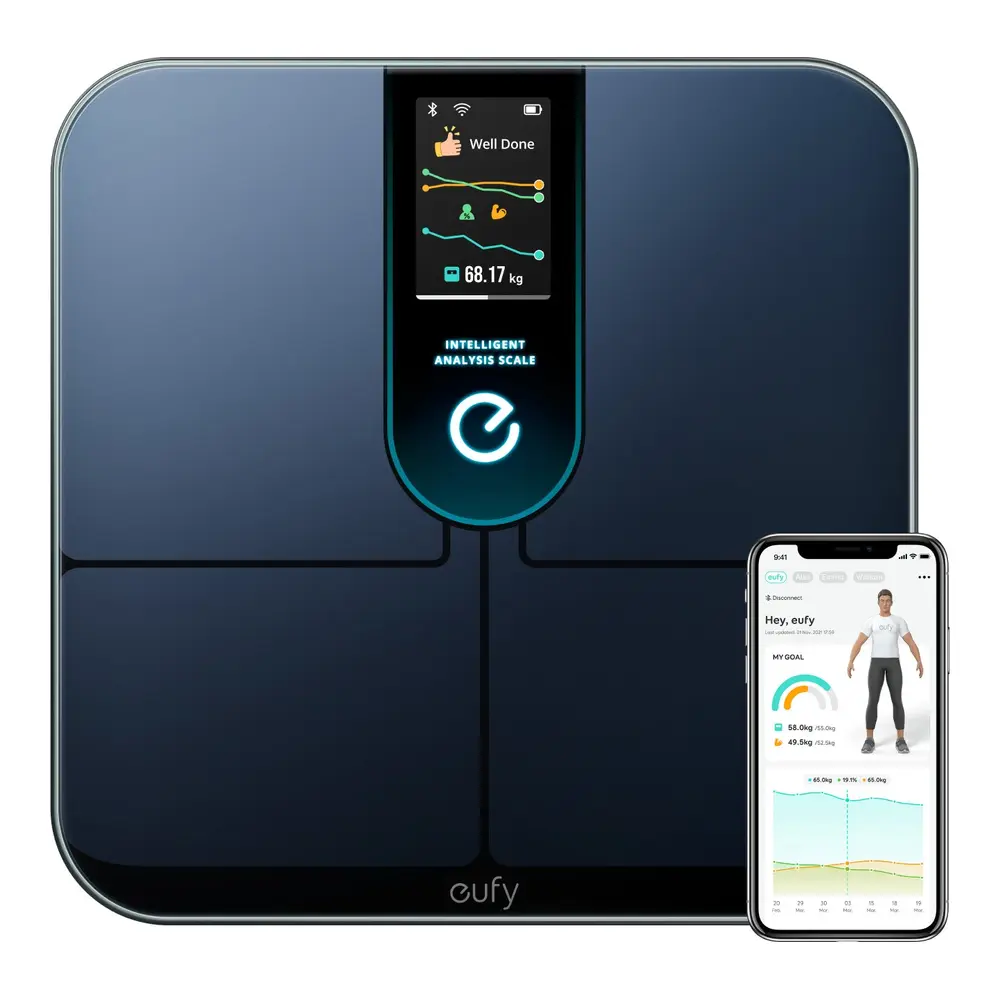 eufy Smart Scale P3 eufy Smart Scale P3 |
76/100 | Foot-to-foot BIA, 16 metrics | Wi-Fi, Bluetooth | 200 kg | Display and app convenience | Amazon* |
| 9 | 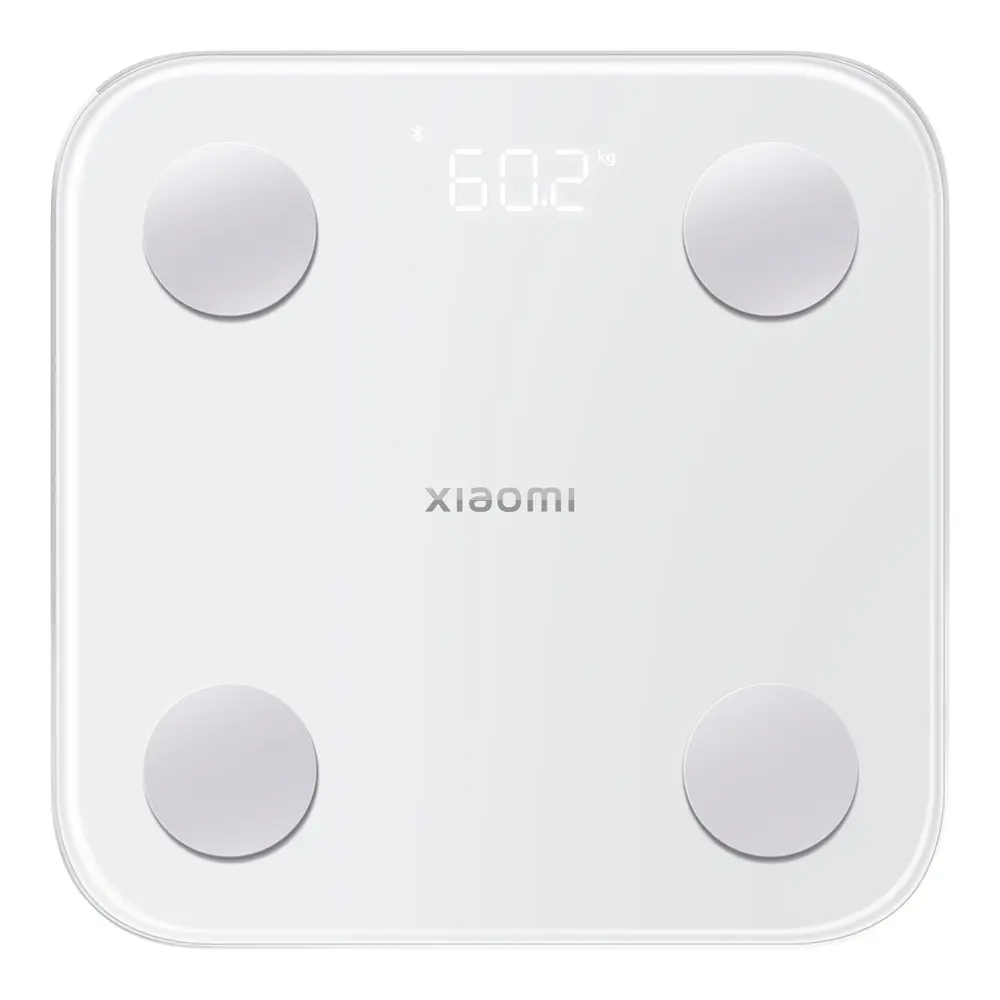 Xiaomi S400 Xiaomi S400 |
74/100 | 4 electrodes, dual-frequency | Bluetooth | 150 kg | Affordable dual-frequency measurement | Amazon* |
| 10 | 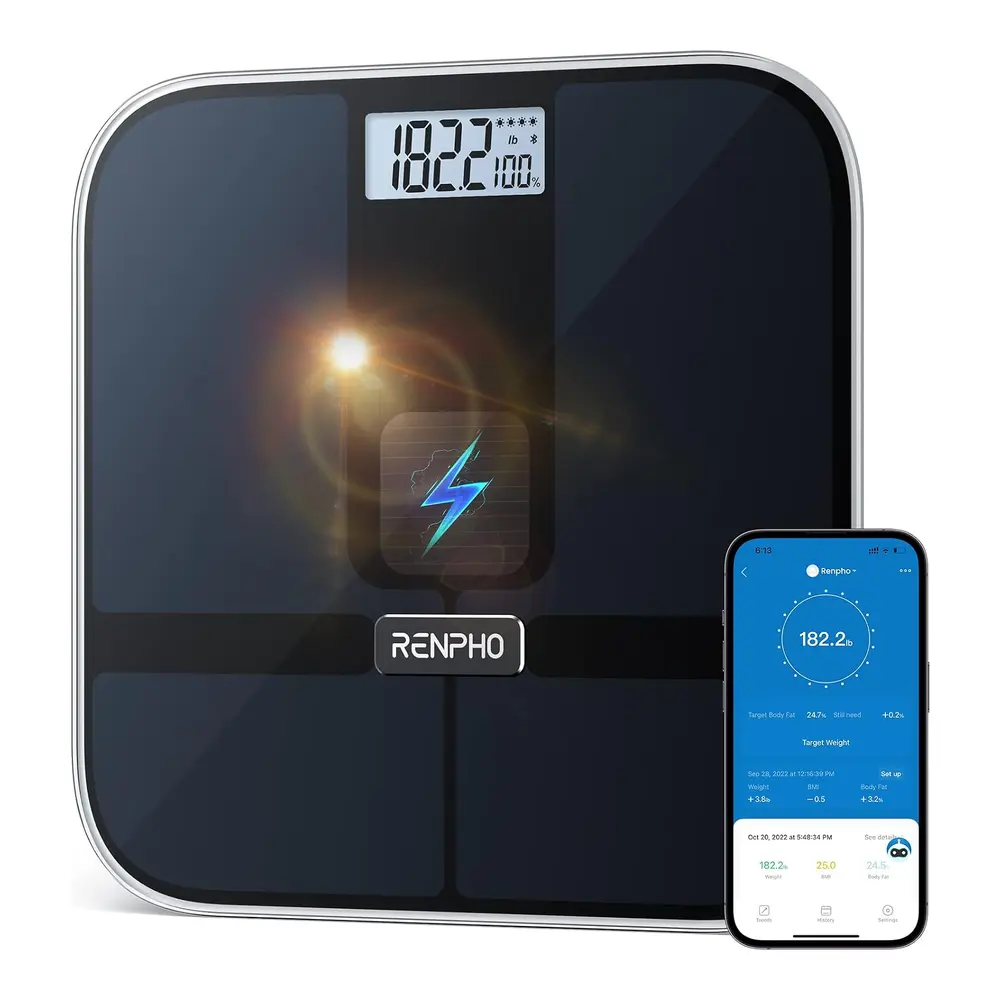 RENPHO Elis Solar 2 RENPHO Elis Solar 2 |
72/100 | ITO foot measurement, 13 metrics | Wi-Fi, Bluetooth | Not specified | Solar charging and app convenience | Amazon* |
The FitRecover score does not reward whichever model displays the most numbers. It assesses which measurement and user experience makes the most sense in everyday life. The purchase price is not directly included in the score; value for money is assessed separately. A high score is not a medical certification.
Measurement path, number and placement of electrodes, frequencies, resolution and transparent manufacturer documentation.
Positioning, user recognition, measurement routine and the likelihood of comparable conditions.
Clear progress rather than an overload of numbers, export options and useful long-term views.
Display, synchronisation, power supply, multi-user operation and ease of use.
Cloud dependency, platforms, integrations and a practical offline option.
Warranty, manufacturer presence, documentation and current availability in Germany.
Important note on accuracy: A high correlation with DEXA, as some manufacturers report from internal studies, does not automatically mean every individual measurement matches DEXA precisely. Hydration, meals, exercise, skin temperature and measurement timing can alter BIA estimates. For everyday use, a clear trend line under consistent conditions therefore matters most.
FitRecover Recommendation 2026 · best overall package
The BodyFit is our most balanced recommendation because its retractable handle includes the arms, legs and torso separately without making the daily routine unnecessarily complicated. According to Withings, measurement takes around 20 seconds; weight, fat and muscle distribution and long-term trends then appear automatically in the app.
Withings specifies 13 measurement frequencies, six body zones and an internal 99% correlation between fat mass and DEXA. This manufacturer study is a positive signal, but it does not prove every reading is clinically exact. More convincing for everyday use is the combination of a repeatable position, 50-gram weight resolution, a colour display and an app that explains changes clearly.
FitRecover verdict: The best choice for users who take muscle and fat distribution trends seriously but want an unobtrusive, straightforward solution for their home.
Segmental analysis with dual-frequency measurement and a long warranty
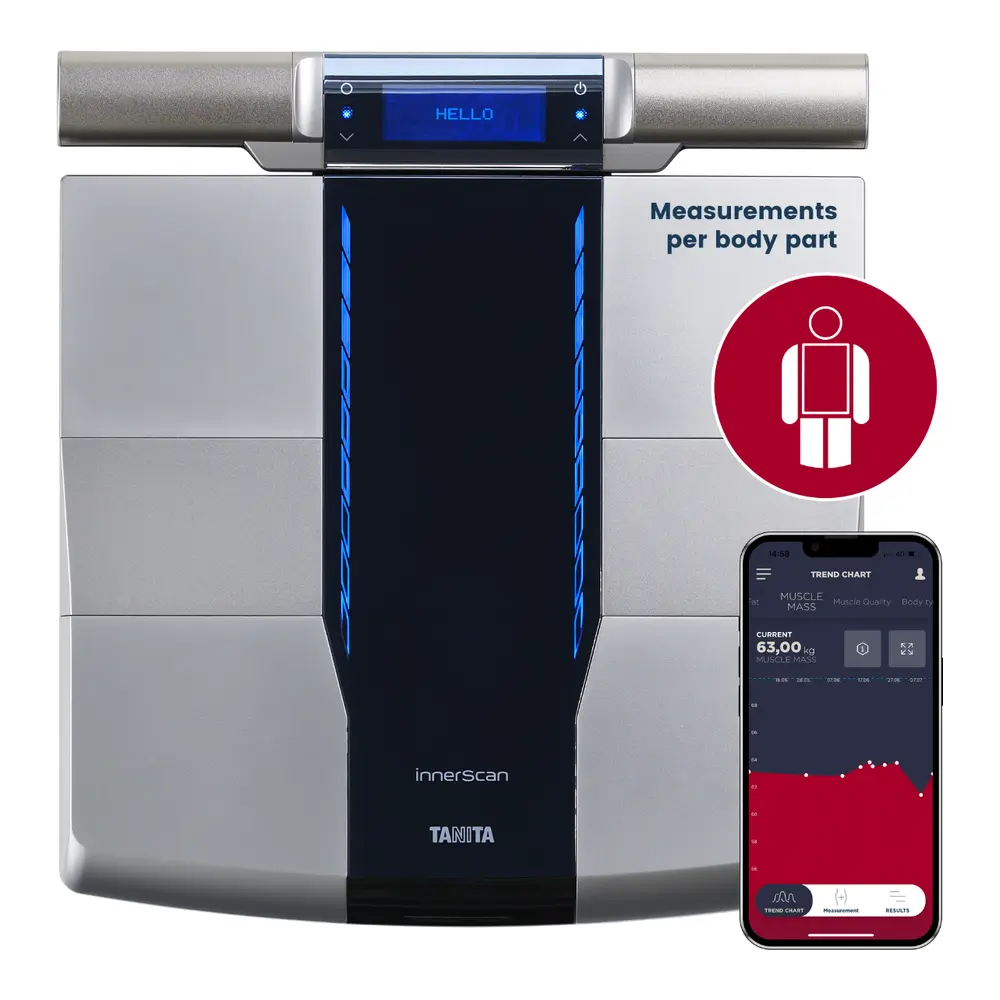
TANITA uses eight hand and foot electrodes and two measurement frequencies in the RD-545HR. Arms, legs and torso are assessed separately; alongside body fat and muscle mass, the system reports muscle quality, visceral fat, body water, basal metabolic rate and metabolic age. During a longer body recomposition phase, this segmental view is more useful than a single overall figure.
The scale supports up to 200 kilograms and measures in 50-gram increments below 100 kilograms. The MyTANITA app tracks progress via Bluetooth. The controls and app feel more functional than Withings, but the model stands out for its clear measurement focus, Japanese manufacture and five-year manufacturer warranty.
FitRecover verdict: Our recommendation for ambitious strength and endurance athletes who want to monitor regional muscle trends, not just total weight.
Maximum data depth, but not useful for everyone
The BodyScan 2 is less a scale than a connected health station. Twelve electrodes – eight in the ITO surface and four in the handle – assess six body zones. Depending on region and approval, it also offers a 6-lead ECG, heart rate, vascular age, oxygen saturation and additional cardiometabolic wellness metrics.
The technical scope is impressive, but it does not automatically provide more useful insights. Some features depend on the region, require a subscription or were still only announced at the editorial cut-off. People who mainly want fat and muscle trends get a more focused package with the BodyFit. Those who deliberately want the extended heart and longevity features will find the most detailed platform here.
FitRecover verdict: Technically the most comprehensive scale in the comparison. It ranks third because price, feature maturity and complexity limit the added benefit for most users.
Eight-sensor whole-body measurement at an accessible price
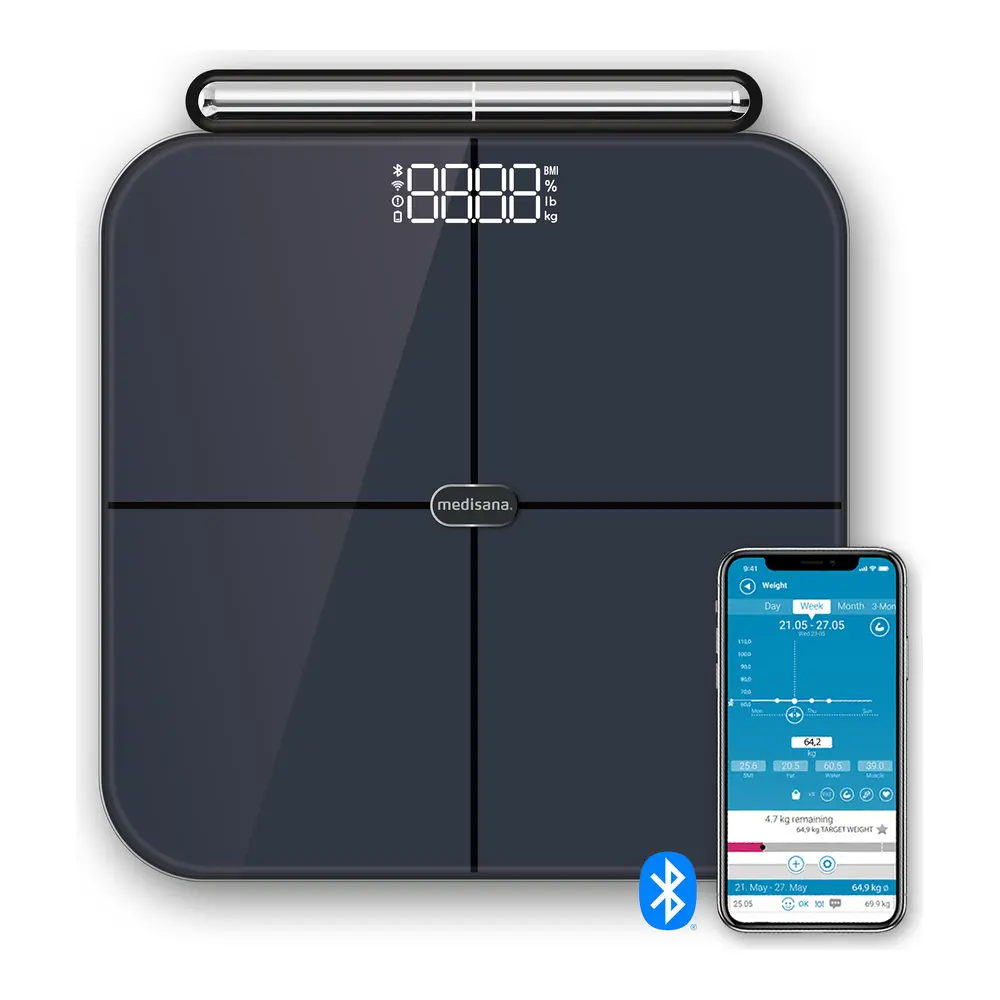
The BS 850 connect brings hand and foot electrodes into a much more affordable category. Its handle extends up to 150 centimetres, routing the measurement current through the upper body too. The VitaDock+ app displays more than 20 derived metrics, including fat, muscle, body water and visceral fat.
The scale itself mainly displays weight; detailed analysis is in the app. It synchronises via Bluetooth, which is not quite as effortless as Wi-Fi. Positive features include 50-gram increments, a 180-kilogram capacity and a rechargeable battery with a manufacturer-stated runtime of up to 120 days.
FitRecover verdict: The most sensible entry into whole-body measurement for people who want an app but find Withings and TANITA too expensive.
Established hand-to-foot measurement, deliberately offline
The BF511 takes the opposite approach to app-based scales: eight sensors on hands and feet, a wired handheld unit and all results shown directly on the device. It displays weight, body fat, visceral fat, skeletal muscle, BMI and resting metabolism. Four profiles plus a guest mode are sufficient for a household, without an account or compulsory cloud connection.
OMRON lists the model as a clinically validated medical device. This is more substantive than many vague marketing promises, but home body composition measurements are still not infallible. The design looks dated, progress must be recorded manually and the maximum capacity of 150 kilograms is lower than most competitors.
FitRecover verdict: The best choice for privacy, simplicity and whole-body measurement without a smartphone. Withings or Garmin are more convenient for automatic long-term trends.
Seamless weight trends alongside training and recovery
Anyone already reviewing training, sleep, training load and nutrition in Garmin Connect gets the smoothest data flow with the Index S2. Weight, BMI, body fat, skeletal muscle, bone mass and body water synchronise over Wi-Fi after weighing. A colour display also shows the weight trend.
Its strength is the ecosystem, not the measurement approach: BIA runs only from foot to foot and provides no true segmental analysis. This is practical for weight and consistent trend graphs, but individual fat or muscle readings should not be overinterpreted. Up to 16 profiles make the scale interesting for families, teams or shared households.
FitRecover verdict: Often more useful for Garmin users than a technically sophisticated standalone solution. Those primarily focused on body composition get more measurement information with eight electrodes.
Segmental cross-body measurement with a fixed stand
The BF 1000 uses four hand and four foot electrodes for cross-body measurement. Body fat and muscle percentage are displayed by segment, alongside body water, bone mass, visceral fat, basal metabolic rate and active metabolic rate. The raised display and fixed aluminium column are more reminiscent of gym or clinic equipment than a flat bathroom scale.
The specifications are convincing: 200-kilogram capacity, 50-gram increments, ten user profiles and a five-year warranty. The cost is high, both financially and in terms of space. At 100 centimetres tall, the BF 1000 needs a permanent spot, and Bluetooth transfer to the HealthManager Pro app is less unobtrusive than a Wi-Fi workflow.
FitRecover verdict: Strong for a dedicated training room and multiple users. BodyFit, TANITA or medisana are more practical for a small bathroom.
Clear app visuals, Wi-Fi and a 3D body model
The Smart Scale P3 makes measurement results particularly accessible. You can prioritise information on its colour display, while the EufyLife app visualises 16 metrics and uses a changing 3D body model to make progress more tangible. Wi-Fi and Bluetooth ensure measurements reach your profile without opening your phone.
The platform supports up to 200 kilograms and unlimited users. People with similar weights may need to confirm their identity with a foot tap. Body composition, however, relies on conventional foot-based measurement and many mathematically derived metrics. The interface is modern, but the measurement information is less detailed than with hand-to-foot systems.
FitRecover verdict: Ideal for motivating visualisation and family convenience. Those seeking the most measurement information should prioritise eight electrodes.
Many profiles and an interesting measurement approach on a budget
Xiaomi combines four foot electrodes with two frequencies of 50 and 250 kHz. The app calculates 25 body indicators; weight, fat percentage and heart rate can appear directly on the display. With up to 36 profiles and baby, guest and object modes, the S400 is unusually flexible.
The manufacturer cites its own study reporting a correlation of at least 0.93 with DEXA for fat percentage and fat mass. Again, correlation does not mean identical agreement in each individual case. The scale also measures only through the feet. Depending on your setup, automatic remote synchronisation in Xiaomi Home requires a compatible Bluetooth gateway.
FitRecover verdict: An interesting budget pick for Xiaomi users. Dual-frequency measurement is an advantage, but it does not replace hand-to-foot segmental measurement.
Solar battery, Wi-Fi and broad app integrations
The Elis Solar 2 solves a small but genuine everyday problem: its 500 mAh battery recharges using sunlight and indoor lighting. It also offers Wi-Fi, Bluetooth, a continuous ITO glass surface and 13 metrics in the RENPHO Health app. According to the listing, Apple Health, Google Fit, Samsung Health, Fitbit and MyFitnessPal are supported.
Multiple users are recognised automatically, and Wi-Fi allows measurements without a smartphone nearby. The underlying principle remains foot-to-foot BIA; the large number of metrics should not be confused with direct whole-body measurement. At the editorial cut-off, there was also less independent long-term experience than for established models.
FitRecover verdict: A convenient, value-conscious smart scale for app-based trends. Solar charging is practical; the top five models are stronger for detailed body analysis.
Four foot electrodes mainly measure the current path through the legs and estimate the rest of the body using models. A handle adds the upper body and enables segmental readings. This is a better approach in principle, but without good algorithms it does not guarantee perfect accuracy.
A displayed body fat figure of 18.7% looks precise, but it is an estimate. Whether a rolling trend changes over several weeks under consistent conditions is more informative.
Wi-Fi generally synchronises automatically, even when your phone is not nearby. Bluetooth is sufficient if you open the app while weighing anyway. Going without an app avoids cloud data storage, but you must record trends yourself.
A scale that reliably sends data to Garmin Connect, Apple Health or your usual app is often used more consistently. Check which readings actually export before buying – not every platform accepts the complete body analysis.
Automatic recognition can confuse family members with similar weights. Confirmation on the display or in the app is then important. Depending on the model, capacity ranges from 150 to 200 kilograms.
Basic readings are available without a compulsory subscription on the models recommended here; optional coaching features may cost extra. Also check whether data can be exported and deleted, and whether a cloud account is required.
With a pacemaker or other implanted electronic device the BIA function must not be used. During pregnancy, body fat and body water readings generally cannot be interpreted meaningfully; use a weight-only mode where appropriate. For illness, oedema or medical monitoring, follow the manufacturer's instructions and agree the measurement method with a medical professional.
The Withings BodyFit is our FitRecover recommendation for most users. It combines a strong eight-electrode measurement approach with automatic synchronisation and a well-explained app. Athletes focused on segmental readings should consider the TANITA RD-545HR.
Often for body weight, but much less reliably for body fat and muscle mass. These are estimated using bioimpedance and mathematical models. Hydration, food, exercise and skin contact affect the result. Use them for trends under standardised conditions, not as an exact diagnosis.
It measures current paths through both hands and feet, allowing more body regions to be included directly. This is particularly useful for segmental analysis. However, electrode count alone says nothing about the algorithm, repeatability or validation.
Home scales estimate a visceral fat index from impedance and profile data. They do not directly see the fat around your organs. The figure can offer a rough trend, but it does not replace medical imaging or diagnosis.
For trend analysis, three to seven measurements per week can be useful if the routine stays consistent. People who find daily fluctuations distressing can weigh once a week under the same conditions.
Yes, but the number of profiles varies. Garmin supports up to 16, Xiaomi up to 36 and eufy unlimited profiles. People with similar weights may occasionally need to confirm their identity.
The OMRON BF511 displays all core readings directly on its handheld unit and does not require an account. Other models also show weight or selected readings on their displays, but usually need an app for complete trends and detailed data.
The best body fat scale is not the one with the longest list of metrics, but the one you use regularly under consistent conditions. The Withings BodyFit provides the most convincing balance of whole-body measurement, app experience and everyday usability in 2026. The TANITA RD-545HR is our most sport-focused recommendation, the Withings BodyScan 2 is the uncompromising premium choice and the medisana BS 850 connect is the clear value pick.
People who do not want health data stored in an app will find the OMRON BF511 a useful offline solution of a kind that has become rare. Whatever the model, remember: weight is a measurement, body composition is an estimate – the long-term trend is more valuable than the second decimal place.
Manufacturer and product data
Independent health context
Editorial note: Product data, Amazon destinations and availability were checked on 17 September 2026. Search results and retailer stock may change at any time. The product images are included for clear editorial identification; the relevant image source is documented directly beside each image.